
Why the Wineries You’ve Never Heard of Are Napa’s Best Hope
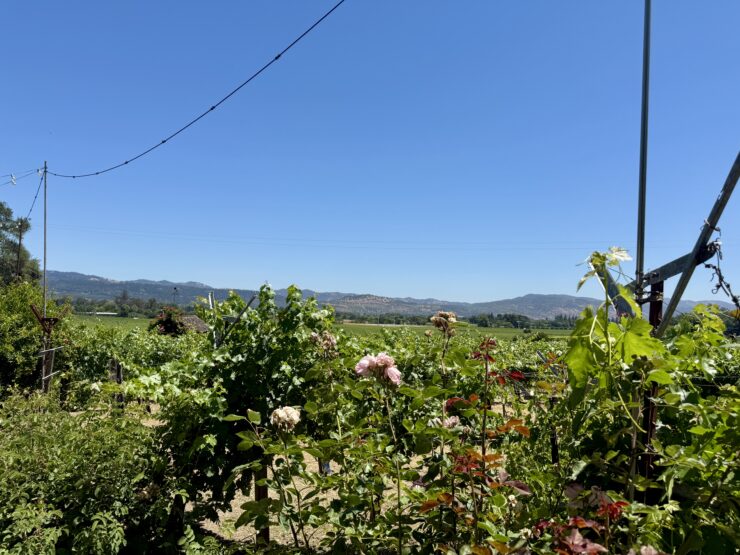
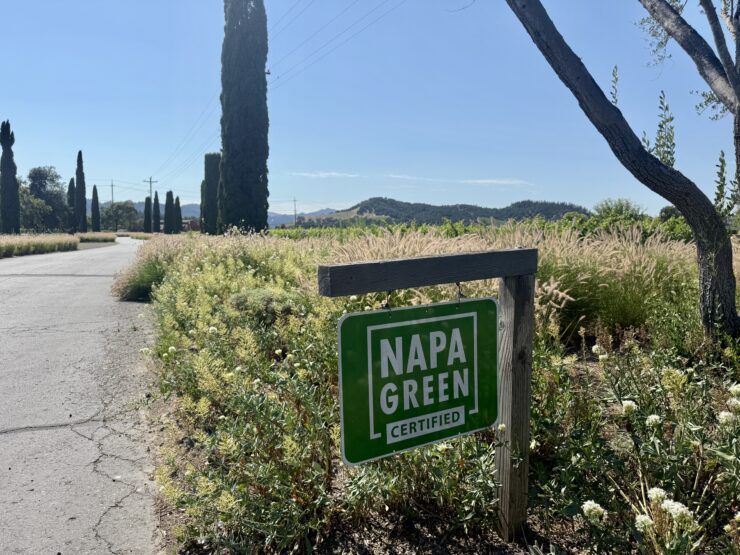
To see the Napa Valley proper, you have to drive north of the city of Napa. When you do, you encounter a land spared from the San Francisco Bay Area sprawl of development. A bucolic beauty dominates.
If your timing is just right to be there after a fresh rain shower, it shines a bright iridescent green, its grasses and grapevines shimmer in a valley of vineyards, wineries, and parks. Just north of Napa is Calistoga, where the Mayacamas Mountains release their water into Napa Valley and the Napa River, assisting in the creation of these award-winning wines, and the precious place that offers so much more.
This 165-year-old agricultural experiment is under real pressure. Current economic conditions, growth demands, climate volatility, and the brutal math of small farming are conspiring to replace some vineyards with luxury estates, while other growers pull up their vines and call it quits. Travelers who love Napa may, unknowingly, be visiting a place that will not exist in its current form within a generation or two.
But there is a largely untold counter-story unfolding that tells a tale of independent, sustainability-forward wineries. And a growing move toward sustainability even among the large players, all fighting to keep the valley alive through regenerative farming, climate adaptation, and sheer stubbornness.
“We have to learn lessons from Orange County, where they lost the land, and oranges are no longer grown.” – Family-run Tasting Room Manager
Napa’s story did not begin with the legendary 1976 Judgment of Paris or with luxury tourism. It was always an experiment, repeatedly interrupted by economic cycles, federal policy, and questions about who controls land, labor, and legacy. The valley’s commercial wine history predates the California Gold Rush. In 1861, Charles Krug established Napa’s first commercial winery, and by 1889 more than 140 wineries were operating here. Prohibition halted that momentum overnight in 1920. Only a handful survived, making sacramental or medicinal wine, and the valley went dormant until repeal in 1933.
The tide turned again in 1966, when Robert Mondavi built Napa’s first major new winery since Prohibition. Two years later, with an early vision of the importance of protecting the valley’s rich volcanic soil, Napa County’s Board of Supervisors established America’s first agricultural preserve, declaring agriculture the highest and best use of the land. It was radical at the time, and it is the reason the valley still looks the way it does.
A Portrait of Authentic Napa: Tres Sabores
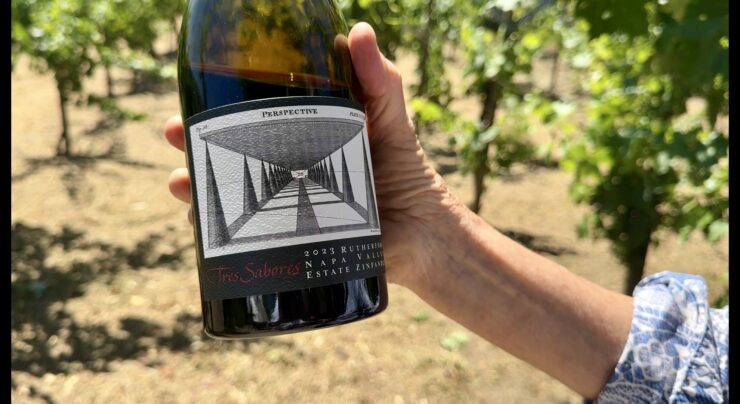
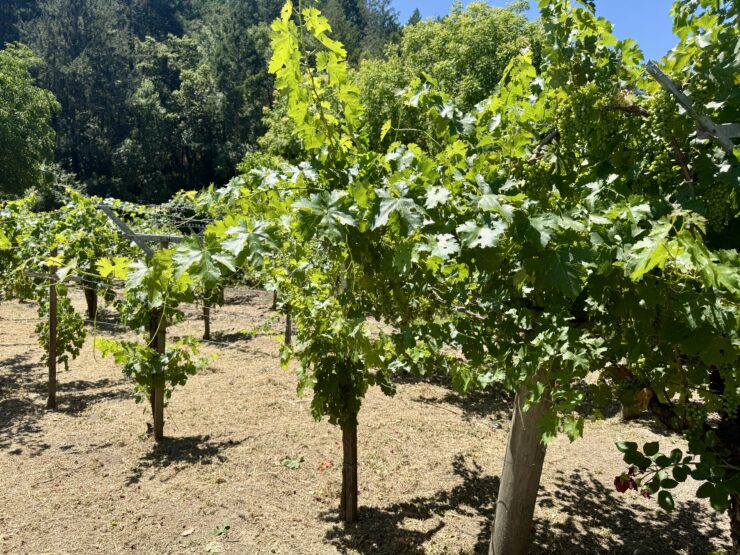
Tres Sabores, which sits on the western Rutherford Bench, came recommended by Napa Green’s Ben Mackie for its sustainable practices as well as its wine: “You’re going to go and feel something very different,” he said. “It’s 14 acres of vines, and when you go there, it feels like a farm.”
You arrive down a narrow dirt road heading west from Highway 29 toward the Mayacamas Mountains, past signs proclaiming “Certified Fish-Friendly Farming” and “California Certified Organic Farmers.” Tres Sabores is Napa Green certified and a certified organic grower, woman-owned and led by owner-winemaker Julie Johnson. Lonely Planet calls it a top-choice winery.
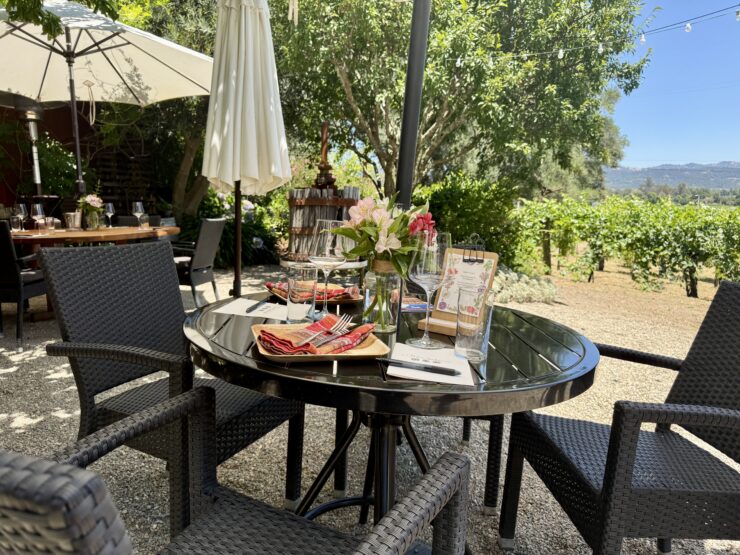
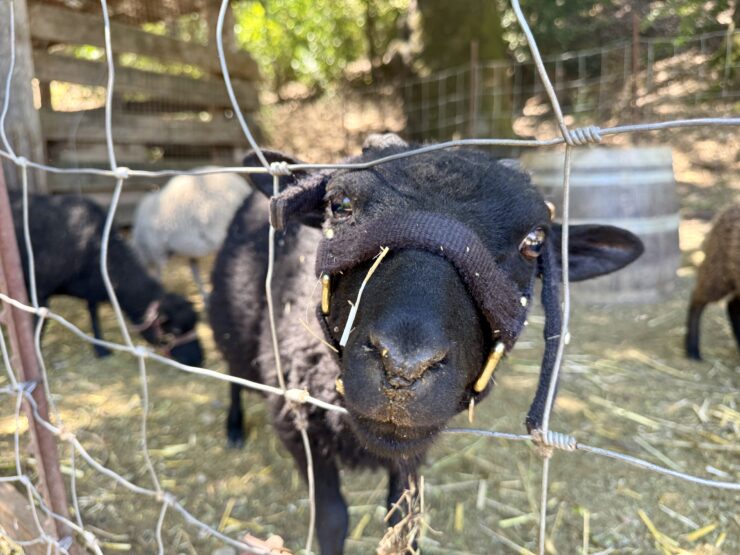
There’s no grand tasting room and no snobbery. Rather, there are tiled tables among the garden and vines, a self-guided vineyard walk (get out into the vines!), farm animals, native hedgerows, and a kitchen garden. The picnic area sits in a grove of trees, served on palm-leaf plates with compostable silverware. “It’s a place where you can get in touch with your rural roots,” Julie said—tres sabores, three flavors: the vine, the terroir, and the good company.
The wines carry that logic:
• 2025 ‘Ingrid & Julia’ Rosé — Zinfandel grapes, what Julie dubbed an “all-day Rosé.” The label is pink tie-dyed duct tape.
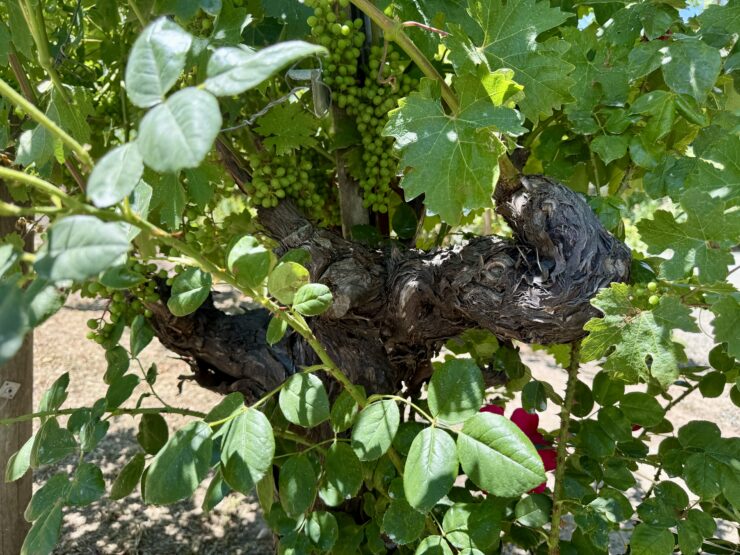
• Estate Zinfandel — rich and plum-forward, from vines grown here since 1972 and dry-farmed since the early 1990s.
• Porque No? — why not? Begun in 2000: Zinfandel, Cabernet, petite sirah, and petit verdot, with a wild blueberry note that leaps across the stage. The label comes from a hand-woven napkin from Oaxaca.
• 2021 Cabernet Sauvignon — 100% Cabernet, sipped 300 feet from the vines that made it.
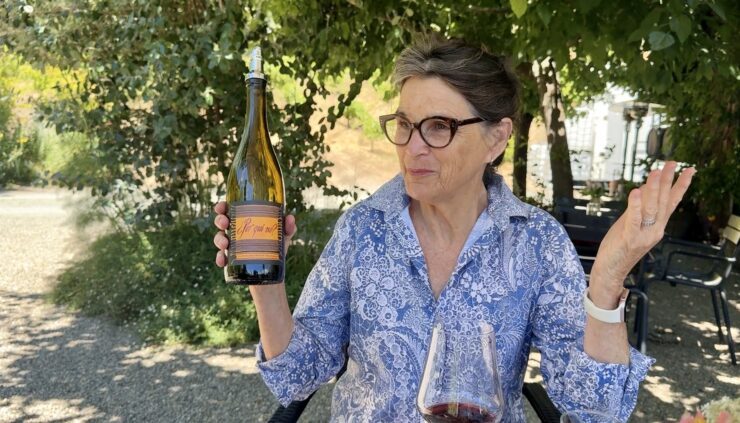
Ask what she’s looking for in the glass, and you get a short course. “Wines are always dynamic. They’re not something that is fixed in a bottle—they move; wines have history.” She’d open a bottle an hour early and let it sit: “You’re opening it to oxygen so it can catch its breath.” It’s the time, place, and terroir that gives a vintage its character.
The case for visiting independent, family-run wineries is strong, and Julie’s roots run deep. She founded Frog’s Leap with her then-husband John Williams, launching their inaugural sauvignon blanc in 1982. It was one of some 50 independent wineries then experimenting with conservation. Her motto has held: healthy soil, healthy vine, healthy fruit, high-quality wine—with a heavy dose of independent energy. Today a new generation of Napa winemakers’ children is building on that legacy.
As Tres Sabores deepens its regenerative practices, Julie said, Napa Green is a crucial link. “You develop depth, sophistication, and honesty when you’re working with their standards.” It third-party certifies, then keeps supporting growers. This drives research into soil health, backing the Songbird Study with Wild Farm Alliance, Humboldt State, UC Riverside, and UC Davis. It also writes metrics on wages and worker safety into certification, “so important for our farmworker community.”
Meet the Organization Dedicated to Keeping Napa Alive – Napa Green
Napa Green, the nonprofit becoming a real force for transformation on the Napa scene, certifies vineyard and winery sustainability, soil to bottle, across Napa and Sonoma counties, and promotes regenerative agriculture. Its methodologies “define rigorous, science-based standards grounded in more than 250 best practices.” To date, they’ve certified 99 wineries, 51 vineyards, and 5,500 acres. There’s a quiet revolution taking root here, a growing wine country movement, made up of a passionate community.
What they’re doing is exciting, and it matters. When you talk to and visit the actors involved, there’s an undeniable pulse of change, a desire to go beyond the glitz.
Napa Green traces to the mid-2000s, when a grassroots group of winegrowers came together over the state of the Napa River. This first effort, under the Napa Valley Vintners umbrella, focused on erosion control and sediment in the Napa River—work now largely written into local and state law. Decades of tillage and agrochemical use had taken their toll. In the late 1990s, the EPA deemed the river impaired, and salmon could no longer spawn there.
I called Ben Mackie, who directs their vineyard program, to find out more. According to Mackie, “in the late 2010s, we realized those were the issues of yesterday. We need to look at the issues of today and tomorrow.” The Napa Green Vineyard (NGV) program launched in 2021 as a whole-property certification program. To map a pathway toward carbon neutrality, members meter their water and track fertilizer, fuel, and energy use. The program has helped growers phase out the toxic weed-killer Roundup over the past two years. It is now working to remove all synthetic herbicides.
Napa Green’s certification looks at employment practices in the cellar and the vineyard, and it covers the whole property, down to the forest level. After Napa Valley’s mega-fires of 2018 and 2020, Mackie said, “we realized we really need to bring forests back into human stewardship.”
Beyond certification, Napa Green runs workshops and a biannual international symposium called RISE. But the core goal is simpler: to get growers talking to one another. “I can provide all the peer-reviewed studies in the world,” Mackie said, “but if they don’t see their neighbor doing it, the growers will not learn how to be early adopters of successful techniques nor will they be able to adopt strategies to learn from failures.”
I asked him about Napa’s biggest challenge, and he didn’t hesitate to outline the wine economy. Winery budgets are squeezed, hours and staff are being trimmed, vines are being pulled out, and sustainability is an easy line item to cut. The valley’s story for years has been “our generations have been doing this since the 1800s, our winemakers are amazing.” Now, he sees an opening to talk about how the grapes are actually farmed.
Wine is sexy; people carry a bottle home and tell the “the how” about the wine. “They had all these bees, they had these pollinator hedgerows, and they’re doing sheep grazing—they’re doing all this stuff!”
“What happens in Napa gets heard around the world,” he added. “We’re a small county, but we have an outsized impact. We need to show that we can still grow grapes, we can still make the best wines in the world, in a biodiverse, resilient, regenerative farming system.”
Napa’s Agricultural Preserve Status Underpins It All
Christina Adamson and Brian Bordona at Napa County Planning, Building, and Environmental Services relay that the 1968 Agricultural Preserve “is widely regarded as one of the most important land-use decisions in this world-renowned region’s history.”
More than 50 years later, it remains the foundation of many county land-use decisions and the main reason the drive to the valley still looks like farmland instead of subdivisions. Brian emphasized: “When you arguably produce some of the world’s best wines, you want to save the land and community” that provides this abundance.
A Benchmark on the Benchlands—Spottswoode
If Napa Green sets the sustainability standards, Spottswoode is the winery chasing every one of them. Spottswoode’s estate sits on the western benchlands of St. Helena. Planted in 1882, it’s been stewarded by the Novak family since 1972.
Spottswoode has farmed organically since 1985 (CCOF certified in 1992), adopting biodynamic practices in 2008. It earned Demeter certification in 2020, and achieved Regenerative Organic Certification in 2023. It is Napa Green-certified, a B Corporation, and a member of 1% for the Planet and International Wineries for Climate Action.
“There is so much more to Napa Valley than just great wine,” Molly Sheppard, Spottswoode’s vice president of winery strategy, told me. “We are home to incredibly special wild spaces, riparian areas, watersheds, wildlife corridors and communities.” The health of those systems, she said, “is what our business depends on.”
She made her case for widening the frame on a Napa trip: “Yes, there is great wine and fantastic restaurants to enjoy here, but there are also incredible trails to hike or bike on and communities of people to connect with, learn their stories and be inspired by.”
Slow Down. That’s the Whole Trick.
When I asked Mackie how he’d design an itinerary for a slower version of the valley, he started somewhere other than wine. “The Napa Valley is so beautiful,” he said. Take a hike, spend time on the river, rent bikes up-valley. “When George Yount (of Yountville) first came to the valley, he called it an Eden because there weren’t any grapes yet.”
He’s right—the parks deserve a morning. Robert Louis Stevenson State Park covers 5,272 acres on Mount St. Helena, the highest peak in California wine country. Bale Grist Mill State Historic Park preserves one of the few working grain mills of its kind in the United States. There is also Bothe-Napa Valley State Park and its History Trail, the Mayacamas Preserve, and 33 miles of the Napa Valley Vine Trail. The Napa Land Trust offers guided hikes; Lake Hennessey and Lake Berryessa are worth the drive.
Julie Johnson has her own list for discovering the hidden side of Napa. For coffee, Under-Study, the new little place at Press. For a bite and a glass: Zuzu, Kitchen Door, Bear at Stanly Ranch, the bar at Bistro Jeanty, and the Pico Bar at Solage. And for a little history, the Sharpsteen Museum in Calistoga. Locals shop the St. Helena and Napa farmers markets and Oxbow Market. Have lunch somewhere sourcing from valley growers, like Mustards Grill. Ask which wines on the list are Napa Green certified. The conversation is the experience.
Then, after the brush of morning dew, find the smaller operations. “Growing grapes can be farming,” Mackie said. At places like Matthiasson or Tres Sabores, “they’re farmers; they just happen to be growing grapes.” Drive the Silverado Trail instead of Highway 29, exploring the wineries hidden along it.

The Choice in the Glass
Come back, at the end, to what you saw on the way in: vines running up to the hillsides, the light going long and gold across the valley floor, an afternoon that feels like it has always been here and always will be.
Consult Napa Green’s certified member list before your next trip. Seek out the small, the stubborn, the places that feel like the valley they are actually working to protect.
If You Go
Find certified members: www.napagreen.org/participating-members
Tasting itineraries curated by Napa Green: www.napagreen.org/wine-tasting-itineraries
A Two-Day Trip:
Day One. Drive the valley floor slowly up the Silverado Trail, lunch farm-to-table, one Napa Green-certified winery in the afternoon, dinner at Compline in the town of Napa.
Day Two, a morning at Tres Sabores (book ahead; weekends fill fast): www.tressabores.com/visit-us or +1-707-967-8027 (weekends +1-707-204-5623). They’re open Wednesday–Monday, by appointment. First tasting 10 a.m., last at 3 p.m., $65 per person. Tasting fee waived with a four-bottle purchase. Driver concierge partners available.
Then visit a sub-appellation you haven’t tried—Coombsville for cool-climate elegance, Chiles Valley for wild remoteness, Oak Knoll for old-vine character.
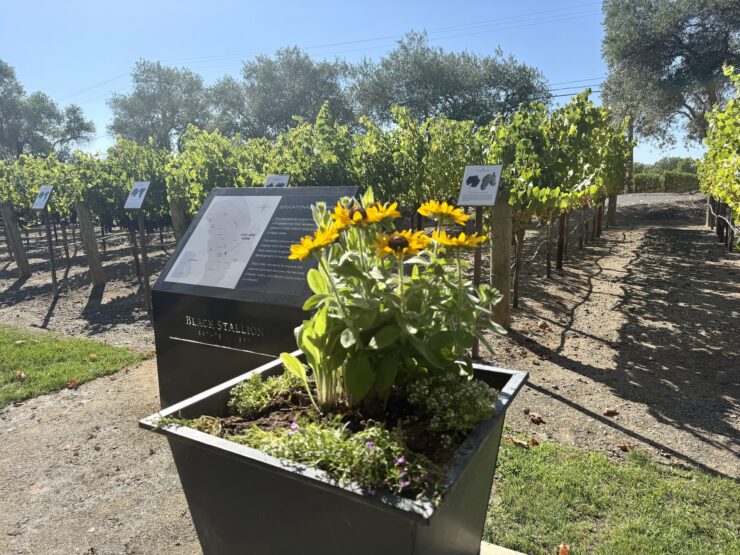
Get outside: Napa Valley Vine Trail, Bothe-Napa Valley State Park, Robert Louis Stevenson State Park, Bale Grist Mill State Historic Park, Mayacamas Preserve.
What to ask at any tasting room: “Are you Napa Green certified? What does that mean for how you farm?”
Look for: The Napa Green certification seal on tasting room signage and wine labels.
Follow along: @NapaGreen on Instagram for certified member highlights and RISE Symposium updates.
You May Also Enjoy Reading
A Vintage Milestone on the Napa Valley Wine Train: The 50th Anniversary of the Judgment of Paris
Argot Wines: Where Artistry Meets Collaboration in Sonoma and Napa
