
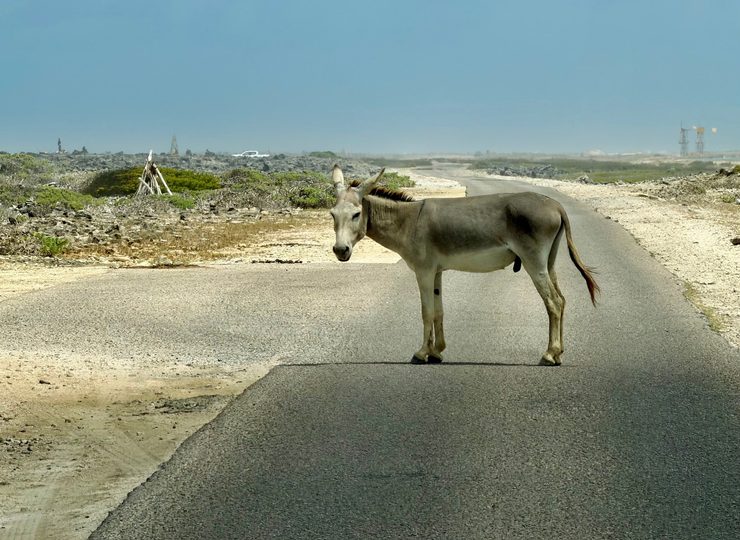
As pigeons are to New York City, donkeys are to Bonaire. We saw none in the trees or on window ledges – donkeys are frightened of heights. We saw them downtown on the sidewalk, many by the sides of the road, often in groups, and many in the road itself – traffic piling up – serene, detached. From their soft eyes and luxuriant eyelashes, we could tell this was because they live on a higher plane and should not be held accountable to prosaic traffic laws as we are. They’re the feral offspring of work-donkeys imported generations back. We loved them, and we loved Bonairian society for treating them with the reverence Hindus reserve for cows.
Cuisine Grand-mére
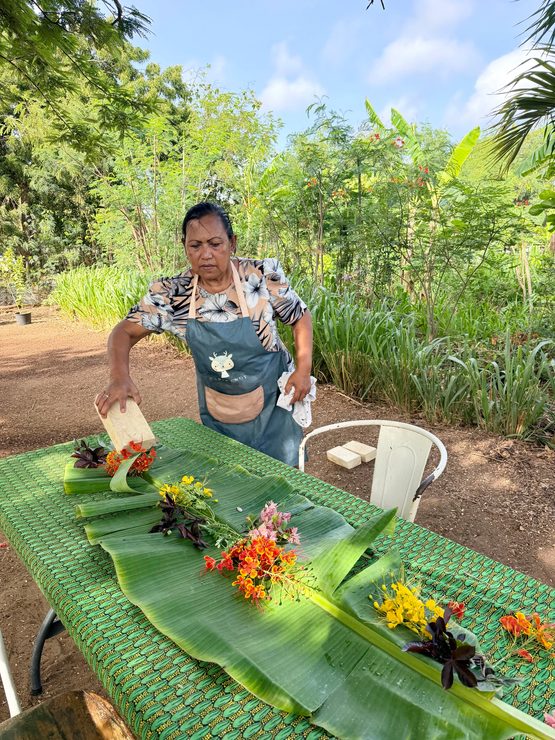
This benevolence exudes from Bonairian society as a whole. At Nature Cooking School Bonaire, far from the commercial thrum, we saw this in how our outdoor table—beneath a tamarind tree that enfolded us in its arms—was set. Chef Rositta Bakri, accompanied by her son and frolicsome grandson, took the trouble to cover it with flower bouquets she’d just picked, trembling with freshness, colors, and scents so delicate they stymie description.
Food was her love language. And her love was copious.
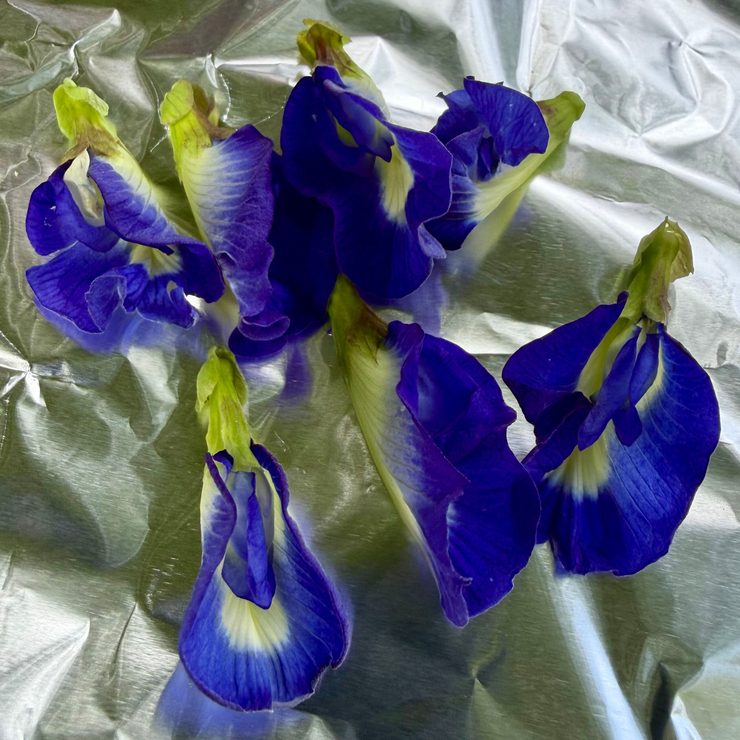
She served pumpkin pancakes, lentil pancakes, fried plantains, cassava-pineapple pudding, bread pudding, chicken cutlets (from the froward gangs of chickens inhabiting her yard), pumpkin soup, fresh-squeezed passionfruit juice, and a drink made from a flower called Butterfly Pea, which tints water blue. Butterfly Pea’s scientific name is Clitoria ternatea because of its resemblance to…. Drinking it was a pleasure.
Just Kidding
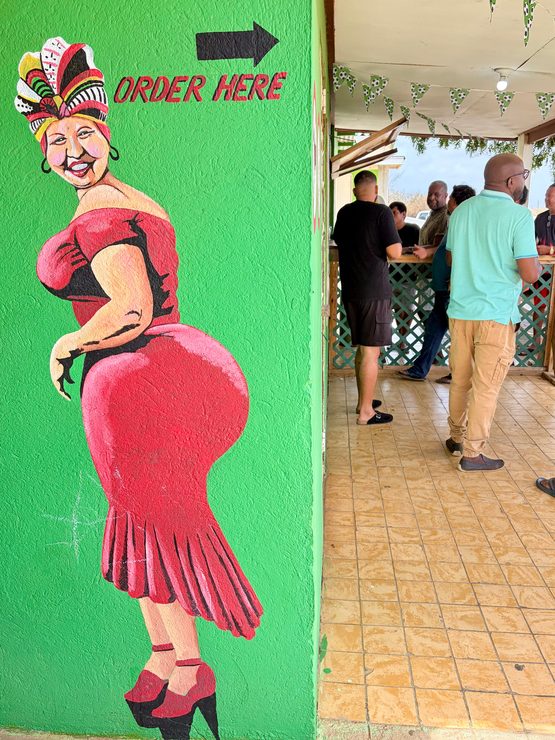
Dirt parking lot overflowing. A long, slow, patient line. Scuffed outdoor furniture, camaraderie, laughter.
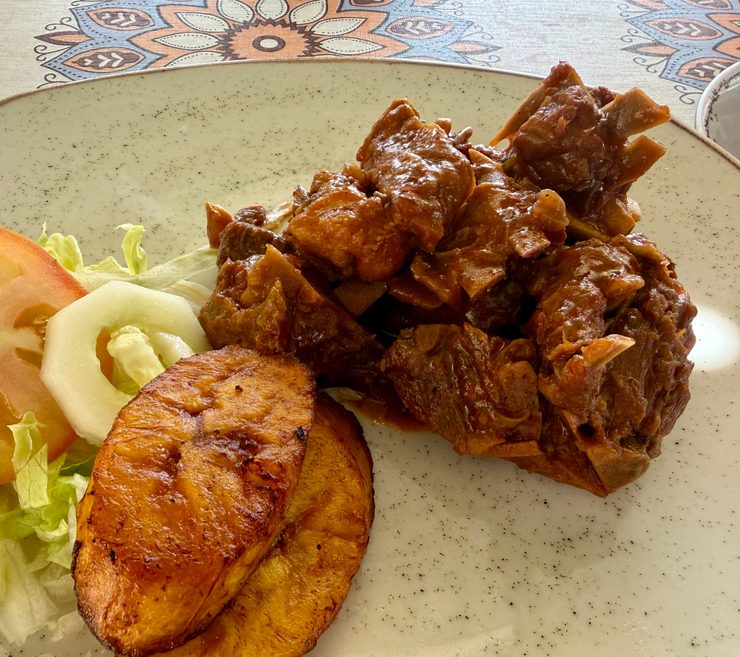
At Maiky Snack we ate goat stew with the kind of gravy that only comes from an interminable low simmer at the temperature of perspiration, meat detaching from the bone from no more than a hovering fork. A foil-wrapped wad of polenta accompanied it. A fiery onion-pepper relish, set on tables in a hodgepodge of repurposed jars, was optional. Cold beers, pulled from the ice, were not.
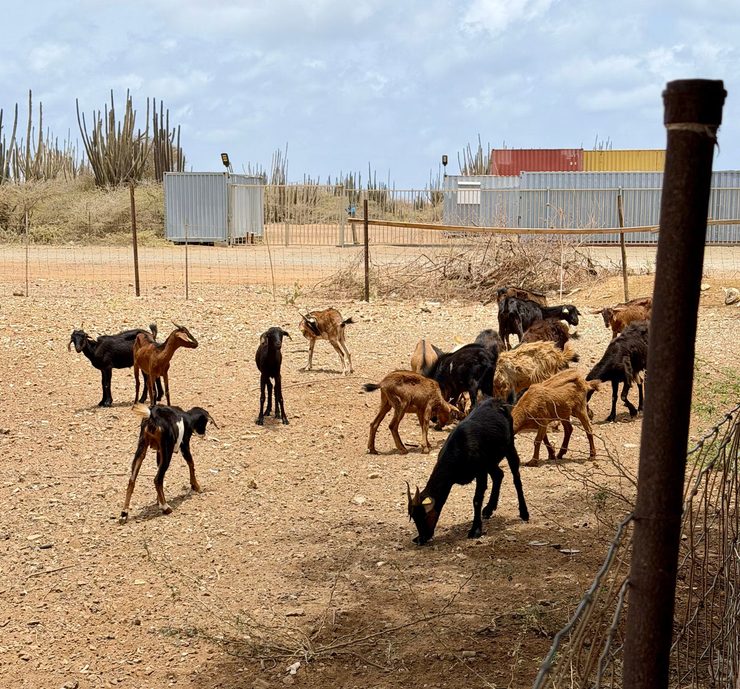
Kids, the restaurant’s source material, played out back. Young goats, that is.
Grand Cuisine – Edible Fabergé Eggs
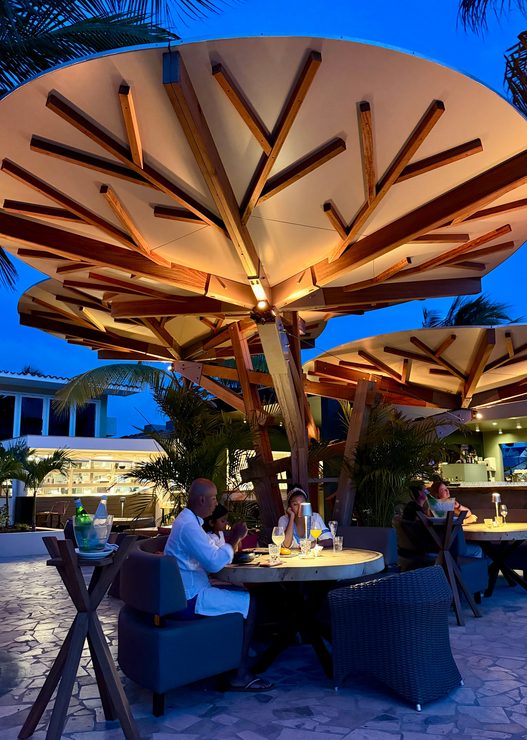
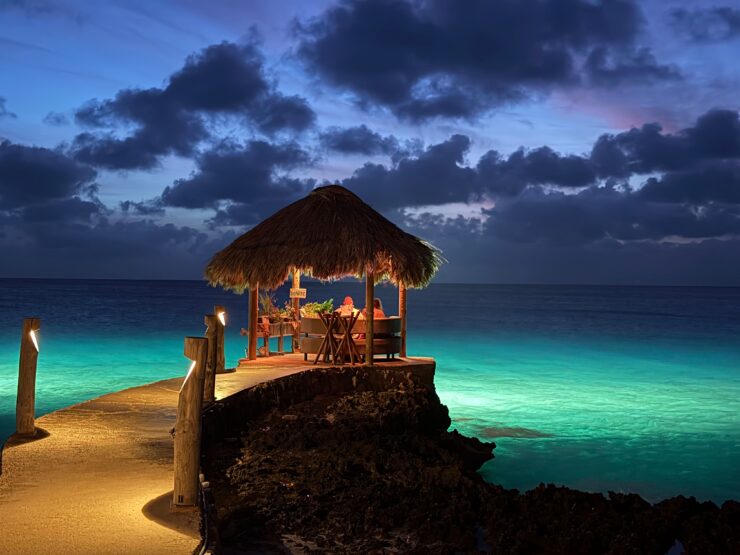
We sat outside at Brass Boer. Everyone sits outside. There is no inside. It’s a slip-and-tumble from the ocean’s surging white mustache. Luckily, it sits on a high-traction, elegant stone apron, with tables far apart and many under beautifully crafted sunbreaks.
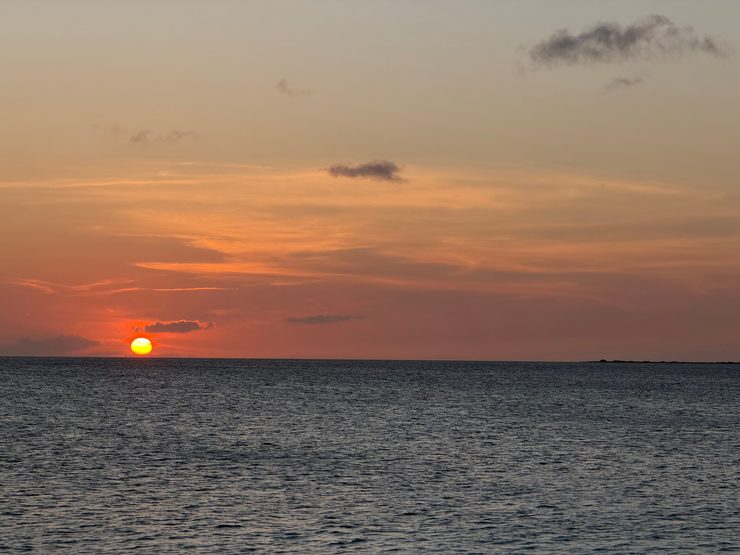
Our time there overlapped sunset. The sky changed color through a spectrum of sharp and pastel evanescent hues unclassifiable because of their delicacy. A sliver of moon and Venus became visible and slowly but discernibly sank below the horizon. It seemed we could feel the rotation of our planet.
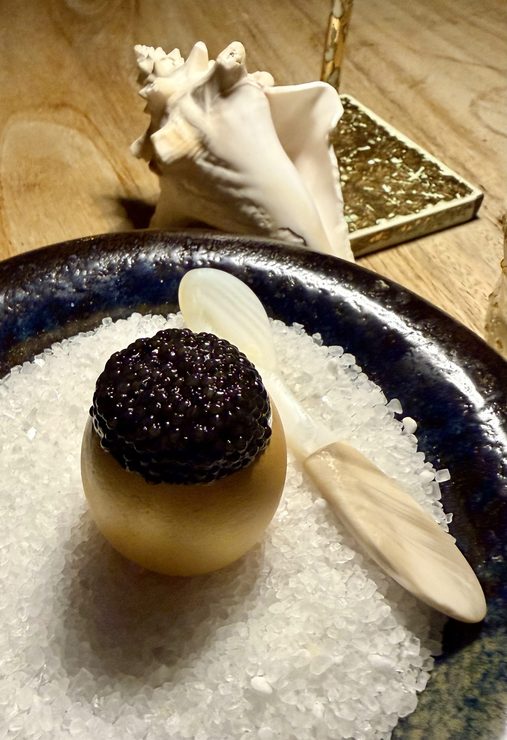
A shooting star! Pinkies touching, we felt it. Our starter only reinforced that feeling. It was a gold-gilded egg, crown removed and emptied of its contents, which were custardized and restored, along with squirts of sour cream, crunchy potato nubbins, and thick jewels of Osetra caviar. It was an edible Fabergé egg!
Another dish, possibly the one we’d choose to live on if required, was bread and butter. But the bread was warm brioche, and the butter was beurre noisette, molten brown butter, with a complex nutty flavor and heady perfume, recongealed.
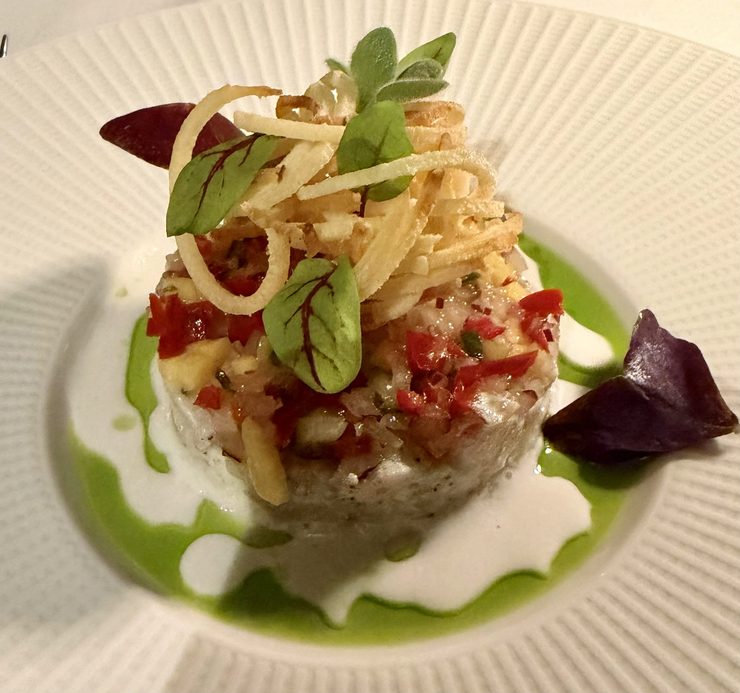
We felt this same sense of planetary rotation at Biña Restaurant & Bar, part of the Chogogo Dive & Beach Resort, where we ate whelk and conch, sea snails, much like abalone, and just as scrumptious. And also at Ingridients, part of Buddy Dive Resort, where we ate fresh-caught wahoo ceviche.
Mexapanese
Of another culinary phylum altogether, we ate tacos in Bonaire’s small commercial center at Number Ten. They were filled with hyper-fresh chunks of raw tuna, avocado, shredded cabbage, crisp onion, spicy mayo, soy sauce, sriracha, jalapeños, black sesame seeds, and sprouts.
Unctuous, spicy, herby, saucy, tart, crunchy, chewy – they were Mexapanese manna. We drank awa di lamunchi (in Papiamentu, local language), essentially fresh limeade, a local thang, like sweet tea in Mississippi.
The Island Operating Philosophy
Nourishment covered, we toured the island on two-lane roads, which is a lie. They’re called two-lane roads in the hope that illusion will foster reality. But really, by mainland standards, they’re one lane. In some places, less. This called for poko (slow) driving, possibly the font of the island’s operating philosophy, “Everything is poko poko.”
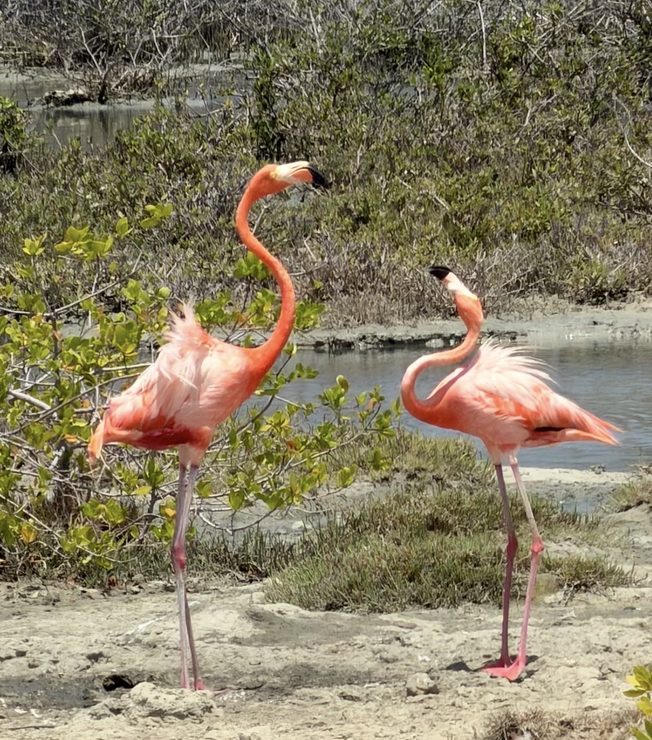
We saw flamingos and were transfixed. Improbably pink, lanky, flexible, elegant, they looked like their natural habitat should be the tops of billionaires’ wedding cakes, not the wetlands in which they naturally reside. Populations dwindling elsewhere, Bonaire protects its own.
Has anyone thought of equipping them with ice skates? They’d be corkers on the rink.
We saw small lizards kickboxing in the middle of the street. We saw portly iguanas. By the Cadushi Distillery there were so many parrots and parakeets in the trees, making such a ruckus, that it brought to mind not so much Alfred Hitchcock’s The Birds, but a movie yet to be made, The Birds, Part Two, The Reckoning.
The Cadushi Distillery makes, among its products, a green Cadushi of Bonaire Liqueur based on kadushi cactus peels. Necessity being the mother of distillation, they dry the peels, poko poko, on car dashboards in the sun.
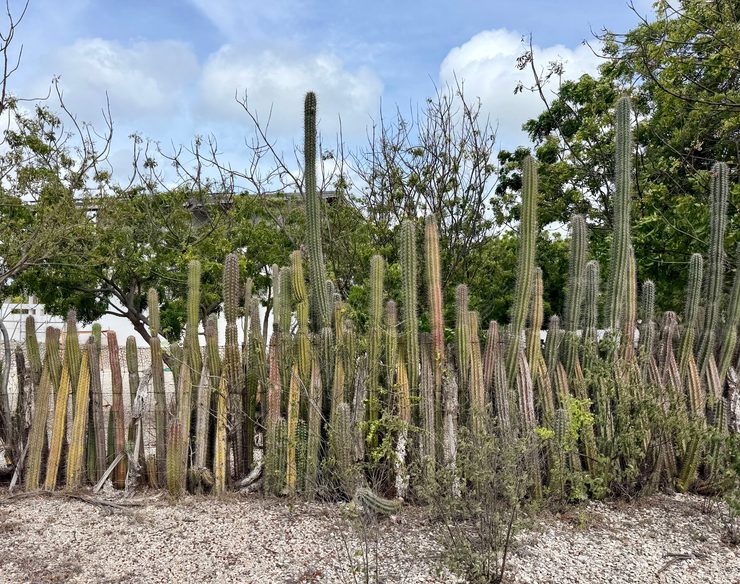
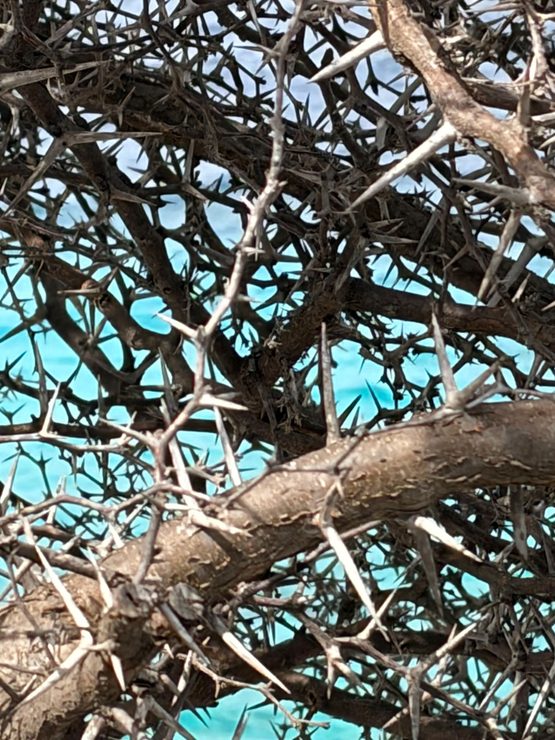
Cactus is so intrinsic to the island that they grow them, side by side, as fences. They don’t use kadushi cactus for this because it’s sweet, and wild goats will eat it. They use yatu cactus, which isn’t sweet. They take decades to grow. Obdurate, spiky plants; they abhor water. In fact, they are not the only spiky plants. Much of the underbrush is spiky, dissuasive to ravenous goats and inquisitive tourists.
Sub-Aqueous Wonders
In 1962, Don Stewart pulled into Bonaire in his sailboat for repairs. He is reputed to be the man who discovered its sub-aqueous splendor and recognized the need to protect it. Now passed, he’s canonized as Captain Don, progenitor of Bonaire’s reputation as the best diving-snorkeling spot in the Caribbean, possibly the world. Scuba being a bridge too far, we snorkeled.
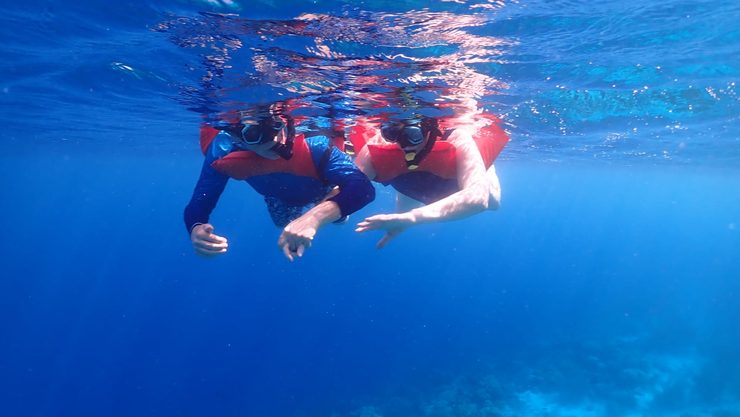
Flying fish scattered before us. Aqua Fun’s speedboat conveyed us to Klein (Little) Bonaire, a small, uninhabited turtle refuge a short distance from Bonaire. They outfitted us with excellent equipment and personally guided us into water which came in two colors: close to shore, aqua (exactly the color of Aqua Fresh mouthwash), further off and deeper, navy, aptly named. We mainly stuck to the aqua fresh, with clumps of coral below us in a boggling range of complex shapes, no land equivalent. The water was like museum glass, startlingly transparent. We saw squid, jetting forward in precise formation, which must have required extraordinary situational awareness. They bore no resemblance whatsoever to restaurant calamari.
We saw trumpetfish, well named, and smooth trunkfish which looked like finny single-serve milk cartons with goth lipstick and eyeshadow. We saw four-eyed butterflyfish, high-voltage blue, with two real eyes forward and two false eye-spots on their hind sides, confusing predators about which way they’re facing and where they’re moving.
This underwater experience is Bonaire’s raison d’être for many visitors. To be objective, though, it is just another remarkable attribute of a remarkable island.
Warm Pajamas Fresh From the Dryer
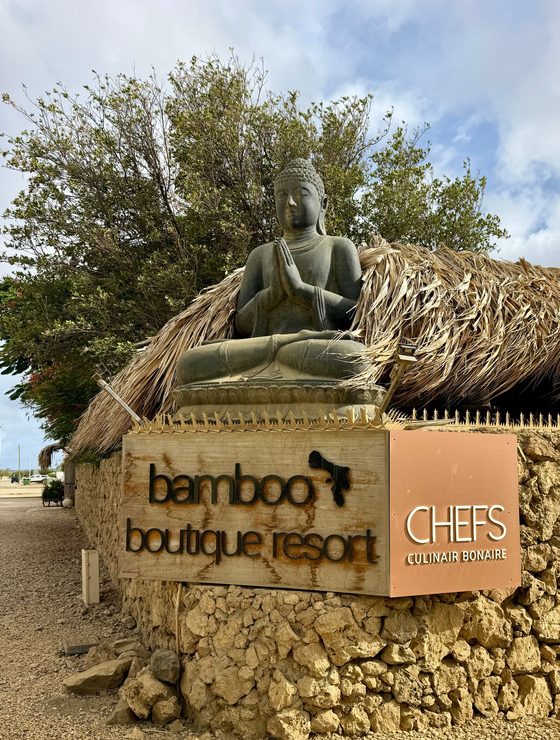
We stayed at the Bamboo Bonaire hotel, luxurious in a way we’d never encountered before. Half of our accommodation was a spare, comely cottage. The other half was outside: a water closet, glass sinks built elegantly into a battered desk (probably found foraging kadushi cacti with the wild goats), twin showers, and a honeymoon-size outdoor bed with canopy.
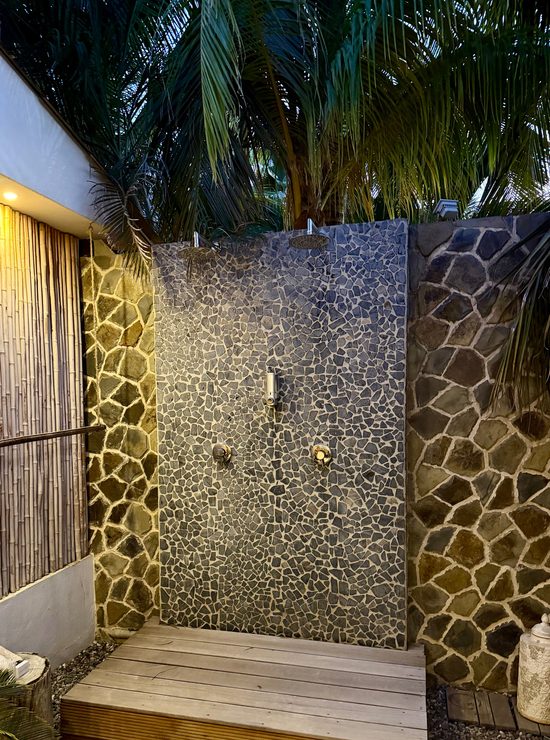
Coconut palms were aplenty, some piercing a partial awning. Decorations were Tiki-Buddhist-Moroccan, surprisingly compatible. An outdoor shower in the tropics is the water equivalent of warm flannel pajamas fresh from the dryer stateside in winter, refreshing and comforting.
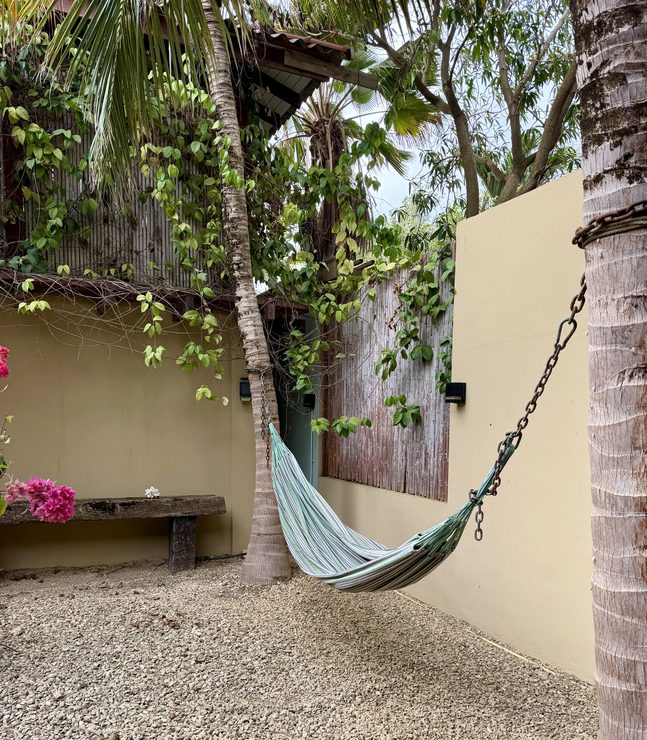
A hammock was slung between two palms beside our front door, pure White Lotus.
Salt & Memory
Slavery is an inescapable part of Bonaire’s history. The Spanish enslaved local Indians in the 1500s. After a military conquest, the Dutch brought African slaves in the 1600s. Slavery ended in 1863, two years before it did in the United States.
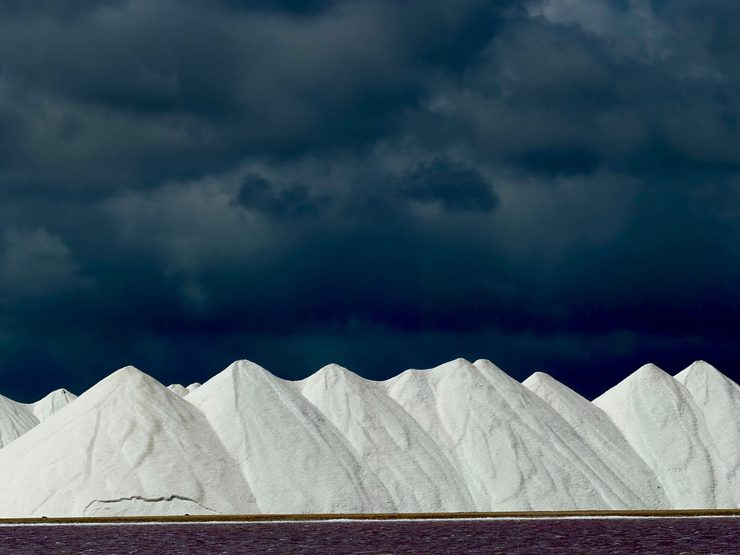
Much of the slavery was tied to the saltworks on the southeast corner of the island. It is a large section of land, divided much like a toddler’s food tray, into which ocean water is fed and moved from one indentation to another, progressively concentrating, culminating in literal mountains of blinding white salt.
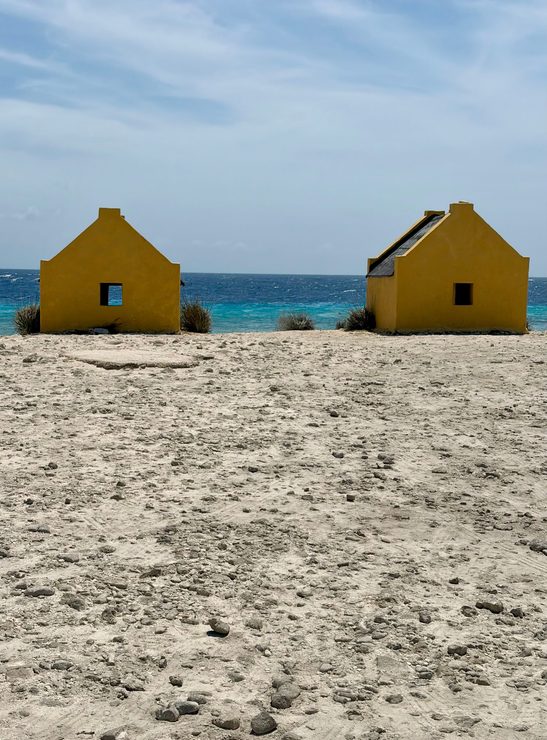
Small slave shacks, many still standing, were built from nearby coral stone. Roofless now, they remain, silent witnesses to those who lived and died here.
Tinged by the Serenity of Feral Donkeys
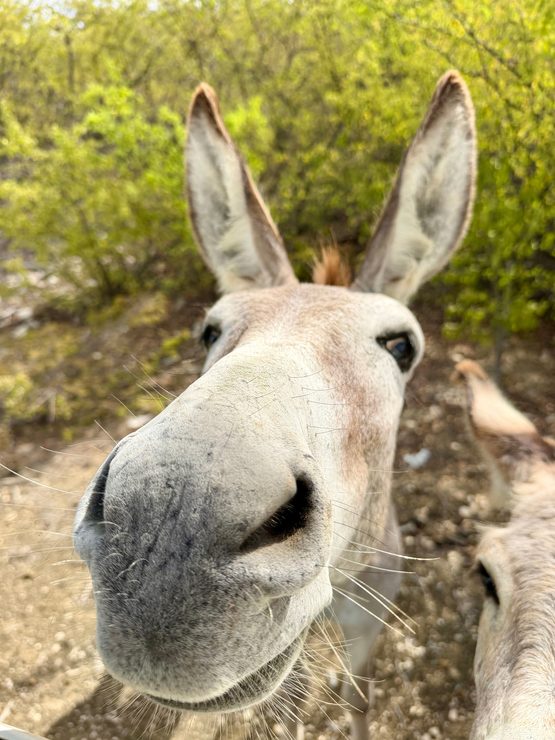
Infused with molecules of kid, caviar, and kadushi, tinged by the serenity of feral donkeys, and, most of all, a little more poko poko than when we arrived, we headed home.
You May Also Enjoy Reading
A Culinary Journey Through Slovenia: Truffles, Wine, and Michelin-Star Magic
The Corazón Cabo Resort & Spa: The Reknit
Domaine Serene Winery Chef’s Dinner: Summiting in Lake Oswego
Read more from David and Susan on their website: Ardent Gourmet
If You Go
Bonaire, in the southern Caribbean about 50 miles (80 kilometers) north of the Venezuelan coast, is a special municipality of the Netherlands and part of the ABC islands, along with Aruba and Curaçao. Learn more here: https://bonaireisland.com

