
Outside Wooler, within sight of the Cheviot Hills, Northumberland’s first single malt whiskey is doing precisely nothing.
I’m guided through a warehouse where barrels stretch in all directions, breathing the cold northern air and waiting.
Despite not being visible, the local landscape is ever present. With no artificial heating or cooling, the barrels are at the mercy of the Northumberland climate to circulate around them.
What it will eventually taste like is another matter when it is opened in 2028.
A Land Apart
That uncertainty feels appropriate in England’s northernmost and least densely populated county, where food has always been dictated by the landscape. Yet Northumberland, sandwiched between the tourism heavyweights of Scotland, the Lake District, and Yorkshire, remains comparatively little-known to international visitors, despite having spent much of its history at the center of events.
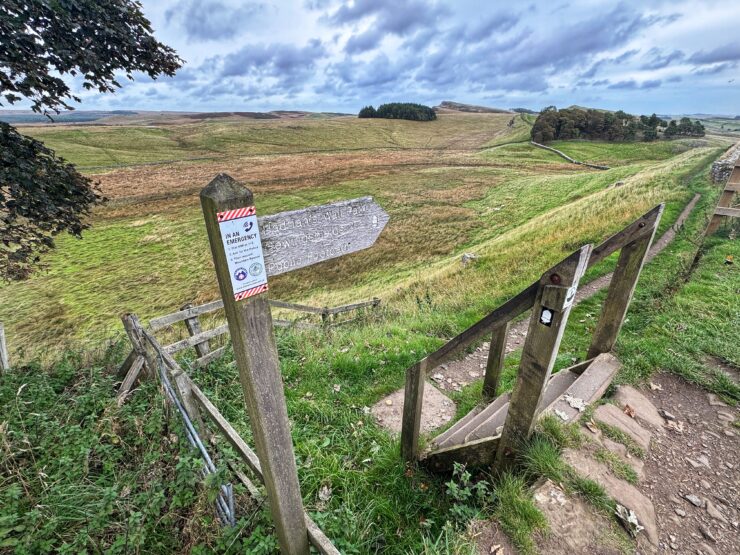
The Romans built Hadrian’s Wall across its southern reaches to mark the boundaries of one of the world’s great empires; the Anglo-Saxon kingdom of Bernicia emerged around Bamburgh before expanding into mighty Northumbria; and Christianity spread across England from the tidal island of Lindisfarne, before Viking raids reshaped the coast once again.
Of these overlapping histories, the Anglo-Saxon story is perhaps the least familiar, less prone to the romanticization of Roman or Viking eras. Wooden halls that were often packed up and moved in the footsteps of the ever-traveling nobility left fewer landmarks, but its imprint survives in less obvious places, including contributions to the modern Northumberland food tour.
This unique provenance is being celebrated through Taste of Northumberland. The county-wide initiative brings together producers, chefs, and hospitality businesses to tell the region’s story through its food and the land it comes from.
Leave Your Weapons At The Door
The connection between heritage, land, and produce becomes clearer at Ad Gefrin, a unique combination of immersive Anglo-Saxon museum and whisky distillery. Four miles away, archaeological excavations previously uncovered Gefrin, a seventh-century royal summer residence.
Northumbrian kings ruled people more than fixed territory, traveling between royal courts throughout the year. As Claire Byers, Ad Gefrin’s Head of Brand and Communications, tells me, the Anglo-Saxon court of Bernicia was home to skilled artisans and producers from a remarkably cosmopolitan mix of cultures and languages. It’s far from the Dark Ages of popular history.
“Food brought everyone together,” she explains. “Leave your weapons at the door, and you were welcomed here.”
Today, the same landscape is being harvested for rather different drinking sessions. Ad Gefrin draws Cheviot water from a borehole beneath the distillery, a common water source for more than a millennium. Malt barley is sourced from Northumbrian farms, which, although some of the best on earth, has traditionally headed north to better-known Scottish brands.
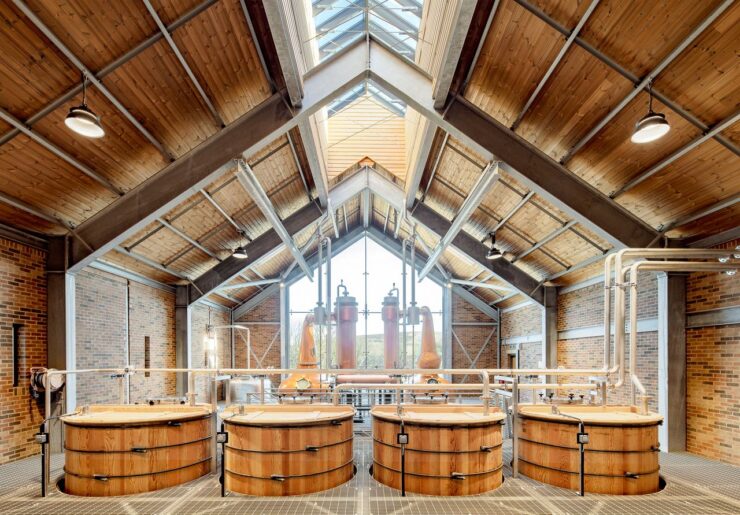
Inside the distillery, wooden washbacks and copper stills turn those ingredients into Northumberland whisky, while the built-to-scale recreated royal hall next door evokes an age when feasting and drinking helped bring together a court drawn from across northern Europe. In a nod to the cultures that previously feasted together nearby, the barrels include some of Scottish and Irish heritage.
A 700-Year Heritage
That relationship between food, land, and power continued long after Northumbria’s kings disappeared. Twenty miles south, the market town of Alnwick grew around another formidable seat of power, Alnwick Castle.
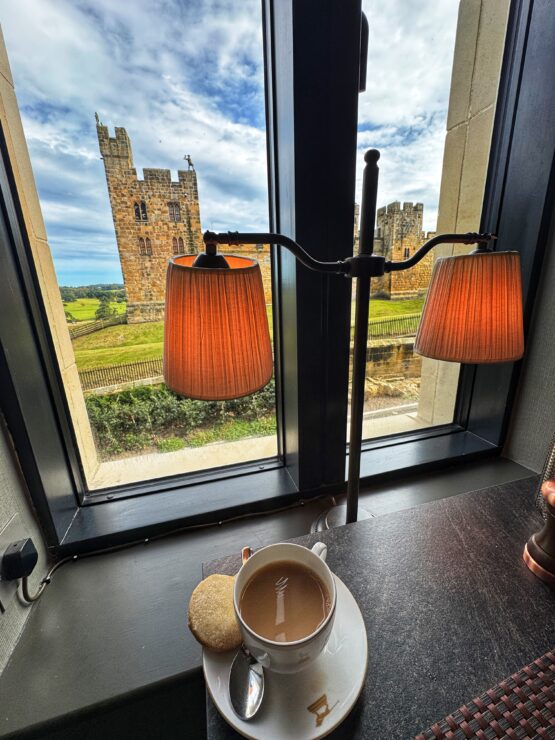
Its cobbled Marketplace became a trading hub for the surrounding countryside, with a 700-year history of traders selling local produce. What was intended to be a short market browse before lunch results in a Northumberland food tour in miniature. I leave weighed down with bags of cheese, cider, and sausages from all corners of the county. The nearby Baliffgate Hotel stands less than a well-shot arrow from both marketplace and castle. Coming into October, the menu showcases local pheasant, venison, and trout served with both seasonal venues and castle views.
Catch of The Day
At Northumberland’s 40-mile coastline, the relationship between landscape and dinner becomes even more immediate.
A beach walk from imperious Bamburgh Castle, of Vikings and Indiana Jones fame, to the nearby town of Seahouses is one of the finest strolls in England. Today, rather than selecting between the superb fish and chip options in the town, I head to the Beach House Hotel. As Head Chef Graham Johns tells me, their menu follows a simple formula – fishermen call with what they have landed that morning, and that’s that.
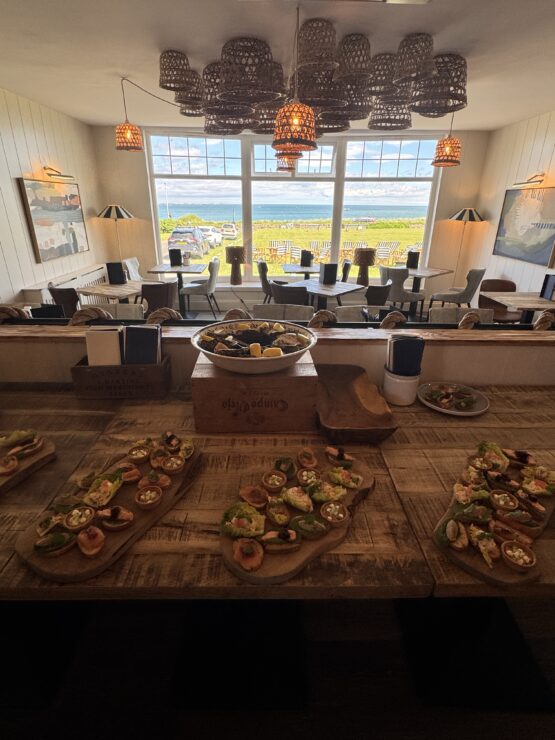
Today, crab, salmon, and locally famed Lindisfarne oysters have arrived from nearby boats and smokehouses, paired with local breads, crudites, and dips. The selection is clearly appreciated by the mix of holidaymakers and locals who have stopped for lunch.
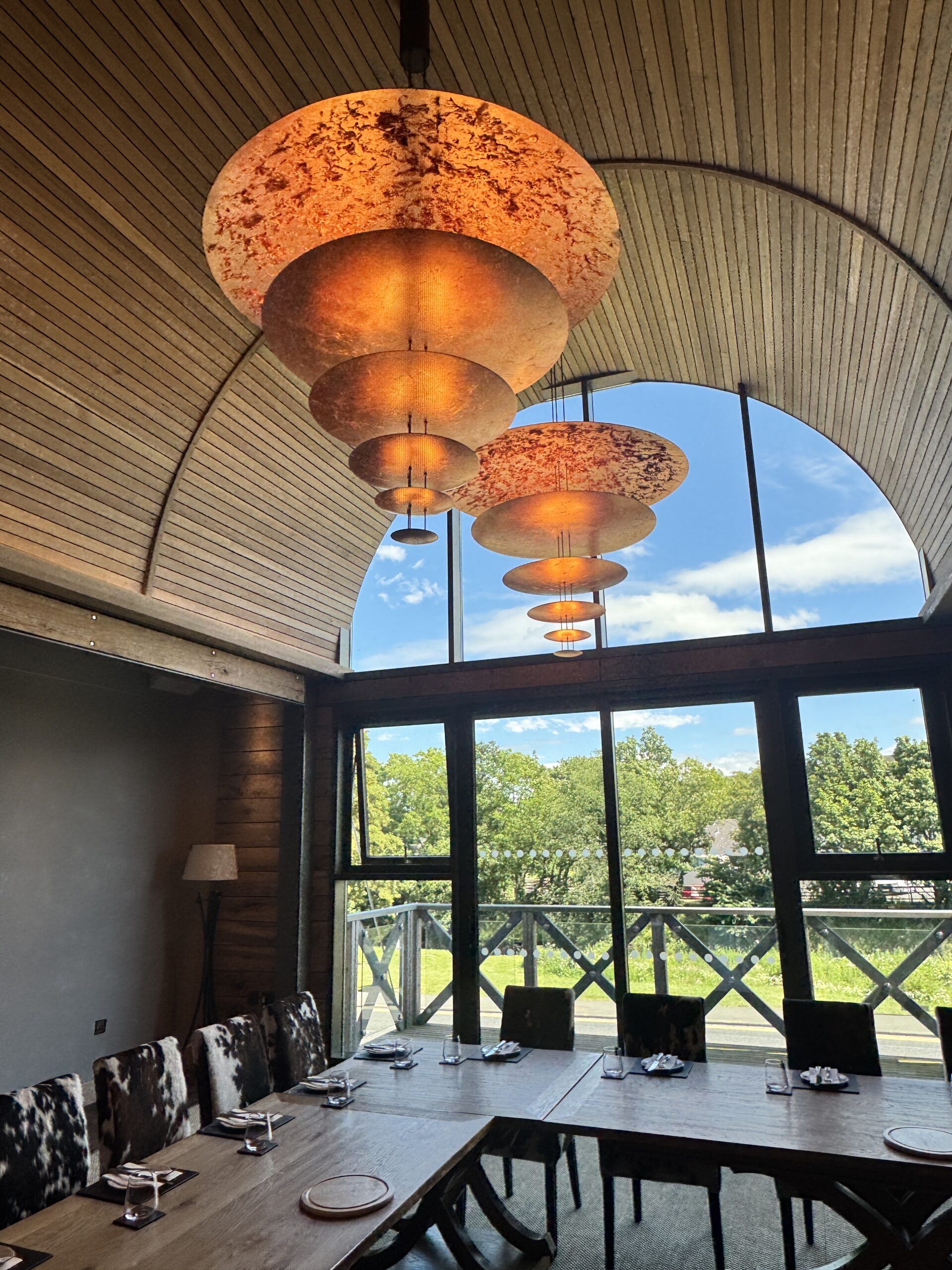
The same principle of local celebration applies at The Tempus on the Charlton Hall Estate. Here, seasonal Northumbrian produce anchors the menu within a playful Alice-in-Wonderland-themed interior. Grilled hake is paired with a playful take on patatas bravas, with a romesco and nduja garnish – a decidedly upmarket take on fish and chips.
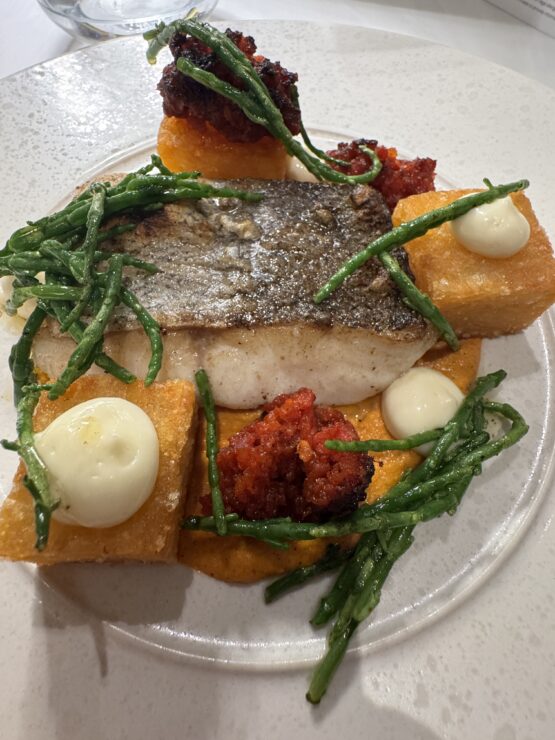
For many restaurants on the Taste of Northumberland trail, showcasing seasonal local produce is a matter of fierce pride, as the county’s food scene remains underrated outside the region. Head Chef Cheryl Radwell of The Tempus lists the local ingredients in her kitchen. It’s sizeable.
I ask if there are any exceptions to exclusively local produce. She pauses and smiles.
“Well, it’s pretty hard to grow olives in the Northeast climate.”
The Most Dangerous Place in Europe
The following day I’m driving inland again through Northumberland National Park. The landscape is quintessentially English – rolling hills, dry stone walls, the odd delay caused by an oncoming flock of sheep.
This bucolic scene belies a darker history. Throughout the Middle Ages, this was the most dangerous locations in Europe. Reivers – the medieval equivalent of mafia gangs — raided on both sides of the Anglo-Scottish border, destroying crops and stealing livestock. The era’s legacy survives in the fortified Peel Towers scattered across the countryside. They resemble miniature castles and were designed to protect animals downstairs and families sheltering above.
After sampling a traditional Northumberland stottie (salty bread bun with a dense chewy interior), filled to bursting with local roast beef and gravy at The Highlander – the name another echo of the region’s past, the food beyond any pub meal in London – I continue on to an even more prominent landmark of Northumberland’s border history.
Ale Caesar
Hadrian’s Wall has snaked across the hills since the second century. Excavated remains along the wall produce a remarkable picture of life at the far edges of the Empire. This includes records of Atrectus from modern-day Belgium, the earliest-named brewer in Britain, nearly two millennia ago.
Within sight of the wall, his legacy continues at the wonderfully named Twice Brewed Inn. Competing local legends on the origin of the name abound. My favorite arises from claims soldiers heading to the 1464 Battle of Hexham demanded the locally weak ale be brewed a second time to strengthen it.
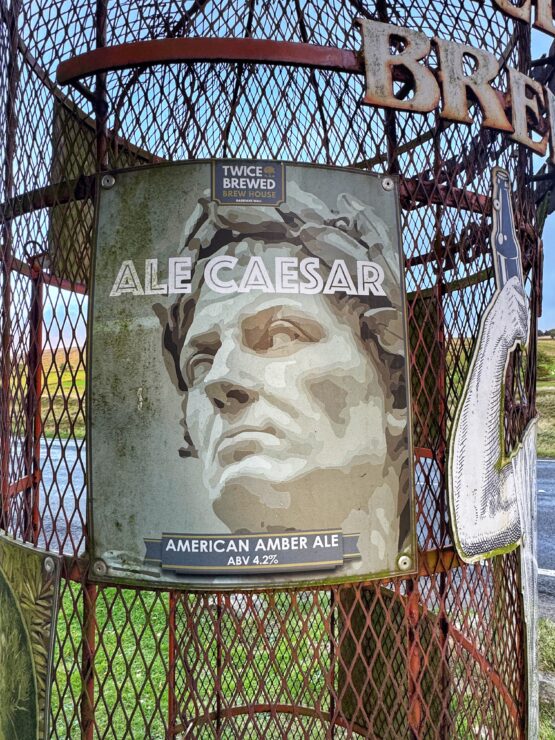
Modern visitors – hikers and history buffs – have no such complaints. Beers range from traditional bitter and pale ale to Czech-style pilsners. The water used in production comes from its own well, leveraging the same source Atrectus would have used.
Were he around today, I’m sure he’d appreciate a pint of Ale Caesar.
Like Ad Gefrin, the on-site brewery is a relatively new addition, opening in 2017 and specializing in small-batch products. Returning in 2028, single malt whiskey will join the ranks of produce originating from England’s Castle County.
And after 1,500 years, who’s counting?
If You Go
For general information on the Taste of Northumberland trails and to get inspiration for your own Northumberland food tour, see the Visit Northumberland website.
Transportation
For those traveling by train from London (two and three-quarters hours) or Edinburgh (an hour and a half), Newcastle is the gateway to the region. Lumo provides an affordable and sustainable way to travel between London and Newcastle, with fares starting from just £31.90.
Once in the region, renting a car is the best way to explore; multiple operators are available from both Newcastle and Edinburgh.
Driving from London is four to five hours up the A1 motorway; Edinburgh is about two hours away.
Helpful bus routes in the region include the X18, which serves the coast, and the 122, which runs along Hadrian’s Wall. Day tickets allowing unlimited travel start at £6.
Where To Stay
The Baliffgate, Alnwick: One of the UK’s Top 50 boutique hotels according to Condé Nast. The Baliffgate offers chic rooms and outstanding food just steps from the entrance to Alnwick Castle. The on-site restaurant, Motte & Bailey, welcomes outside visitors for lunch, dinner, or afternoon tea.
The Tempus: Gorgeous estate close to the coast. Accommodation ranges from lakeside cabins to converted farmhouses, some with a private hot tub. The on-site restaurant is one of the best in the region, with a seasonal menu and fresh seafood.
Twice Brewed Inn: Loved by Hadrian’s Wall hikers. A traditional inn offering comfortable rooms, hearty breakfasts and dinners (and packed lunches for walkers) and beers brewed on-site. Also offers stargazing tours in one of Europe’s premier dark sky zones.
Visit Northumberland hosted Phil’s visit.
You Might Also Enjoy Reading
Visit The World’s Only Pencil Museum in England’s Lake District
If You’ve Seen One Castle, You’ve Not Seen Them All
Lagers, Legends and Jeremy Clarkson
