
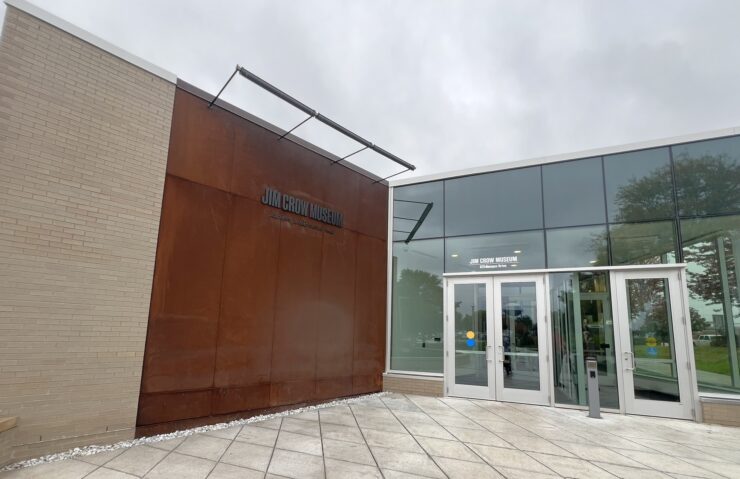
Some museums invite you to admire the past. The Jim Crow Museum in Big Rapids, Michigan, asks you to confront it. In its new home at Ferris State University, objects once used to demean Black Americans become tools for examining racism and for understanding the people who challenged it.
This isn’t a museum visit to squeeze in between other stops. It’s one to take time to read, reflect, and sit with questions that don’t end when you leave.
The Jim Crow Museum’s new building is more than a larger home for its collection: its architecture helps tell the story. The $22 million, 26,000-square-foot standalone facility near the entrance to Ferris State University’s Big Rapids campus features a steel veil, river-inspired patterns, symbolic colors, and a mosaic reflection space.
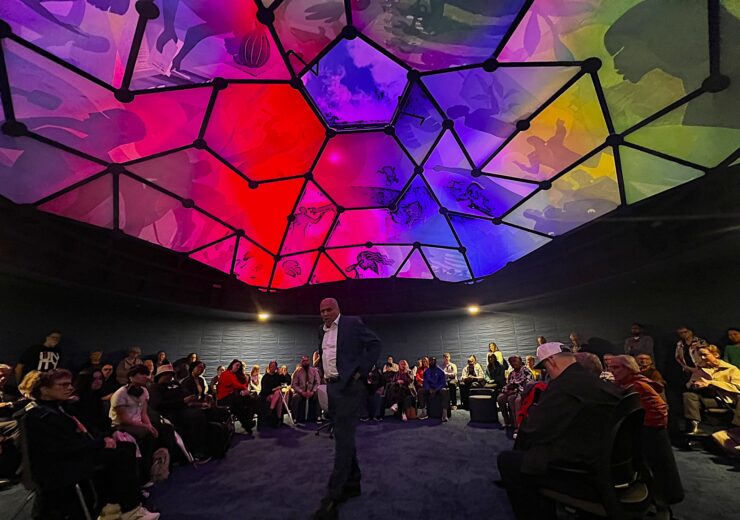
The facility also gives the museum more room for exhibitions, research, and group learning. Its 7,500-square-foot gallery anchors the experience, while quieter spaces complement it. In the Reflection Room, a mosaic dome inspired by artist Aaron Douglas offers a visual expression of beauty and unity forged in the face of adversity.
The Museum’s Architecture
The museum’s storytelling begins before visitors even encounter an artifact. A steel veil wraps the new building, drawing on W. E. B. Du Bois’s description of the barrier between Black Americans and white America. Here, architecture becomes part of the interpretation: the veil represents exclusion and the distortion of seeing people through a racist lens rather than their full humanity.
River-inspired details carry that symbolism indoors. Tile flows across the lobby floor, and a sidewalk curves beside the building. These elements connect to African heritage and to the challenges generations of Black Americans have overcome.
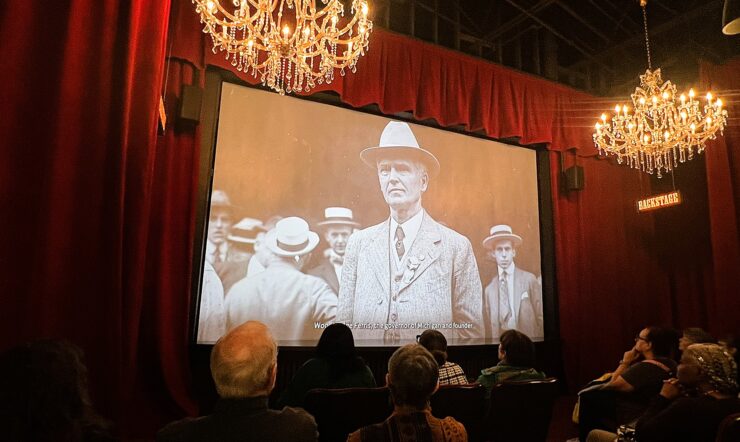
Inside the museum, historical objects are only part of the story. Photographs, projected media, and interpretive displays help visitors examine how racist representations were created and how they obscured the humanity of the people they targeted. In “Jump Jim Crow,” an animated, music-driven projection introduces different versions of the caricature behind the museum’s name.
One particularly revealing display changes depending on where visitors stand. Large photographs of real African Americans are visible from outside and inside the building, while accompanying racist caricatures can be seen only from within. The pairing exposes the distance between actual people and the degrading images used to portray them. Nearby, the “Rise Above” banners provide a counterpoint through photographs of African Americans working, raising families, and participating in their communities.
Throughout the gallery, red marks the history of Jim Crow oppression, while citron yellow identifies resistance. Together, the exhibits ask visitors to confront the artifacts without mistaking them for the people they claim to represent. The emphasis isn’t simply on seeing racist imagery, but on understanding its function and recognizing the lives and actions that challenged it.
The Museum’s Purpose
The museum’s purpose isn’t to preserve these objects as curiosities. It’s to help visitors understand how racist imagery reinforced prejudice and how everyday items carried messages with consequences far beyond their use. Displayed with historical context, the collection becomes a starting point for examining the relationship among images, attitudes, and discrimination. Alongside its exhibition gallery, the facility includes spaces for research, teaching, and conversation.
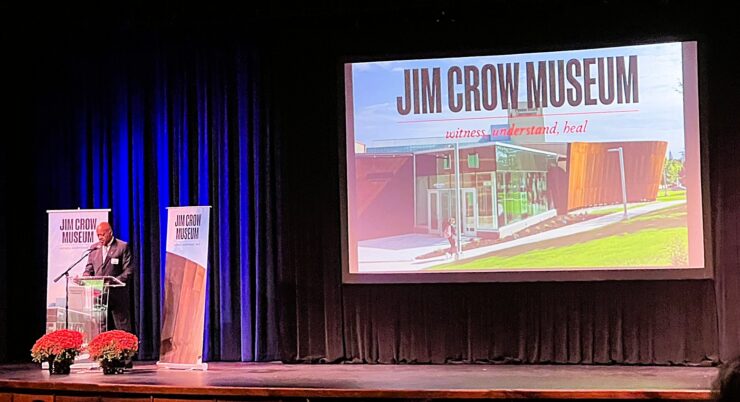
“Witness, Understand, Heal” provides the framework for the new Jim Crow Museum. Visitors are asked to confront the evidence of racism, examine the history behind the objects, and consider how that understanding can contribute to change. Throughout the experience, stories of African American achievement, activism, and everyday perseverance stand alongside the history of oppression. Healing isn’t presented as forgetting that history, but as part of the ongoing work of learning from it.
Why the Museum Matters
The Jim Crow Museum began with a question that still shapes its work: What can objects created to spread prejudice teach us about confronting racism? Founder Dr. David Pilgrim, a sociologist and former Ferris State professor, built the collection on the belief that these materials could serve as teaching tools. He describes the museum as a “teaching laboratory,” where historical context and candid conversation help visitors examine racism rather than observe its artifacts.
That distinction matters. An object displayed without explanation can repeat the message it was created to spread. Here, interpretive panels place racist imagery within its historical background, explaining how it reflected and reinforced attitudes toward Black Americans. The purpose isn’t simply to prove that these objects existed, but to examine their origins, popularity, and consequences.
Much of the collection’s importance lies in how ordinary its objects were. Racist messages appeared in items people encountered in daily life, including dolls and advertisements. Their familiarity is part of the lesson: prejudice was not confined to laws or public speeches. It also circulated through popular culture and everyday surroundings.
But oppression is only part of the history the new museum tells. Pilgrim has emphasized that the expanded facility also explores how African Americans resisted racism through activism, achievement, and lives lived with dignity. That broader perspective gives visitors more than a record of harm. It also recognizes the people who challenged the messages these objects carried.
The Exhibit Areas
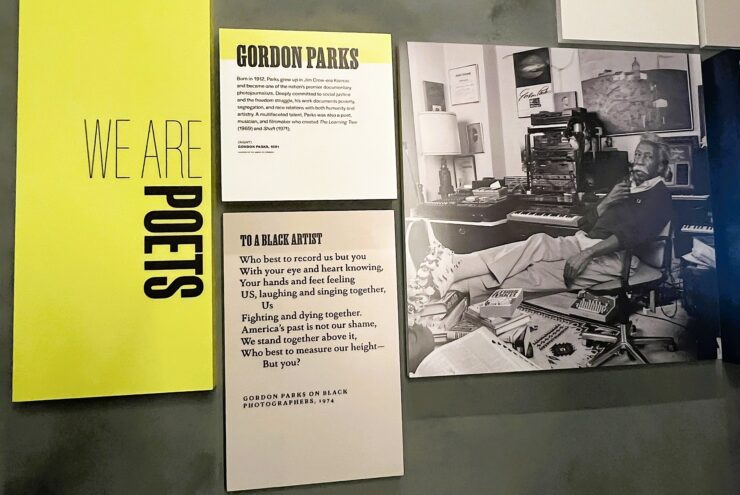
The museum organizes its story into six core exhibit areas. Visitors begin with “Who and What Is Jim Crow,” then examine violence and anti-Black imagery. The focus then shifts to resistance, both against racist representations and segregation itself, before concluding with “Beyond Jim Crow.” Together, these sections place the objects within a larger narrative of discrimination, opposition, and ongoing reflection.
One of the new displays, “Understanding Objects,” encourages visitors to slow down and look closely. During preparations for the opening, staff selected more than 200 objects for a conveyor-belt-style display with custom mounts. The experience was designed to prompt questions about the messages objects carry and the meanings that may not be apparent at first glance.
Interactive artifact-explorer screens offer another way to explore the collection. They provide additional information about objects, allowing visitors to move beyond a brief label and delve into the context behind what they see.
Elsewhere, displays called Representation Towers bring visitors face-to-face with racist depictions. In Ferris State’s opening report, retired educator Natasha Dotson reflected on how these images helped justify mistreatment and oppression. Her observation points to an important distinction: the museum isn’t simply documenting offensive imagery. It’s examining what that imagery did in the world.
Resistance and Resilience
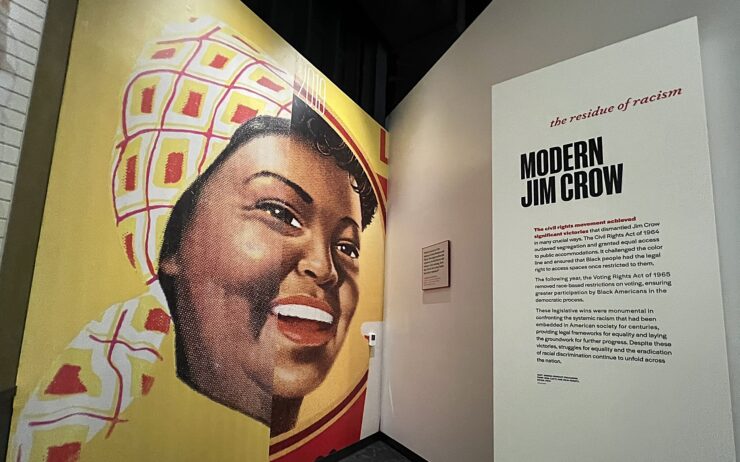
The expanded museum also makes room for those who resisted. Photographs highlight individuals who resisted racism and oppression, reinforcing a broader emphasis on resilience, resistance, and the struggle for justice. These stories shift attention from how Black Americans were depicted to how people acted, organized, and challenged the conditions around them.
That balance matters to the visitor experience. The exhibits ask visitors to confront dehumanizing representations without letting them tell the whole story. Resistance appears alongside oppression, making clear that the people targeted by racist imagery were never defined solely by it.
A Place for Personal Stories
The new facility also includes a storytelling studio where visitors can record and share their experiences for future educational use. It extends the museum’s work beyond its historical collection, creating a place for personal accounts to contribute to learning and conversation.
Together, these elements offer several ways into the subject: examining an object, reading its context, encountering a story of resistance, or contributing to a personal experience. The collection remains central, but the new exhibits place greater emphasis on the questions and conversations those objects can spark.
The Jim Crow Legacy
The Jim Crow Museum isn’t an easy stop on a Michigan itinerary, and it doesn’t need to be. Its value lies in asking visitors to look closely: at the objects, the messages they carried, and the lives those messages misrepresented.
In Big Rapids, the museum’s home makes room for that examination. Visitors may not leave with a single answer, but with a question worth keeping: How does understanding this history change the way we see the world today?
If You Go
The Jim Crow Museum is located at 825 Campus Drive on the Ferris State University campus in Big Rapids, Michigan. Plan your visit for Tuesday through Friday, when the museum opens from 9 a.m. to 5 p.m., or Saturday, from 11 a.m. to 5 p.m. It’s closed Sunday and Monday, and the last admission is one hour before closing. Hours may change with the university schedule, so check before traveling.
Admission is $10 for adults and $5 for children ages 6–17; children 5 and younger enter free. The museum is designed for self-guided visits, and staff is available to answer questions. Campus visitors need a guest parking permit or must use a metered space. For assistance, call (231) 591-5873.
Explore Big Rapids
Leave time afterward to explore Big Rapids at a slower pace. A good time to reflect is to take a walk on the paved Big Rapids Riverwalk, which follows the Muskegon River and connects downtown with Hemlock Park, Northend Riverside Park, and Swede Hill Park. Walk a stretch of the pathway and pause beside the water. Back downtown, browse local shops and art galleries, then head to Schuberg’s Bar & Grill at 109 N. Michigan Avenue
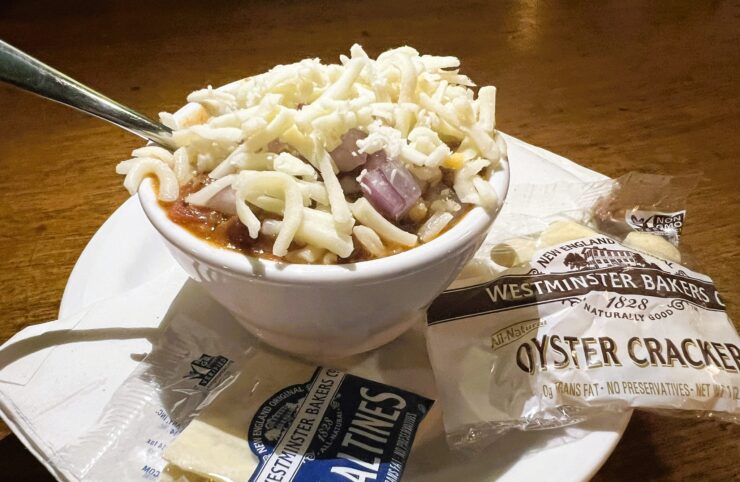

This longtime downtown gathering place specializes in burgers, including the Original “Schu-Burger,” a hand-pressed, char-grilled patty served on a Kaiser roll. Its “everything” topping includes ketchup, mustard, green olives, onion, and pickles. This is a Michigander’s combination worth noting if you’re not used to olives on a burger. Other options include a mushroom-Swiss burger, a Reuben, and beer-battered cod. The house-made chili uses a recipe the restaurant says has remained unchanged for more than 80 years. Schuberg’s doesn’t accept reservations.
For an overnight stay, Hampton Inn Big Rapids, at 15320 Waldron Way, offers complimentary hot breakfast, Wi-Fi, an indoor pool, and a fitness center. The hotel is about 10 minutes from Hemlock Park’s Riverwalk, making it a practical base for combining the museum with downtown browsing and time outdoors. An overnight visit also lets you focus on the museum without squeezing the experience between two long drives.
You May Also Enjoy Reading
The Nun Doll Museum at Michigan’s Cross in the Woods
A Museum where Marshals are Stars
ESSE Purse Museum in Little Rock: The Stories Women Have Carried
