

Matilda Dodge Wilson’s journey from tragedy to triumph, and the estate that became her enduring act of generosity
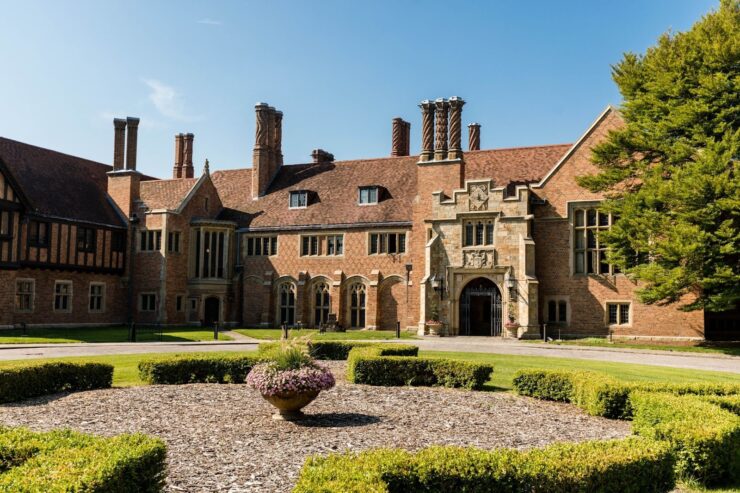
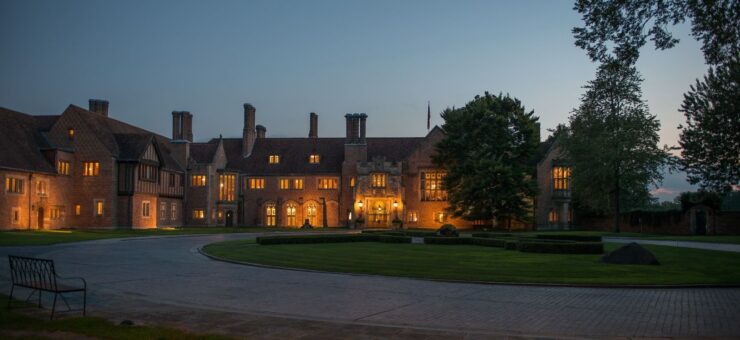
Meadow Brook Hall is a grand home, rising from acres of lush fields outside Rochester, Michigan. This architectural wonder, with its carved wood, hidden staircases, carved plaster ceilings, crystal chandeliers, and thousands of artifacts, stands as a reminder of the strength and will of a remarkable woman – Matilda Dodge Wilson.
Matilda Dodge Wilson drove the creation of the magnificent Meadow Brook. Built between 1926 and 1929 for the tidy sum of $4 million, today it is more than a historical home. It ranks as the fourth-largest estate in America. And the mansion was her answer to grief. She had known young love, industrial success, and sudden death. She chose not to retreat. Instead, she chose to build a sanctuary, cementing her legacy and philanthropy.
The Beginning
Matilda Rauch was a well-educated stenographer, hired by John Dodge to help his budding automotive business run more smoothly. She would become so much more.
John and his brother Horace were drawn to the Motor City of Detroit, a world of steam engines and metalwork. Their talent led them into partnerships with some early automotive titans. First came Ransom Olds, then Henry Ford. Within a few years, the Dodge brothers were building 60 percent of Ford automobiles while also producing their own vehicles.
A Love Story and Its Tragic End
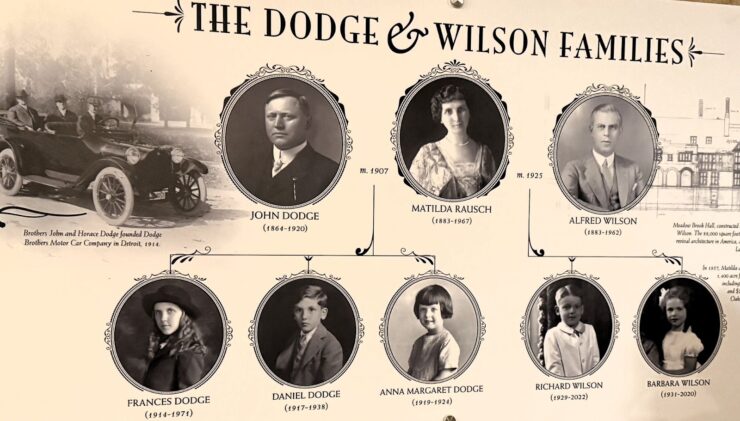
Matilda and John fell in love at a time when a woman could not work for men they were involved with, so she had to choose. Matilda chose love, marrying John in 1907 and becoming stepmother to his three children. The Dodge family split their time between Detroit and a country farmhouse on 320 acres.
What began as a working farm grew over time to include more than 2,000 acres and several residences. Matilda’s shrewd management turned Meadow Brook Farms into a profitable operation with a reputation for quality produce and livestock. This land eventually became part of her inheritance.
Sadly, Spanish flu took John’s life in 1920, along with his brother’s, a few months later. Matilda was 47, widowed, raising children, and suddenly in control of one of the largest fortunes in America.
A New Beginning
Over time, Matilda found solace in her church. There, she developed a friendship with Alfred Wilson, a gentle and charming lumber broker and deacon within the church.
His steadiness and resolve melded with hers. Alfred helped Matilda through her grief and built a relationship not only with her but also with her children. They were married in 1925 and later adopted two more children.
Once married, they began sketching out their dream home. The couple built this home on Matilda’s inherited land – Meadow Brook Farms. Construction began in 1926. Although John Dodge never lived at Meadow Brook Hall, the incredible wealth he and Matilda amassed during their marriage enabled its construction.
The Building of Meadow Brook Hall
England’s grand estates inspired the masterpiece of Meadow Brook Hall. However, it was created almost entirely using American craftsmanship and materials. Architect William E. Kapp designed the house, and landscape artist Arthur E. Davidson developed the extensive grounds and gardens.
Matilda oversaw every aspect of the home – from choosing switch plate covers to designing the Grand Staircase. The vision took three years to complete.
Meadow Brook was a home intended to welcome, impress, and support the causes Matilda believed in. They included causes such as salvation missions, boys’ clubs, and housing for unwed mothers. Matilda designed Meadow Brook to host lavish parties and fundraisers while still being a comfortable family home. It became a place where charity, family, and celebrations joined together. As Matilda once said, “This home was built not just to live in, but to welcome and to give.”
The Sheer Elegance of Meadow Brook
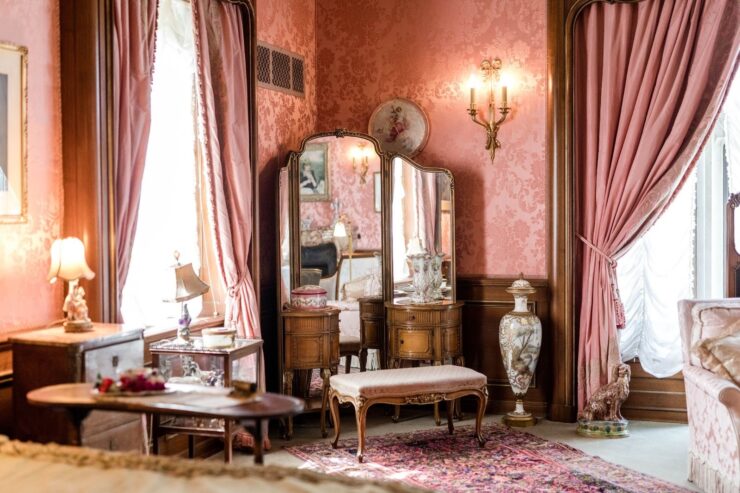
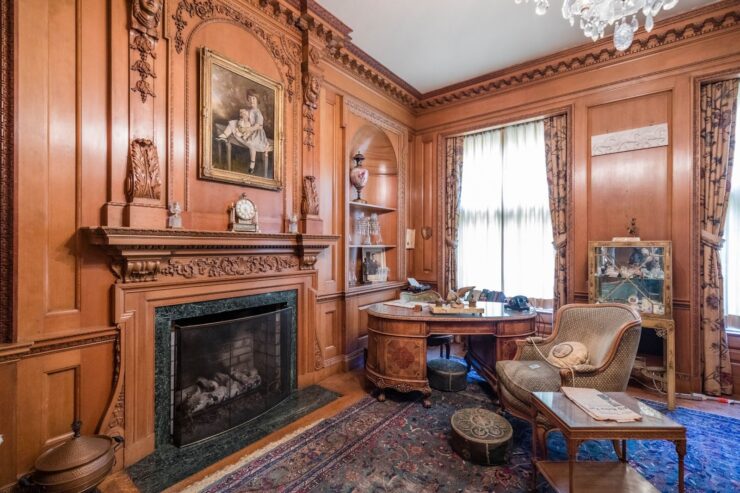
During my recent visit to Meadow Brook, I walked through the mansion’s decadent rooms and the sprawling gardens and landscapes. The beauty, elegance, and craftsmanship all around me were amazing. Each room felt like the most exquisite, until I stepped into the next.
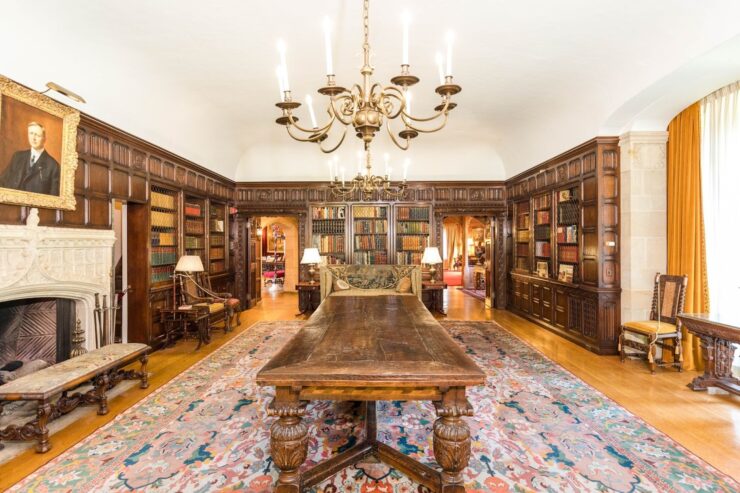
In basic numbers, the house is 88,000 square feet, with 110 rooms, 23 bedrooms, 25 bathrooms, 24 fireplaces, and 68 closets, spread across four levels. It houses 75,000 historic artifacts. In 2012, the U.S. Department of the Interior designated Meadow Brook a National Historic Landmark.
It was also home to the Dodge-Wilson family, one where life unfolded. Frank Sinatra sang at Frances Dodge’s 21st birthday; an organ with 4,600 pipes sang throughout the home; weddings and tragedies, love and loss, were all a part of the lives lived within Meadow Brook.
The Emergence of Oakland University
With age came clarity for Matilda and Alfred. In 1952, after the children grew up, they realized their house was too large. At the top of the hill, overlooking their beautiful Meadow Brook, the Wilsons built a simpler home – Sunset Terrace. In a grand gesture, they deeded the mansion and 1,400 surrounding acres to Michigan State University, along with $2 million to build a new campus. That campus became Oakland University.
The university began as Michigan State University-Oakland and later became Oakland University, with the first graduating class in 1963. The university grew rapidly and, in 1970, became an independent institution. Matilda loved the university, its students, and the activities it brought to Meadow Brook. The time spent hosting students and university events became some of the happiest years of her life.
In her own words, “Education has always been an important issue for me. What I did not suspect was the depth of affection I would come to have for the students of this new university.”
Meadow Brook Today
On September 25, 1971, Meadow Brook Hall officially opened as a historic house museum. Visitation in the first year exceeded 50,000 people – far more than originally anticipated. In the years that followed, Meadow Brook’s growth was extraordinary.
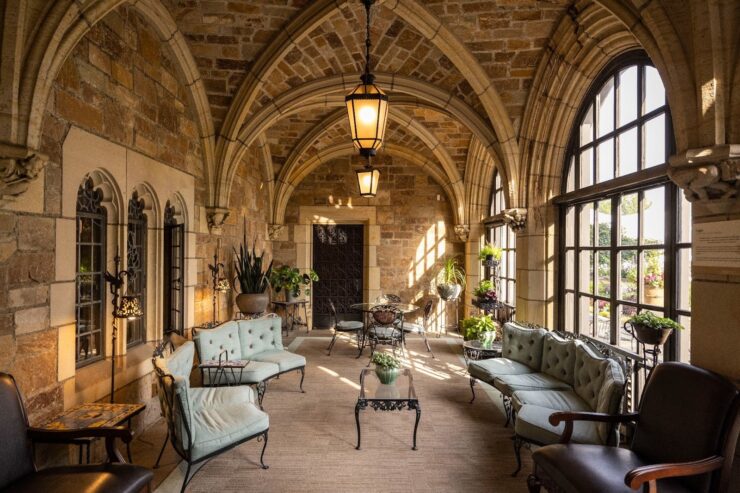
Today, the mansion is a museum, its details lovingly preserved: the elevator’s walnut panels, the secret staircases, the Tiffany lamp hidden in the attic for decades, and the plaster ceilings by a 25-year-old Corrado Parducci. From firsthand experience, I can attest that it is truly one of the largest and most majestic historic homes I have visited. The beautiful estate and gardens have also made it Michigan’s most beautiful full-service wedding venue, hosting numerous weddings and special events throughout the year.
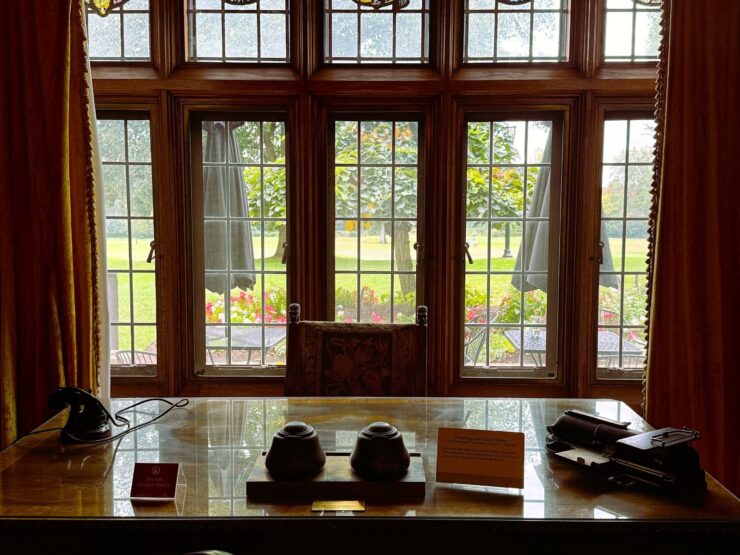
Meadow Brook remains a place where you feel history. With every breath, you sense the love, devotion, hardship, and grit it took to build this legacy. It stands not merely as a monument to wealth but as a testament to the woman who carried that wealth with dignity and purpose. Matilda Dodge Wilson built this house from fortune, grief, imagination, and her unfaltering belief in generosity. Her guiding principle was always “To whom much has been given, much is expected.”
Through the university that grew from her land, she still tells her story – one student, one life, one possibility at a time.
You may also enjoy reading
A Step Back in Time: Pittock Mansion in Portland Oregon
Cranbrook: A Place Made by Hand
