

History drifts through crafted spaces at Cranbrook, where home, legacy, design, and learning merge into a living story.
When I decided to visit Cranbrook, my main interest was the estate’s history. Wandering through historical homes has always captivated my imagination. Here, I discovered so much more.
History and Vision
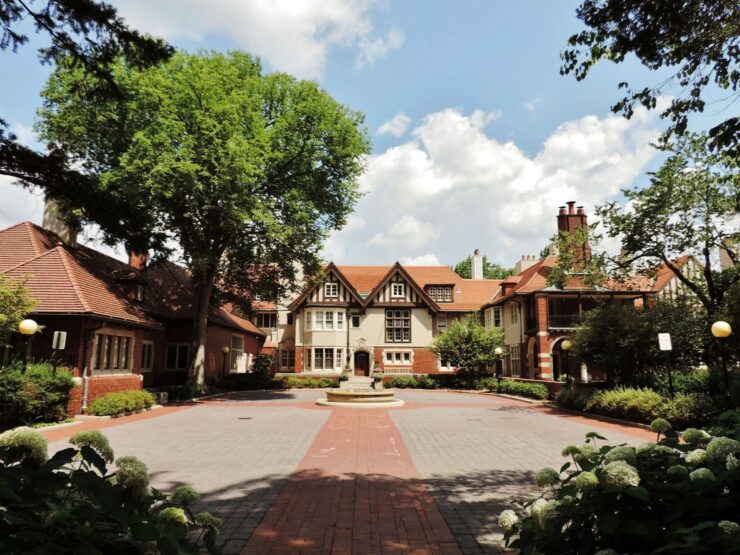
Cranbrook was an aspirational dream of newspaper baron George Booth and his wife, Ellen Scripps Booth – a dream to create a world where art, landscape, and learning blended into a single creation. Construction of the Arts and Crafts-style home, with an emphasis on craftsmanship, began in 1907. They completed the home in 1908.
Walking through the home and grounds, I felt as if I were stepping into a carefully orchestrated vision. The gardens unfold in layers, the buildings meld together, and the paths seem to guide not just movement but thought. It is a place built to shape how people see, feel, live, and learn. Cranbrook has evolved from a summer home into a world-renowned center for education, art, and science, just as the Booths wanted.
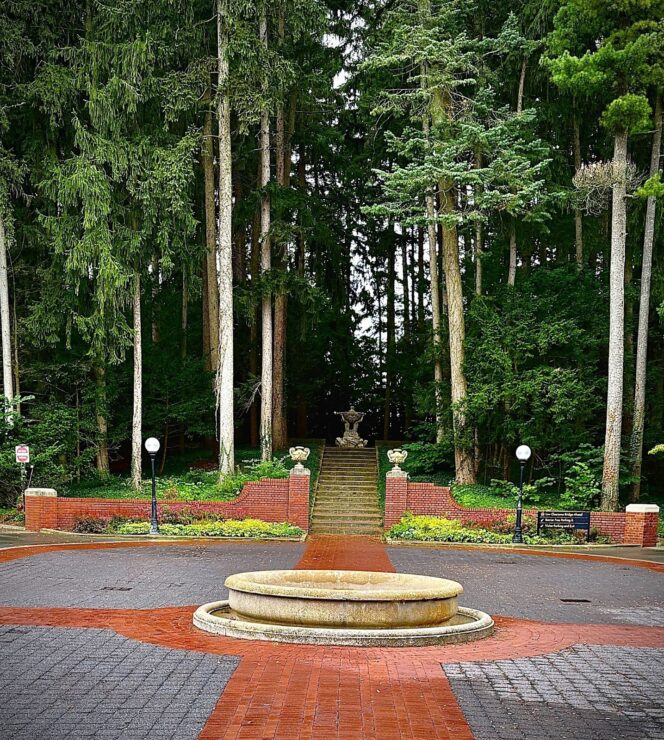
In 1904, George and Ellen purchased 319 acres of farmland outside Detroit to build their summer home, naming it after the Booths’ ancestral home in Kent, England. The couple was deeply involved and influenced by the Arts and Crafts movement – a time when artists and designers placed great focus on handmade items such as woodwork, tiles, furnishings, and lighting.
Through their philanthropy and belief that merging the arts, nature, and education would lead to a more refined way of life, Cranbrook, over the years, became more of a community, housing schools, stunning gardens, and studios for resident artists. In the words of my tour guide, “The Booths imagined a world where art was not simply decoration, but atmosphere as well.” They believed beauty should not only be studied but lived.
©James Haefner, Courtesy Cranbrook Center for Collections and Research
Architecture and Design – Albert Kahn
The architecture and design of the Cranbrook House and Gardens and the educational buildings and campus are significantly different. This is because two well-known designers made Booth’s dream a reality.
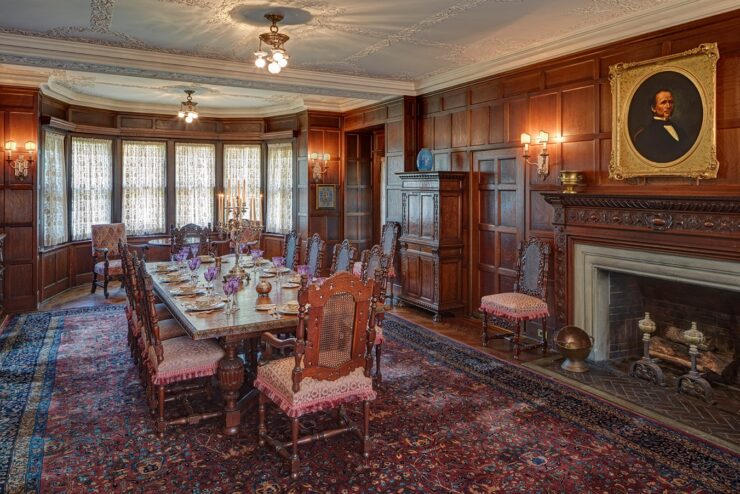
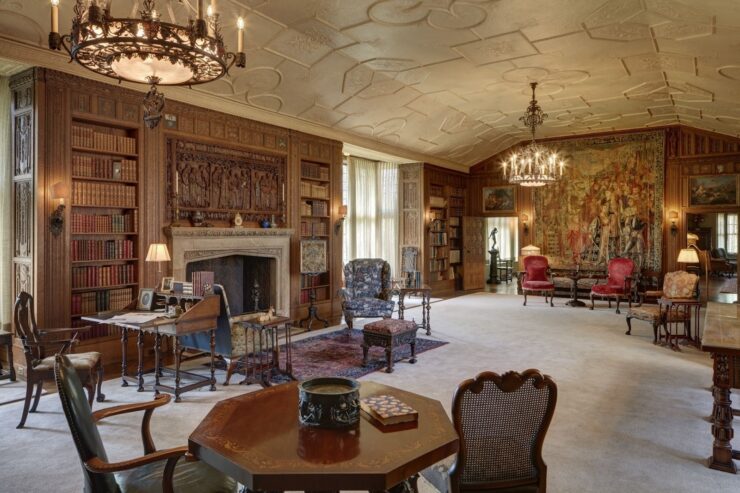
In 1907, Albert Kahn designed the home. Kahn was renowned for his designs for many industrial buildings in the Detroit area. Departing from that for Cranbrook, he approached this design through the lens of Arts and Crafts. He made the home traditional and intimate, using handcrafted furniture and fixtures and an abundance of windows and skylights to let natural light fill the home.
©James Haefner, Courtesy Cranbrook Center for Collections and Research
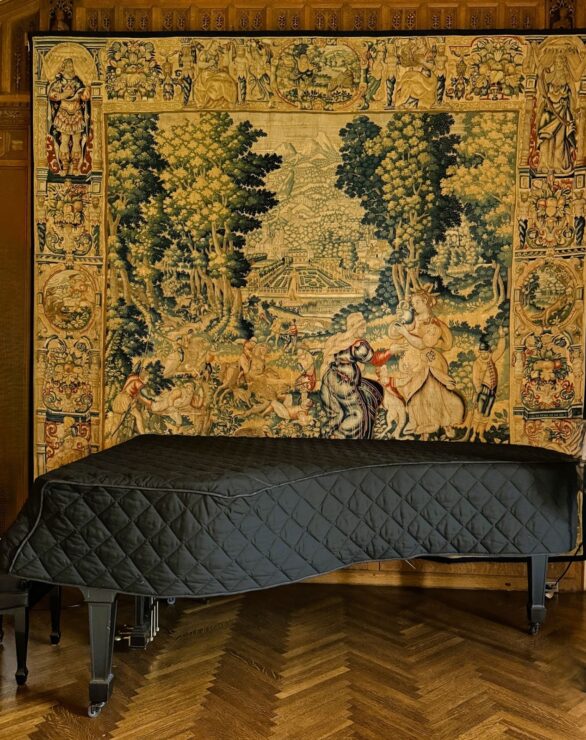
Within the house, I saw some amazing furnishings. Leonard Bernstein once played the Steinway piano. There are Pewabic Pottery tiles – handcrafted by a ceramics studio founded in 1903 in Detroit. The studio fired these tiles using shimmering glazes in blues, greens, or metallic tones. The pottery studio was a key part of the Arts and Crafts movement in the Midwest.
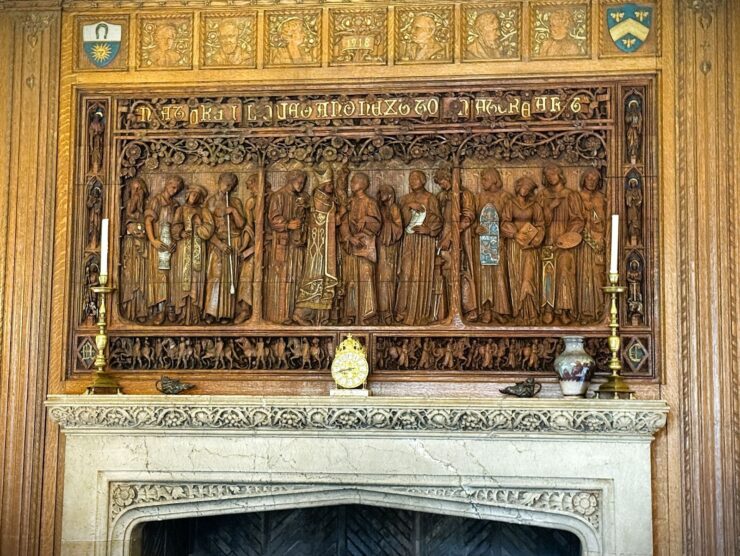
I saw some incredible decorative woodwork throughout the home. One that stood out was the frieze, a decorative horizontal band above a fireplace mantel, that Johann (John) Kirchmayer carved from wood. It portrays the types of craftspeople who worked on Cranbrook House, including a glassblower, a silversmith, and a sculptor.
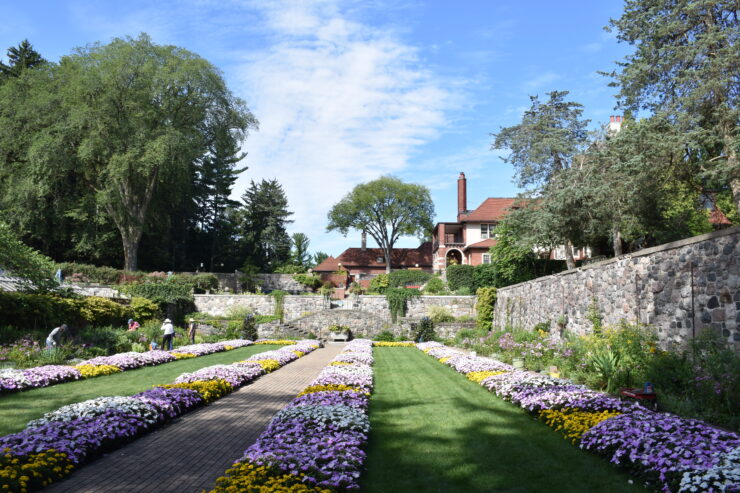
To align with Booth’s vision of harmony between nature and home, Kahn designed spectacular gardens and terraces that flow smoothly with the natural landscape. There is an abundance of trees and walkways, sculptures and fountains, wildflowers, formal gardens, and a greenhouse. It is amazing to wander through this landscape where you can feel “home” with every step.
The Birth of an Educational Community
As the Booths’ wealth and land holdings increased, so did their philanthropic activities.
George and Ellen developed the idea for the Cranbrook School for Boys, followed by the Cranbrook Academy of Art, the Cranbrook Institute of Science, the Kingswood School for Girls, and Christ Church Cranbrook. What started as a family home became a complex that the Booths built for an entire community, focusing on arts and education.
You May Also Enjoy Reading
Pittock Mansion in Portland Oregon
If You’ve Seen One Castle, You Haven’t Seen Them All – Food, Wine & Travel
Architecture and Design – Eliel Saarinen
The Booths invited Eliel Saarinen to Cranbrook in the early 1920s to design and build the educational campus. Saarinen’s modern design philosophy was distinct from Kahn’s for the house and gardens.
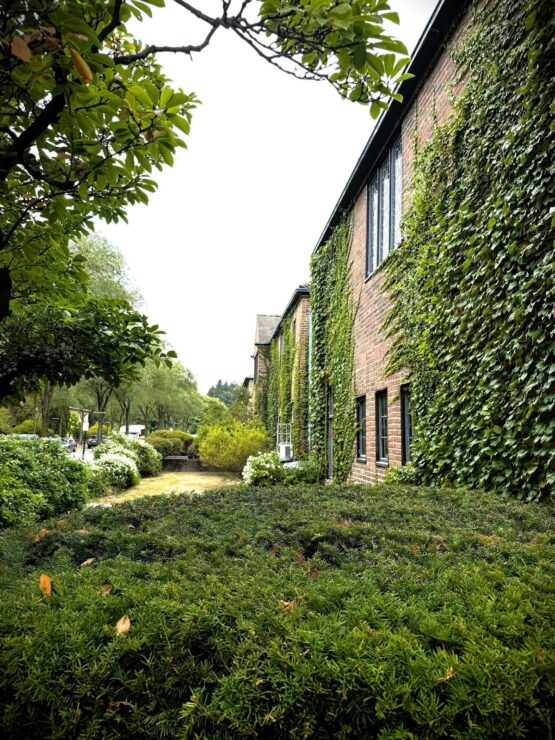
Saarinen designed most of Cranbrook’s educational campus and housing, including his own house. His style was deeply modernist, drawing on craft, symbolism, and total design. He relied heavily on brick, stone, carved detailing, bronze, and custom tilework. The campus, its paths, topography, axes, and plantings all blend into the architecture. It’s deliberate, but at the same time, quietly calming and serene as you walk through the grounds.
Saarinen House
I toured Saarinen House, the private residence of Eliel and his wife Loja, who was known for her textile work. It stands in sharp contrast to Cranbrook House, yet is still beautiful in its remarkable structure and flowing, modern design. Historians note that Eliel used his ‘total work of art’ philosophy.
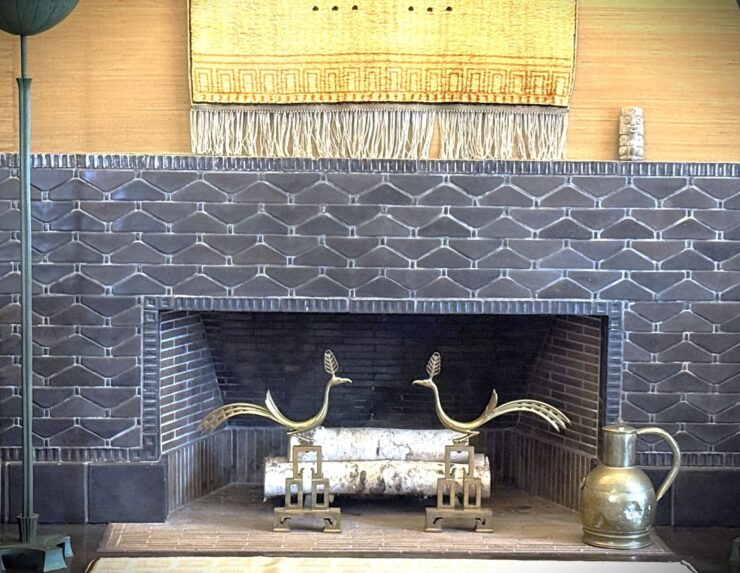
Many items in the Saarinen House differ from the main home’s design. There are custom carpets and rugs, many of which Loja Saarinen created using her textile expertise. The decor is streamlined, yet the furniture is custom-made. There are several built-in storage areas, and Saarinen also used the early modernistic idea of bare light bulbs.
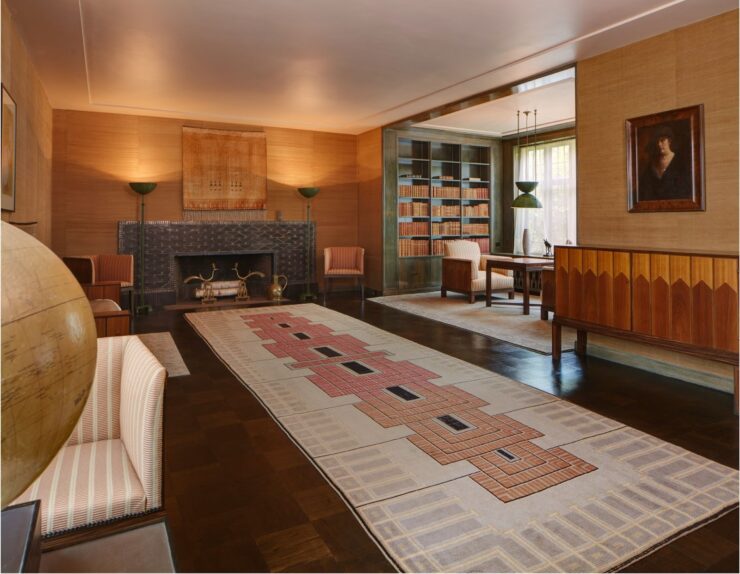
©James Haefner, Courtesy Cranbrook Center for Collections and Research
While all the rooms in Saarinen House are artistic and elegant, they still convey a sense of simplicity. While it served as a place for Saarinen, who also served as the first president of the Cranbrook Academy of Art, to entertain dignitaries and guests, it was also a family home. Even with the minimalist style, it felt lived-in.
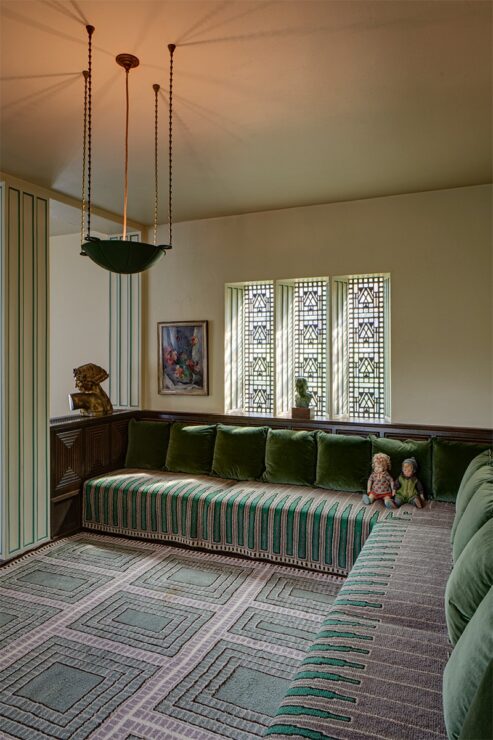
©James Haefner, Courtesy Cranbrook Center for Collections and Research
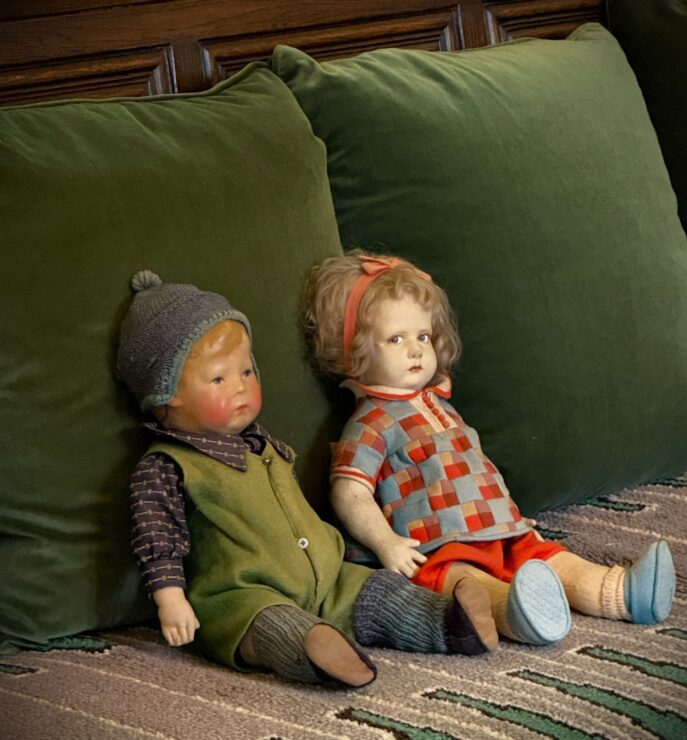
On display in this area is a set of dolls that represent family and everyday life. The dolls are quite realistic (notice the side eye). The textiles used on the dolls align with the rest of the house: the handstitched textiles reflect the style of Loja Saarinen’s weaving studio, and the craftsmanship is outstanding.
Cranbrook Campus
Eliel Saarinen’s son, Eero, studied at Cranbrook and later joined his father in continuing to design the campus as it grew. All the buildings around campus I saw were designed to work in harmony, giving students a quiet sense of order. The idea was to help students feel that art and education were inseparable.
Many describe the campus under Saarinen’s direction as a sanctuary for those who choose to live and learn there. It shows them how to slow down and see the world differently. This is likely one of the reasons for its continued growth and accolades in the field of arts and science education.
Today, Cranbrook Educational Community is designated a National Historic Landmark. In addition to Cranbrook House and Gardens, there are several educational areas. The Cranbrook Schools are pre-K through 12 independent college-preparatory schools. There is the Cranbrook Academy of Art, the Cranbrook Art Museum, and the Cranbrook Institute of Science. Lastly, the Cranbrook Center for Collections and Research provides the needed management and curatorial leadership for the varied historical details.
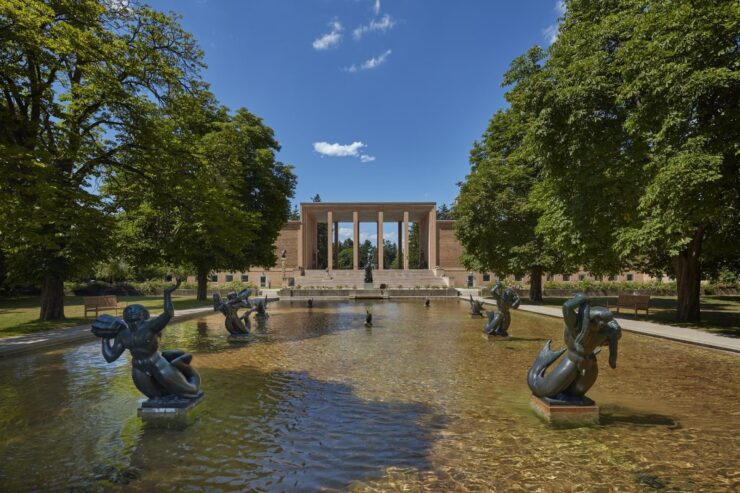
Together, George and Ellen Booth’s aspirations and dreams and Kahn and Saarinen’s talents shaped Cranbrook through two distinct yet interconnected visions. Cranbrook House introduced a warm, Arts and Crafts residential character. Eliel Saarinen later transformed Cranbrook into a cohesive, modern educational campus.
As I was told during my tour by a staff member, “The Booths imagined a world where art was not decoration but atmosphere. Cranbrook is not just a campus; it is a living philosophy.”
