
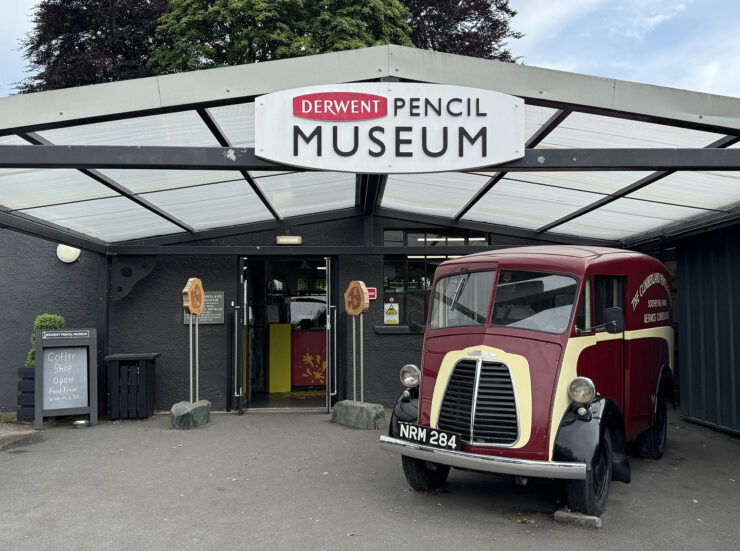
Unless you’re a student or an artist, there’s likely no pencil within arm’s reach right now. Pens have held on — I have a whole cup of them next to my laptop that I reach for throughout the day. But pencils? We’ve moved on — to keyboards, touchscreens, styluses.
And yet the humble pencil quietly changed the world. I found out just how much during an afternoon visit to the Derwent Pencil Museum in Keswick, England — a town that, it turns out, has a legitimate claim to being the birthplace of the modern pencil.
Stumbling upon a museum dedicated to pencils in a small market town in the Lake District was the last thing I expected. But somewhere between the replica Elizabethan graphite mine and the world’s longest colored pencil, I began to realize that the story of this slender wooden tool is, in many ways, the story of the modern world.
A Mountain Full of Secrets
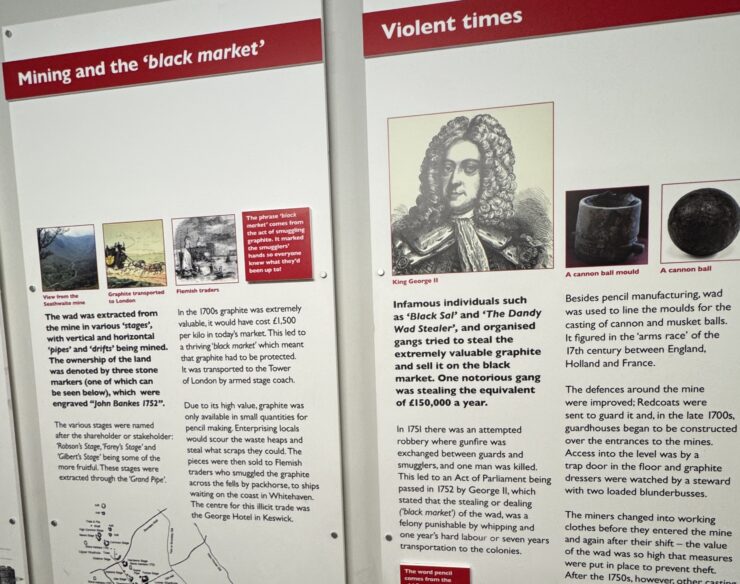
The story begins underground. In the mid-16th century, locals in the Borrowdale valley, just south of Keswick, stumbled upon a deposit of pure graphite, unlike anything seen before in Europe. (Fun Fact: Graphite comes from the Greek word “graphein,” meaning “to write.”) Initially mistaken for a form of lead (hence the pencil’s lingering association with “lead”), the graphite was remarkably pure and solid, and could be sawed into sticks. At first, shepherds used it to mark their sheep. Then someone had a better idea.
Wrapped in string or sheepskin to keep hands clean, these graphite sticks became the world’s first pencils — born not in a factory but on a Cumbrian hillside. The Borrowdale deposit remained the world’s only known source of solid graphite for decades, making it extraordinarily valuable, even more valuable than gold at the time.
©Debbra Dunning Brouillette
Armed guards supervised the mining and the stagecoach transport to the Tower of London, a secure storage location for precious materials. Smuggling it out was even a criminal offense.
From Cottage Industry to Global Trade
(Photo provided: Derwent Pencil Museum)
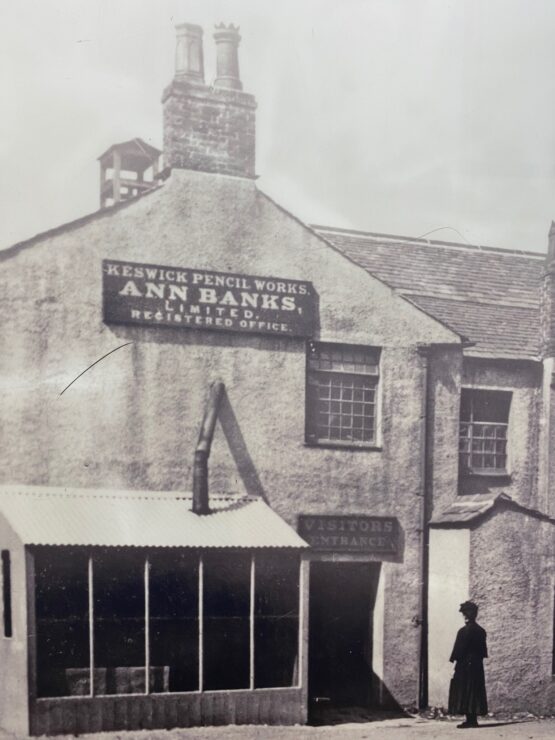
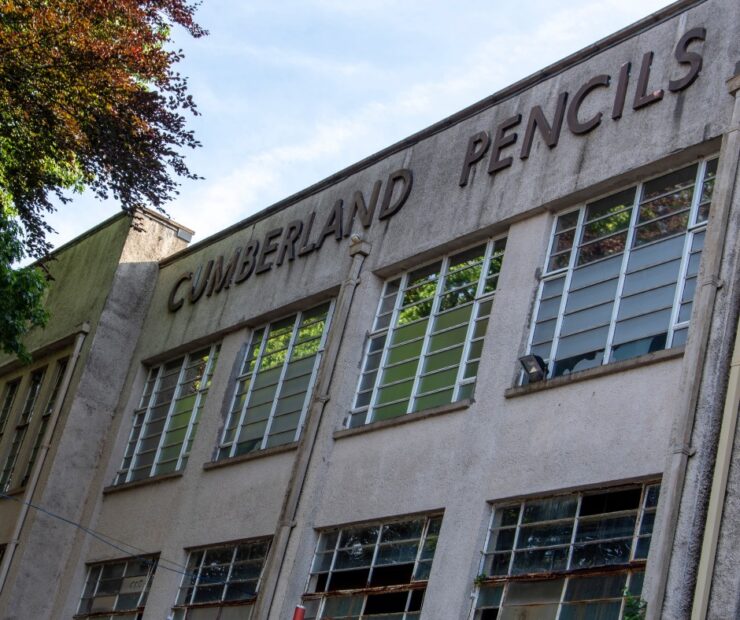
The museum traces the evolution of pencil-making from a cottage craft to an industrial enterprise. By the 18th and 19th centuries, Keswick had become the heart of the British pencil industry. The original Cumberland Pencil Company factory was built alongside the River Greta, harnessing the river’s power to drive its machinery. It was a neat bit of early industrial ingenuity.
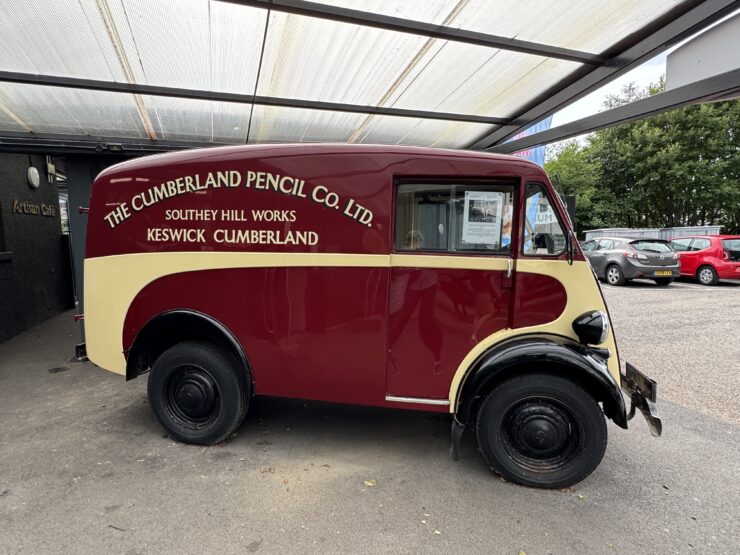
The Cumberland Pencil Company was founded in 1832 and later became the iconic Derwent brand, which is still sold worldwide today. The Keswick factory closed in 2007, and production moved about 20 miles west to Workington, where Derwent continues to manufacture pencils and art supplies.
©Debbra Dunning Brouillette
(Photo provided: Derwent Pencil Museum)
Inside the museum, you’ll find intricate displays of Victorian pencil-making machinery, including cross-sections that show how a pencil is actually constructed. (It’s more complex than you’d think.) There is also a fascinating account of how, during World War II, the factory secretly produced pencils with hidden compasses and maps inside — issued to RAF pilots as escape tools.
The Making of a Pencil: A 14-Step Process
©Debbra Dunning Brouillette
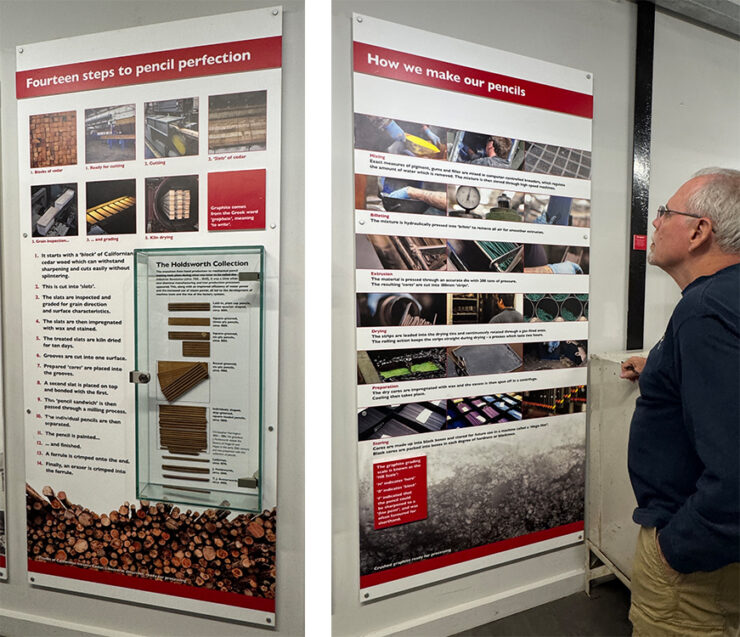
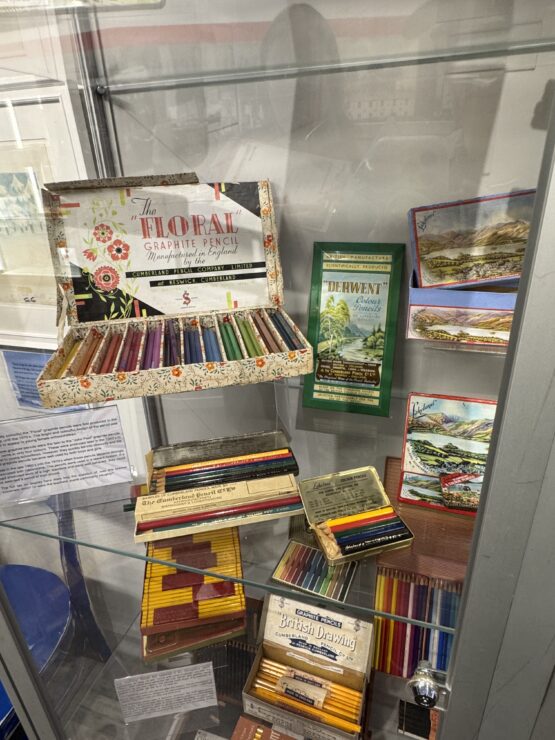
A pencil, it turns out, takes fourteen steps to make — starting with a block of cedar wood. The museum’s displays outline each step in detail. The transition from hand production to mechanical pencil making occurred during the Industrial Revolution (circa 1760-1840). However, the first colored pencils weren’t produced until 1932.
at the Derwent Pencil Museum
©Debbra Dunning Brouillette
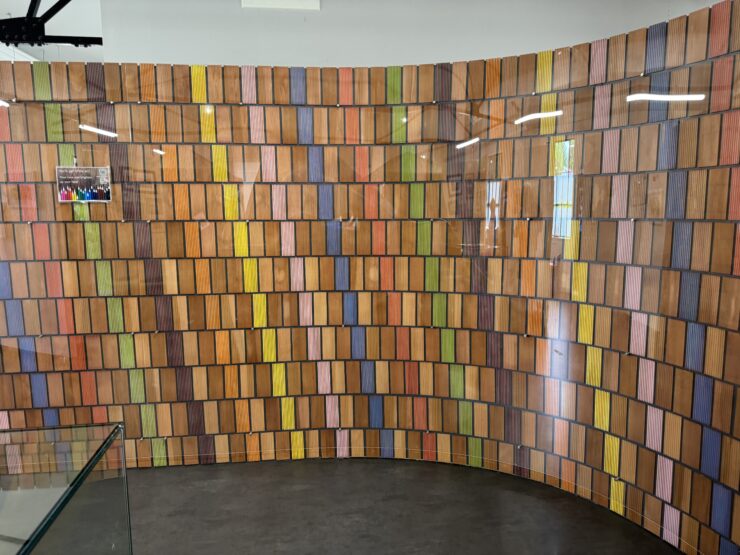
Did You Know? The average pencil can be sharpened 17 times and write about 45,000 words.
WW2 Secret Map Pencil
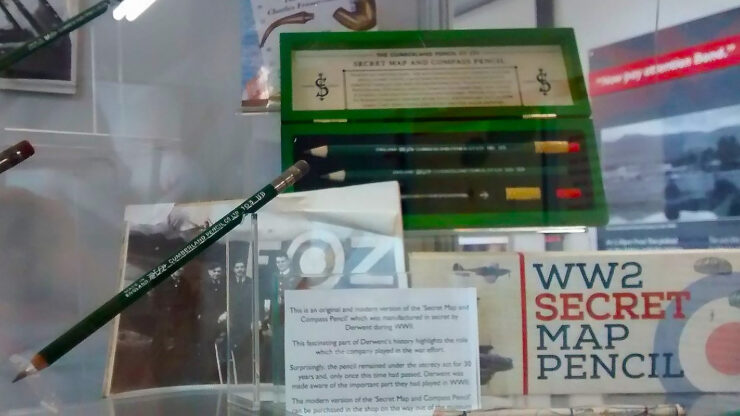
One of the most fascinating stories at the Pencil Museum concerned the manufacture of the WW2 Secret Map Pencil, which MI9 commissioned under the Official Secrets Act. The secret British organization was established during World War II to help prisoners of war escape.
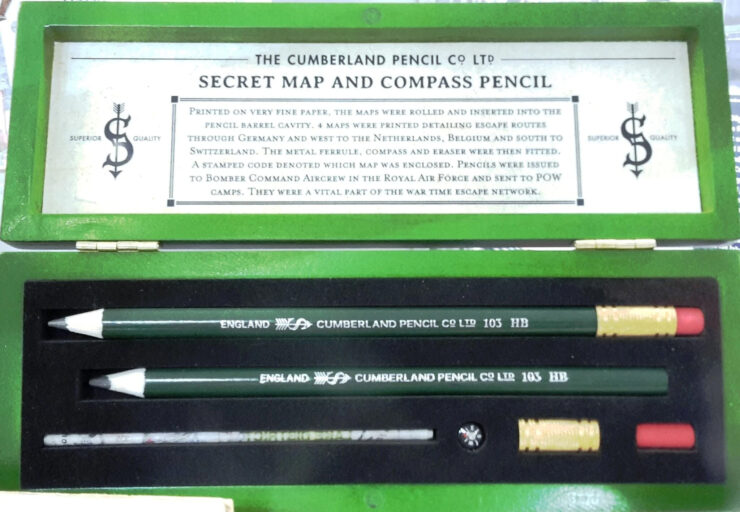
How? By hiding a map inside pencils, “tightly rolled, about twelve centimeters long, plus a compass.”
How It Was Accomplished
Here’s a bit of the story shared at the museum about how this was all accomplished:
Charles Fraser-Smith, a British inventor and key figure in MI9’s operations, specialized in creating covert tools and gadgets for espionage.
He was bombarded with requests for devices with secret compartments, and he conjured up shaving brushes, pipes, pens, golf balls, and even shoelaces that concealed escape equipment. His strategy was to approach a well-known firm that manufactured a suitable object and ask whether they could make a version with unusual features.
When Fraser-Smith needed a pencil with a secret compartment, he visited the oldest manufacturer in the country, The Cumberland Pencil Company. A pencil was a standard piece of navigation equipment, making it an ideal place to hide escape gear. For security, only the managers knew the secret, and they were sworn to silence by the Official Secrets Act.
Five Separate Operations to Produce a Pencil
Fred Tee, Technical Manager at the Pencil Company, worked out how to make the pencils without the rest of Keswick’s tight-knit community finding out. There were five separate operations in producing a pencil: first, making the leads; then gluing them into grooved cedar wood slats; shaping the pencils and embossing them with the company name; and finally packing them into boxes. Although it would have been easier to create the hiding place early in the process, Tee decided to take the extra steps at the end to ensure that no one in the workforce realized what was going on.
After hours and on weekends, Tee and his fellow managers crept into the factory, took a box of finished pencils off the shelf, and carefully drilled out the interiors, leaving a short stretch of lead at the working end. With the holes drilled, the next job was to slide in the map, secure the metal ferrule to the end, slip in a tiny brass compass, and glue the eraser back on top.
At the end of the job, the pencil looked just as it had at the start.”
The Inspiration for “Q” in James Bond Novels
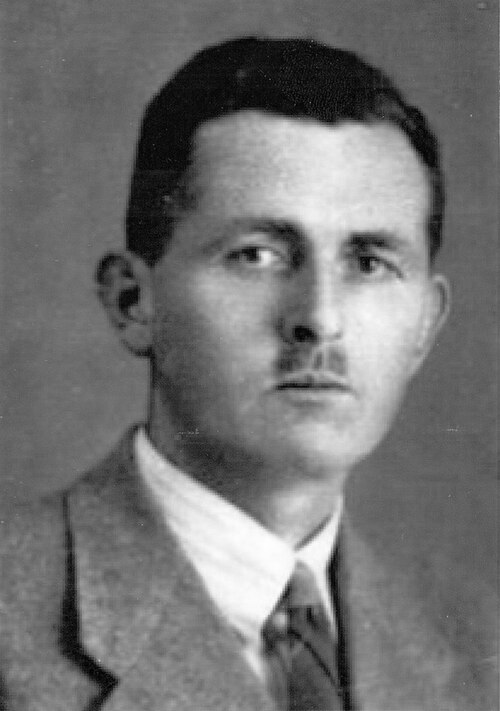
Charles Fraser-Smith is widely credited as one of the real-life inspirations for Q — the legendary gadget master in Ian Fleming’s James Bond novels and films.
Special Pencil Displays: Fit for a Queen – and a King
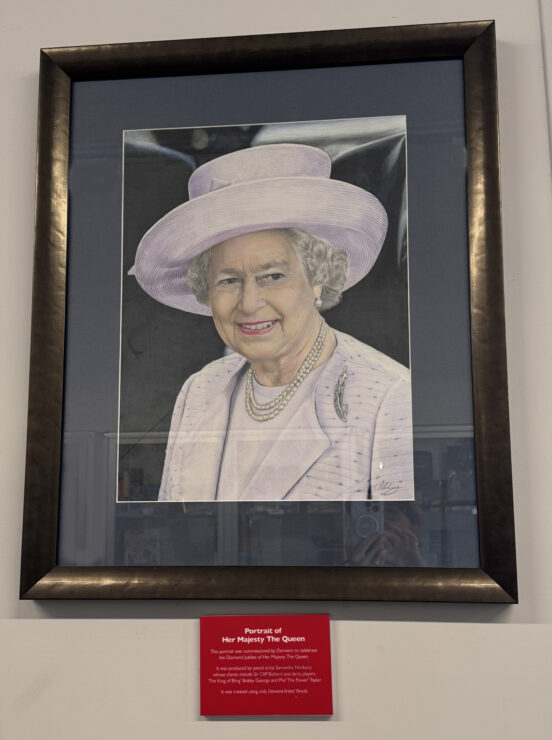
This portrait of Her Majesty The Queen, was commissioned by Derwent to celebrate the Diamond Jubilee in 2012. It was created using only Derwent Artists’ Pencils, produced by pencil artist Samantha Norbury.
©Debbra Dunning Brouillette
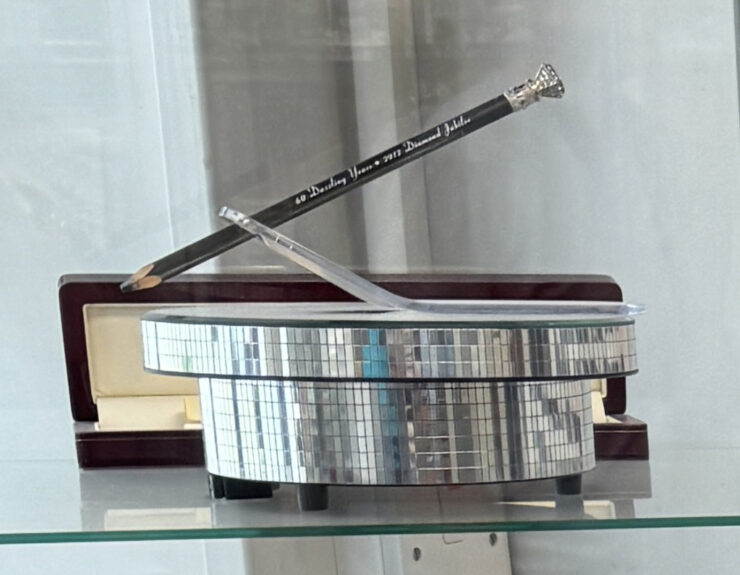
in 2012. ©Debbra Dunning Brouillette
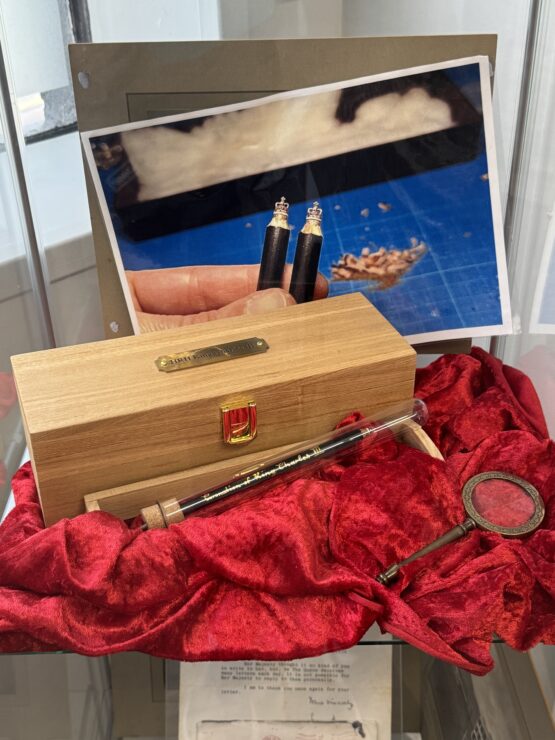
of King Charles III ©Debbra Dunning Brouillette
Two dazzling pencils, each encrusted with 60 diamonds, were made to commemorate Her Majesty The Queen’s 2012 Diamond Jubilee. One was presented to Her Majesty, while the other is on display in the Museum.
Special pencils were also made to mark the Coronation of King Charles III.
The World’s Largest Pencil
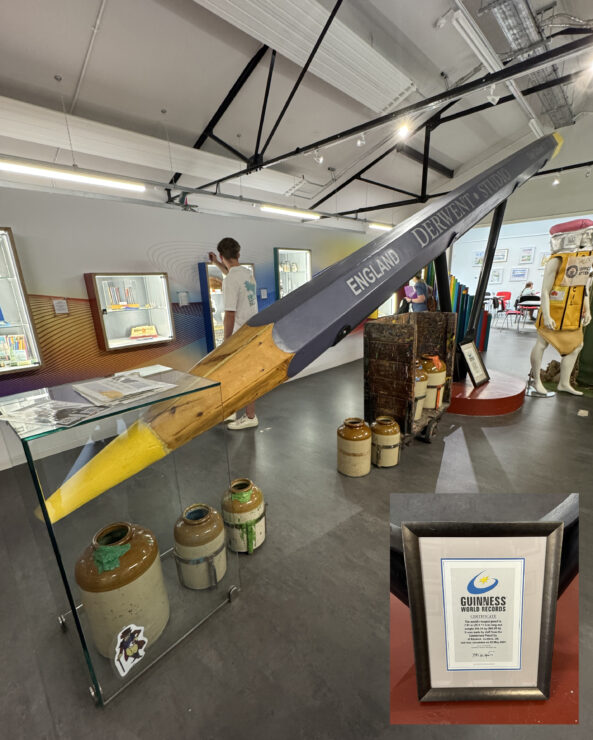
Almost no one leaves the museum without stopping for a photo next to the World’s Largest Pencil, as certified by Guinness World Records.
The giant yellow pencil, completed on May 28, 2001, measures nearly 26 feet long and weighs half a ton.
Are There Other Pencil Museums?
A handful of museums around the world touch on writing instruments — including the Museum of Writing in England and a pencil museum in Japan. However, only the Derwent Pencil Museum is exclusively dedicated to the history and craft of pencil making.
Did You Know? The word pencil comes from the French word “pincel,” meaning small paintbrush.
When You Visit
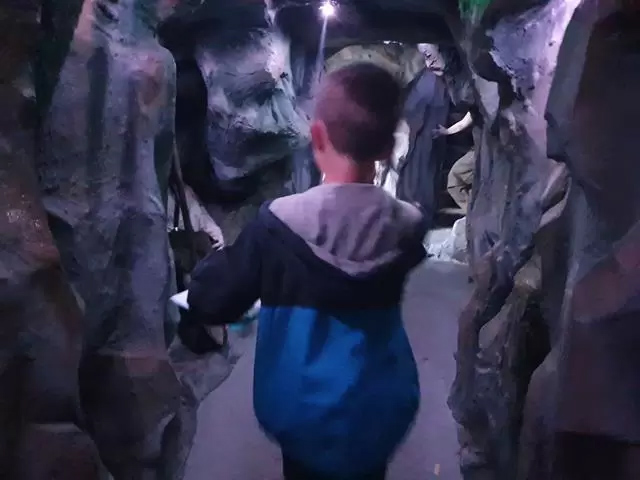
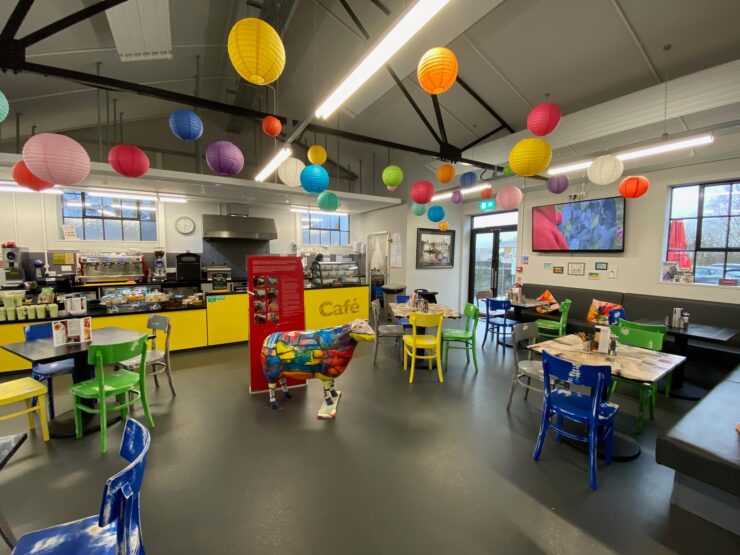
Visitors receive a pencil and a quiz with questions to answer along the way. Those who complete the quiz receive a gift of several Derwent colored pencils.
(Photo provided: Derwent Pencil Museum)
Allow one to two hours. The Derwent Pencil Museum is compact yet dense with detail. There’s a well-stocked shop at the end — great for gifts and art supplies. Check the Derwent website for more information on hours and admission.
Surprise, Not Spectacle
The Derwent Pencil Museum may not be the flashiest stop on your Lake District itinerary, but it offers something rarer than spectacle: a genuinely surprising story, well told. It’s proof that the most ordinary objects, the ones we lose down sofa cushions and forget in coat pockets, often have the most extraordinary pasts.
It’s also worth noting that the pencil isn’t the relic it might seem. Worldwide sales are steadily climbing — driven not only by classrooms in developing nations but also by a growing appetite in the West for sustainable, screen-free creativity. The humble pencil, it turns out, is having a moment.
Come for the history. Stay for the giant pencil. Leave with a new appreciation for this underrated tool you may no longer own.
If You Go: Make a Day of It
Make a day of it beyond the museum. The Keswick area rewards those who linger.

©Debbra Dunning Brouillette
Start your day on the water with a scenic 50-minute boat ride around Derwentwater aboard one of Keswick Launch Company’s charming wooden boats — a beautiful introduction to the Lake District landscape.
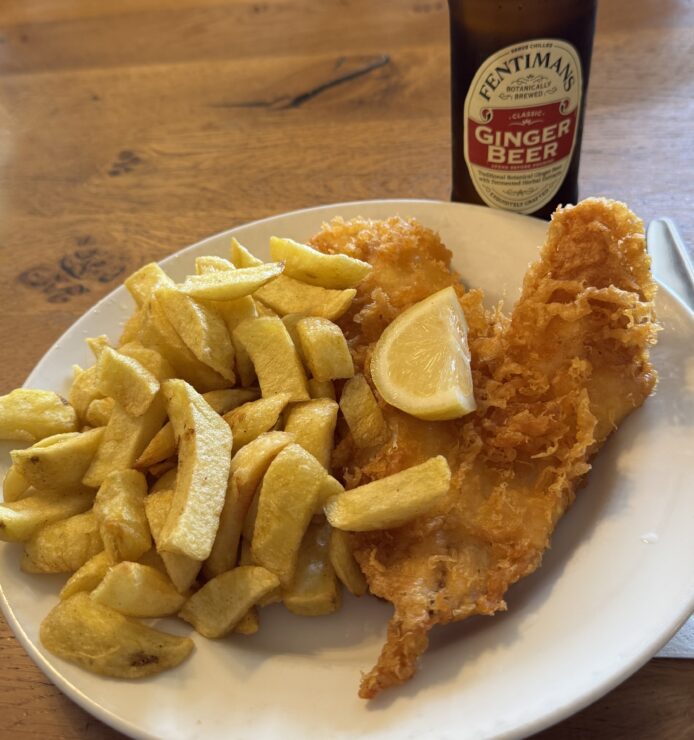
Back in town, Keswick’s Market Square is perfect for a stroll before settling in for a pub lunch of fish and chips. (We enjoyed ours at the Old Keswickian Fish and Chip Restaurant.)
©Debbra Dunning Brouillette
The Pencil Museum makes for an ideal afternoon stop, and before you leave the area, don’t miss Castlerigg Stone Circle. It’s just a short drive away.

Walk among a ring of 38 standing stones, set against a sweeping panorama of Lake District fells. The Stone Circle, estimated to be about 4,500 years old, is free and open year-round. The site holds special magic during the Summer and Winter Solstices, when visitors gather overnight to watch the sun rise. We visited the morning after the Summer Solstice and could still feel the celebration’s energy.
I visited as part of a small-group tour from Oxford to York with Adeo Travel. Our stop at the Derwent Pencil Museum was a last-minute add-on, which turned out to be one of many highlights of our trip.
The official visitor site for Keswick, located within the Lake District, Cumbria, is Visit Keswick. You may also be interested in checking out Visit Lake District and Cumbria, the official guide to the region.
You May Also Enjoy Reading About Other Museums:
Visiting Rochester, New York? Put These Four Museums on Your “Must See” List
The Nun Doll Museum at Michigan’s Cross in the Woods
ESSE Purse Museum in Little Rock: The Stories Women Have Carried
At La Cité du Vin Museum in Bordeaux, France, Wine is Everything
