
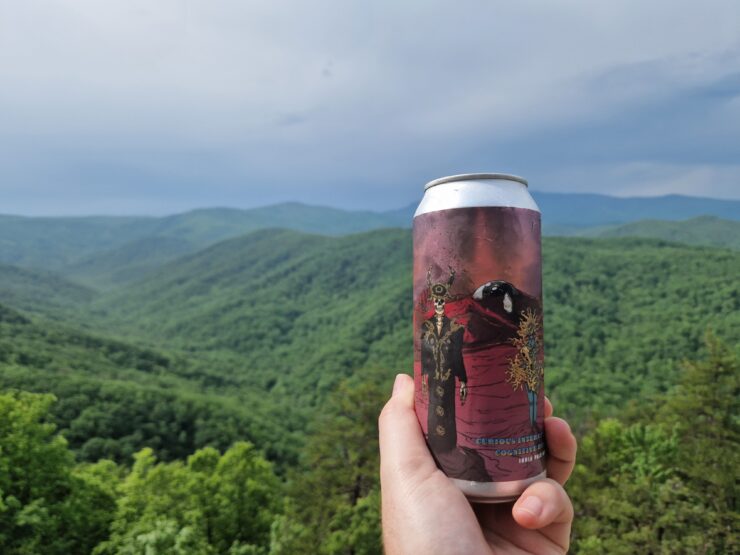
North Carolina takes its rivalries seriously. Spend five minutes here, and you’re being asked to pick a side: Duke or Carolina, mountains or coast, Raleigh or Charlotte.
I walked straight into the most Carolinian of all arguments on my first visit, 12 years ago, in a roadside barbecue joint outside Boone with friends (and brothers) Bryan and Ronnie. We’d spent the morning hiking around Chimney Rock and arrived ravenous.
The place, run by three generations of the same family, felt frozen in time in the way that quickly becomes a traveler’s favorite story. We ordered chopped pork, hush puppies, and slaw, and after a morning on the Blue Ridge Parkway, I made short work of my plate.
Then I made the fatal mistake.
“So what’s in that sauce?”
Bryan didn’t hesitate. “Mostly tomato around here. Less vinegar. Not as good as what they do out East.”
Ronnie rolled his eyes. “Really? We’re doing this again?”
Twenty minutes later, we were still at it: sauce bases, pork cuts, even the slaw, all up for debate. Welcome to North Carolina BBQ battles, where a house divided applies as much to smoked meat as it does to sport.
Over the past 12 years, I’ve told anyone who will listen—and plenty who won’t—that North Carolina may be the most underrated state in America.
The landscapes alone make the case. The Blue Ridge Parkway, snaking from Boone towards Asheville (part of a 469-mile route from Virginia to the NC-Tennessee border), offers mile after mile of layered ridges fading into an impossible number of shades of blue.
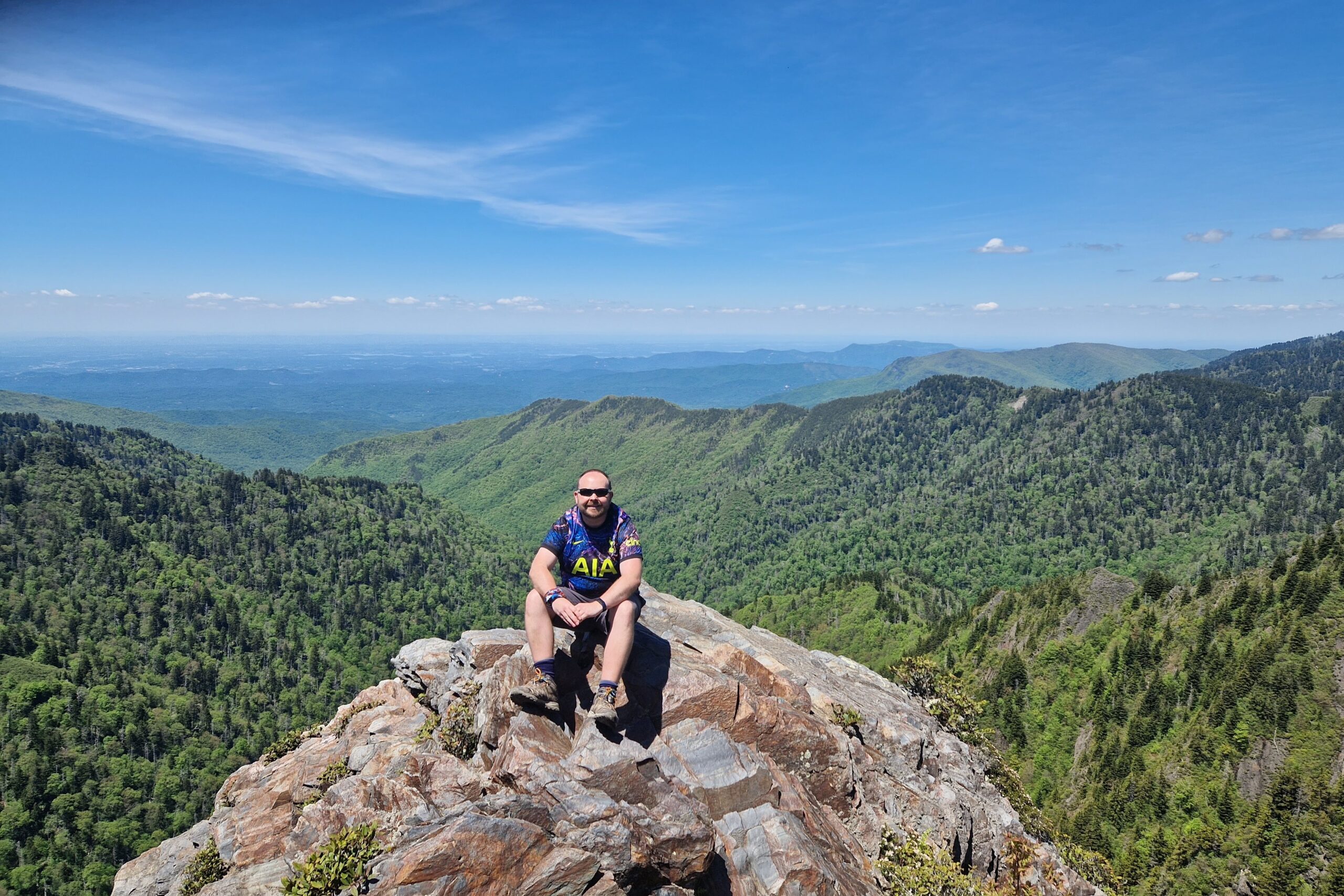
The more I travel it, the more I’ve realized that North Carolina’s culinary heritage and landscape are inseparable.
Barbecue is the state’s most famous fault line. Eastern style uses whole hog and a vinegar-based sauce; Lexington style (often mistakenly called “Western”) favors pork shoulder with a tomato-tinged dip.
In 2007, lawmakers tried to settle the debate by naming Lexington the North Carolina BBQ. The debate went as well as you’d expect.
“There’s no winning that argument,” says Sam Jones, whose family has cooked whole hog for generations. “The best barbecue is the one you grew up eating. Everything else is just a conversation starter.”
And it’s a conversation that follows you everywhere—gas stations, breweries, tailgates—but it’s far from the only one.
What Grows Together, Goes Together
While rivalry between beer and wine drinkers is nothing new, the fact that wine is even part of the North Carolina culinary conversation still surprises.
On my most recent visit, friends suggested a detour off the Parkway into the Yadkin Valley, a gently rolling stretch between Boone and Winston-Salem that looks, at first glance, more like rural France than the foothills of Appalachia.
North Carolina may be a relative newcomer on the American wine trail, but the Yadkin Valley’s grape heritage runs deep. Five hundred years ago, European explorers recorded an abundance of native varieties, including muscadine. It is now the state grape (presumably adopted with far less controversy than barbecue). Today, growers are working with vinifera too: Cabernet Franc, Viognier, and Petit Verdot, thriving in warm days, cool nights, and mineral-rich soils.
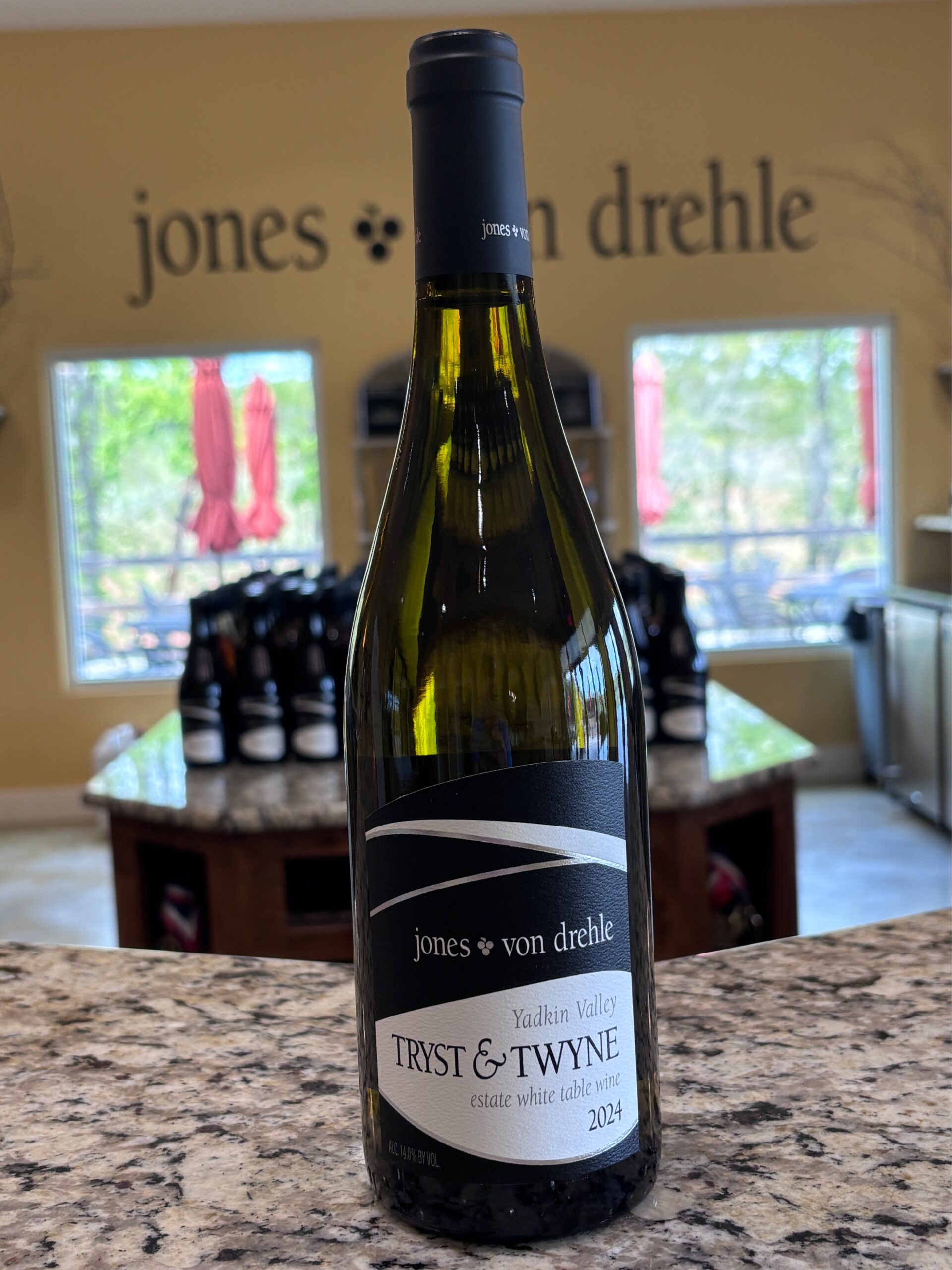
At Jones von Drehle Vineyards, the landscape is both backdrop and advantage. Their signature Cabernet Franc, grown in schist-heavy soil, is structured, peppery, and unexpectedly elegant.
“Any of our wines will change your perception,” says co-owner Diana Jones when I ask what people still get wrong. Their Tryst and Twyne white, a mix of Gros Manseng, Petit Manseng, and Corbu Blanc, with notes of citrus and pineapple, has just taken double gold in a blind tasting at the San Francisco International Wine Competition. Not bad for a grape blend rarely seen outside southwest France.
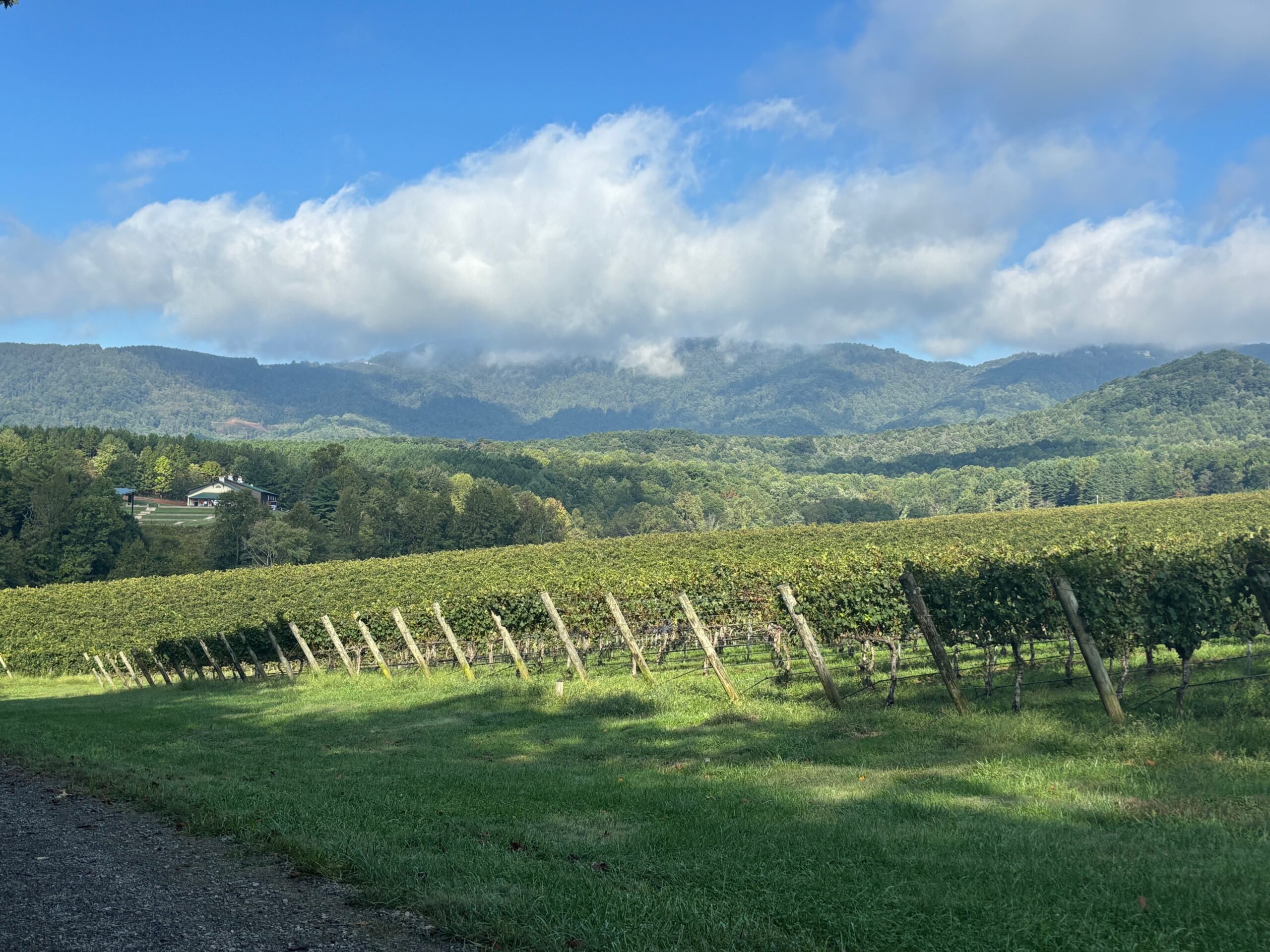
The success is infectious. With more than forty wineries, the Yadkin Valley benefits from being young and free to experiment. Then there’s the community.
“What grows together, goes together,” Jones laughs, describing their summer farm-to-table events pairing estate wines with local produce.
Intrigued, I tempt fate by asking if, within the North Carolina culinary pantheon, any local wine could ever pair with barbecue?
She doesn’t hesitate. “Absolutely. Cab Franc. No question.”
You Can’t Kill Our Soul
If wine is the upstart, beer is the established heavyweight of North Carolina booze.
A hundred miles south along the Parkway, Asheville has long marketed itself as “Beer City USA,” and not without justification. More than 30 breweries sit within city limits, many clustered along the French Broad River.
When Hurricane Helene tore through in September 2024, that water went from being the breweries’ fuel to their predator. The damage was catastrophic, especially along the riverside. Taprooms are gradually reopening, and, as in the Yadkin Valley, locals have picked up the slack left by visitors, who have been returning over the last year.
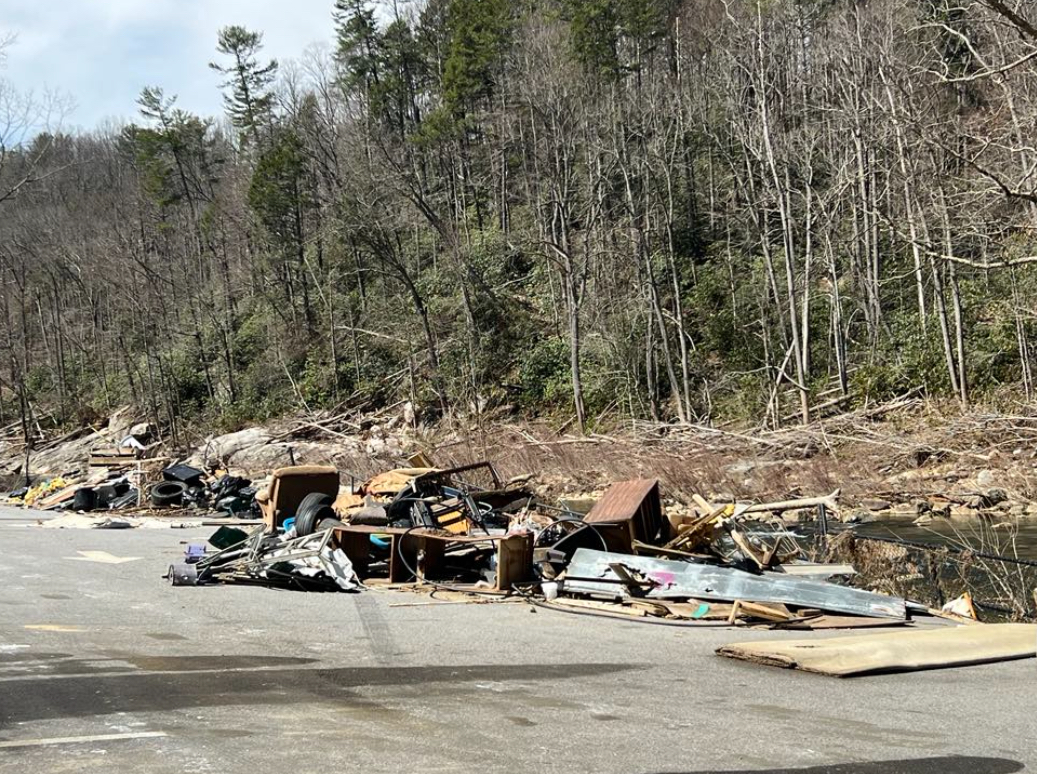
When asked what kept him going through the destruction of his business, Zillicoah Beer Company founder Jonathan Chasner was resolute:
“The physical side of life is just that, physical stuff. The minds, hearts, and souls that created Beer City USA are still here. You can’t kill the soul of that.”
Zillicoah, the Cherokee name for the river, is now open again, serving its pre-prohibition style lager. In nods to the partnership I see everywhere across this state, it offers not only the obligatory barbecue truck (Western style) but also serves a selection of wines from the local Stellar Farm winery.
Whether it’s the food, the drinks, or the people, Diana Jones’ words resonate again: what grows together, goes together.
Here’s To The The Land of The Long Leaf Pine
My North Carolina culinary journey loops back north, ending where it began over a decade ago: Boone.
At Appalachian Mountain Brewery on the outskirts of the city, the atmosphere has always felt community-inspired. Students, families, and more than the odd bluegrass musician from the mountains fill the outdoor tables, framed by mountain views.
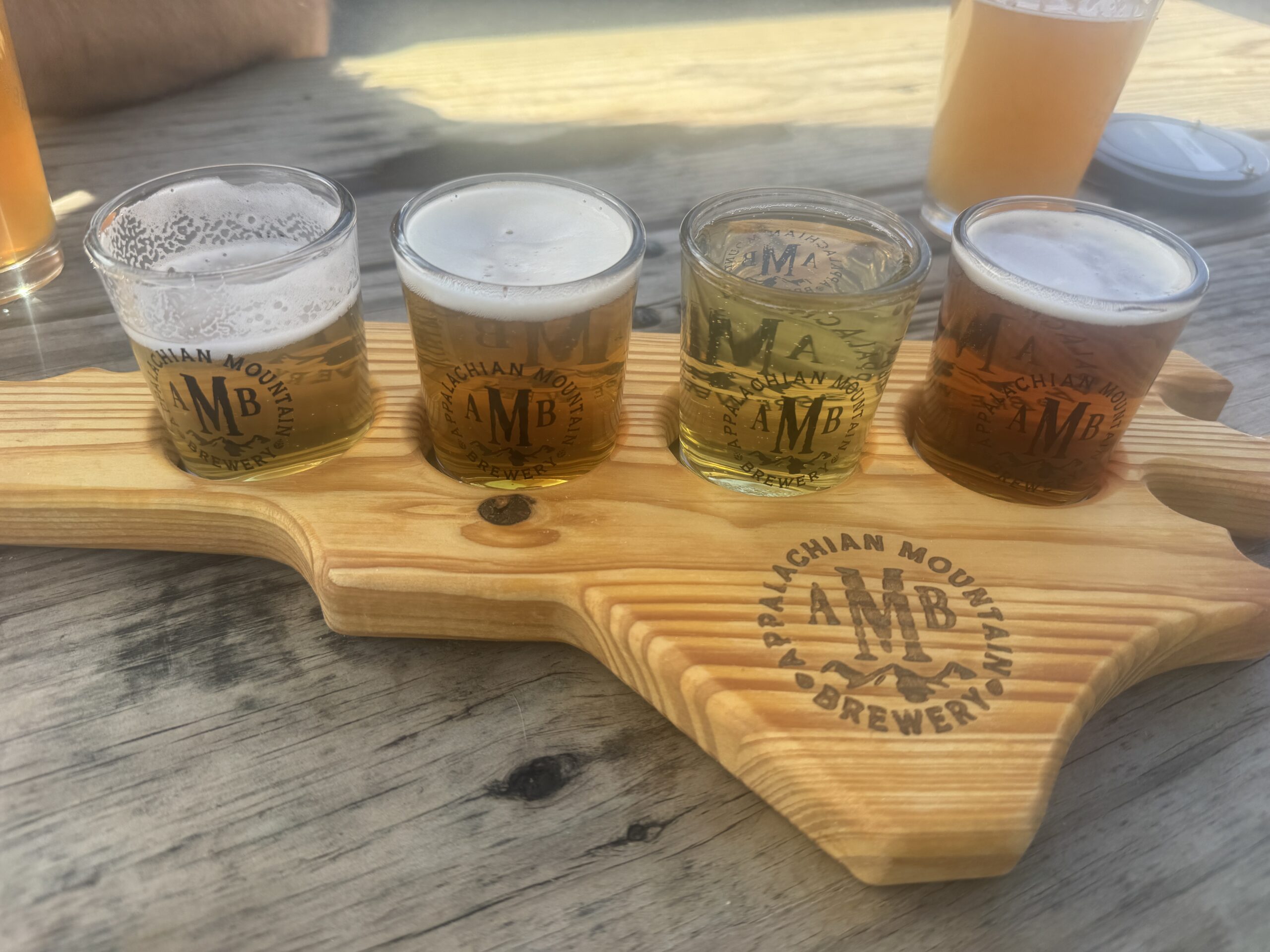
For co-founder Nathan Kelischek, the sense of place is at the root of everything they do.
“North Carolina isn’t just where we built our brewery – it’s our home.”
This pride comes through in the state flag emblazoned on their trademark Longleaf IPA and in the local secret ingredient: mountain water, which is soft, mineral-balanced, and requires far less treatment than other sources.
Like Jones von Drehle, invention and creativity are at the heart of Appalachian Mountain’s produce, with green tea and strawberry ciders competing with honeydew and honeysuckle wheat beers.
In the afternoon, I return, the musicians have formed a circle with bluegrass strumming carried across the breeze into the outdoors. App State fans convene before the afternoon’s football game, with an easy hum of conversation that suggests no one is in too much of a hurry to head to the stadium.
Bryan reappears with three pints.
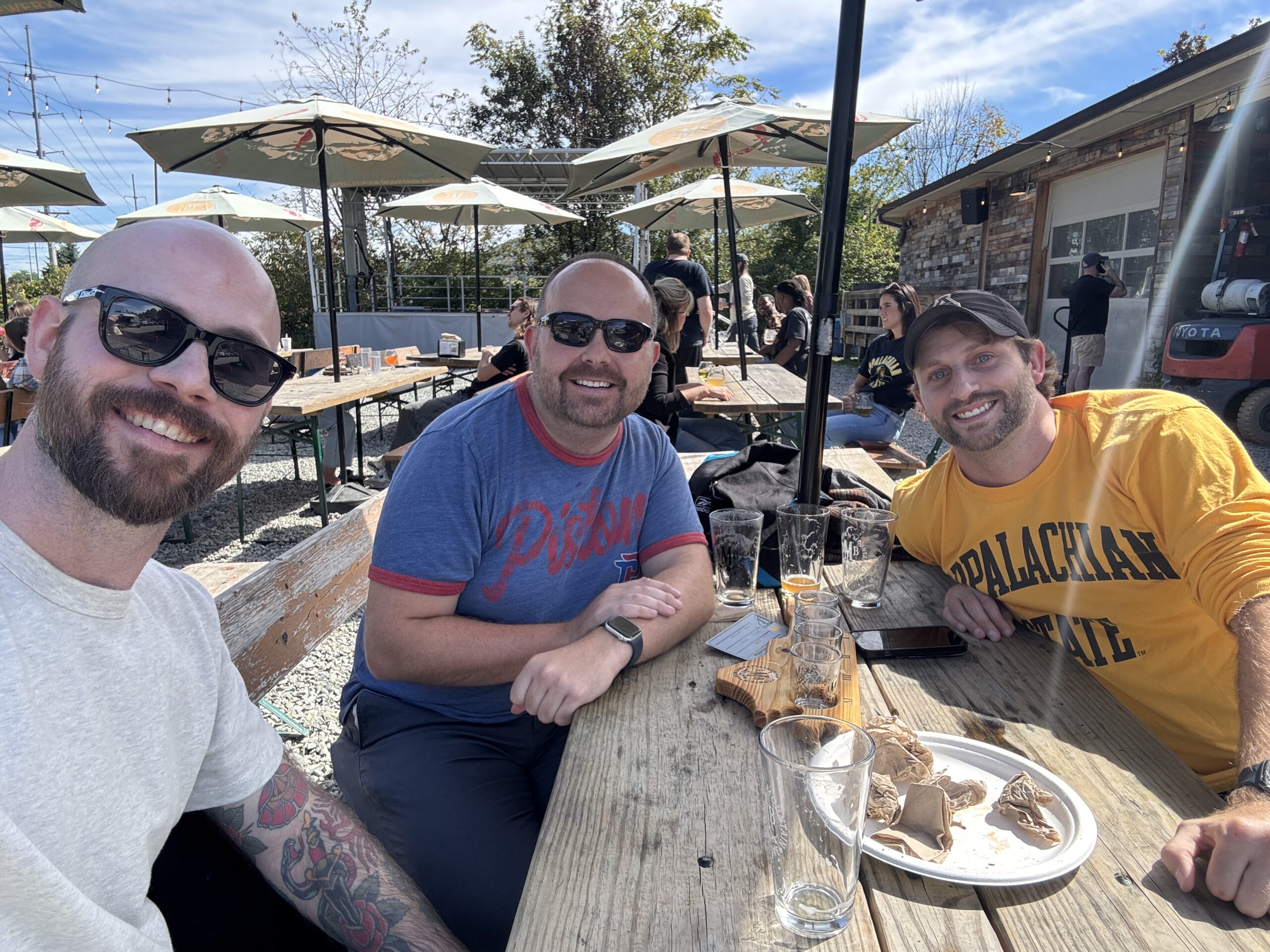
We clink glasses. Printed on the side is North Carolina’s official state toast. Yes, of course it has one.
“Here’s to the land of the longleaf pine…” he begins, grinning.
Then, as if no time had passed:
“So, what are we doing for food after the game?”
I pause, fully aware of the consequences.
“How about barbecue?”
Ronnie laughs. “Alright,” he says. “But I can tell you right now, we’re not going where he wants to go.”
And so it continues.
To Undertake Your Own North Carolina Culinary Road Trip
You’ll need a car to access the Blue Ridge Parkway. Boone is a two-hour drive north of Charlotte, with the Yadkin Valley a one-hour drive from Boone on US-421.
Asheville Regional Airport is served by flights from multiple US cities, including Atlanta, Boston, Chicago, New York, and Orlando. Asheville and Boone are 90 miles apart on the Blue Ridge Parkway, but you’ll want to pull over multiple times, so allow at least half a day.
You May Also Enjoy Reading
Vya in Portland, Oregon: Sangria by the Glass, Paella by the Pan
Argot Wines: Where Artistry Meets Collaboration in Sonoma and Napa
Read more from Phil on his blog, Someone Else’s Country and follow him on Instagram, Facebook, and Bluesky
