
“Miranda, I’m scared!” I yelled over the thunder and engine rumble. The rain felt like needles piercing my face. It punched through the gaps in my poncho, chilling me even on this Botswanan summer day.
I pulled the hood tighter as the edges flapped around me. Hippos and crocodiles vanished under the surface of the water. I began to think about the worst-case scenario.
The guide shouted over the storm, “It’s not the time to go back! We have until 4:00!”
My God, I thought, it’s only 2:00. We’ll be dead by then.
How absurd would it be to die for that perfect shot?
Elephants Strolling by Our Range Rover ©Amy Piper
On Photo Safari
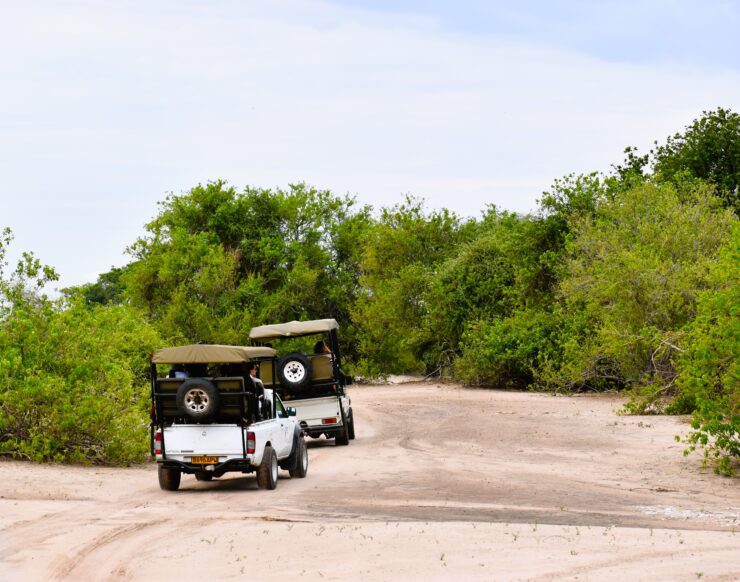
After breakfast, we’d driven the 90 minutes from the Radisson Blu Mosi-Oa-Tunya in Livingstone, Zambia, crossing the border into northern Botswana and Chobe National Park. We traded the luxury of hotel glass and air‑conditioning for river heat and open sky. The morning included a safari through Chobe National Park. The elephant herd wandered parallel to our Range Rover. The lion sat docile under the tree, satisfied with the remains of a Cape buffalo kill.
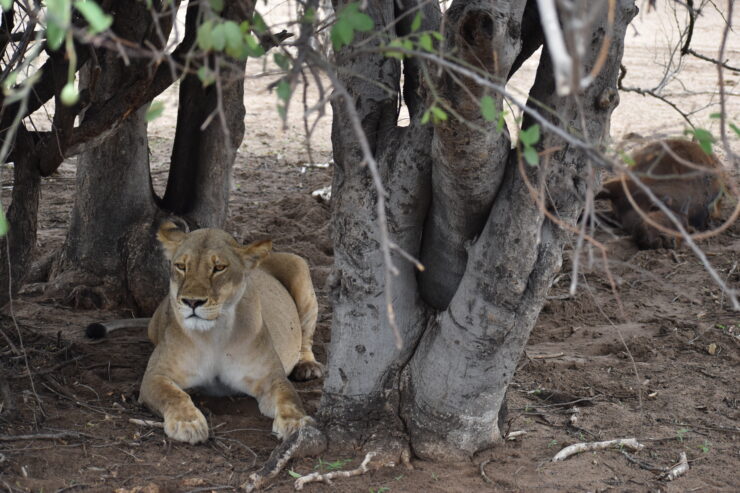
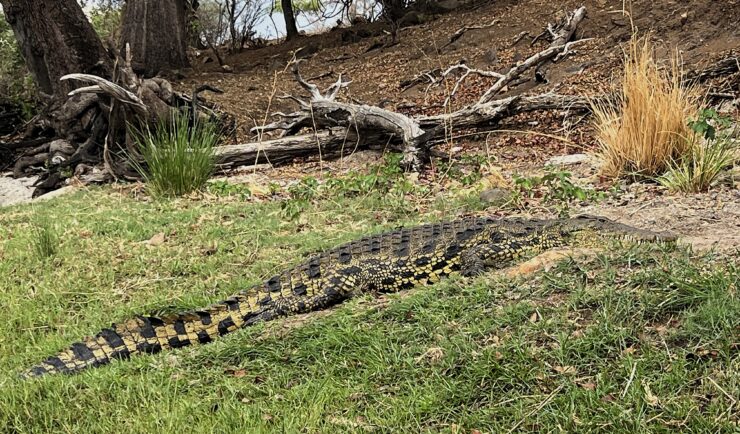
We finished lunch and headed to the riverfront. This corner of Chobe, where the riverfront, Linyanti’s lagoons, and Savuti’s floodplain grasslands meet, is well known for lions, hippos hidden in the reeds, and elephants and Cape buffalo lining the banks. Crocodiles sun on the banks, and birds fill the air. It’s the kind of place wildlife photographers dream of.
On the drive in, I’d only half‑noticed the dark smudge building over Botswana. I was too busy imagining the hippo shot I’d missed in Tanzania.
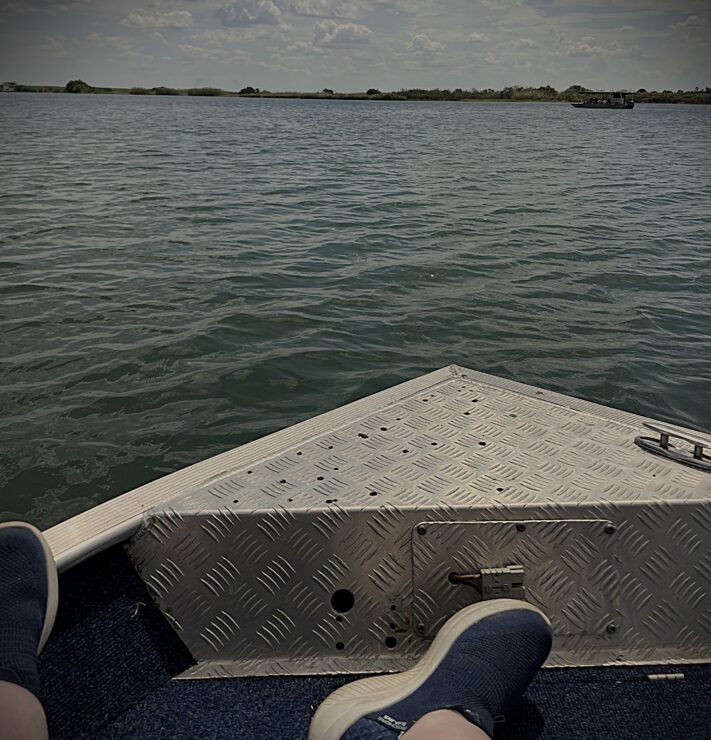
Arriving at the boat launch after the others, I stepped into the metal boat and was directed to the front seat. The other seats were higher, but mine was out in front, at the bow, uncovered by the aluminum canopy. My legs were stretched at a right angle. The motor started with a simple hum. Our tour guide stood in the rear of the boat with the river guide, who also functioned as the skipper. All told, we had eight in our party. Some of us carried our DSLR cameras, others, their smartphones.
As I sat alone, exposed in the front of the boat, I wondered about the images we hoped to capture. However, those thoughts were overtaken by fleeting worries about our safety brief. The guide had tossed us life jackets, and I attempted to put one on when he stopped at a river station to handle the paperwork. It didn’t fit properly, so I gave up. It sat next to me on the seat.
The sky was fairly clear, and I didn’t remember any instructions about life jackets. Perhaps that’s because I was more interested in the photographer’s light.
The Storm Gathers
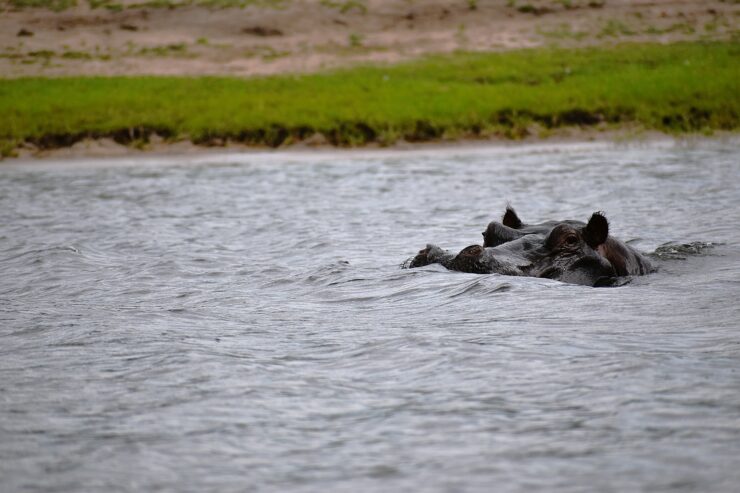
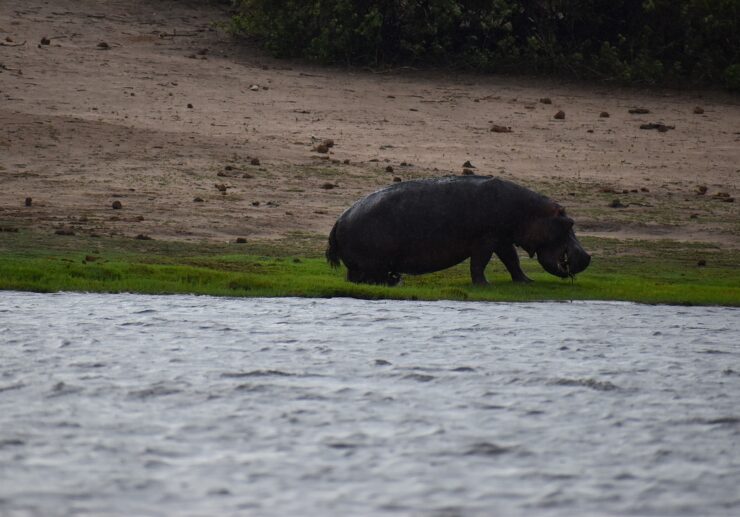
As we chugged down the Chobe, crocodiles and hippos were everywhere, eyes and nostrils breaking the surface like periscopes. I braced my feet against the deck in front of me and lifted my DSLR, firing in burst mode, hoping to catch a hippo with its mouth stretched wide, like it was waiting for a dentist. I’d missed this shot in Tanzania, distracted by lion porn—two lions mating on the riverbank while a hippo yawned in the background. This time, I was determined to collect the shot.
But that afternoon, the only thing gathering was the storm.
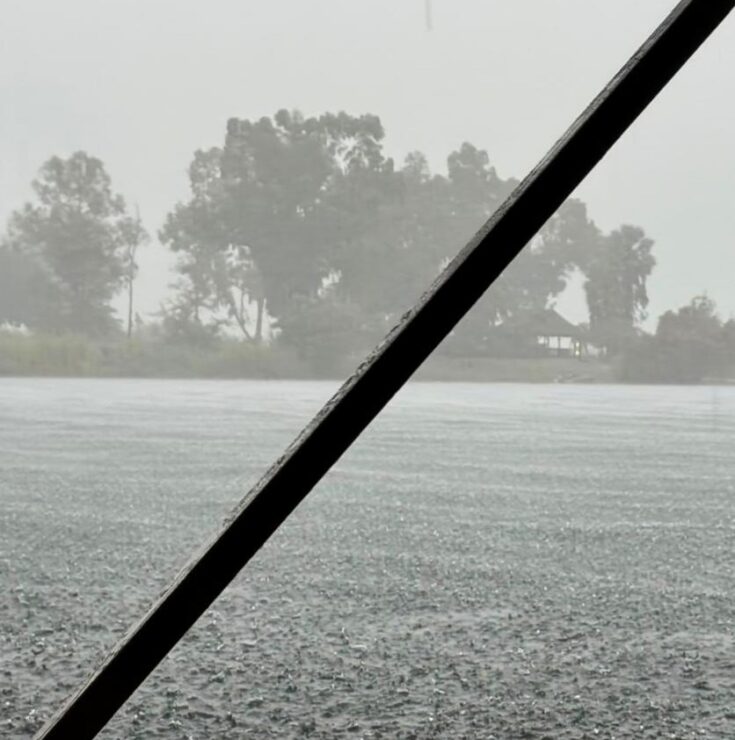
The storm didn’t arrive all at once. At first, the clouds were just a dark thumbprint in the blue. Then the air went heavy and still. And the rain started. First, as a sprinkle, then a downpour.
The crocodiles on the bank blurred into silhouettes as the light flattened. Even the hippos seemed to sink lower, only nostrils and ears showing. It seemed they knew what was coming. Our aluminum boat persisted downstream, a gunmetal dash under a sky turning the color of a fresh bruise.
“It seems to be letting up,” said Miranda, her voice small against the crash of thunder. A white-hot bolt split the sky, turning the river silver for a heartbeat. The aluminum boat bottom seemed to hum. Letting up was the last thing it felt like.
Miranda started to say something, but a fresh crack of thunder rolled right over her words, making the aluminum hull shudder beneath our feet. For a moment, the engine sounded small and uncertain, as if it were thinking about quitting, too.
Safari Team Member
The Dreaded Silence
The worst moment wasn’t the loudest crack of thunder. It was the pause just before it.
For a second, everything went silent: the engine, the birds, even the wind. The hair on my arms stood up. The metal rail under my hand felt like it was humming. The rain had soaked me under the poncho. I remember thinking, “Let go of the rail, now.”
I turned around and opened my mouth to yell to the guide we needed to get to shore, and a bolt split the sky so close the flash lit his face from below. The answering boom hit a beat later, rattling through the metal rail in my hands.
“I’m scared!” I yelled. My fellow travelers seemed to be laughing. I relaxed a little, figuring they had a better overall view from their vantage point.
Later, I learned that the apparent laughs weren’t. They were screaming too.
The Storm, Video Courtesy of a Safari Team Member
But It Gets Worse
Then the sky exploded. A white bolt hit somewhere ahead of us, so bright it erased the horizon, followed by a crack that punched the air out of me. The boat lurched as a gust slammed into us. I tried to protect my camera from the rain. For a second, I couldn’t tell where the river ended, and the sky began.
At that moment, my biggest fears were drowning or being struck by lightning. But if I were pitched overboard in that chaos, it wouldn’t just be water waiting. It would be the crocodiles and hippos in the muddy churn. My daughter later pointed out that drowning might have been the best outcome.
We drifted in an uneasy silence against the occasional screams and shouts to go ashore until the next gust slammed into us, flinging spray across the bow and snapping the poncho’s hood against my ears. Somewhere behind us, thunder cracked again, a hard, flat sound that cut off the nervous laughter on the boat as if someone had pressed mute. This is how it happens—one bad decision, one stubborn guide, one lightning bolt.
Miranda assured the guide, “We don’t mind ending the tour early. We need to go back.” The guide finally turned the boat, engine straining against wind and current.
Land At Last
I tried to shield my camera, counting the seconds between the flash and the thunder. The first glimpse of the shore was a literal safe harbor, a gathering of boats whose owners had come to their senses much earlier. In fact, there were so many boats at the dock that we had to step from rocking boat to rocking boat to reach the shore.
As we finally stepped onto solid ground with wobbly legs, the storm had already moved downriver. While we weren’t back to where we started, I breathed a sigh of relief as the shuttle picked us up. While it seemed like 20 miles downriver, we’d gone less than two.
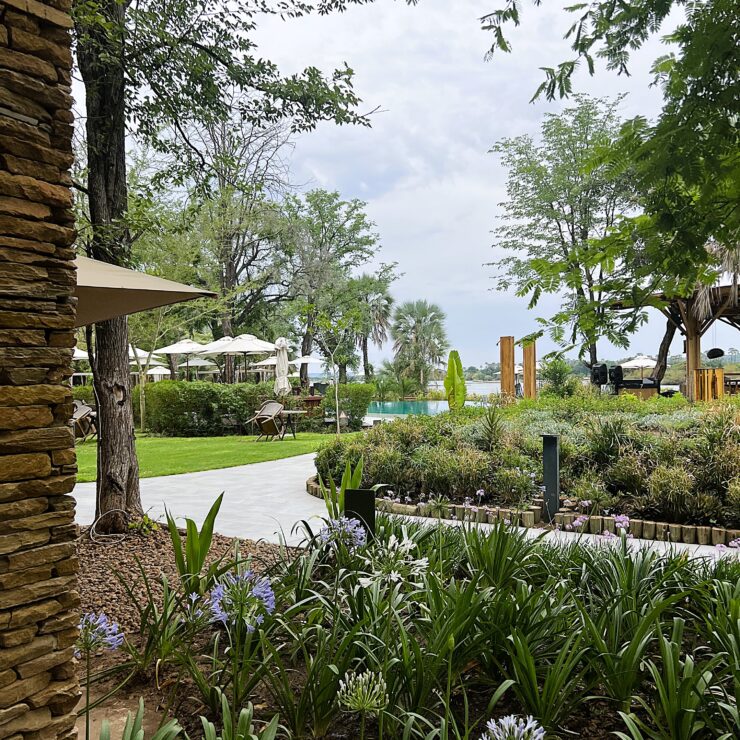
Back at the Radisson Blu, wearing dry clothes and holding a stiff drink, the experience felt like a bad dream. From a beautiful garden area, the Zambezi River looked calm. Other guests leaned forward, already swapping sightings—how many elephants, whether that distant shape was a lion or just wishful thinking.
I could still feel the ghost of the metal railing in my fingers, though, and hear the flat, empty second before the loudest thunderclap.
When someone asked, “So, how was your cruise?” I opened my mouth to say “Amazing,” the automatic safari answer. Instead, I heard myself laugh a little too loudly and say, “Honestly? I’m just glad we’re here to talk about it.” I never got my perfect hippo yawn. Instead, I got the flash I hadn’t wanted: the sky itself, opening over the Chobe River.
Related articles by our FWT Magazine writers, you might also enjoy:
- In Barbados, I Got Some African Sand in My Eye
- South African Wine Collection “Blazing” through Arizona
Read more from Amy at Follow the Piper.
