

While Machu Picchu tops Peru’s list of most-visited destinations, for food lovers, some of the most remarkable experiences in this culinary heartland of the Americas come on a plate, not on the Inca Trail.
Start in the capital Lima, a lively, arty, and historic city of more than 11 million people on the Pacific Ocean. From street food to Michelin stars, Lima earns its crown as the country’s capital of gastronomy.
Then move 650 miles inland and south to Peru’s second-biggest city, Arequipa. Founded in 1540, it’s famous for its white volcanic-stone heritage buildings, while its culinary riches have earned it UNESCO Creative City status for Gastronomy.
Food is a national obsession in Peru. “We like to eat a lot and all the time,” said Yuriko Rivera of Peru’s tourism board at the massive annual Lima food festival, Perú Mucho Gusto.
So, I put on my roomiest pants and ate like a Peruvian.
Over the Top in Lima
My most memorable and over-the-top day was in Lima, where I ate at two restaurants helmed by celebrated Lima-born chef Mitsuharu “Micha” Tsumura.
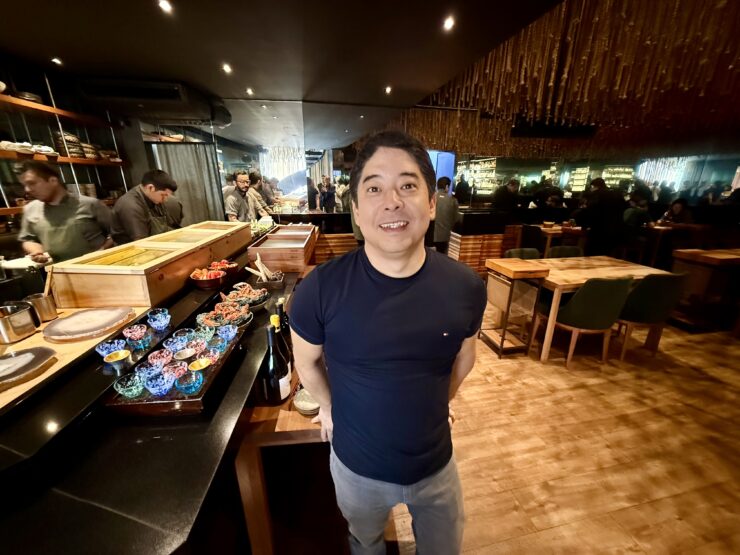
©Linda Barnard
The first, Maido, recently took the top spot on The World’s 50 Best Restaurants, an honor that has drawn controversy over a voting system that relies on anonymous, unpaid judges.
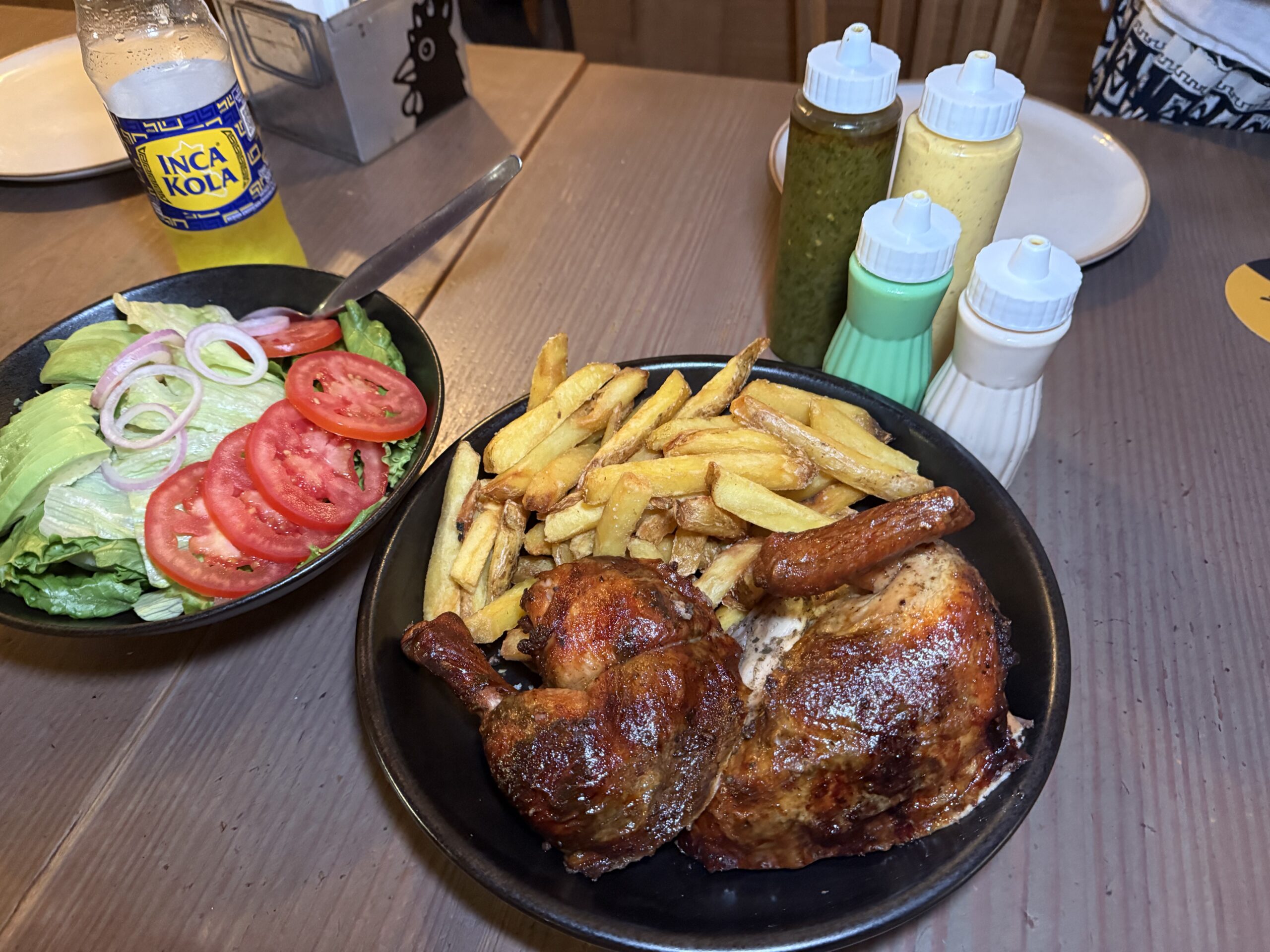
The 12-course Maido Experience menu costs $385 USD, without drinks. The second was a $22 plate of rotisserie chicken at Tsumura’s Tori Polleria restaurant.
Maido earned the title of world’s best restaurant for Tsumura’s approach to Nikkei cuisine, a blend of Japanese culinary styles and Peruvian ingredients born in Lima in the late 19th century.
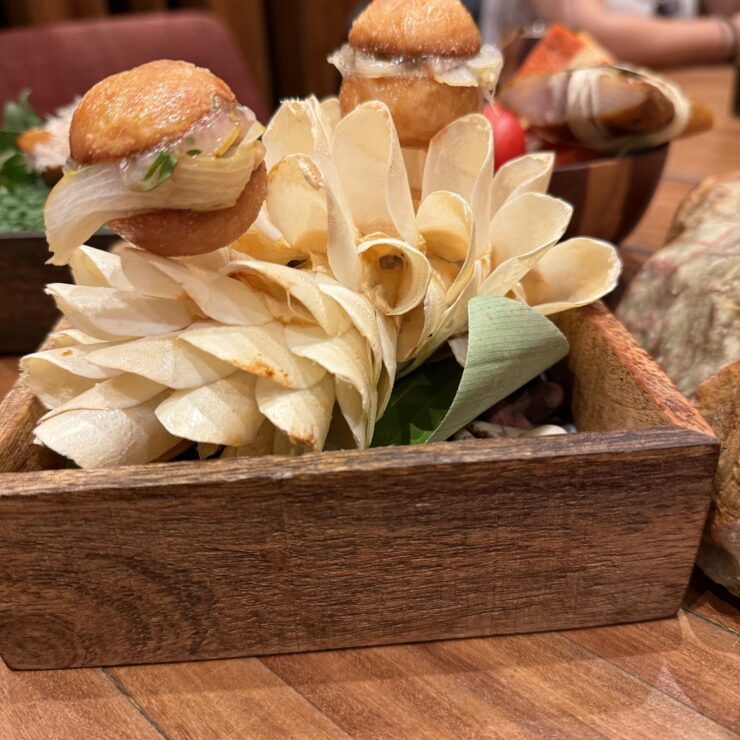
The tasting menu included nods to traditional dishes like smoked paiche, a surfboard-sized Amazon river fish. The two-bite sandwiches came on a stand of thumbnail-sized paiche scales.
There was Chilean seabass with citrusy Amazonian cocona fruit, and rich veal cheeks served with a sauce made from nutty macambo beans and pleasantly sour tucupi (fermented casava root). A generous chunk of rosy bluefin tuna belly was carved tableside for sashimi.
Maido means “thanks for coming again.” Diners typically book months in advance for a chance to eat at Tsumura’s contemporary 50-seat restaurant in the upscale Miraflores neighborhood.
Playing Peruvian Chicken
While “coming again” to Maido may depend on deep pockets, Tsumura’s other Lima restaurant, Tori Polleria, exemplifies his philosophy of democratizing deliciousness. It’s dedicated to smoky, charcoal-grilled rotisserie chicken. Tsumura says rather than ceviche, pollo a la brasa is truly the national dish, the thing every Peruvian craves. It even has its own national day.
At Mercado No. 2
During my visit, I immersed myself in Peru’s bounty on a morning tour of the bustling local food market, Mercado No. 2 de Surquillo. Guide Cesar Contreras and chef Marco Viena of Haku Tours showed us the huge diversity of Peru’s natural larder, with foods from the ocean to the Andes and the Amazon. Many things were unknown to me.
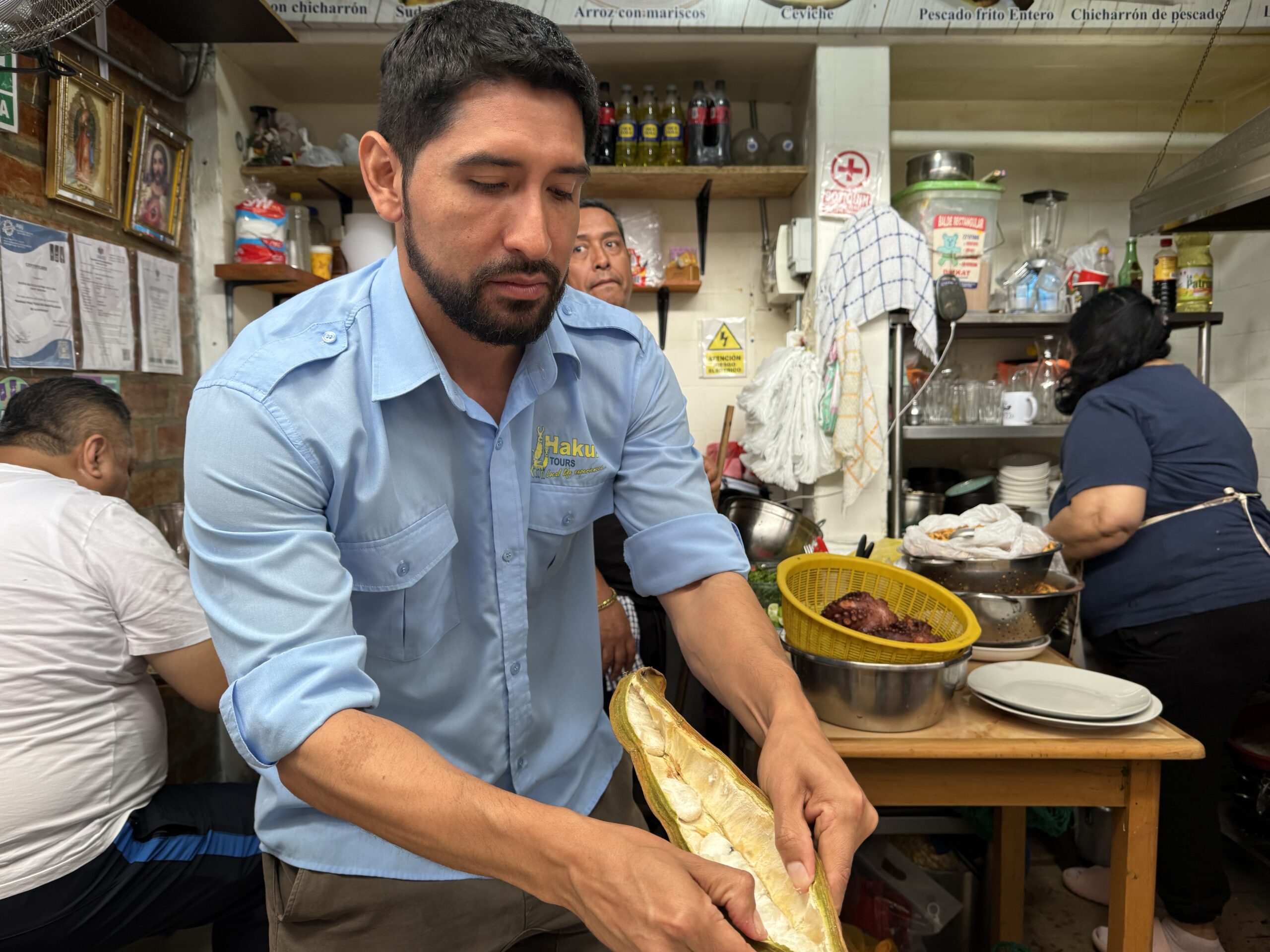
Take the yellow-green pod of the pacay fruit. It was the length of Contreras’s forearm. He slit it open to reveal beans encased in sweet, vanilla-flavoured pulp. I slurped custardy lacuma fruit, tried a steaming cinnamon-scented apple and quinoa breakfast drink, and a restorative bowl of chilcano fish soup. Contreras said the gingery broth is a bona fide hangover cure.
Some 160 kinds of fruit grow in the Andes. There are 450 varieties of chilis, more than 50 colorful varieties of corn. Some 4,000 potato and tuber varieties originated in Peru, growing in a staggering array of shapes and shades. From home cooks to Michelin-starred chefs, Peruvians match the proper potato to the dish with sommelier-like precision.
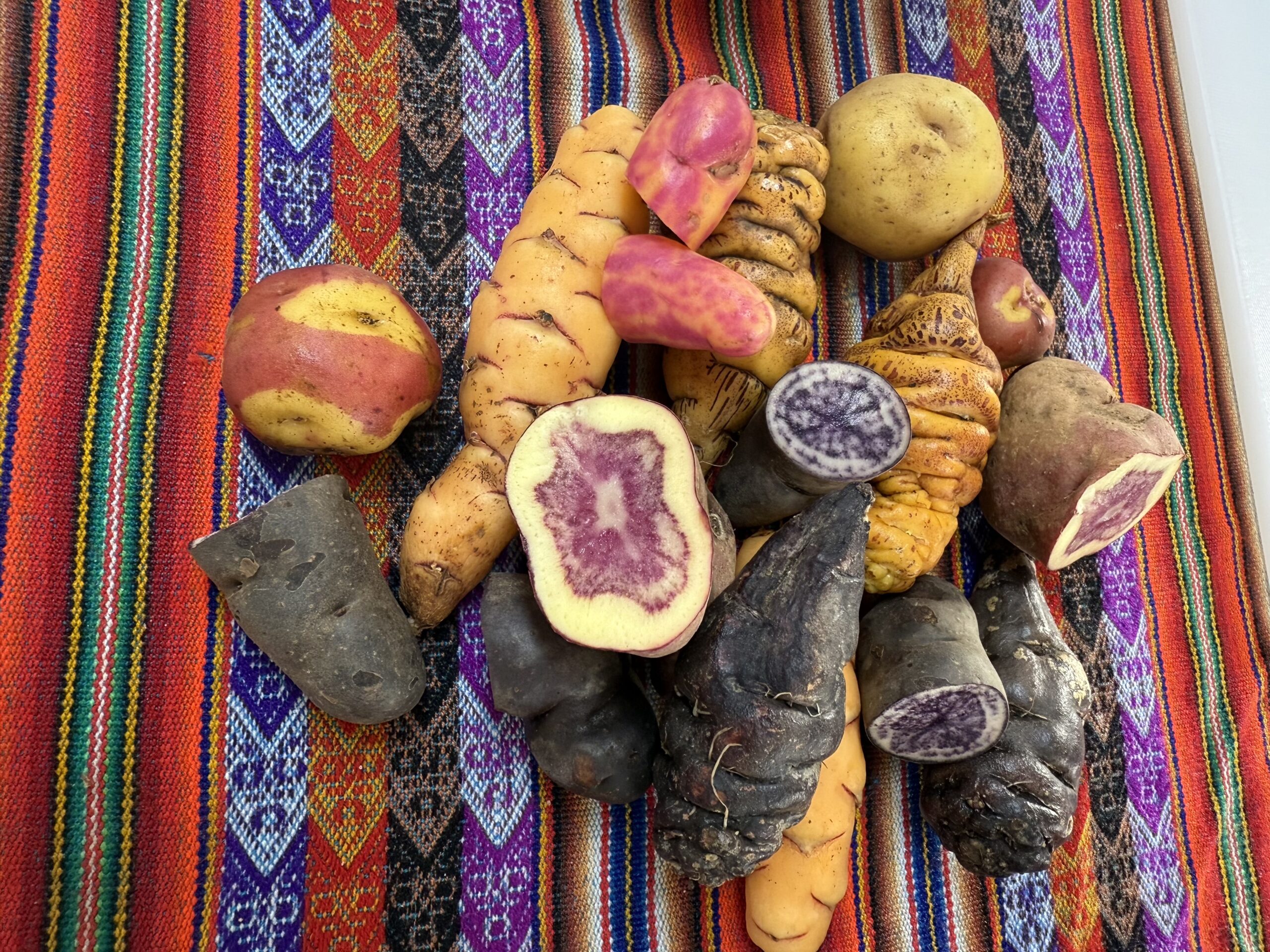
Colorful potatoes at a Haku Tours cooking class. ©Linda Barnard
Tsumura said Peruvian recipes come from Indigenous peoples as well as immigrants from Spain, China, Japan, and Africa. There’s lomo sataldo (Chinese stir-fried beef) and my new favourite, papas a la Huancaina, sliced potatoes coated in a chunky sauce of pureed yellow peppers, garlic, fresh cheese, lime juice, and evaporated milk. Like every dish in Peru, it’s aggressively salted with naturally pink Maras salt harvested from the Sacred Valley of the Incas.
Beautiful Boho Barranco
The leafy Barranco neighbourhood is known for streets lined with Belle Époque mansions. It’s evolved into a boho-chic area of restaurants, boutiques, galleries, and murals, and was my favourite part of Lima. At the romantic wooden Bridge of Sighs pedestrian overpass, teen girls in frothy ballgowns posed here for quinceañera portraits to mark their 15th birthday.
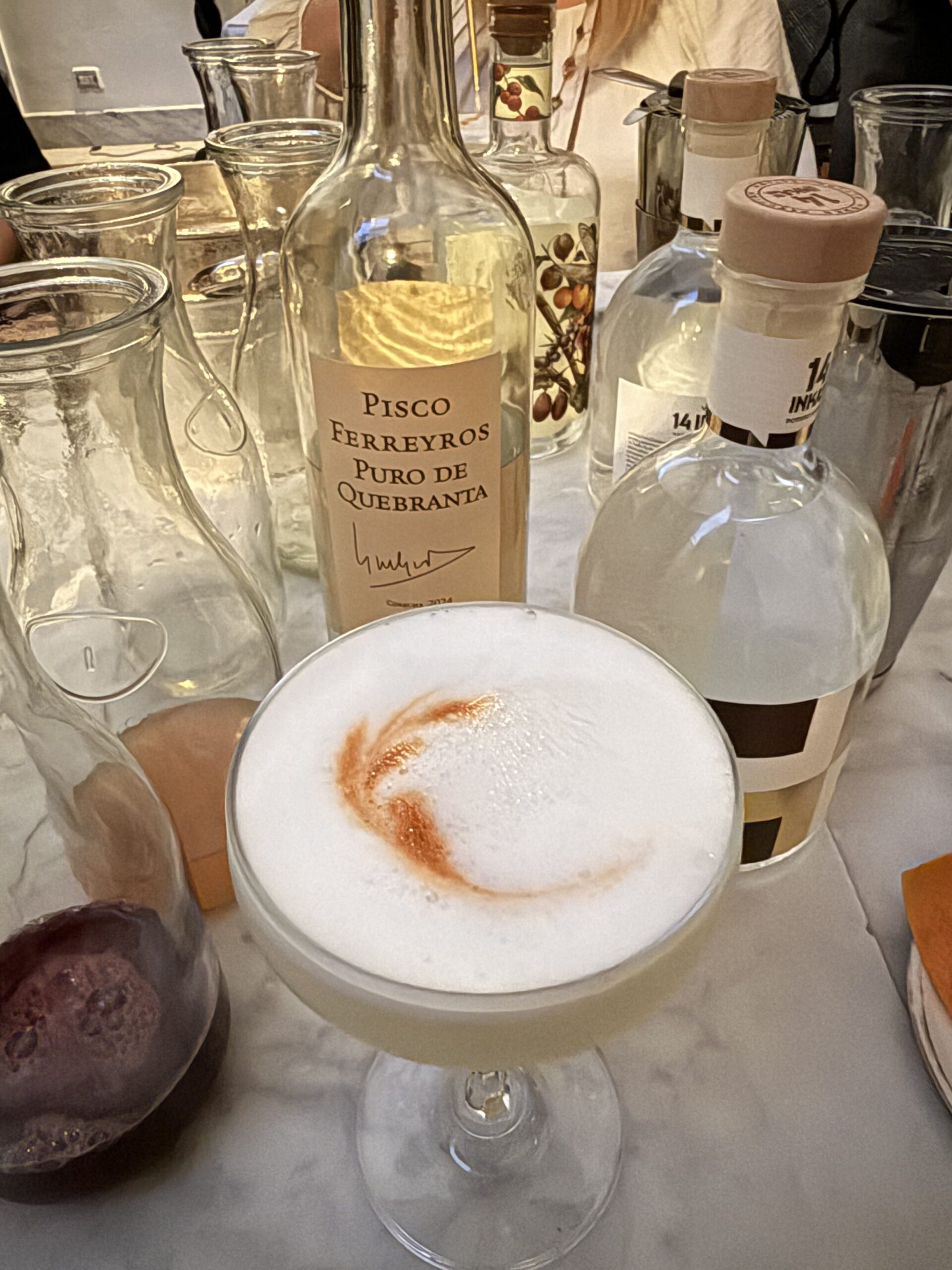
Learn how to make Peru’s signature pisco sour cocktail at Hotel B. ©Linda Barnard
You don’t have to be a guest at Hotel B to take a cocktail class. The Relais & Châteaux property is in a white 19th-century mansion and has an impressive modern art collection. We learned to craft drinks with Peruvian spirits, including the frothy, tangy pisco sour. Peru’s national cocktail is based on a distilled spirit that tastes like grappa’s cousin. The secret is in dry-shaking the egg whites first.
Venezuelan chef Juan Luis Martínez opened Mérito in Barranco in 2018 and also made the World’s 50 Best Restaurants list last year. The bijoux dining room is an informal setting for Martínez’s 11-course menu. It included delicious scallop ceviche with brilliant green leche de tigre made from super-citrusy Amazonian cactus fruit called sanky.
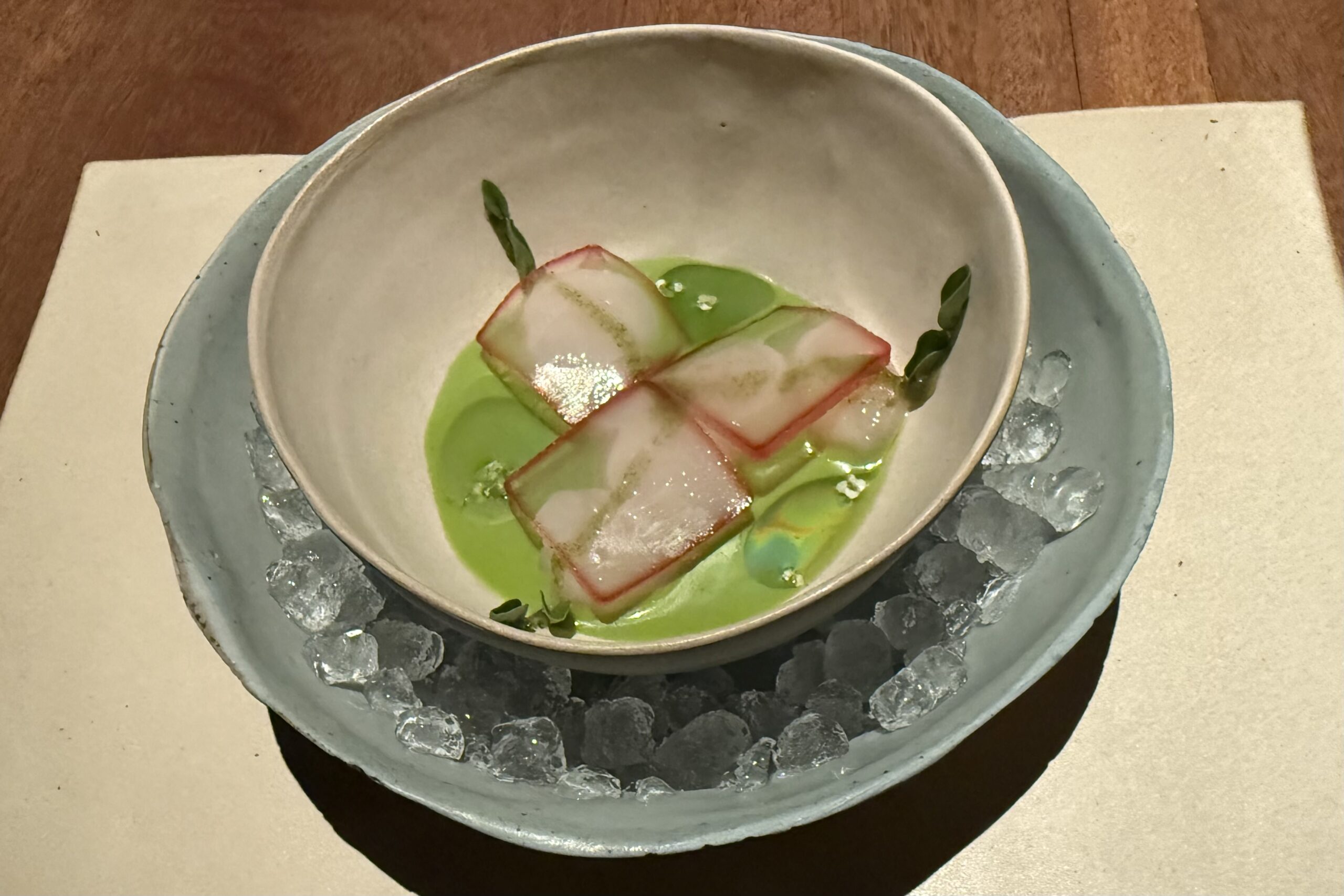
A dish of scallop ceviche with leche de tigre made from Amazonian cactus fruit called sanky at Mérito Restaurant in Barranco. ©Linda Barnard
The meal ended with a lighter-than-air coffee-flavoured cake made from freeze-dried, ground papa voladora (flying potato). The triangular Peruvian tuber grows on trailing vines.
Coffee and Chocolate
Peru is known for growing excellent coffee and the key ingredient in chocolate, cacao. We got the best of both worlds with a tasting class at Ciclos Café and El Cacaotal, a husband-and-wife-owned boutique coffee roastery and chocolate shop in Barranco. American-born Amanda Jo Wildey runs the chocolate library on the second floor, where she sells hard-to-find bars of exceptional Peruvian chocolate.
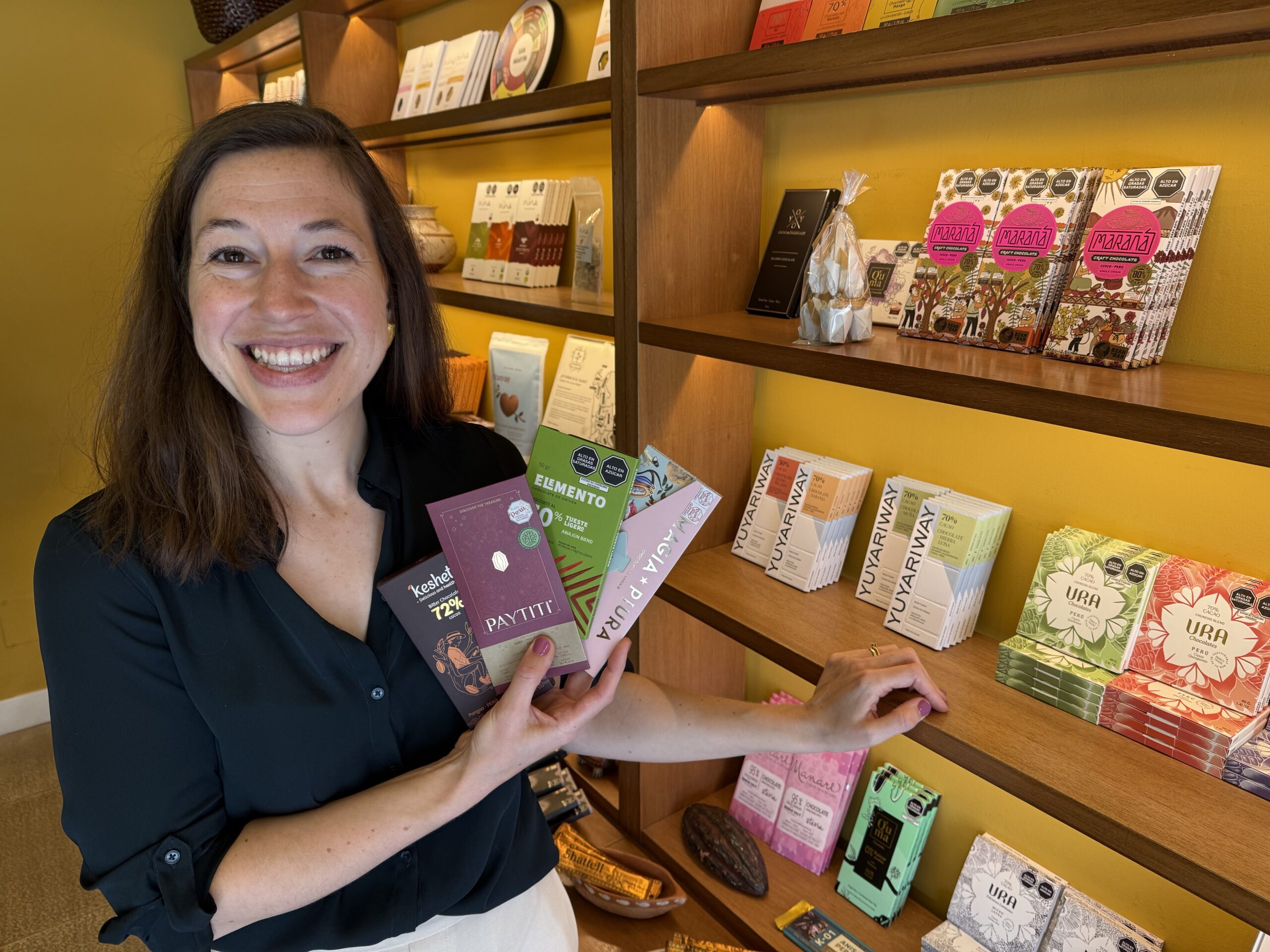
American-born Amanda Jo Wildey with some of the hard-to-find Peruvian chocolate available at Ciclos Café and El Cacaotal in the Barranco district of Lima. ©Linda Barnard
Downstairs, her husband Felipe Aliaga Ramirez, a self-confessed coffee nerd, runs the roastery. They source their products from farmers all over the country, and their knowledge is impressive. You’ll find independent coffee shops all over Lima. I started my mornings at Puku Puku Café in Miraflores, which ranked in the top 20 of The World’s 100 Best Coffee Shops 2025 for its Peruvian-sourced coffees.
Arequipa
Photogenic Arequipa is surrounded by three volcanoes: Misti, Chachani, and Pichu Pichu. On a hot day, Misti’s snow-capped peak inspires ice cream cravings.
Arequipa’s contribution to the ice cream world is queso helado (frozen cheese). There’s no cheese in this refreshing treat. A thin mixture of boiled and cooled cow’s milk, a bit of sugar, dried coconut, vanilla, cloves, and cinnamon is swirled in a stainless-steel bowl, tucked into an ice-filled metal basin. As the maker spins the bowl, the newly frozen edges are carved away, and the bowl is served with a dusting of cinnamon. Texture and taste make this treat irresistible as firm, icy shards melt into a sweet, smooth puddle on the tongue.
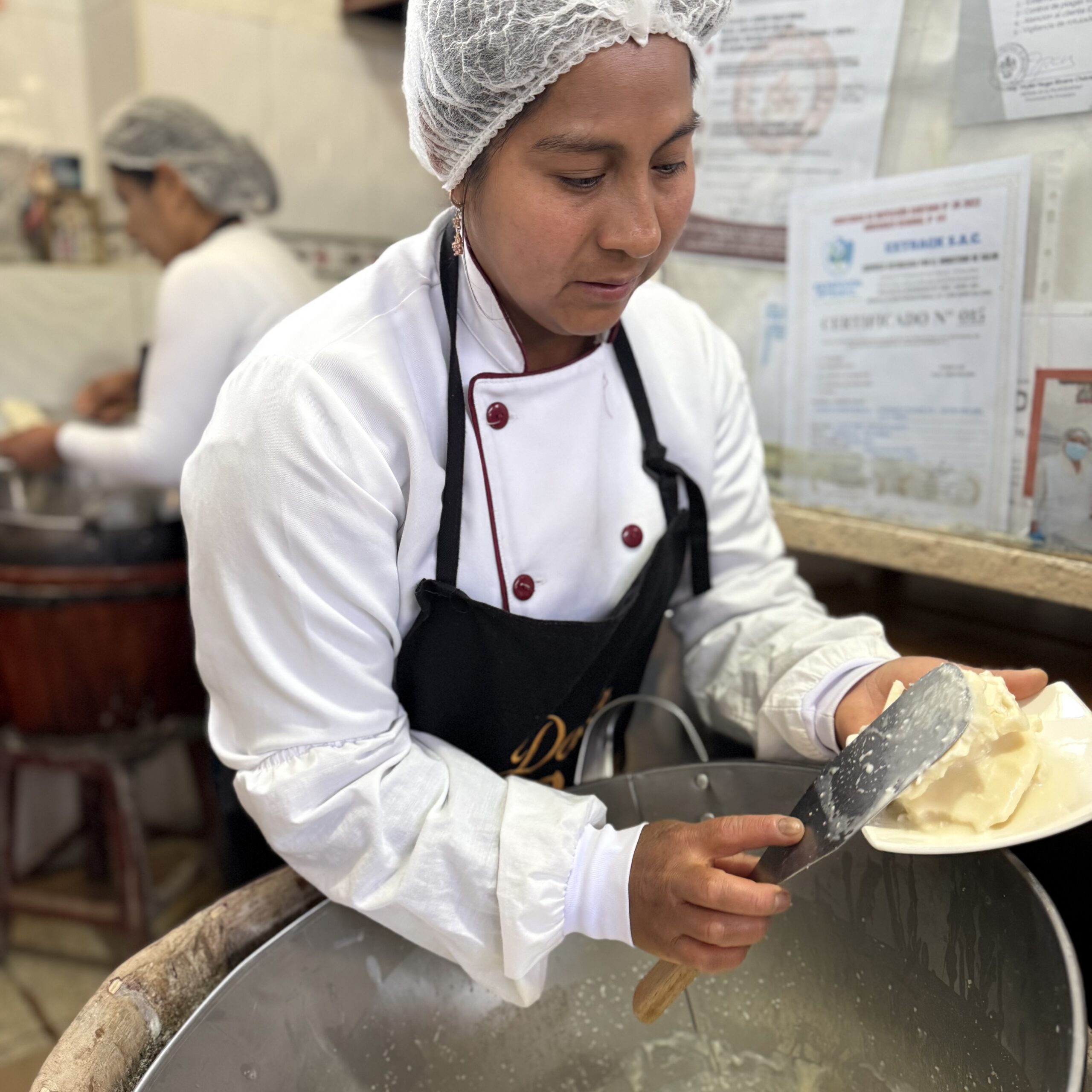
There’s no cheese in queso helado, Arequipa’s sweet frozen treat. ©Linda Barnard
Be sure to try it at historic San Camilo Market. That is where hundreds of merchants sell everything from sunhats to herbs and ghostly-white, rock-hard, freeze-dried potatoes called chuño. On the second floor, first Doña Rosa, and now her family, have been making and serving queso helado at their six-table stand since 1948.
The City on Foot
The old city center, with its narrow cobblestone streets and impressive heritage buildings, is best discovered on foot. The colonial central Plaza de Armas is a good place to rest on a bench and watch the world pass.
The winding passages of the well-preserved 16th-century Santa Catalina Monastery are Arequipa’s most popular tourist spot. A guide explained how girls as young as 12 entered the convent to leave the world behind. Their families hoped for heavenly rewards and status by giving up a daughter to the cloistered order.
Across the street, restaurant 13 Monjas (13 Nuns) has a pasta-maker at the ready for orders and a glowing pizza oven for artisanal pies. I added a sample platter of Peruvian cheeses.
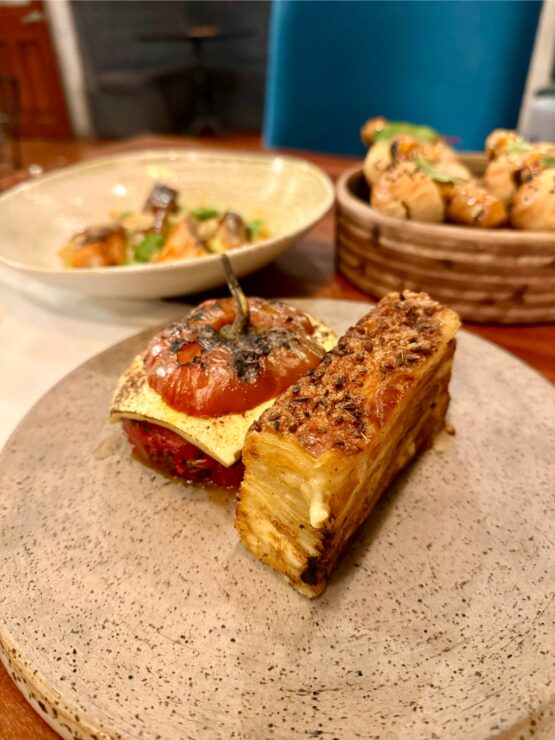
I had the local dish, rocoto relleno, more than once. The baked mildly spicy red pepper is typically stuffed with flavorful ground beef and lots of cheese. It comes with pastel de papas, a multilayered, cheesy potato galette that puts scalloped spuds to shame.
Clan Restaurant
At Clan Restaurant, the menu focuses on stories of heritage, farming, and culture through a nine-course lunch served beneath a handsome barrel-vaulted ceiling. A box of illustrated index cards explains each dish in English. I was invited to use a traditional stone pestle, called a batan, to make a chunky peanut sauce for a single dish. I also enjoyed the siwichi, the Quechua word for “fish,” cured bonito served in leche de tigre.
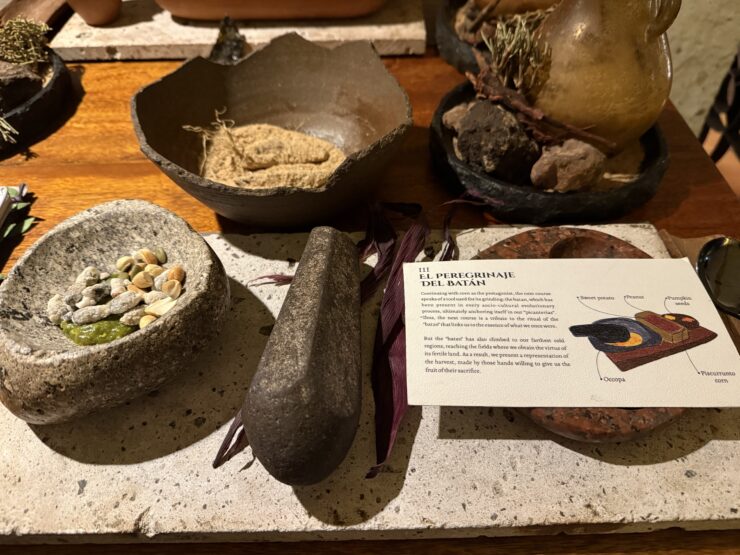
I got up from the table with body and mind well fed by a growing admiration for Peruvian food.
If You Go
Where to Stay in Lima
AC Marriot Miraflores has large rooms and faces the picturesque Malecon.
Where to Stay in Arequipa
Costa del Sol Wyndham Arequipa Hotel has resident alpacas for guests to visit, including handsome male, Marco.
Getting There
Five U.S. airlines offer non-stop flights to Lima. I flew direct from Toronto with Air Transat. Air Canada also has direct flights from Canadian airports.
Learn more
Start planning your trip at www.peru.travel/
Linda Barnard was hosted by PROMPERU which did not preview this story.
