
Munich is known worldwide for its joyful annual Oktoberfest and its colorful Christkindlmarkt (Christmas Market). Most visitors arrive ready to see the sights and sample local beers and wines.
Few of them are aware of Munich’s dark past.
Munich was Adolf Hitler’s adopted hometown and the birthplace of the Nazi Party. What would ultimately become the Third Reich started in Munich’s beer halls. Dachau, the first concentration camp, opened nearby in 1933. Many high-ranking SS officers had homes and villas in Berchtesgaden, an hour south of Munich. The Eagle’s Nest, Hitler’s mountain retreat, overlooks the town from its perch atop Kehlstein Mountain.
The Third Reich disappeared after World War II, but vestiges of the Nazi reign of terror are visible in the city and surrounding area if you know where to look.
Several companies offer historical city walking tours and tours to Dachau. They tell the story of Hitler’s rise to power and the fate of those who dared to oppose him. I joined a Third Reich walking tour around Munich, another tour to Dachau, and a third tour to Berchtesgaden and the Eagle’s Nest.
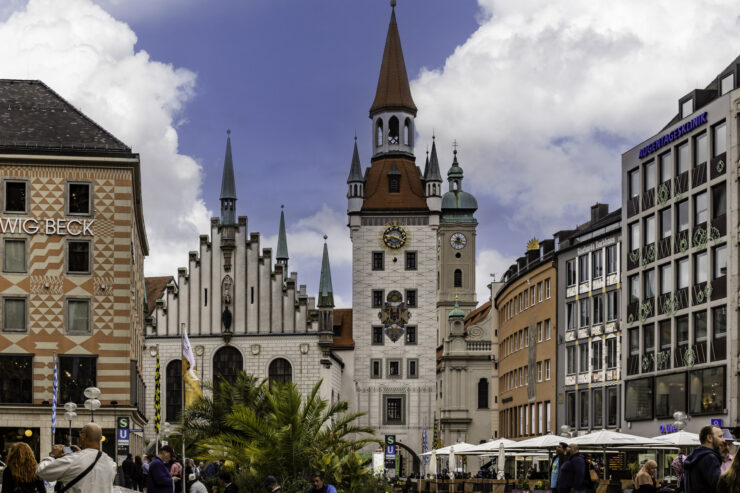
Our Third Reich walking tour began at Marienplatz (St. Mary’s Square). It is the historic heart of Munich and the city’s central square since 1158. We were immediately taken in by the Gothic Revival architecture and Rathaus-Glockenspiel that Munich is known for. However, our vision of Marienplatz as a beautiful medieval town square was clouded when we learned it was the epicenter of the Third Reich.
Hofbräuhaus
The Hofbräuhaus at the east end of Marienplatz is a famous beer hall. It is where Adolf Hitler held his first meetings and delivered speeches that ignited the Nazi movement. The first floor is a continuous party for beer-loving tourists. Waiters dressed in lederhosen and waitresses wearing dirndls serve liters of beer, pretzels, and German specialties while an oompah band plays popular drinking songs.
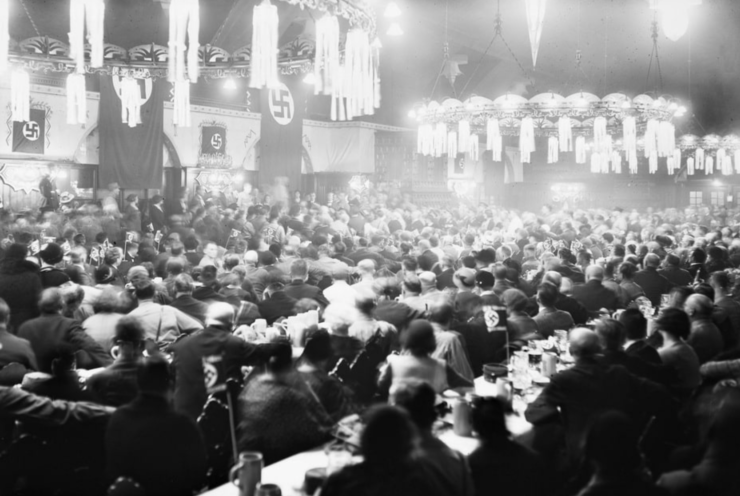
Two floors above the merriment is the Festsaal (Festival Room), where Hitler presented his Twenty-Five-Point Program on February 24, 1920. The plan outlined the Nazi political philosophy and served as the foundation for the party’s rise to power. High-ranking party officials met at the Hofbräuhaus on February 24th each year to celebrate Hitler’s rise to power.
The Festsaal is now an event space for church services, small concerts, and parties. The paintings and murals that decorate the walls are the same ones that were there during the Third Reich. However, the swastika flags depicted in the murals have been meticulously repainted with Bavarian flags.
(Credit: War Documentary)
Altes Rathaus
The Altes Rathaus (Old Town Hall) next door was built in 1310 and is a Munich landmark. Like most visitors, we were immediately impressed with the intricate stained-glass windows, timbered archways and curving staircases. Most visitors don’t notice a plaque near the entrance that commemorates Kristallnacht, the first step in the annihilation of the Jewish population in Europe.
On November 9, 1938, Nazi leaders gathered at the Altes Rathaus to hear Josef Goebbels, Minister of Propaganda. It is here that he delivered his famous speech calling for nationwide violence against the Jewish population.
After his address, members of the Sturmabteilung (SA) and Schutzstaffel (SS) ransacked Jewish homes and businesses and burned synagogues in cities throughout Germany. The attack became known as the Kristallnacht (Night of the Broken Glass) because the streets were littered with broken glass the next day.
Feldherrnhalle
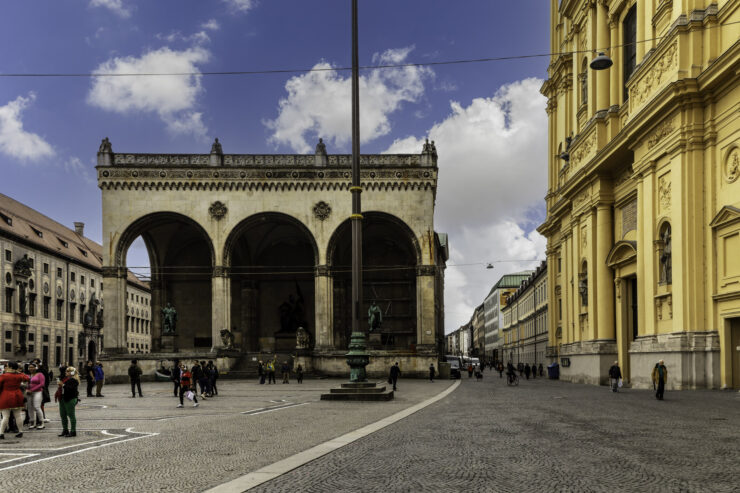
Our next stop was the Feldherrnhalle (Field Marshals’ Hall), an Italian Neoclassical building that resembles the Loggia dei Lanzi in Florence. It presides over Odeonsplatz (Odeon Square) and hosts an open-air classical music festival each July.
In 1923, the Feldherrnhalle was the site of a gunfight during the Beer Hall Putsch, a failed coup d’état led by Hitler. The Nazis erected a monument on Feldherrnhalle to honor 15 Nazis and one bystander who were killed during the revolt.
Passers-by were required to give the “Deutsche Gruß” (Nazi salute) to honor the fallen party members. An SS honor guard stood in front of the memorials day and night and instantly arrested anyone who refused.
Dodger’s Alley
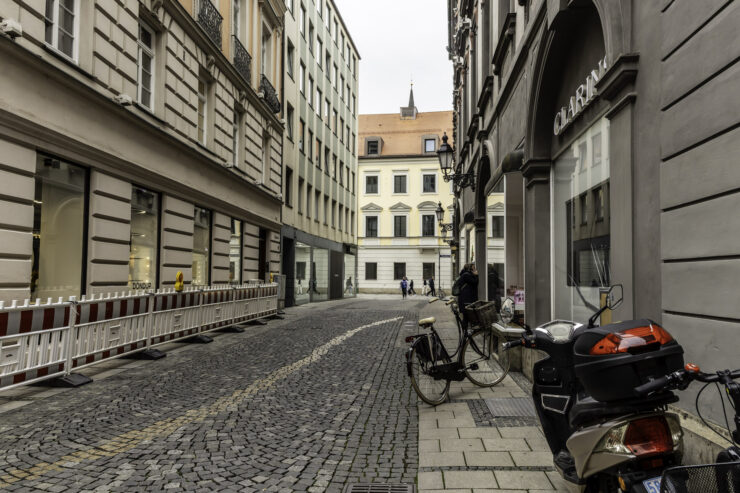
People who opposed the Nazis avoided the Feldherrnhalle by walking down the Viscardigasse, a small pedestrian street around the corner. It looks like thousands of other cobblestone streets in Munich, but it became known as “Dodger’s Alley” because it was the perfect detour for citizens who wanted to avoid saluting a regime they hated.
In 1995, the City of Munich commissioned a sculptor and bronze caster to embed a foot-wide, S-shaped golden/bronze trail into the cobblestones on Viscardigasse along the detour route to honor citizens who dared to defy the Nazi regime.
Königsplatz
Our next stop was Königsplatz, (King’s Square), one of Munich’s most beautiful squares. It’s home to several museums that surround an expansive park with walkways and grassy areas for sunbathing and picnics.
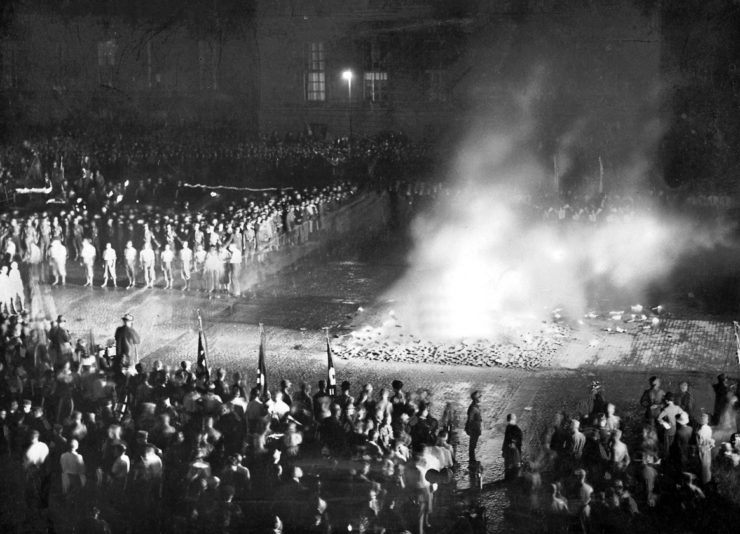
In 1935, the Nazis paved over the grass to create a place to hold their rallies. Königsplatz is also where the infamous book burnings took place.
After World War II, Königsplatz was restored to its former beauty. The grass is back and the swastikas have been replaced with German and Bavarian flags. All that remains of the Third Reich is a commemorative plaque and a memorial to the book burnings.
(Credit: NS Dokumentationzentrum)
The Nazi Quarter
The area east of Königsplatz is called the Nazi Quarter because most of the political and administrative buildings were headquartered there during the Third Reich. Most of the buildings were destroyed during Allied bombing raids. We visited two that survived and one that has been rebuilt.
Wittelsbach Palace
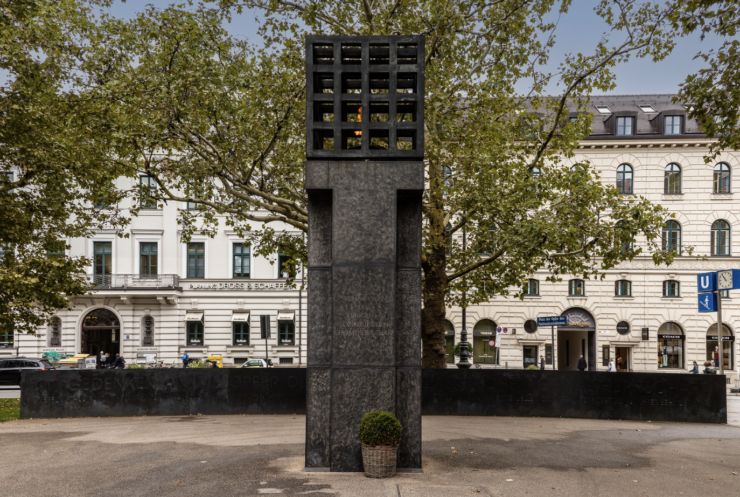
The Wittelsbach Palace, one of the surviving buildings, is now the Bayerische Landesbank. It was originally the residence of Ludwig I. However, during the Third Reich, it served as Gestapo headquarters and was also a prison and torture chamber.
Across the street, the Eternal Flame Monument in the Square for the Victims of National Socialism pays tribute to everyone who suffered at the hands of the Nazis.
Führerbau
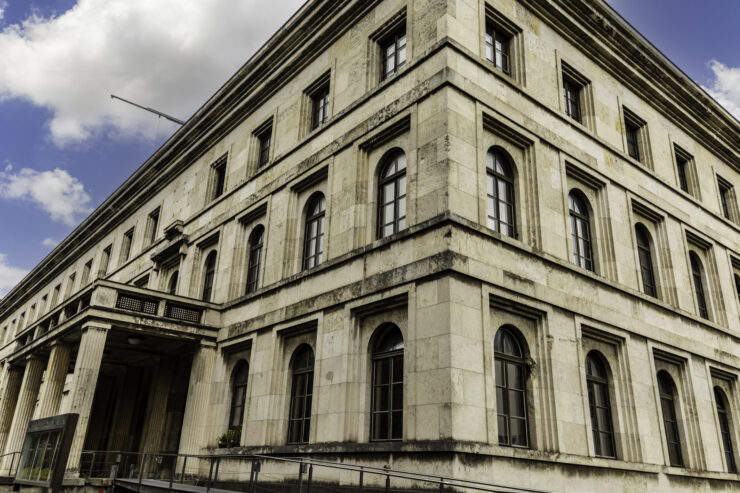
The Führerbau (Führer’s building), which also survived, was designed by Paul Ludwig Troost, Hitler’s favorite architect. During the Third Reich, it served as Nazi Party headquarters and was the site of the signing of the historic 1938 Munich Agreement. The Agreement forced Czechoslovakia to cede the Sudetenland to Germany.
The Nazis stored thousands of stolen art masterpieces that were stolen or extorted from Jewish collectors in the cellar.
Today, the Führerbau is the home of the University of Music and Performing Arts. Ironically, it is next door to the Israeli Consulate.
The Brown House
The Brown House, which was destroyed in a 1943 bombing raid, was the headquarters for the National Socialist German Workers’ Party and Third Reich leadership. Hitler had an office there, as did Rudolf Hess, his private secretary, and Ernst Röhm, the head of the Sturmabteilung (SA). The Nazis also imprisoned and tortured political opponents in the basement.
Between 2011 and 2015, the city, state, and federal governments built the Munich Documentation Center for the History of National Socialism on the Brown House site. The museum opened on April 30, 2015, the 70th anniversary of Munich’s liberation by U.S. forces.
White Rose Pavement Memorial
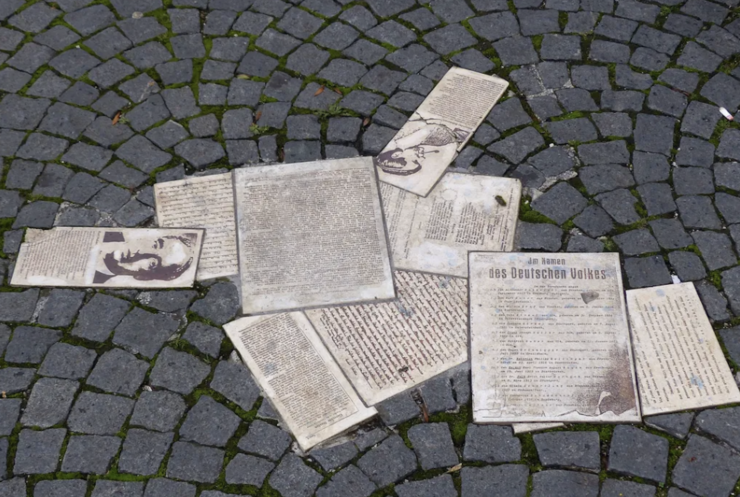
At Ludwig-Maximilian University, we saw an unusual display of randomly tossed leaflets embedded in the floor at the entrance to the Central Atrium. The display honors the White Rose, a student resistance group led by Hans and Sophie Scholl.
Most White Rose members were students at Ludwig-Maximilian University and former members of the Hitlerjugend (Hitler Youth) or the Bund Deutscher Mädel (League of German Girls). They rejected the National Socialism ideologies they’d been taught and retaliated by distributing inflammatory leaflets. They also spread political graffiti throughout Munich and other southern German cities.
In February 1943, Sophie and Hans Scholl and other White Rose members tossed stacks of anti-Nazi leaflets into the main atrium of Ludwig-Maximillian University a few minutes before classes were scheduled to be dismissed. A janitor saw them and turned them over to the Gestapo. All were arrested and beheaded.
I joined another tour to visit Dachau, the infamous concentration camp 35 miles northwest of Munich. We left the tour company’s office as a group and traveled by train for a few stops. After exiting the Dachau station, we boarded a bus for a short ride to the concentration camp site.
Dachau
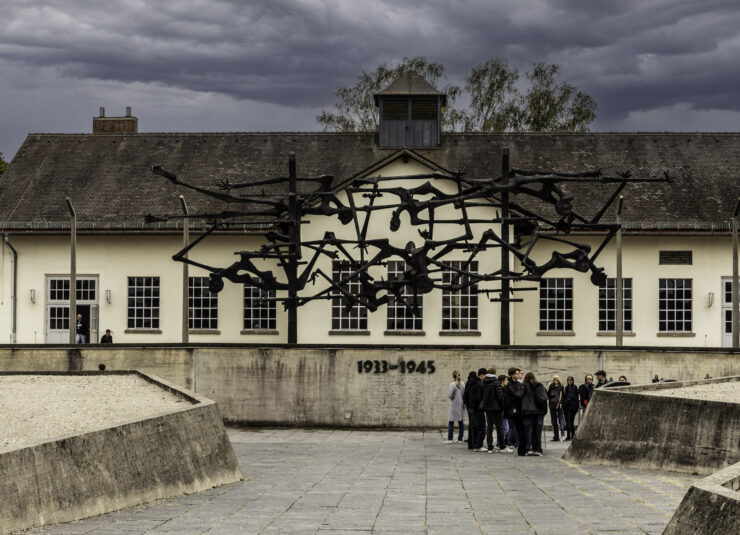
Dachau was the first concentration camp the Nazis opened. It was their “model camp,”the blueprint for thousands of concentration camps built throughout Europe and a training center for future commandants and guards.
Dachau wasn’t a death camp because it wasn’t designed for mass exterminations like Auschwitz, Treblinka and other camps in Poland. However, an estimated 41,500 people died of disease or starvation, or were killed before American troops liberated it in April 1945.
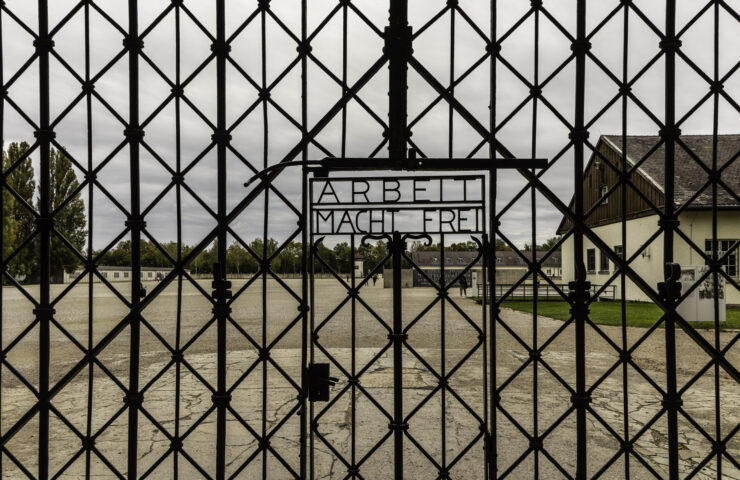
Our walk down a peaceful tree-lined lane ended abruptly at an iron entrance gate with the notorious inscription, “Arbeit Macht Frei” (Work will make you free). A bronze sculpture in front of the camp’s main building shows human figures entangled in barbed wire.
The buildings look the same as they did during the Third Reich, and we could only imagine the conditions that almost 200,000 political prisoners, Jews, homosexuals, communists and Catholic priests endured between March 1933 and April 1945.
The final leg of our Third Reich odyssey took me close to the Austrian border where I joined a tour to Berchtesgaden and the Eagle’s Nest.
Berchtesgaden
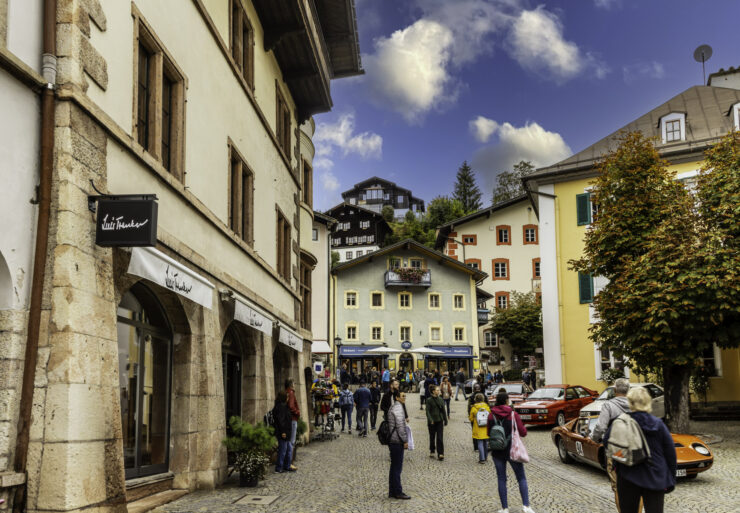
Berchtesgaden is a small town an hour south of Munich. At first glance, it’s a picture-perfect alpine village with cobblestone streets, charming shops and quaint chalets that display window boxes full of colorful flowers.
During the Third Reich, Berchtesgaden was the “crown jewel” of the Nazi empire.
Hitler and many high-ranking SS and party officials had homes and offices in town or in Obersalzberg, the surrounding area. The Nazi insignia are gone, but it’s easy to find remnants of the town’s Third Reich past.
The train station looks the same as it did during World War II. The flagpoles are the same ones that flew Nazi flags. The mural on the exterior wall is the same, except the swastika on the flag has been scrambled into a nondescript design.
At the train station and throughout the town, round displays over door frames that are part of the local architecture once displayed swastikas and eagle insignia.
A former Nazi guard house is on the main road near the train station next to the river. During World War II, it was the main guard station between Berchtesgaden and Obersalzberg. It’s now a gift shop, but is preserved in its original condition. The date (1937) is still carved above the door, but the eagle and swastika are gone.
The Berchtesgadener Tunnel near the train station was built for a railway that would connect Berchtesgaden with Salzburg, Austria. The railway was never completed. So, Hermann Göring used the tunnel to store stolen artwork, and townspeople used it as a shelter during Allied bombings.
The Eagle’s Nest & Obersalzberg
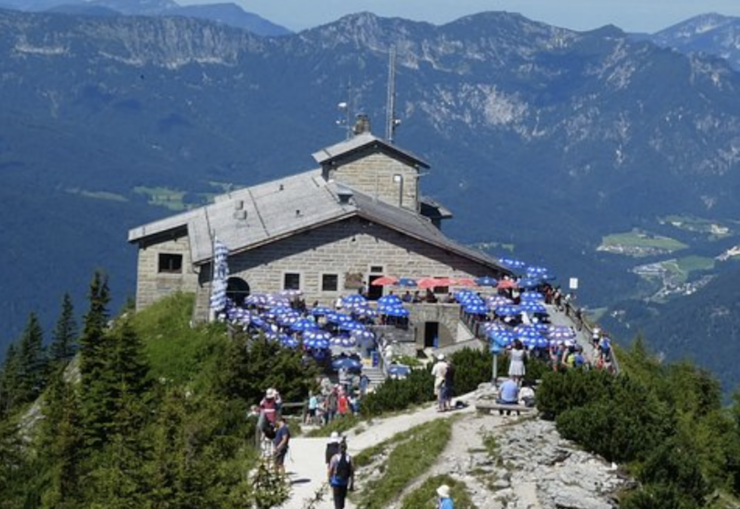
The most well-known Third Reich relic in Obersalzberg is the Eagle’s Nest, Hitler’s mountain retreat. It’s also called Kehlsteinhaus because it reigns over the town of Berchtesgaden from its perch atop Kehlstein Mountain.
The Eagle’s Nest was built in 1938 as a 50th-birthday present for Hitler and was the site of social and business events for high-ranking party members. Today, it’s a restaurant dominated by a red Italian marble fireplace that was a gift from Italian dictator Benito Mussolini. Visitors enjoy panoramic views of the Alps and can stroll through a historical exhibition that chronicles the Eagle Nest’s Nazi past.
Getting to the Eagle’s Nest is an experience unto itself. Hitler’s engineers built a special access road that requires buses that can navigate the narrow single-lane road, steep inclines, and hairpin turns. They cut a tunnel 407 feet into rock at the base of Kehlstein Mountain and installed an extravagant brass and mirrored elevator that transports visitors to the Eagle’s Nest in less than a minute.
There are bomb shelters, bunkers, and ruins of historical buildings, such as Hermann Göring’s villa, where US troops discovered half a million bottles of wine, champagne, and liquor, and Kampfhäusl Hut, where Hitler wrote the second installment of Mein Kampf. Taking a World War II guided tour with a guide who knows the area is the best way to see them.
We ended our journey through the Third Reich on the terrace of Hitler’s mountain lair. The sweeping view of the Alps that we were seeing was the same vista he and Nazi party leaders admired as they planned the destruction of Europe.
If You Go
- Radius, Viator and Get Your Guide offer Third Reich walking tours and tours to Dachau. Book early online. Tours fill up fast, especially during the summer and special events like Oktoberfest and Christkindlmarkt.
- The tours aren’t recommended for small children because of the emotional and intense subject matter and authentic exhibits at Dachau.
- Don’t give the Nazi salute or yell “Heil Hitler” or “Sieg Heil,” even as a joke. They’re criminal offenses in Germany and can result in severe fines, immediate deportation, and refusal of entry into countries in the Schengen Area (most of the European Union).
- Wear comfortable shoes! You’ll be doing a lot of walking, and much of it will be on cobblestones and uneven terrain.
- Dress in layers and bring a waterproof jacket or umbrella, if the weather forecast looks questionable.
- Bring bottled water and snacks, if needed. There are no stops during the Third Reich walking tour. There’s a cafeteria in the Dachau Visitors Center, but there’s limited free time during the tour.
- Take all the photos you want, but be respectful. Selfies at memorials and Dachau aren’t appropriate.
- No smoking, eating, or alcoholic beverages are allowed on the grounds at Dachau.
You May Also Enjoy Reading
The Intense History of Berlin Captivates Visitors to the German Capital
Exploring the Danube Aboard a Luxury River Cruise
