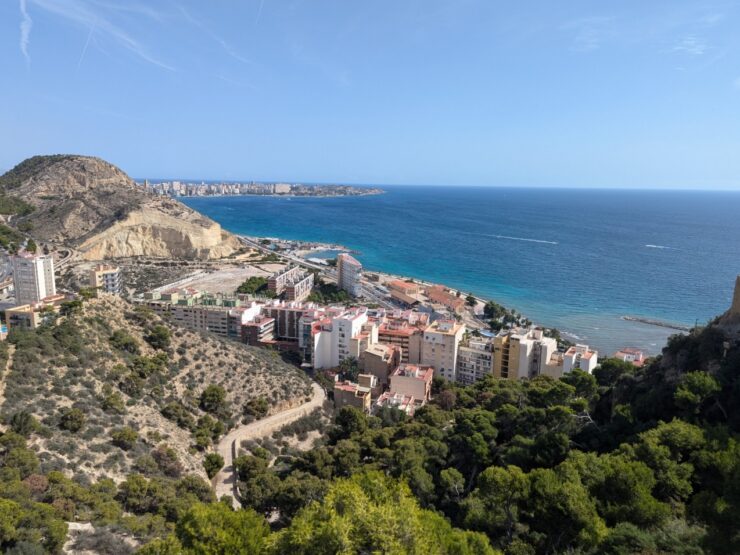
Giddy at the discovery of an unexpected fortress, I wasn’t sure what thrilled me more: the Santa Bárbara Castle in Alicante, Spain, or the shocking ease of visiting it. No parking stress, no timed entry, no advance planning—after the over-subscribed venues in Mallorca and Barcelona, the simple act of walking uphill and wandering at will felt almost illicit. The pleasure of exploring a place without barriers, schedules, or crowds amplified every view of the azure sea against the cobalt sky.
Our Plan to (Partly) Avoid Over-Tourism
This one-week road trip was a planned respite between visits to the island of Mallorca and Morocco during a month-long journey. Conscious of the anti-tourist protests in Barcelona and Mallorca, we balanced our desire to see iconic hot-spots with less-traveled areas.
While we encountered nothing but kind and welcoming interactions, I could understand why residents are fed up—queues at every museum, sold-out time slots, and a level of visitor saturation that made spontaneity impossible. Those pressures nudged us toward a slower, more meandering road trip down Spain’s Mediterranean coast, hoping to find accessible towns, uncrowded castles, and areas of quiet beauty between Barcelona and Marbella.
Bites of Reality in Southern Spain
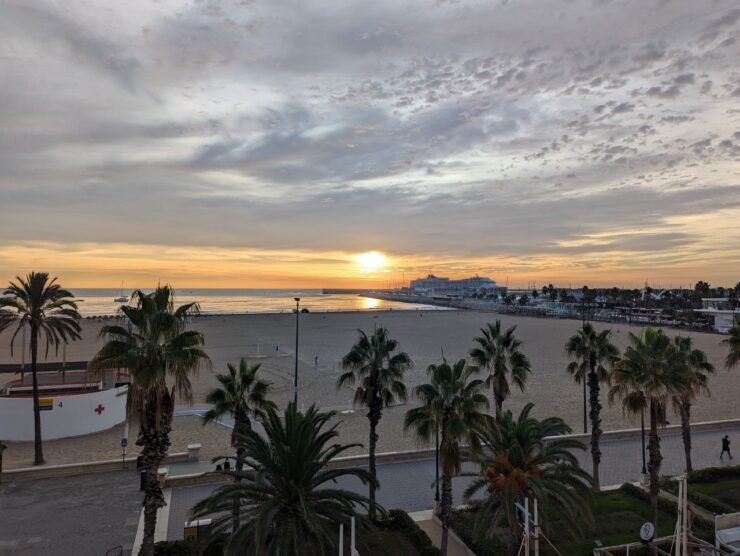
We found what we were seeking, but not right away.
Warehouses, blocky towers, and identical rows of villas made the first stretch feel thoroughly exploited, a far cry from the romantic Mediterranean we’d imagined. Water views eluded us from the roadway laid just a bit too far inland.
Still, each stop revealed its own pockets of charm, and as we continued west, the scenery improved—flat plains gave way to rolling hills, then jagged peaks that finally matched the drama we’d been chasing.
Busy in Barcelona
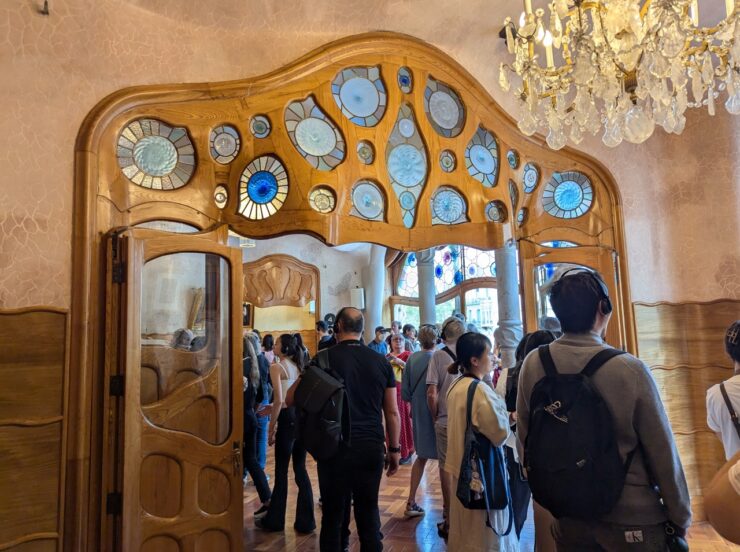
After spending a week in Mallorca, we began this road trip in Barcelona. With our friend Cindy, who joined us for our road trip, we gorged on Gaudi architecture. Exploring a different Gaudi site every day, we delighted in immersing ourselves in his cartoonish, gravity-defying style of architecture. These included Casa Batllo (a three-story residence with no straight lines), Sagrada Familia (a church that has been under construction for 142 years—will it ever be finished?) and Park Guell (a whimsical outdoor space with mosaics and art scattered throughout).
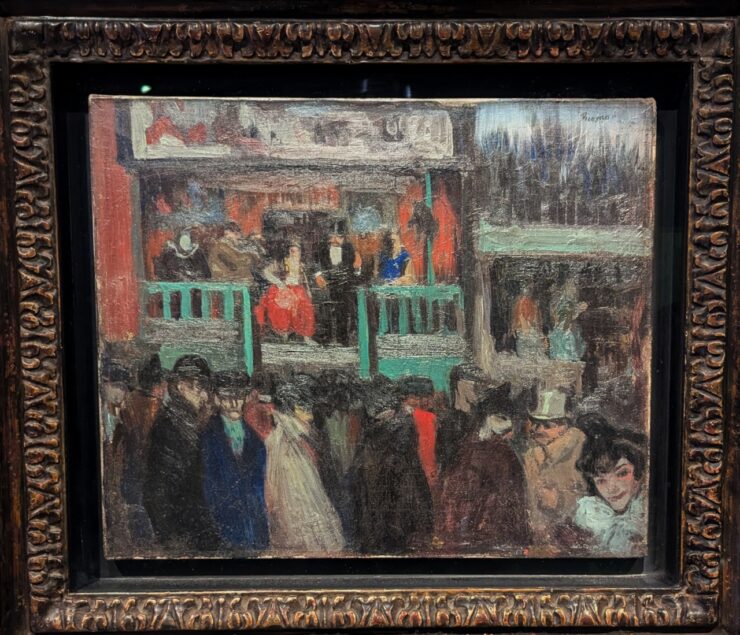
The Picasso Museum offered a fascinating, unexpected glimpse of the creative path that led to the Cubist art we think of today. The museum covers his early works, when he painted much more conventional landscapes and portraits with all the body parts in the expected places.
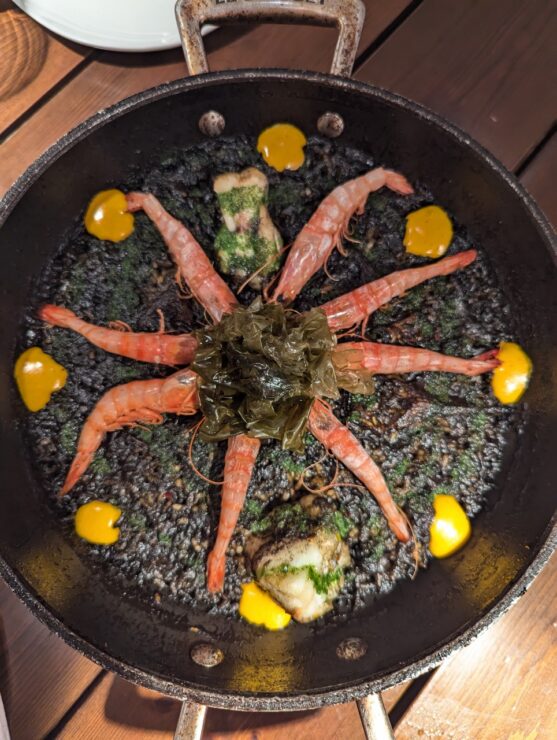
Barcelona is a foodie city that lived up to its reputation, whether it was a simple sidewalk café or the Michelin-starred Compartir Barcelona. The latter left us in a food coma after a three-hour parade of artfully displayed foods, including fresh oysters topped with caviar, crispy ham croquettes, fresh tuna, and pork loin with a savory pepper sauce.
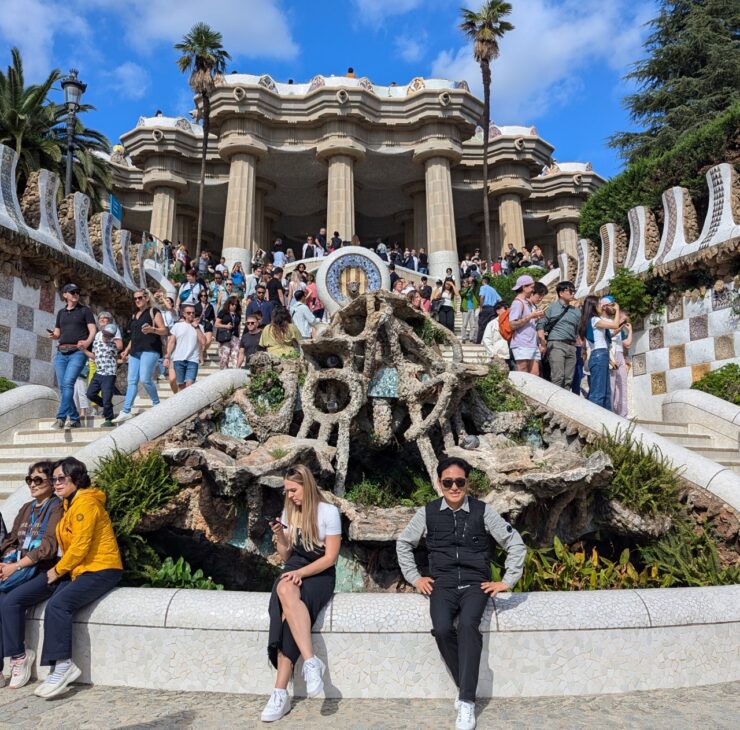
We met the expected crush of tourists at all the sightseeing hotspots with plenty of patience and extra time. Timed ticket entry was the norm, and reservations were obtained in advance. I breathed a sigh of relief each evening when we arrived at our hotel, the Ibis Barcelona Centro. Located in a residential neighborhood, we strolled to local bistros with plenty of last-minute seating for dinner.
Seaside at Sitges
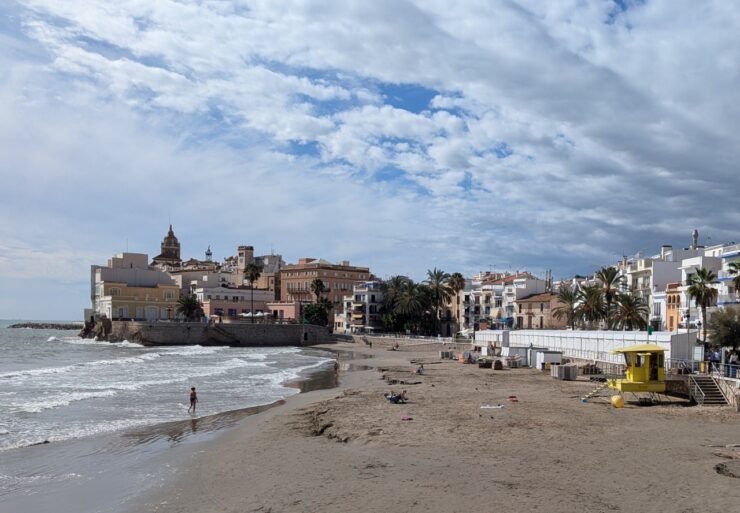
I considered staying overnight in Sitges, but the mere 45-minute drive from Barcelona wouldn’t have satisfied our desire to get on the road and see something of the coast. Deciding it would make a good lunch stop, the fishing village turned Barcelona-city-escape charmed us.
As it turned out, this was as close to the sea as we would get that day, as the highway line on the map that seemed to hug the coast didn’t offer many views of the water.
Built around a tiny bay with the Church of San Bartolomé and Santa Tecla and other buildings clinging to the very edge of dry land, it invited an immediate stroll. A search for parking, which was in short supply, delayed this impulse.
Before the trip, I swooned over the stunning photos of Maricel Palace, a neoclassical mansion built by Charles Deering, an American art collector. The arched columns framing panoramic views of the sea and mosaic blue tile seemed irresistible.
Unfortunately, I could not decipher the confusing website when I tried to research how to see it. Finally, we took our chances by dropping in, where tantalizing glimpses into a magical tiled courtyard teased us, but a groundskeeper shook her head emphatically–no entry.
Regardless, we enjoyed walking around the historic area in relative peace due to our mid-week visit, and the water views were enticing.
Party Time in Valencia
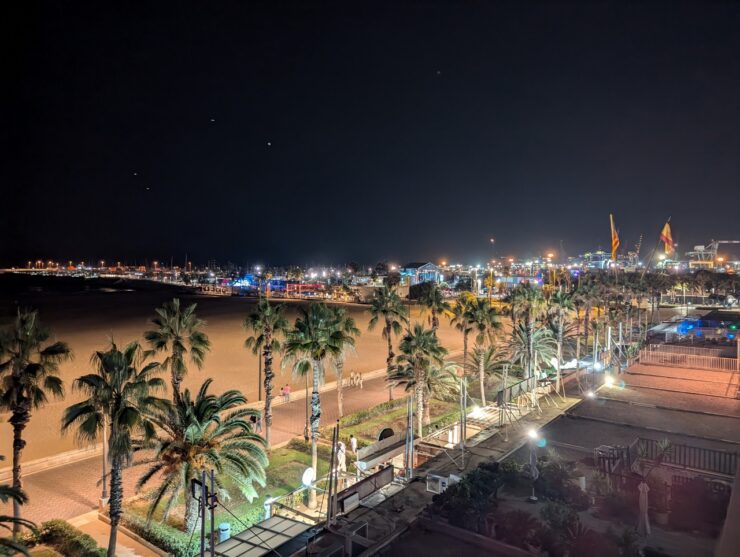
After the tiny-town appeal of Sitges and a drive through seductively aromatic orange groves, the big city of Valencia took us by surprise. A Miami Beach-like party vibe with non-stop concerts, pulsing music from nightclubs, and fireworks kept the waterfront vibrating until the wee hours. Thankfully, the noise faded when we closed the windows of the beachfront Hotel Miramar.
Our rooms at the Hotel Miramar were interesting in that Cindy had a cozy private room with twin beds, but the “master” bedroom shared space with the open kitchen. The ocean view made up for any inconvenience.
It’s impressive how Valencia absorbs visitors from giant cruise ships without as much of an impact as other European cities. Next to the beach and Paseo Marítimo promenade are the cruise ship terminals on the edge of a working port, and somehow, there’s room for everyone.
©Inga Aksamit
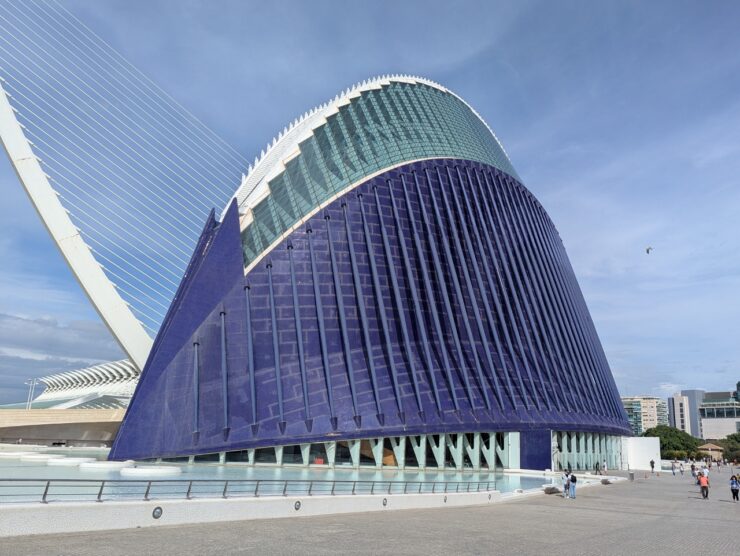
Wanting to stretch our legs the day after a long day in the car, we walked the two miles to the distinctive City of Arts and Sciences with its plethora of dramatic buildings. We saw the planetarium in a glass building resembling an eye, the science museum that resembled the skeleton of a whale, the aquarium shaped like a water lily, and the Walk of Sculptures, among other destinations. Throngs of people filled the wide paths meandering through the property, yet with plenty of breathing room, it felt vibrant rather than overwhelming.
Paella hails from Valencia, and all the restaurants along the promenade featured huge skillets loaded with rice topped with chicken, fresh seafood, and saffron. It’s a hearty and flavorful meal.
A Castle at Alicante
The landscape became more varied as we alternated between orchards and hills on our way to Alicante.
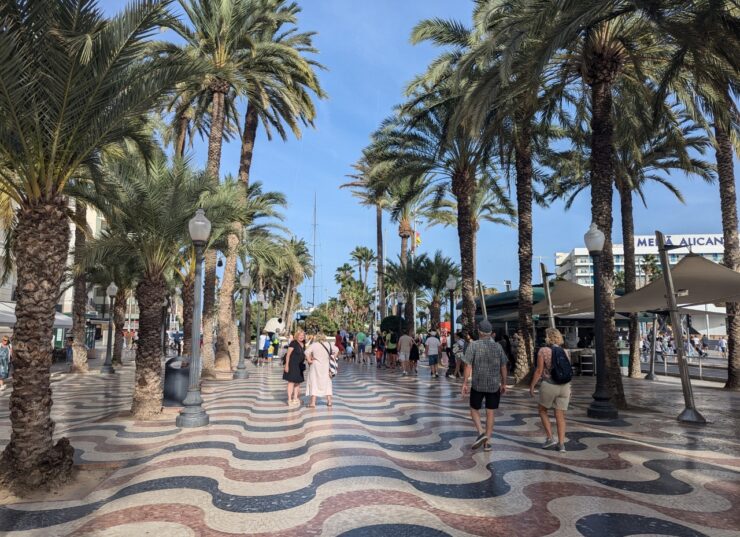
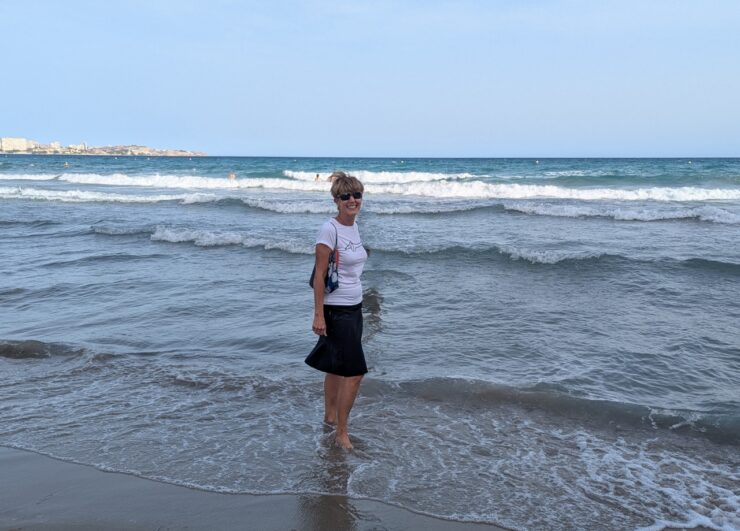
Alicante immediately impressed us and became our favorite place for this segment of the trip. Everything was easy, and we had a spacious, modern two-bedroom apartment at the Holihome Rambla 24 on the main street of town near the water. A lively esplanade, Passeig Esplanada d’Espanya, bordered the water between a small boat harbor and the main part of town. A sandy beach invited frolicking in the waves.
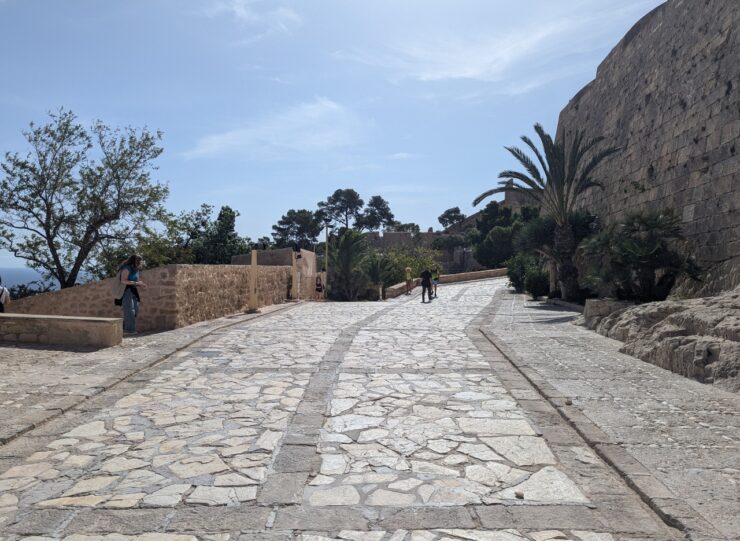
The wonderful Santa Barbara Castle high on a hill beckoned us. After visiting so many busy places in Mallorca and Barcelona before our road trip, it was refreshing to amble up the hill without needing timed reservations or even tickets. We simply parked at the base of the hill near the hospital and walked up. Interpretive signs brought the history to life, and several eateries in the castle provided fantastic views of the sea and surrounding area.
Granada and the Alhambra
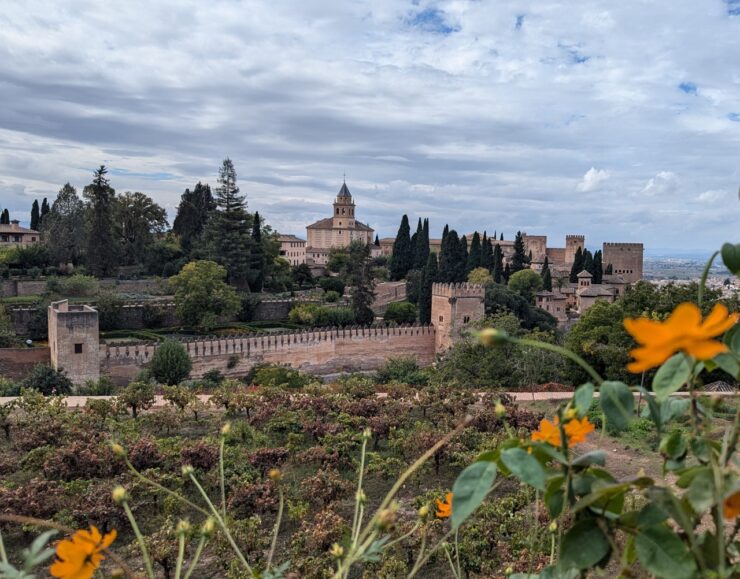
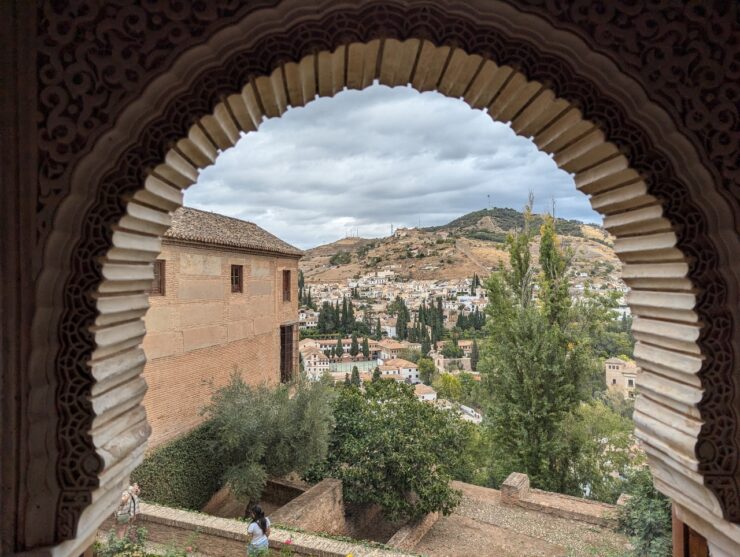
We loved the scenic drive to Granada with all the hills, valleys and rocky promontories providing visual interest. With increasing excitement, we approached our primary destination—the Alhambra.
On a previous visit to Spain, we avoided planning and let the trip unfold as it would. That mostly worked well, but when I became enchanted with the Royal Alcazar, another notable Moorish palace in Seville, I wanted to add a visit to the Alhambra. I realized we didn’t have enough time, and it was hard to get last-minute entry tickets.
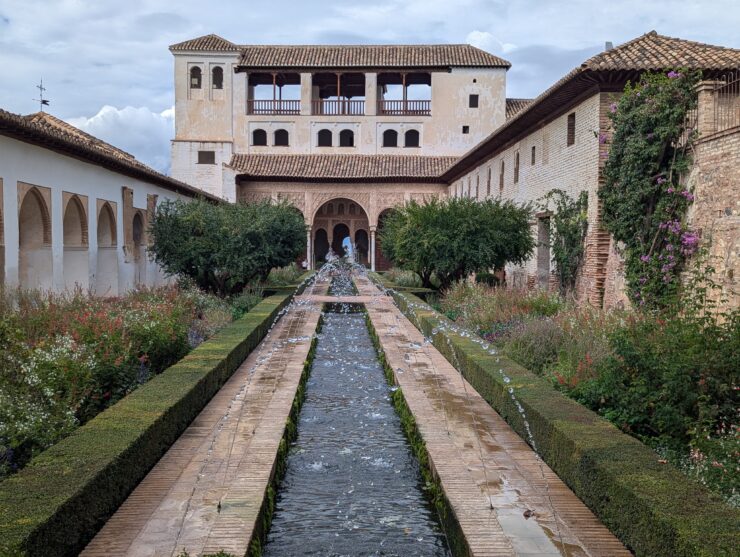
This time, I came armed with reservations made weeks before our trip. We devoted one full day to the Alhambra so we could amble through the gorgeous Generalife gardens, take in the complex history and still make our timed entry to the Nasrid Palaces. There, we took in the serene light-filled spaces, delicate architecture and intricate tile work, though the hordes of people filling every square inch of every room became claustrophobic. For that reason, I enjoyed the openness of the gardens more than the palace.
Beyond the Alhambra
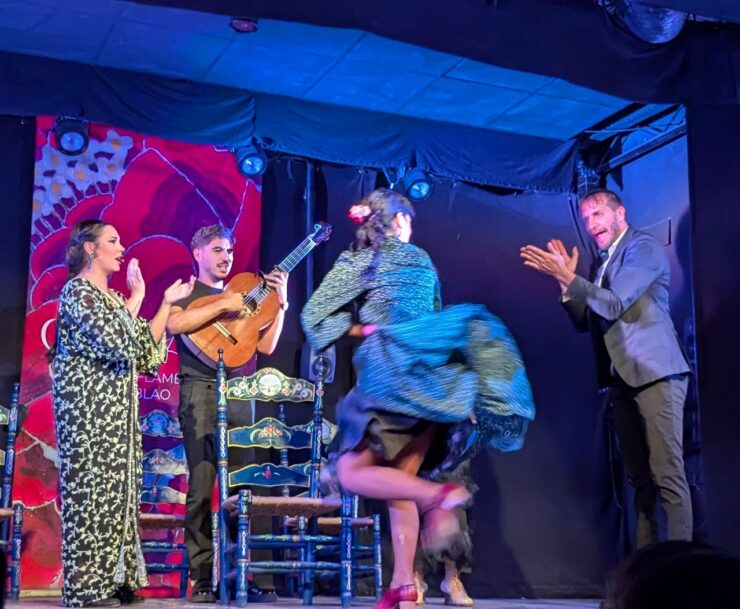
A flamenco performance with exceptional dancers thrilled us with their athletic power and grace. Best of all, the location of the Tablao Flamenco theater was within a short walk from our apartment, so the rental car slumbered in its hideaway.
Our lodging at the Tourist Apartments Mauror was ideal, being the very last building on a street that led directly into the expansive, leafy grounds of the Alhambra. With two enclosed bedrooms, each with its own bath, and a spacious common area, we had plenty of privacy and room to move around the modern apartment cloaked within an ancient structure. Parking in the historic district challenged our sanity, so we gave thanks for the provided parking space, and vowed to not move the car until we left town.
Ronda: A Bridge and More
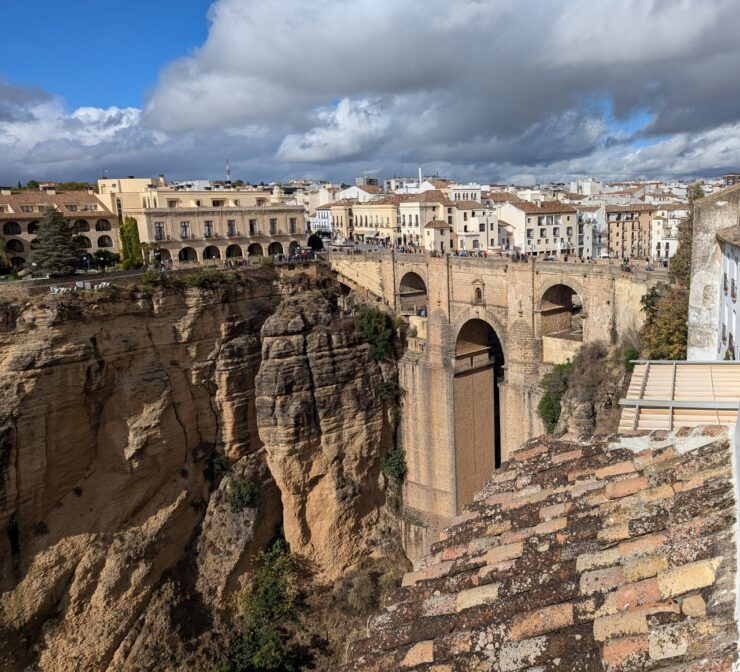
After a few days in Granada, we headed south to Ronda through vast olive groves. Hours and hours passed by as we wound through alluring hilly terrain dotted with silvery-green leafy trees loaded with fruit.
Ronda, known for the incredible Puente Nuevo Bridge, challenged engineers in the 1700s to build a span across the 390-foot chasm carved by the Guadalevín River. This void cleaves the town in two. It’s easy to lose hours at a time gazing at this graceful architectural marvel from as many angles as possible. We purchased tickets to walk into one of the bridge supports, examined the stone bridge from both sides, and hiked a long way to the bottom of the gorge to look back up at the structure.
Beyond the Bridge
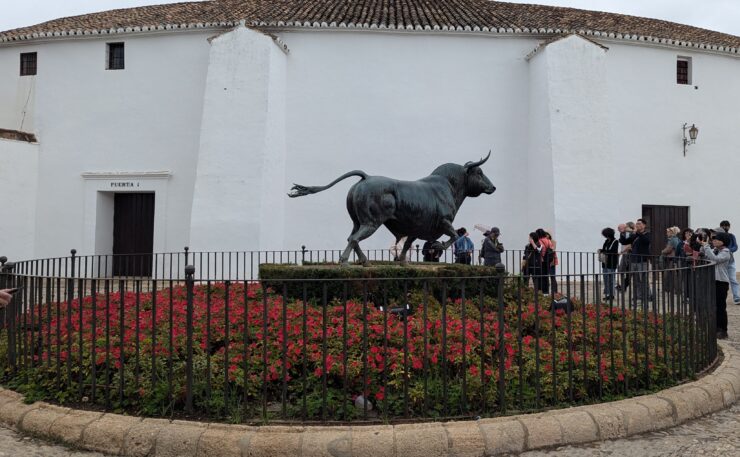
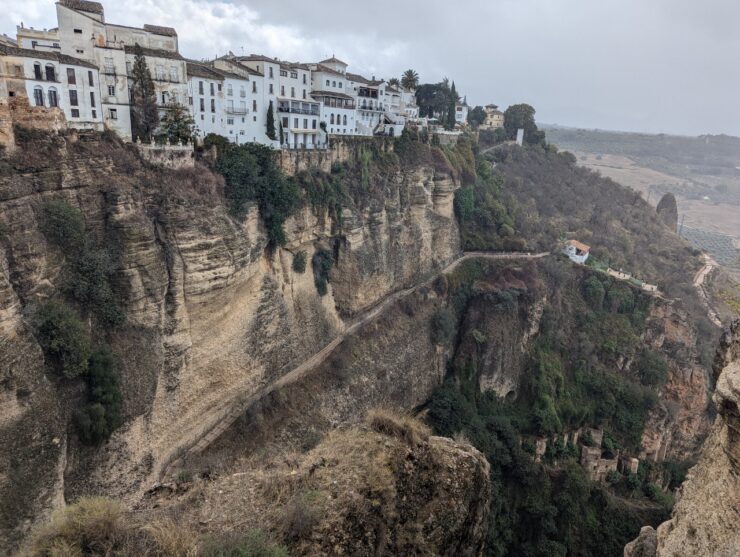
We observed many buses disgorging and reclaiming tourists visiting on a day trip, leaving us to revel in tranquil late afternoon and evening hours. Spending two nights here allowed us to fully appreciate the rhythm of the town. A temporary Picasso exhibit at the tiny museum at the Palacio de Congresos de Ronda, filled with his sketches of bullfighting, was a highlight. Since Ronda is known for its large bullfighting ring, Plaza de Toros de Ronda, on the opposite side of the bridge, the exhibit served to illustrate this important facet of the city.
Another reward was our spur-of-the-moment attendance at a musical performance by accomplished flamenco guitarist Carlos Perez. We discovered the beautiful mansion-turned-museum, Casa Museo Don Bosco, where the performance was held, as we strolled down the street from our hotel, Casa Palacio Villa Zambra. Leaving our pampered, royal-like surroundings with views of the Puente Nuevo Bridge took self-discipline, but it was worth it.
This ends the recommended part of the drive. For others planning a road trip, I advise driving either west to Seville, south to Gibraltar, or north to Madrid. You’ll see why in the Marbella description. It’s also possible to travel to Portugal or head to Morocco, as we did.
Marbella Through the Back Door
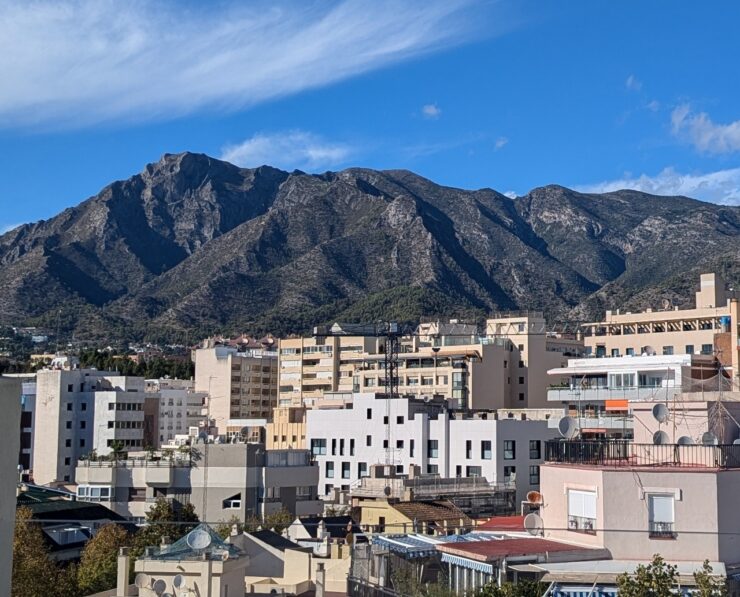
Continuing our southern route to Marbella, the tiny all-white villages nestled into the pine and fir forests of the mountainous Sierra Nieve National Park enthralled us.
We snuck in the back door to Marbella, first threading our way through enormous estates and gated communities on the outskirts of town. Then we spotted rows and rows of villas, with an army of cranes putting up still more villas, tucking them into every fold of the hills facing the sea. Interspersed were golf courses that would appeal to visitors who enjoy this activity.
The pleasant Hotel Lima was crammed into the dense built-up environment of the old town. There’s a nice beach promenade, but everything felt crowded with all the development, and the old town looked rather tired and shabby, despite the multitudes that jammed every cafe featuring the exact same menu.
I didn’t find the scene very inviting after all the wonderful places we had discovered on our road trip.
End of the Road Trip
After turning in our rental car, a private driver conveyed us to Tarifa, where we boarded a fast ferry to Tangier. The open stretch of sea offered a chance to decompress and let the trip settle in.
The iconic sites delivered as promised, but it was the spaces between that shaped the journey. We chased the highlights, but we also sought places to exhale: a shaded garden bench at the Alhambra, a long beach promenade in Valencia, a nearly empty palace in Alicante. Those moments of stillness after busy days allowed us to absorb the beauty and history of the place.
If You Go
Taking Our Time
We could have driven from Barcelona to Granada in around eight or nine hours, but efficiency was not the goal. Trains were a romantic option, but we wanted a slower pace to allow time for spontaneous exploration. Renting a car for a week provided variety within a month-long trip where we otherwise depended on public transportation or private drivers through other parts of Spain and Morocco.
Car Rental
We rented a sedan from Sixt Rent A Car. Fifteen minutes after picking up the car, before we could even get out of Barcelona, we developed a flat tire. They replaced the car, but still charged us fees for the flat tire.
Normally, we’d rent a compact vehicle for my husband and me, but with three of us, we definitely needed a larger, mid-size sedan.
Lodging
Staying one or two nights on each of three stops enabled us to break up the driving and get a feel for each place, though admittedly not enough time for deep dives. For our group of three, we sought two-bedroom suites with character or seaside locations, reserving through Booking.com or directly through the hotel website.
Where We Stayed
- Barcelona: Ibis Barcelona Central
- Valencia: Hotel Miramar
- Alicante: Holihome Rambla 24
- Granada: Tourist Apartments Mauror
- Ronda: Casa Palacio Villa Zambra
- Marbella: Hotel Lima
Other things to consider
- Motorists drive on the right, like in the US.
- An International Driving Permit is required for non-EU/EEA drivers. UK drivers don’t need one for stays up to six months, but it is still recommended for rental cars or to ease translation issues. You must apply in your home country before you travel. You may not be asked for it at the rental car agency, but if there is an accident, you will be expected to have it.
- Carry your passport, driver’s license from your home country, International Driving Permit, rental documents, and proof of insurance when driving.
- Drivers are required to provide safety gear such as fluorescent vests for passengers and warning triangles in case of emergency—verify your rental car has these.
- We found highway driving to be easy but parking in dense urban cores was challenging. If possible, stay in places with provided parking and avoid driving in town. We walked or took taxis while staying in towns.
- Dial 112 in case of emergency.
- Familiarize yourself with local laws and regulations related to driving.
You May Also Enjoy Reading:
- On the Tail of Flamenco in Andalucian Spain
- Beyond Couscous: Discovering the Real Flavors of Moroccan Food
See more about Spain, Portugal and Morocco at Inga’s Adventures, including: