
A Story of Love and Adversity
We arrived at The Ramada Inn in downtown Yerevan at 3 a.m. Bars and restaurants were still open and lively. People were on the street, and the atmosphere was relaxed and felt safe. This capital city is clearly doing something right. Or maybe it’s the people, their resilience and quiet pride of place.
I was here to judge Concours Mondial de Bruxelles (CMB), a renowned international wine competition. We toured Armenia’s capital city and wine regions as a group, and I stayed on for a few extra days. There was a sense of innocence and optimism everywhere, and I believe I witnessed the emergence of a country long repressed.
And it all started with wine.
Wine began here or near Armenia, and its re-emergence and survival here is a testament to its value to the Armenian people and civilization. The country is counting on its repatriates—those who have left and returned to live in Armenia again—to help move the ball forward. They’re also drawing on the history of its karas, or buried clay amphorae, to connect it to its storied past.
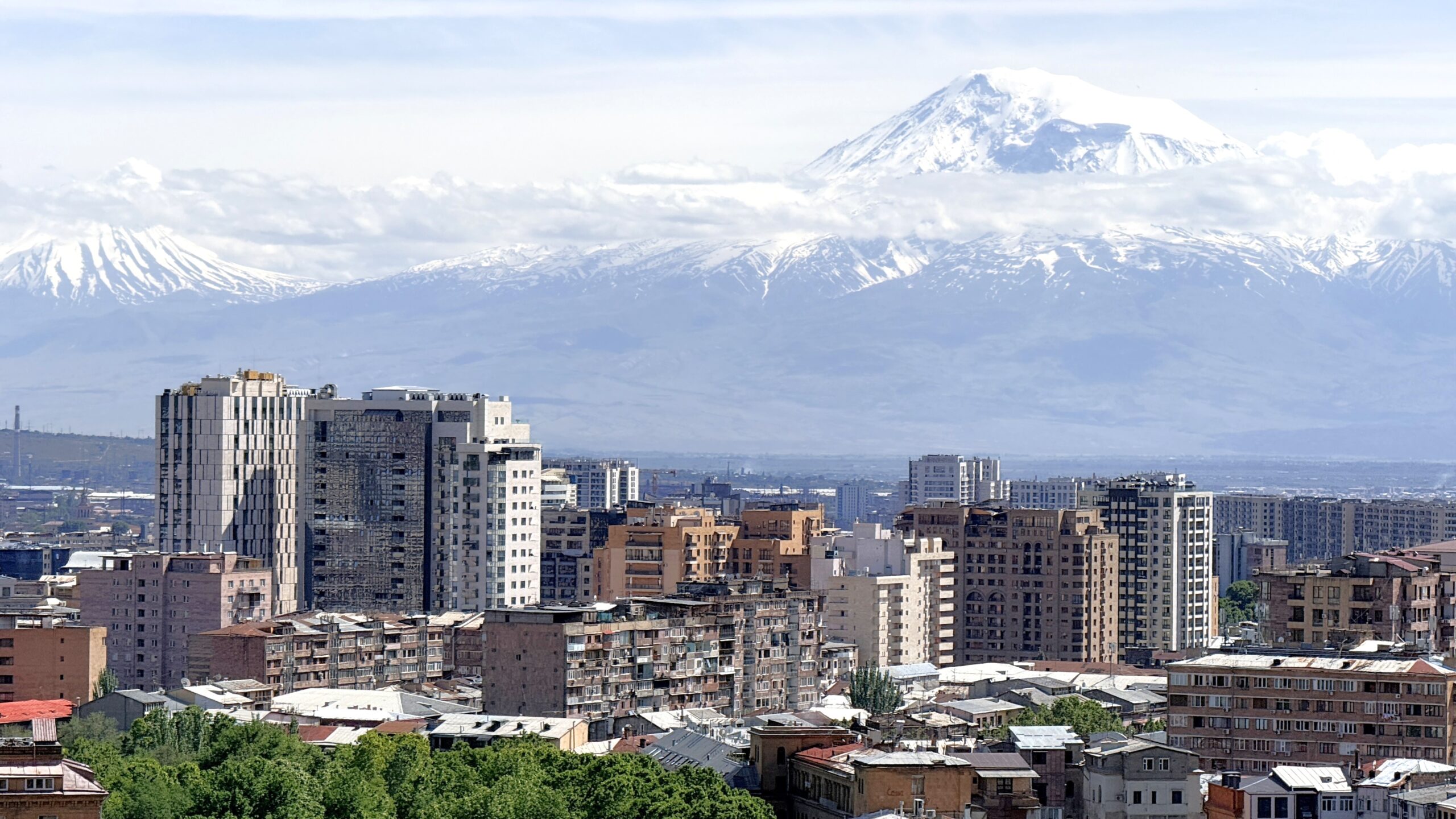
Mount Ararat looks over the Capital City of Yerevan © Carl Giavanti
Repats Role in the Revival of Armenia
There are over seven million people of Armenian descent living outside the country, in more than 100 countries. Only three million reside in the country. There are multiple causes for this, rooted in the Ottoman Empire, in what is now modern-day Turkey, and the Armenian genocide beginning in 1915, followed by decades of displacement and diaspora. Over one million people died, with the exodus of several million others. This was followed by the Soviet occupation from 1921 to 1991, which resulted in the dismantling of Armenia’s fine wine industry with a mandate to focus on brandy production.
The organization Repat Armenia estimates that roughly 50,000 diaspora Armenians have resettled in the country since independence in 1991. The returns have come in waves: about 22,000 Syrian Armenians during the civil war, another 15,000 following the 2018 Velvet Revolution in Czechoslovakia, and the largest recent surge in 2022-2023, from Russia, after the Russian invasion of Ukraine.
According to High Commissioner for Diaspora Affairs Zareh Sinanyan, most recent repatriates have come from Russia, followed by Syria, Lebanon, and Iran, with smaller numbers arriving from the United States, Argentina, and Australia.
From Return to Influence
I spoke to several repats about their role in driving and elevating the modern wine industry.
Shant Petrossian is the Global Director of The Armenia Project (TAP), an educational non-profit established after the recent war and ethnic cleansing by Azerbaijan. Their mission is to keep the stories of its people, history, arts, culture, and of course, its wine heritage alive.
“I think repats are playing an important role,” he said. “Many bring international experience, new ideas, and global networks, while local winemakers bring generations of knowledge and a deep connection to Armenia’s land and traditions. This contribution is helping shape a modern Armenian wine industry that remains deeply rooted in its identity.”
Today, there are about 30,000 acres under vine. An estimated 300 wineries from five regions produce wine from native varieties like Areni Noir, Voskehat, and several other unpronounceable grapes like Khndoghni, Lalvari, Garan Dmak, Kakhet, Kangun and Haghtanak, Tozot, Karmrahyut, Khatun, and Kharji. Don’t worry, just taste it. You’ll also find international varieties like Syrah, Malbec, Sauvignon Blanc, and Cabernet Sauvignon.
And much of this industry is being driven by repatriate energy. “I think the diversity of experiences expats bring is one of the strengths of the Armenian wine renaissance, says Zara Mazmanyan of Northern Terroir. The more places you see and the more cultures you experience, the more you understand your own roots, and what makes Armenia’s heritage unique and worth preserving.”
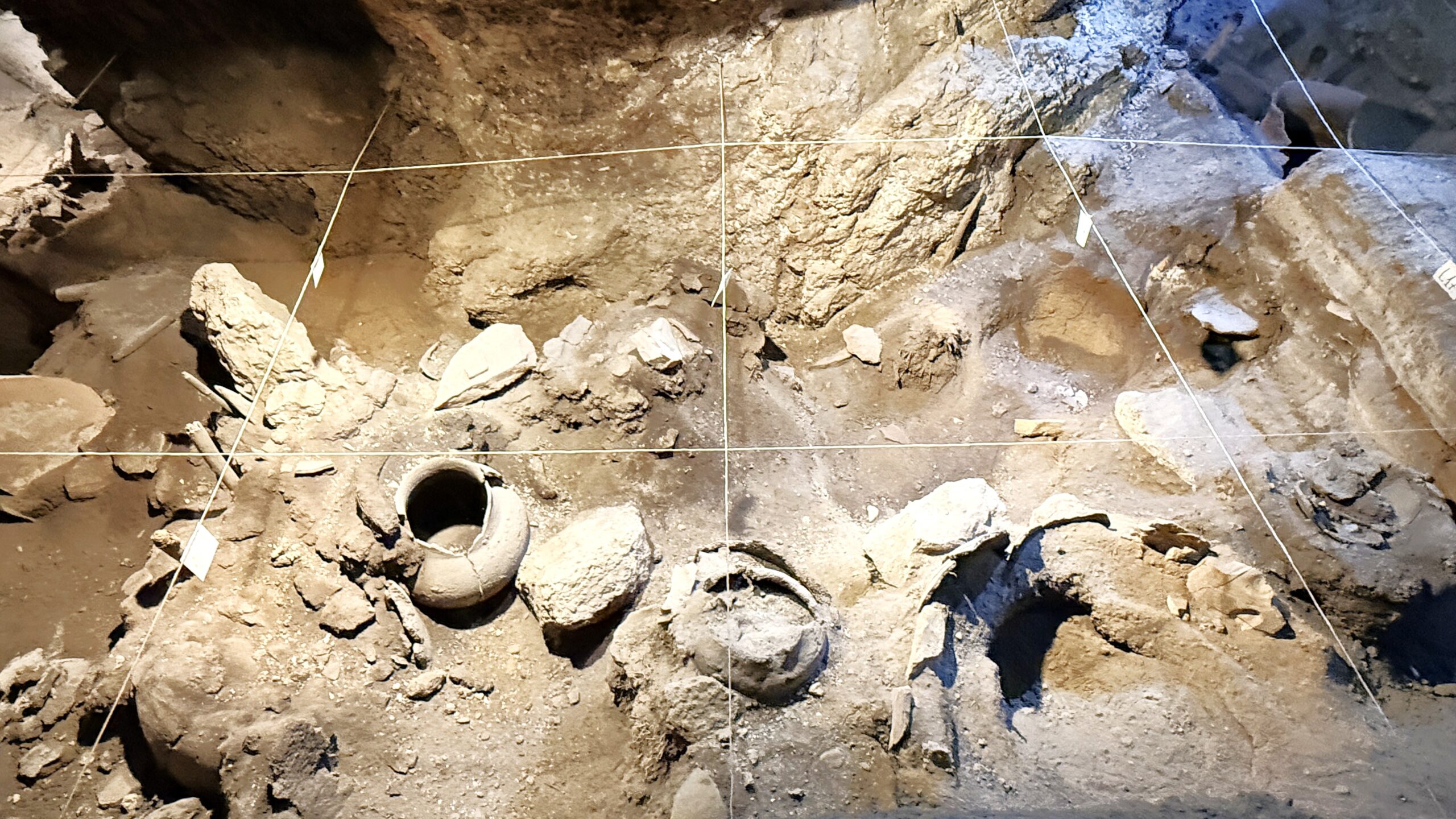
Areni-1 Caves and Winery dated 4,100 BC in Vayots Dzor, Armenia © Carl Giavanti
Karas: Unifying Wines Past and Future?
The ancestral and emotional soul of Armenia had long been Mt. Ararat of Noah’s Ark fame. It is a cultural and spiritual symbol tied to the country’s identity. In 1921, Turkey annexed a large swath of western Armenia, including Mt. Ararat, after years of war and civilian casualties. Today, territorial war continues with neighbor Azerbaijan. Vineyard lands are in dispute.
The Armenian wine industry is embracing the historic karas as a unifying representation of wines past and possibly its future. In 2007, karases were found at Areni-1 Caves in Vayots Dzor, along with wine presses and other fermentation and storage vessels, proof of intentional winemaking over 6,000 years ago. UNESCO World Heritage listing is pending.
Additionally, in the late 1930s, archeologists discovered a field of about 500 karas at Karmir Blur, nearly 3,000 years old, just outside of the capital city, Yerevan. They estimate 30,000 liters of wine stored at what was once a royal palace. Karmir Blur is also being considered for future UNESCO listing.
Ancient Methods Meet Modern Scale
Modern winemaking in Armenia is less than 25 years old, yet Armenian winemakers are embracing their past, fully aware of wine history in their sacred land. Winemakers have embraced state-of-the-art winemaking technology and techniques, as well as the historic use of karas (buried clay amphorae) for aging certain wines. Karas were once part of everyday life in Armenia. They were buried in the ground to store and ferment wine, but also used for preserving food in homes and caves.
“Today, we use a range of modern techniques and technologies,” Mariam Sagatelyan of Trinity Canyon Vineyards explains. “The karas represents the values of our ancestors and, in this sense, is a symbol that bridges Armenia’s wine heritage and its contemporary wine industry. As we say in Trinity, we are creating modern wines with an ancient soul.”
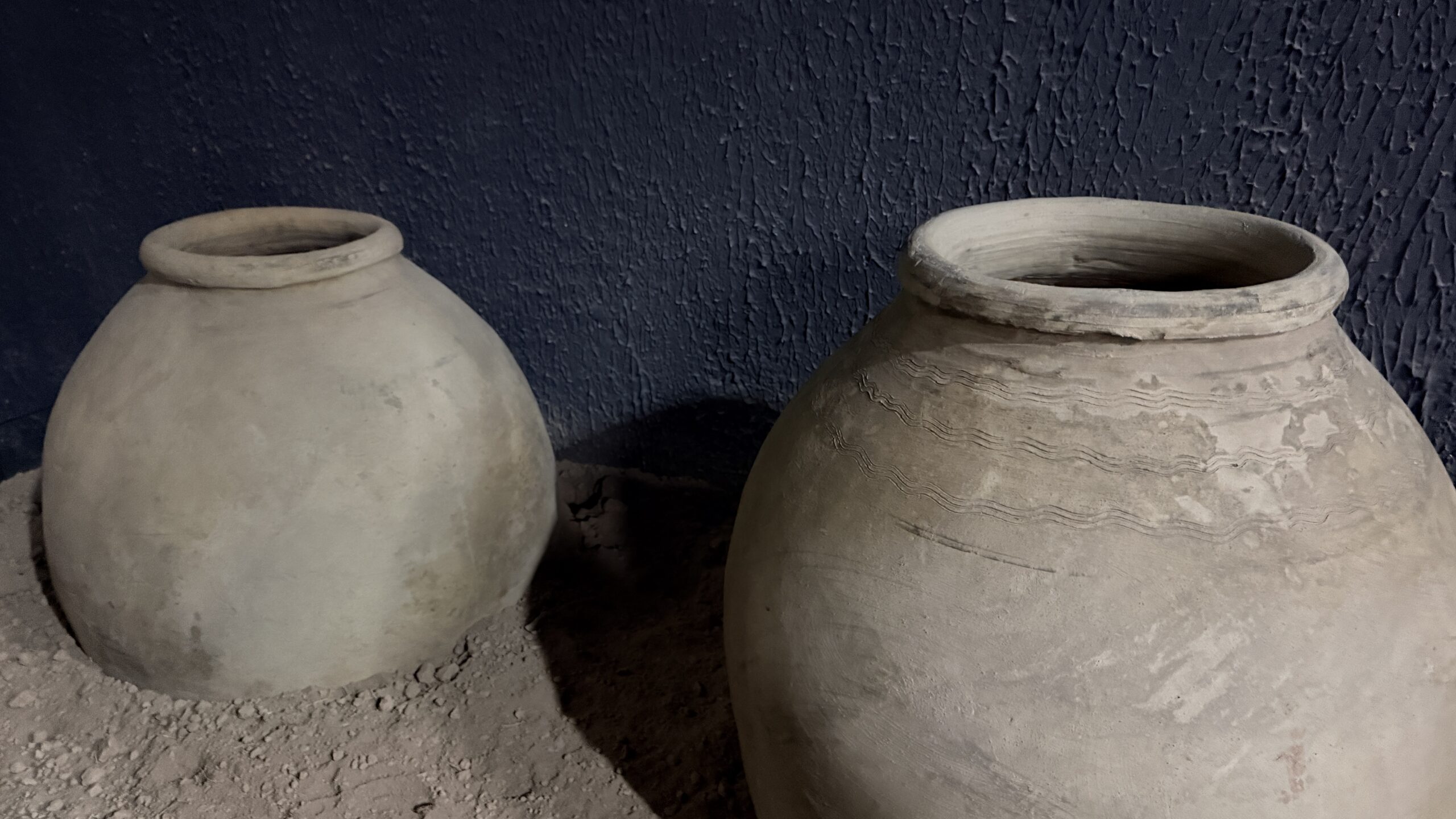
Ancient Karas wine storage vessels © Carl Giavanti
Karas: Symbol or Substance?
The outstanding question is whether karas can become more than symbolic, as the craftsmanship of using them to make wine was largely lost during the Soviet era, and precious few remain. A few old vessels are still turning up in villages, often pulled from cellars or backyards and bought directly from local families.
Could the karas be the brand identity best suiting the Armenian people and wine industry?
A small but growing group of wineries are producing wine using karas today — not as their primary production, but for certain boutique and reserve wines – and to preserve and highlight Armenia’s wine character and origins. A small group of wineries are experimenting with karas today, including Zorah Winery, Voskevaz Winery, Trinity Canyon, Hin Areni Winery, and the Armenia Wine Company.
But karas aren’t just tools; they are cultural artifacts, pieces of history that happen to still hold wine. Can the Armenian wine industry rally around the karas as a defining symbol? Karas Wines in the Vayots Dzor region may not primarily produce karas wines, but they adapted the moniker. There are two contrasting perspectives to consider.
Adam Kablanian, founder of Alexandrea Winery sees karas as an enduring symbol with value in today’s marketplace. He shares some insight. “Karas-made wines have become highly attractive to consumers seeking authenticity, heritage, and minimal-intervention winemaking. They are both culturally emblematic and technically relevant for premium niche wine production.”
Vahe Keushguerian, founder of Keush, holds a differing opinion. “Unlike Georgia, Armenia lost the use of karases during the Soviet period. Currently, a few wineries use them but mostly for the narrative that accompanies them rather than the historic and cultural component.”
The Future of Armenian Wine
The Concours Mondial de Bruxelles competition was a modern debut of sorts for the people and wines of Armenia. CMB is one of the world’s most influential wine competitions. Founded in 1994 and organized by the Belgian company Vinopres, it has grown into a global benchmark for wine quality, evaluating more than 15,000 wines each year from dozens of countries.
Its medals carry real commercial weight, often opening doors to new markets for winning wine makers. But just as important, the competition moves from country to country each year. Its appearance in Armenia put the country on the international stage, with exposure to around 350 international critics, buyers, and wine media.
The future in Armenia looks bright, according to Varuzhan Mouradian, founder of Van Ardi Winery. “Hosting the CMB in Yerevan was a significant milestone for Armenia and its wine industry,” he says. “It brought the global wine community to our doorstep, providing a unique opportunity to showcase both our ancient winemaking heritage and the quality of our modern wines. We hope they will become ambassadors for Armenian wine, sharing their experiences and spreading the story of our wines to different corners of the world.”
The Armenian wines I tasted during the CMB competition were a small percentage of the total wines I reviewed, but they stood strong against entries from other countries. In fact, several earned Gold and Grand Gold medals. Additionally, I enjoyed the wines during each of my winery and region visits. I particularly liked Areni Noir, the flagship red grape of Armenia, as well as Voskehat, the leading white wine grape. Both were unique and expressive of place.
Armenia has always had wine. The question is whether the world will recognize the story being written today. Can repatriates, karases, and international exposure provide enough momentum to put Armenian wine in the limelight?
If You Go
For trip planning and more information about Armenian Wineries, try these resources:
You might also enjoy:
- A Journey Through the Wines of Peloponnese, Greece
- Turkish Wine: From Ancient Vines to Modern Wine Bars
Learn more about the Armenian Wineries mentioned and other winemakers interviewed – on Carl Giavanti’s Wine Characters website for a fresh take on the people behind the bottle.
