
Atlanta, Georgia, is home to one of the world’s busiest airports and notorious for highway gridlock. But drive north beyond the vertical skyline, congestion, and outlet malls, and a different side of Georgia emerges.
Sixty miles from the hustle of the city, rolling hills, pines, and orchards stretch toward the Dahlonega foothills. Vines push through soil and heat with Southern tenacity. This wine region is as sweet and storied as the South itself, with a surprising connection to the Old World, an ocean away.
How the Old World Took Root in North Georgia Wine Country
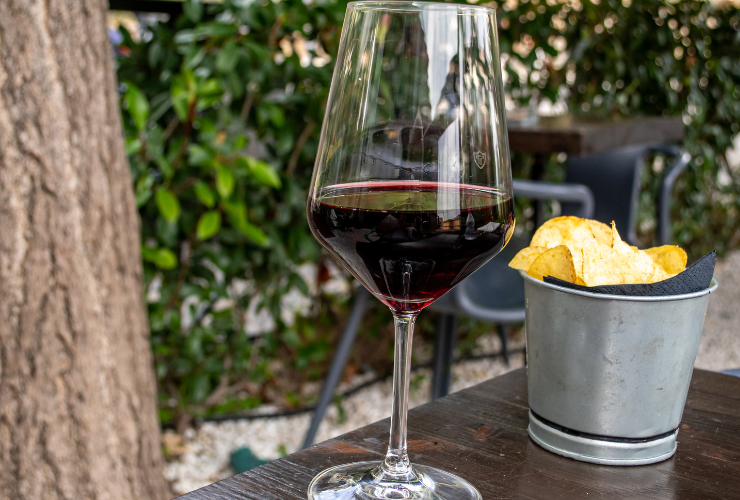
As Tuscan-inspired villas with stone detailing and arched entryways rise over neat rows of vines, you find yourself checking your purse for your passport. A tasting menu that lists Sangiovese beside muscadine wine confuses your palate as much as your geography. And when the winemaker hails from Piedmont, Italy, rather than the Piedmont of the American South, you’ll be tempted to throw up your hands and declare “Y’all are in crazy town!”
But this improbable, seemingly impossible place does exist in the North Georgia mountains. And it’s why the humble, extraordinary wine region is drawing the interest of wine lovers around the world.
Italian Sensibility Meets the Sweet South
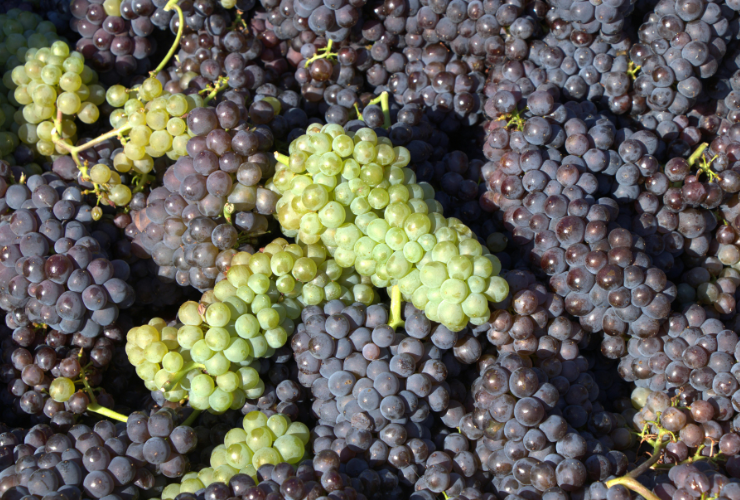
Georgia has long been wine country, though not necessarily the kind anyone bragged about. For generations, the state was synonymous with sweet muscadine. This thick-skinned native grape grows well in hot, humid conditions, traditionally good for jam and a jug of homemade wine.
But over the last two decades, a quiet transformation has been underway. Whether by default or by design, this transformation has been shaped by an Italian sensibility. It’s all about how wine is supposed to be made.
For years, growers fought the climate and tried to grow Old World grapes the Old World way. The land fought back. Some winemakers gave up; some leaned in and listened to the land that was stubbornly reminding them that a wine should taste like the place it came from. In parts of the Georgia mountains, that means perfecting what is sweet. In others it means blending Old World technique with whatever the Georgia soil will actually give.
What has emerged is a truly Southern wine experience that is unapologetic about its Italian inheritance. Sometimes that inheritance is literal: an Italian-born winemaker at the helm. Sometimes it’s aspirational: the architecture, the grape, the food, the whole experience. Either way, drive into the hills and you might believe you’d crossed an ocean, almost, as you get a taste of a little dolce vita in the Georgia mountains.
The Piedmont Connection
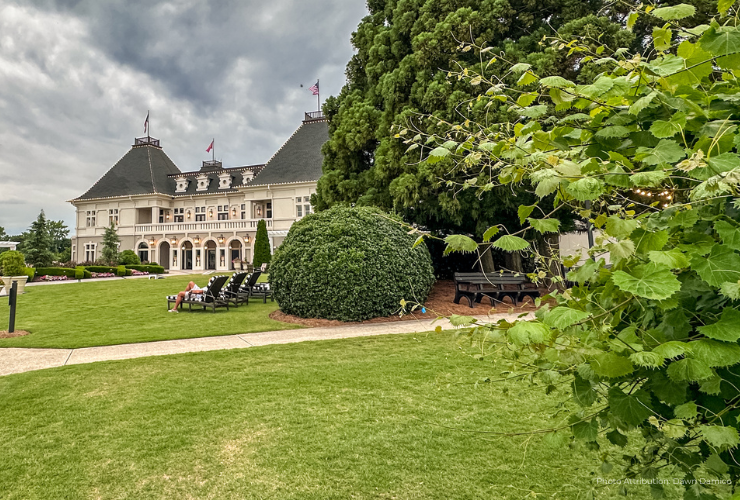
Nowhere is that crossing more convincing than a wine tour that can originate from Atlanta, Georgia, or Greenville, South Carolina. Just off Interstate 85 in Braselton, Georgia, Château Élan has been making wine since the 1980s. The founders built a resort inspired by the French countryside. They envisioned a destination ripe with wine, wellness, and outdoor recreation.
For years, the estate did what ambitious Southern wineries kept trying to do: it fought the land. Its founders planted classic European varietals and watched the vines struggle against humidity and disease year after year.
Then came Simone Bergese, born near Alba, in Italy’s Piedmont, the same region that gave the world Barolo and Barbaresco wines. Bergese arrived with a different perspective.
That perspective is the result of formal education in oenology and viticulture, decades of experience including chief winemaker on three continents, and something that might be called a conversation with the vineyard. There is an Italian winemaking tradition that says a winemaker should listen to what the grapes are telling them rather than impose their ideas on the land.
Working With The Land
Rather than continue forcing European grapes into soil that rejected them, he looked at what actually thrived in the Georgia foothills. The muscadine. The same thick-skinned native everyone else had written off as a common backyard grape has become the Cinderella story at Château Élan. It’s been transformed into something special at the hands of an Italian-born winemaker.
Expanding from that sweet foundation, he built an award-winning program that spans moscato, port, sparkling, whites, and reds. Château Élan wines have earned Gold, Double Gold, and Best in Class at the International Eastern Wine Competition. Also, Best in Class at the 2026 San Francisco Chronicle Wine Competition, among others.
For the dry wines, which include a premium line that is marked by the winemaker’s fingerprint, he sources the grapes further west. Much further. Bergese hand-selects grapes from California vineyards that he oversees himself. They are transported to Braselton and crafted into wines onsite. You can tour and taste in style, forgetting for a moment that you are still on American soil.
Now, if an Italian winemaker crafting wines that run festive and sweet, serious and bold, in a château just off I-85 in the American South isn’t enough to convince you that a kiss of Italy has taken hold in the Georgia mountains, this next stop will have you swooning under the Tuscan sun.
A Tuscan Village in the Foothills
In the early 2000s, the Beecham family of Georgia took a trip to Tuscany. Like the rest of us, they soaked up the sun and daydreamed about owning an Italian vineyard of their own. Unlike the rest of us, they actually built one. They just built it about five thousand miles away from Italy, in the mountains of North Georgia.
The spot they chose sits on the Dahlonega Plateau, about 30 miles north of Braselton. As you climb toward it, the wine itself begins to change. This is not muscadine country. Up here in the Blue Ridge foothills, the higher elevation and cooler nights allow traditional European grapes and vinifera that struggle in the heat below to thrive.
Georgia’s first federally recognized mountain wine region, the Dahlonega Plateau earned its American Viticultural Area designation in 2018. This came after a handful of local growers spent more than two decades proving that serious wine could be grown. The Beechams were betting on the same hills.
Mountain of Light
The Montaluce experience begins before you’ve parked. A long drive climbs toward a villa perched on the hilltop. Terraces of vines spill away on every side toward the ridgelines beyond. Stacked stone wraps the walls, ivy creeps up to meet the clay-tiled roofline, and the whole estate seems lifted from a hillside outside Florence and set down in Lumpkin County, Georgia.
The winery’s name fits the setting. Montaluce means “mountain of light” in Italian, and on a clear afternoon, you understand why. The scene is so convincingly Italian you might catch yourself murmuring “Buongiorno” as you push through the rustic wooden doors of the tasting room.
When the Beechams opened Montaluce to the public in 2008, they didn’t want a winery with an Italian theme. They wanted the real thing. They brought in Italian-born master winemaker Stefano Salvini, from a winery in Bertinoro, and an Italian chef to match, building the food and wine around genuine Old-World craft.
Today the winemaking is led by a California-trained vintner with hometown roots in nearby Asheville. But the Italian spirit it was founded on is still bottled into the wine itself. The flagship Super-Tuscan-style blend of Sangiovese and Cabernet Sauvignon celebrates Old World traditions. The on-site Trattoria di Montaluce turns out house-made pasta and wood-fired pizza for a perfect afternoon pairing.
Wolf Mountain: A Touch of France
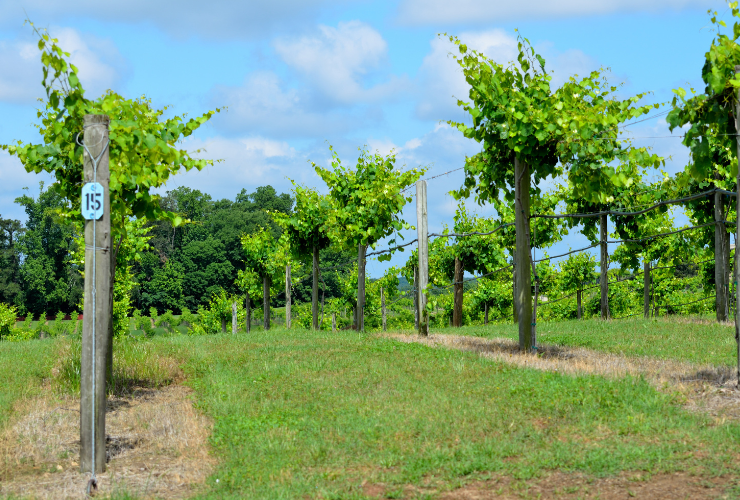
Ten thousand hand-planted vines in small lots that embrace the hills, sunshine, and rain of Georgia are the foundation for Wolf Mountain’s European-inspired winery. The Boegner family has spent more than two decades building a destination to taste, enjoy, and celebrate. They craft wine in small batches mostly from grapes grown on their estate, along with some grapes from other Georgia vineyards,
They blend grape varieties the way it’s done across Europe. The estate grows Cabernet Sauvignon, Syrah, Mourvèdre, Tannat, Petit Verdot, Malbec, and Touriga Nacional — Rhône, Bordeaux, and Iberian varieties — crafted into award-winning estate reds like the Claret, a Cabernet and Mourvèdre blend. They age their wines in French, Hungarian, and American oak barrels. This retains an emphasis on the fruit the terroir gives them, not on heavy wood.
While their Old World grape choice is interesting, the real revelation is how they tapped into European winegrowing sensibility and got them to thrive under conditions the Old World never had to reckon with. The Southeast’s humidity and rainfall are enemies of fine wine grapes. So, Wolf Mountain leans on the mountain itself for a solution.
Old World Grapes; New World Problems
Southwest-facing slopes near 1,800 feet catch the sun and drain the rain away fast. The fruit is lifted into the constant mountaintop air to dry after a storm, and low yields concentrate flavor to elevate what each cluster can give. It’s Old World grapes grown with a New World problem in mind, embracing European intent with Georgia ingenuity.
That Old World patience in the field continues indoors. The winery was designed around gravity rather than pumps, something I first observed in the Peloponnese. Workers harvest and sort the grapes by hand. They gently press or destem them and feed them into fermentation tanks set fourteen feet below in the cellar. This efficient process works with the mountain. Rather than expending extra energy to move things up, this gentler path down skips aggressive processing. That preserves wine quality.
Almost as if to underline their French winemaking influence, Wolf Mountain has bubbles. Their sparkling wine is crafted with the Méthode Champenoise. This labor-intensive process is synonymous with Champagne, where a second fermentation happens right in the bottle. This authentic method, adapted from true Champagne, was carried across an ocean and adapted to the North Georgia mountains. The result? You can enjoy French-style bubbles without going through customs.
No Passport Required
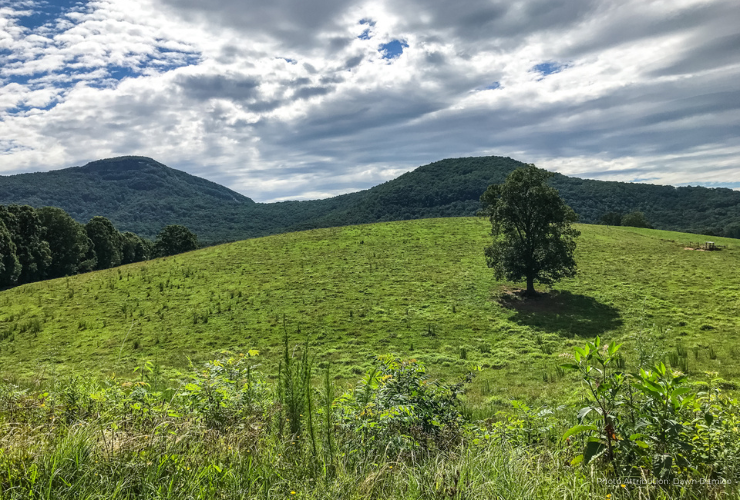
North Georgia — the people, the place — still offers the kind of warm hospitality that makes you feel like you’ve stepped onto a good friend’s front porch. Yet somewhere along the way, the same Appalachian foothills that gave America bluegrass and moonshine stopped imitating wine country and have simply become it.
As much as it’s been shaped, time and again, by Italian and European influence, Georgia’s wine industry has also embraced what is truly Southern. By taking the muscadine and perfecting it, celebrating the local grape much like Europeans celebrate theirs, Georgia’s winemakers honor the land beneath their feet even as it brings in elements from an ocean away.
They understand the limits of their climate without settling for less. They craft serious wine from what these hills will give, and from what growers elsewhere can provide. It’s a dance between old and new, a celebration of the soil, and a challenge accepted by Georgia’s winemakers.
There’s no ocean to cross, no long-planned vacation time to set aside. A Tuscan lunch on a vineyard terrace, a glass of estate red with the Blue Ridge in the distance, and a slow drive home through the foothills can all fit inside a single unhurried weekend. A European-style wine experience, it turns out, is closer than you thought. You just had to know which exit to take.
If You Go
Château Élan Winery
Château Élan makes it easy to linger because it’s surrounded by nature and outdoor activities. The Château Tour & Tasting is the signature wine experience — a behind-the-scenes walk through the vineyard, production spaces, and bottling line, followed by a semi-private tasting of five wines poured by one of the resort’s wine stewards. If you’d rather skip the tour, the Chateau Wine Tasting offers six curated pours drawn from the full portfolio, from the limited-release Fingerprint Collection to sparkling, bold reds, crisp whites, and blends. And when you simply want to sit with a glass and the view, wines are available by the glass or bottle in the tasting room or out on the lawn — no reservation needed. (Location: 100 Tour De France, Braselton, GA 30517)
Montaluce Winery & Restaurant
Montaluce gives you reasons to stay past the tasting room. Wine hikes run Friday through Sunday — a guided 1.8-mile trek through the vineyards and along the headwaters of the Etowah River, ending with a five-wine tasting at the sister restaurant, Trattoria di Montaluce. For something more hands-on, Wine 101 walks you through the production room and vineyard with a sommelier before a five-wine tasting, while the Chef’s Table serves a five-course farm-to-table dinner prepared in front of you, and fly fishing guides work more than 400 acres of the Etowah for anglers of any skill level. Four privately owned Tuscan villas overlook the vineyards for those who’d rather not drive home at all. (Location: 501 Hightower Church Road, Dahlonega, GA 30533)
Wolf Mountain Vineyards & Winery
Wolf Mountain keeps things simple. Tastings run without a reservation for groups under eight, poured at a four-sided stone and cedar bar in a room that opens onto a veranda where you can enjoy an afternoon. On Saturdays and Sundays, one of the winemakers leads an educational tour that begins out in the estate vineyards and ends in the cellar, tracing the wine from vine to bottle. And on Sundays, the kitchen puts on a themed brunch that changes every month — a tribute to Tuscany one season, the food of the American South the next — paired with the estate’s own wines and views of the Blue Ridge in every direction. (Location: 180 Wolf Mountain Trail, Dahlonega, GA 30533)
You May Also Enjoy Reading
Columbus, Georgia: Visit for the Thrill, But Stay For the Flavor
Dining in The Gilded Age at Georgia’s Jekyll Island Club Resort
Join Dawn and a growing community in her weekly newsletter: Wine & Wellness: The Tasting Room
