

I love being surprised by a restaurant.
At two Michelin-star Tanière³ in Quebec City, the only restaurant in Quebec with a pair of the coveted stars, chef-owner Francois-Emmanuel Nicol keeps the surprises coming throughout the evening.
Each sublime dish was served with a visual treat, an interesting back story, or a bit of theater. Even the gender-neutral bathroom has a sense of place. The glass sinks are embedded in living forest plants.
Count Michelin Stars in the UNESCO World Heritage Provincial Capital
©Audrey Eve Beauchamp/Tanière³
Our 16-course, high-concept gastronomic adventure started outside, with a punch code texted to us at the nondescript back door. We were greeted by name and descended two flights of metal stairs past a stark mural of a boreal forest to enter a windowless 17th-century stone cellar. Candlelight flickered across the barrel-vaulted ceiling.
“We are trying to see people disconnect and be in our world for a while,” said dining room director and Tanière³ co-owner Roxan Bourdelais. “It could be a hurricane outside, and you wouldn’t know.”
Historic Vaults Become Dining Rooms
A trio of vaults underneath a pair of historic houses in Old Quebec City are now the dining rooms. Another houses the open kitchen and horseshoe-shaped chef’s table. In the 1700s, a furrier used them for storage, part of the French-speaking Canadian province’s foundational fur trade, part of Quebec’s 400-year-old history.
Each dish is a secret until it’s served. The final reveal comes with a personalized menu presented after dessert.
The first vault is the cozy bar. We were served a welcome mocktail with lemon balm syrup and an alcohol-free herbal distillate from Projet Pilote in Montreal.
Four small starter bites came first. A golf-ball-sized burdock donut with rich, chewy, aged tuna was served on a torched section of carved log. A single perfect mussel was set in a nest of flattened, dried burrs within a ring of overlapping shells and topped with wild blackberry and birch syrup.
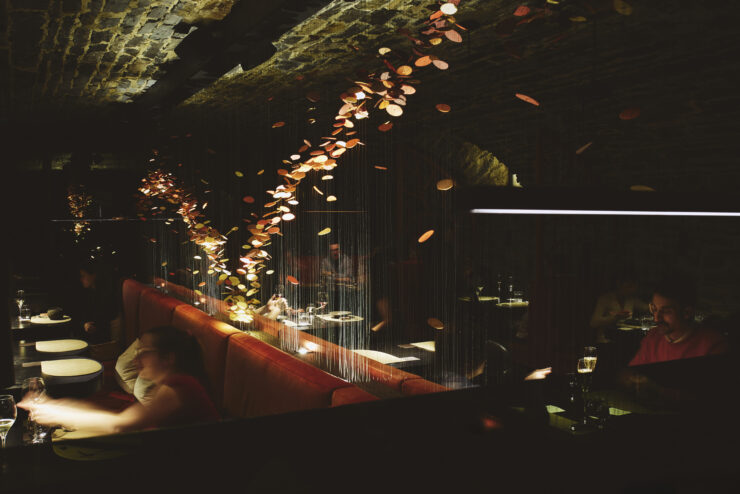
We were led through the fourth vault into the romantic main dining room. Low lighting, rich wood, stone walls, and rusty-red modernist upholstery set the scene. A striking art piece of hanging discs represents a cross-section of the St. Lawrence River.
Flawless Service, Local Provisions Tell Tanière³ Story
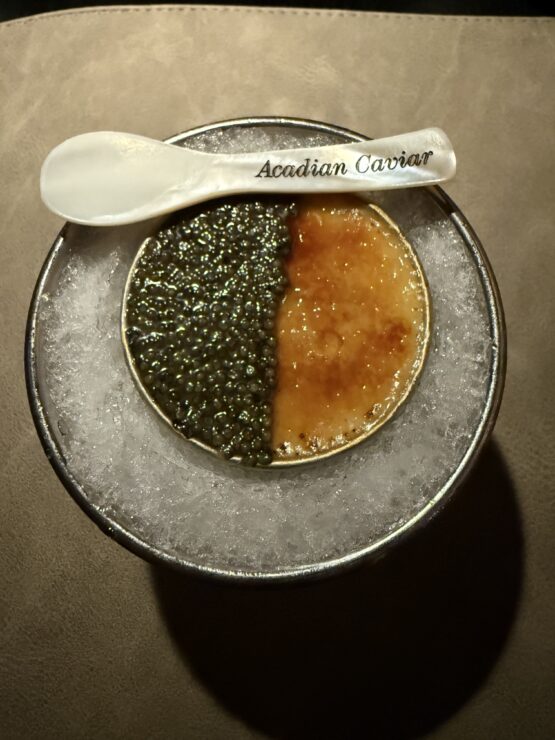
Everything on the menu is from Quebec farmers, fishers, and foragers, except for Acadian Caviar from the neighboring province of New Brunswick.
The brigade of servers treated us like we were the only guests in the place, describing and serving each course with efficient ease. We were told about prickly ash pepper (it’s smoky) and cow parsnip (it tastes like celery) and sweet daylily leeks.
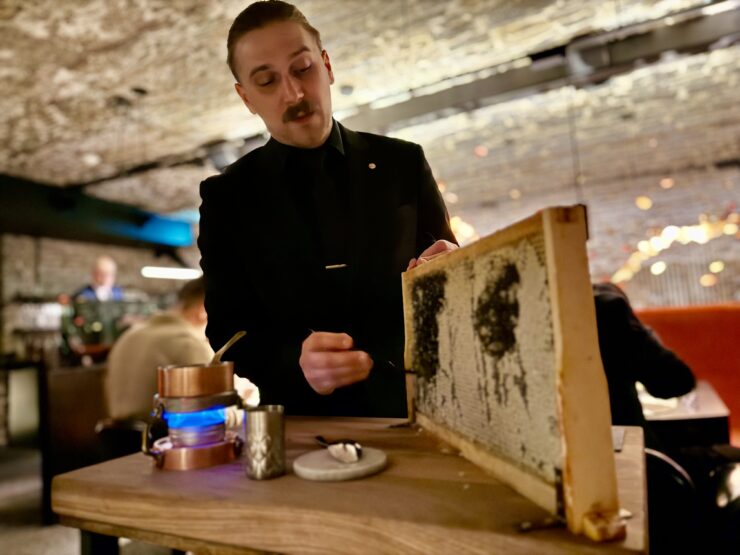
My favorites included a mosaic of tender quail and foie gras with tender white turnip. The copper pot of profoundly rich jus was finished tableside using honey scraped from a rectangular wooden frame. The jus was flambéed in a bit of old-school flash.
Before one course, we were presented with an ornate key on a velvet pillow. It opened a drawer on each side of our table. Inside was a poem about the restaurant and the next dish, “Le Noble.” A perfectly poached scallop in butter-rich beurre blanc came topped with caviar and surrounded by tiny squares of gently cooked local fingerling potatoes. The dish is the only one that has been on every menu, and with good reason.
The Le Noble poem sets the stage for Tanière³: “Three acts of wonder, deep underground,” and calls Le Noble “a sweet, spun delight, caramelized nod to the dawn of the night.”
For pre-dessert, there was an astonishing version of crème brûlée made with candy cap mushrooms and topped with salty sturgeon caviar.
Fairytale Ending
We moved to the third vault for dessert. It was decorated to look like an enchanted birch forest, with white paper birds suspended from the ceiling amid glass orbs and small lights.
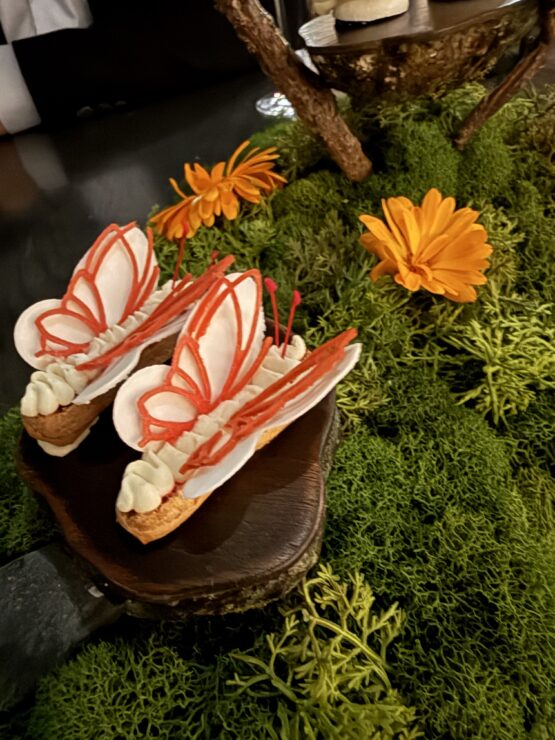
A slice of the forest held pastries and sweets tucked in pairs on tiered branches and a moss-bed base. One delicate butterfly-shaped bite was made with foraged pawpaw, Canada’s only fruit that tastes of the tropics. It reaches ripeness for just a few days before rotting.
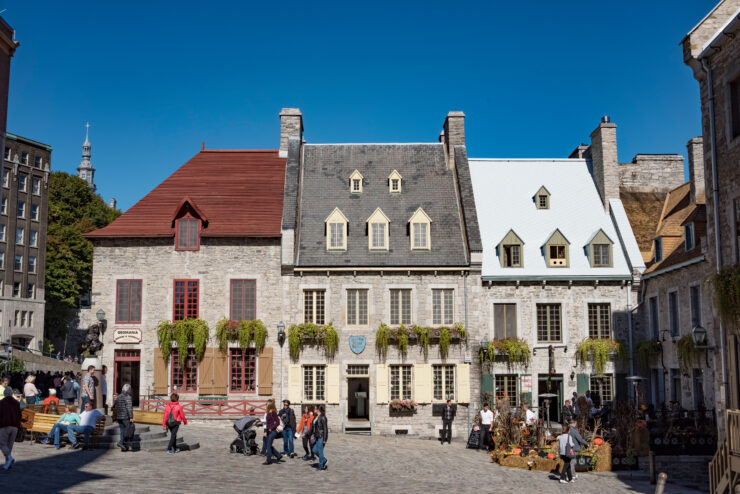
At the end of the meal, we emerged onto the quiet cobblestone street in historic Place Royal. In 1608, Samuel de Champlain founded the first permanent settlement in New France just a few steps away.
We struggled to sum up the meal as we said goodnight. The final line of the poem to Le Noble described the Tanière³ experience in a way we couldn’t quite manage: “A dinner, a drama, a poetic dream.”
The chef’s menu at Tanière³ is $300 Canadian per person. Pairings are extra, including an excellent non-alcoholic version. Tables are booked several months in advance.
Seeing Michelin Stars
Quebec City isn’t huge, yet the variety and excellence of dining options can be overwhelming.
Eric Lavoie is superbly connected to what he calls the “crazy good” restaurant culture here, running some of the city’s top food events with company CELEB Événements. He recently launched Québec Foodie Experience, elevated food tours that introduce visitors to restaurants in the old city and neighborhoods, including St-Roch and Faubourg.
Lavoie took me to three restaurants that each received Michelin love and that he felt showed Quebec’s culinary chops.
Join the Crew at Le Clan
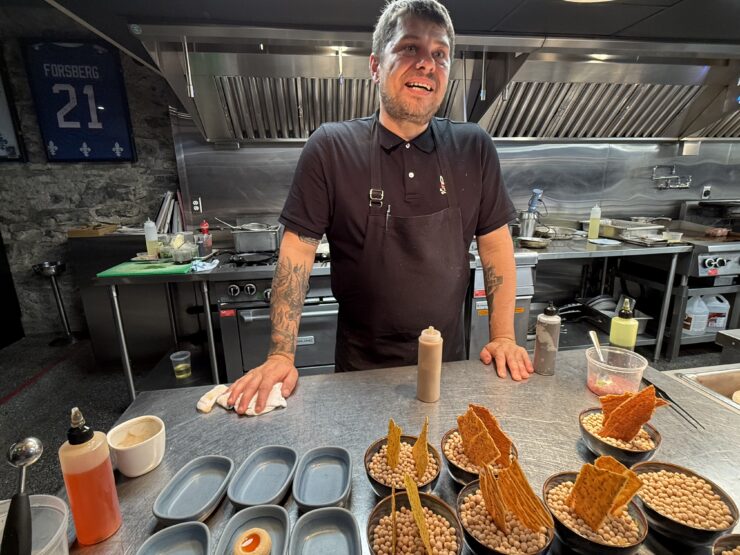
The first thing diners see when they walk into Le Clan is chef Stéphan Modet and the kitchen brigade at work in the glass-fronted kitchen. The second thing is a whale skull. Modet was cheerful as he greeted Lavoie. He was clearly still riding high on the restaurant’s first Michelin star.
©Linda Barnard
Every dish served in the second-floor dining rooms of the 17th-century house celebrates local meats, fish, game, and the land. Ruby-colored and rough-chopped tender deer tartare comes with black garlic from Charlevoix, an hour away. Chewy sourdough bread baked for the restaurant is made with Sept-Îles seawater. The decor is playful, including a wall-sized mural of Quebec notables and pop culture touchstones.
ARVI Breaks Restaurant Rules
Lavoie encourages visitors to explore beyond the Old City. A 10-minute cab ride took us to the hip nabe of Limoilou and the Michelin-starred restaurant ARVI.
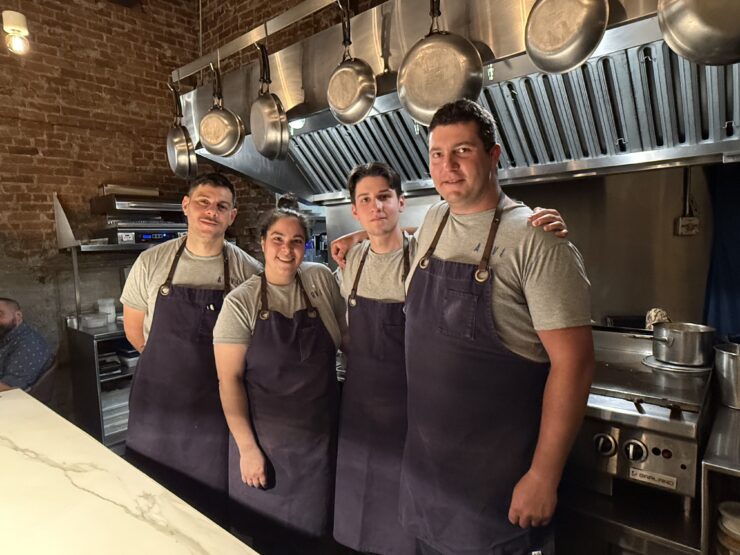
The concept in the 30-seat restaurant is cuisine libre — free cuisine — meaning the kitchen has been liberated from a place “back there” and put amid the diners. So have the chefs, who cook, plate, and serve. Tables wrap around three sides of the kitchen and prep areas so guests see all the culinary action.
©Linda Barnard
A row of gas stoves with hanging pans runs along the back wall. Chefs work at wide islands with sinks and prep areas, plus storage and fridges below. The star of the set menu is a toasted slice of brioche with a quenelle of dulce de leche on one half and a slab of foie gras on the other. Smash, fold, eat, swoon.
Bistro L’Orygine
Located at street level, upstairs from sister restaurant Tanière³, this relaxed bistro focuses on Canadian ingredients. Chef Sabrina Lemay does it so skillfully that Bistro L’Orygine earned a Michelin recommendation. We shared a plate of delicate Lake Ontario walleye ceviche in a sweet pepper, marigold, and habanero marinade. What looked like salmon roe was actually tiny pearls of tangy juice made from unripe grapes and infused with saffron grown by Safran Nordique in Charlevoix, about 90 minutes from Quebec City.
They grow saffron in Quebec? Quelle surprise!
If You Go
Auberge Saint-Antoine
The family-owned Relais & Châteaux hotel, Auberge Saint-Antoine, is on a quiet street in the Old City and holds two Michelin Keys. In-house restaurant Coteau, which has a Michelin Green Star, plans menus around its namesake farm on Île d’Orléans, 30 minutes away.
Learn More
Visit Bonjour Quebec: bonjourquebec.com/en-ca
You May Also Enjoy Reading
Québec’s Hyper-Local Food and Wine Movement: A Taste of Place
Montréal Turns Up the Heat and Lights Up Winter
