
The setting to learn more about the flavors of Oman through my cooking class at Rozna Institute of Culinary Arts in Muscat, Oman, feels like an episode of MasterChef, with 15 cooking stations, marble countertops, and high ceilings. I peek into the attached room where guests can eat the food they prepare. There, a dark table and chairs for 20 are surrounded by arched windows.
Rozna Restaurant
The cooking institute is part of Rozna Restaurant, which is housed in a fort replica. It’s made of stone, mud, and clay and resembles a medieval fortress with big, heavy wooden doors. As the name suggests, the restaurant serves traditional Omani food, a variation of Arabic cuisine. There’s Shuwa, goat meat cooked in the ground, and Qabouli, rice with chicken or meat and vegetables. Rozna also offers traditional floor seating; the decor includes hanging woven circular place mats and pottery water pitchers.
Rozna Institute of Culinary Arts
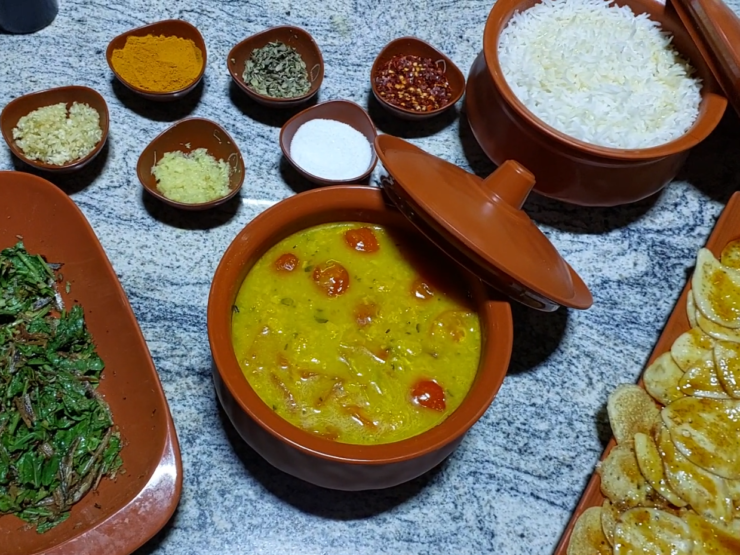
Back at the front room, some of the flavors of Oman, such as chili flakes, limes, tomatoes, and pieces of ginger, garlic, and turmeric, await. The fragrant, earthy aromas were making my stomach grumble. I could not wait to see what I would be learning to cook.
Chef Sameera
©Courtesy of Freddy Hines
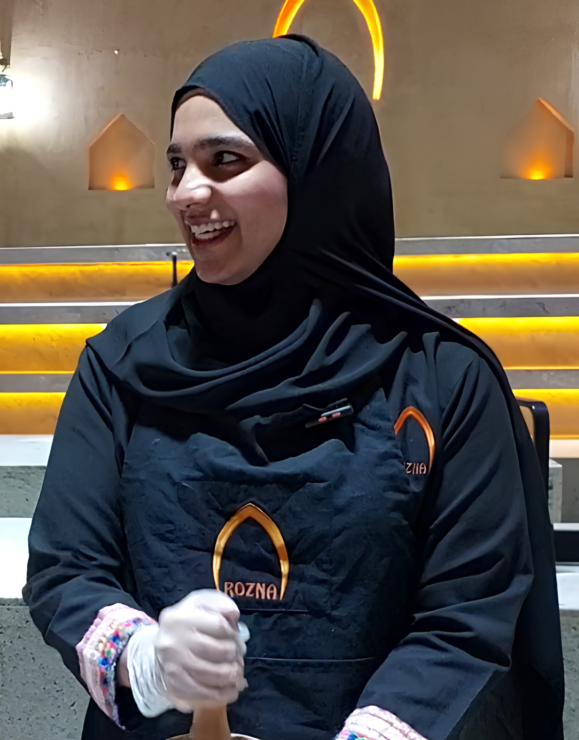
My teacher for the afternoon, Chef Sameera, looked eager to start, too. She was all smiles and welcomed me to the kitchen demonstration station. She is bubbly and warm; her eyes light up when she’s talking about food. Before we began, we had some traditional Omani karak, tea infused with milk, sugar, saffron, and cardamom. I like karak, and this version hit the spot — not too sweet, warm and floral.
Flavors of Oman
I’ve been teaching English for Specific Purposes and English as a Second Language in Oman since 2018. I’ve come to love Omani food and always enjoy eating local dishes. I have asked friends about ingredients, but I’ve never watched or helped them cook.
When I travel, I like to take cooking classes to learn about cultures, and I also enjoy trying to replicate these dishes for friends and family when I get home. So I thought I should take a class to further appreciate the cuisine where I live. And I was pleased to find a place nearby where I could do it.
Omani Traditional Food
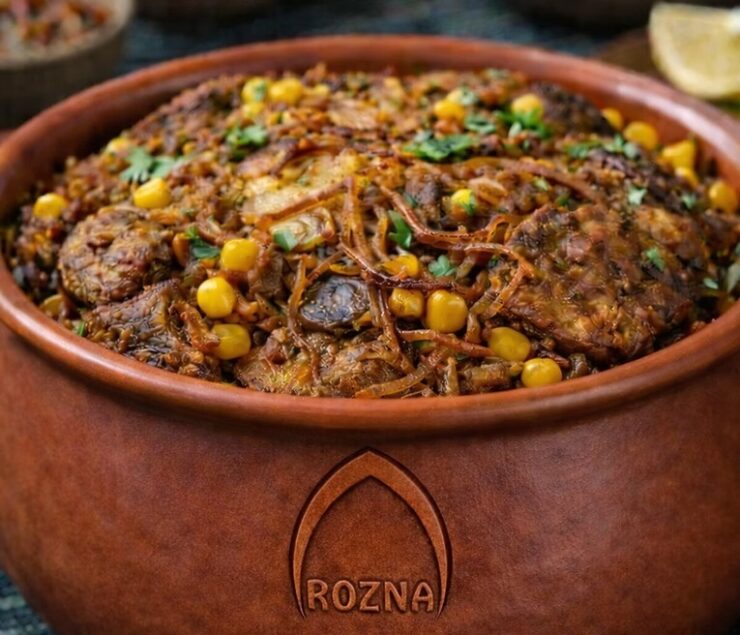
Just like other world dishes, including Italy’s spaghetti Bolognese and Indonesia’s Nasi Goreng, Oman has its signature Shuwa, a whole goat cooked for 12 to 48 hours, depending on the region. It is paired with spiced rice, flavored with cumin, cardamom, cinnamon, and cloves.
Spices
Omani cuisine also features a spice blend sold in local shops, a mix of cinnamon, cloves, cumin, cardamom, black peppercorns, and turmeric. Fresh Za’taar, which provides a flavor similar to thyme, is grown in the mountains. Other flavors of Oman, including Saffron and ghee, a clarified butter, are also staples. Omani limes, which are about the size of a golf ball, add a slightly sour taste to food. When dried, they have an earthy, woodsy aroma. Some cook them whole, while others use the soft, black, dried pulp inside.
Eating The Right Way
It is common in Oman to eat food with the right hand, as the left hand is considered dirty. The key to eating with your hand is to push a small amount into your mouth with your thumb. Your fingers should not touch your mouth since the food is shared. If it’s rice, it’s better to make a small ball before eating.
It was May, which is the low tourist season in Oman, so I was lucky to have a private session. Chef Sameera explained that I would be learning how to cook Pablo, a traditional Omani soup with tuna and spices. We’d also make Qasha salad and Quroos. I’ve eaten Pablo and Quroos, but this would be my first time with Qasha.
First, The Qasha
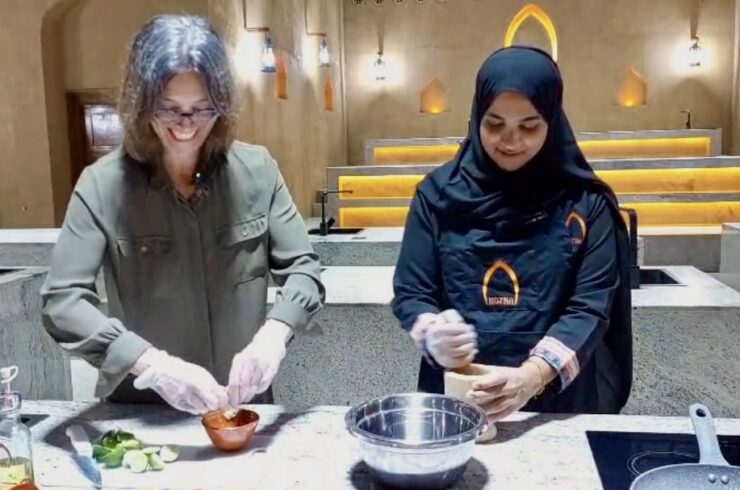
We started with the Qasha, made from dried, roasted anchovies mixed with rocket leaves, salt, Za’atar, chili flakes, and fresh limes. Chef Sameera told me her grandparents used to eat this in the summer because it’s a very light dish.
While I was helping her separate the anchovy heads from the rest of the body using our fingers and slicing limes, we talked about her love for cooking. When Chef Sameera was roasting the anchovies, I was watching her toss them by flipping the pan. I laughed, saying if I tried it this way, the food would be on the ground.
Cooking Aspirations
Chef Sameera has been at the institute for a year and a half and enjoys showing people how to make traditional food. She also works in the kitchen at Rozna restaurant. She learned to cook with her grandmother starting at age 9. It was her hobby until she started working professionally at Rozna. She enjoys the cooking classes because they give her a chance to socialize while introducing her culture through the cuisine. She wants to help put Omani cuisine on the world map.
Onto the Pablo and Qaroos
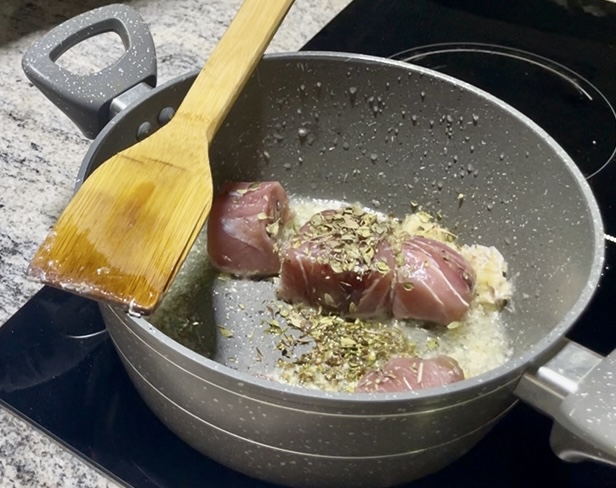
©Erin Coyle
The next dish we started preparing was Pablo. After fragrant shallots and garlic started to cook, we added pieces of fresh tuna, Omani Za’atar, fresh lime juice, chili flakes, turmeric, salt, and pepper. For me, the two stars of this dish were turmeric and lime, thanks to their aromatic blend of tangy, zesty, and rich notes. I was getting even hungrier.
While we continued, Chef Sameera told me that, as a child, while cooking with her grandmother, she liked making chapati with chicken salona, which includes tomato, onion, and eggplant mixed with cumin, turmeric, dried lemon, and a blend of Omani spices.
After adding water, we set the pot to simmer.
Omani Treats
Next, Chef Sameera showed me how to make Qaroos, small, thin pancakes topped with date syrup or honey. Quroos is a popular snack found at most Omani festivals. The difference between Quroos and regular pancakes is that they are small, thin, and have slightly crispy edges.
It is hard to stop eating them; it would be easy to pop five or ten into your mouth. Women eat Qaroos after giving birth to celebrate and provide relief for the body.
Spices and Flavors of Oman
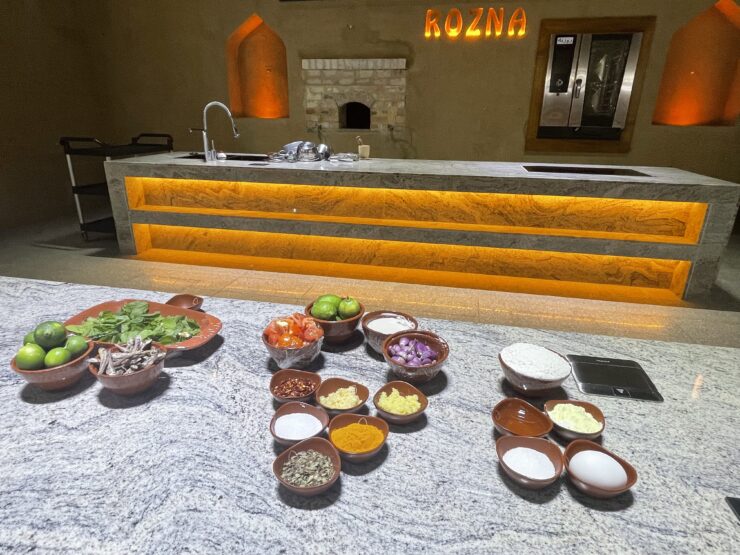
Throughout the class, we discussed spices and flavors used in Omani dishes.
Shuwa Spices
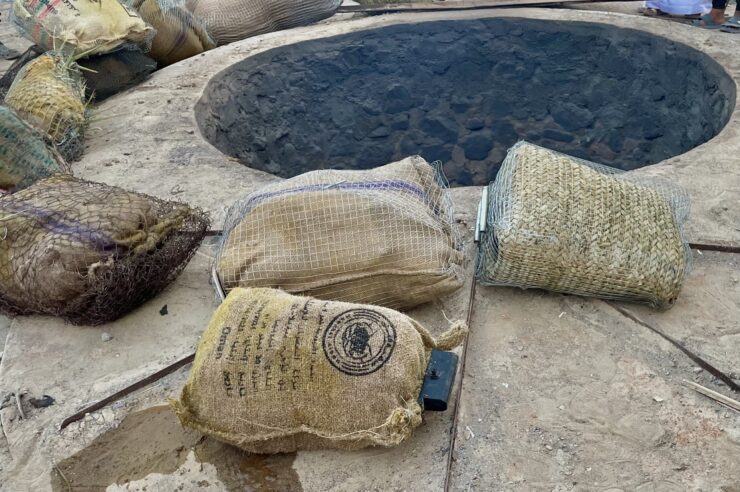
For Shuwa, the traditional goat cooked underground, women will make a date vinegar marinade and store it for 39 days. Any longer, and it could ferment into a spirit. Cumin and cardamom, important flavors of Oman, are also mixed together. Families use different ingredients, just as regions cook it differently.
The goat is wrapped in banana leaves and then placed in a woven bag for cooking. The smoky and tender meat falls right off the bone. It’s eaten during Eid al-Fitr, a festival that follows the end of Ramadan, during which Muslims fast from dawn until sunset for 30 days. Eid al-Fitr is about two months later and usually takes place after people finish the Hajj pilgrimage to Mecca.
Arsiya
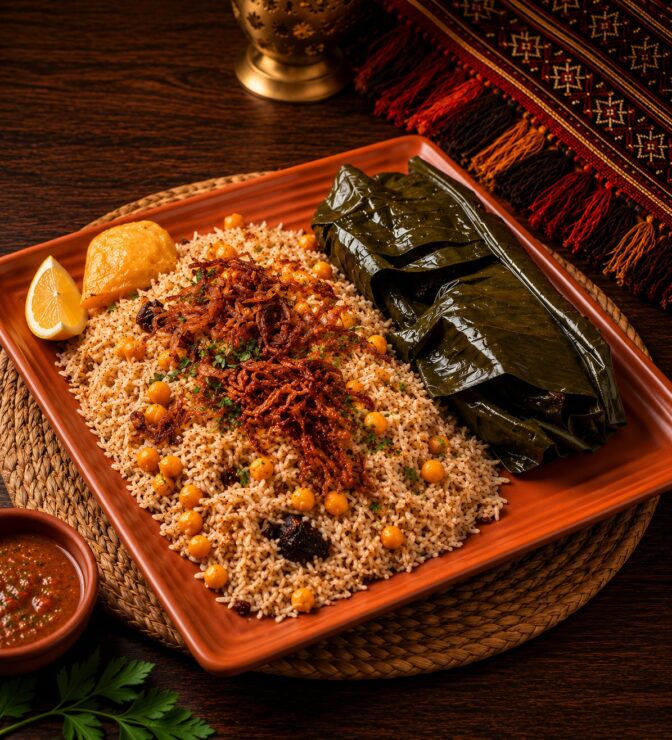
Chef Sameera told me her favorite dish to cook and eat is Arsiya, rice mashed with chicken or meat, with a texture resembling porridge. Cardamom and cinnamon Many households eat this for breakfast on the first day of Eid, but it’s offered at the restaurant for guests to try at any time.
©Courtesy of Rozna Restaurant
What I Learned About Traditional Food and Flavors of Oman
While I’ve always enjoyed eating Omani food, I went in not knowing what to expect from actually cooking it. I was surprised that Pablo didn’t take as long to cook as I thought. It was ready in less than 30 minutes.
But it was only when we sat down to eat what we had cooked that I appreciated the complexity and delicacy of the cuisine. The mix of lime, anchovies, and seasoning in the Qasha salad was refreshing. The turmeric and hints of Za’atar and lime made the Pablo aromatic. The drizzled date syrup Qaroos was the perfect light end to the meal.
Flavors of Oman
Looking at the empty bowls and plates, my mind flashed back to the sizzling tuna with turmeric cooking in the Pablo pot, which made me appreciate and further understand Omani cuisine. I couldn’t wait to cook these dishes for friends. I feel confident I can pull this off because I can buy the ingredients at local markets here, and I am even more familiar with the flavors of these dishes after this class.
If You Go
Visitors to Oman can book a flight to Muscat via Europe, Qatar, or Dubai. The best time to go is between November and early February.
For more information, head to Visit Oman or Experience Oman.
Some citizens can visit visa-free for 14 days or less; otherwise, travelers can obtain a 30-day visa. Go to the Royal Oman Police visa website for more details.
Visit the U.S. Department of State website for up-to-date information on travel conditions in Oman.
To book your space at Rozna Institute of Culinary Arts, call or send a WhatsApp message to +968 77121777, or visit their Instagram @roznaica.
Culinary Inspiration
For more culinary inspiration around the world, read about Peru’s food scene here and find out how to cook the Cajun way here.
