
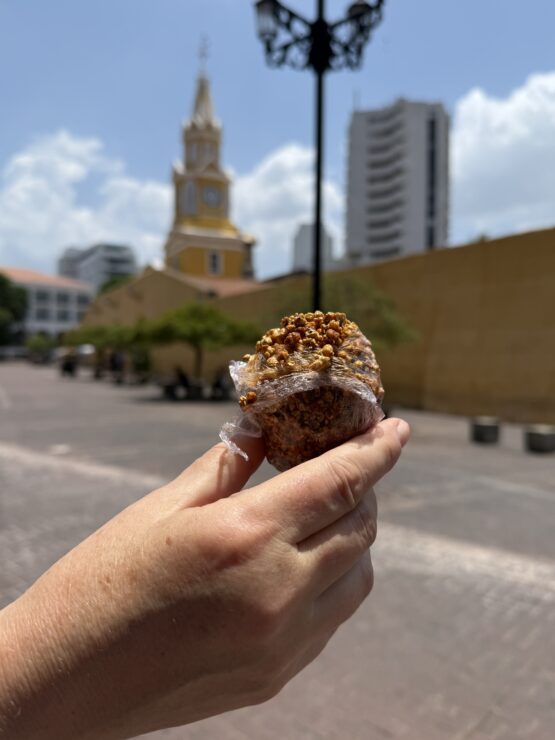
Sweet happiness costs less than a buck in Cartagena, Colombia.
Vendors sell sweet and chewy bolas de legria (happiness balls) inside the Arcade of Sweets, a shaded row of colonial arches inside the walls of one of South America’s oldest colonial cities. The simple candy is made from popped millet, coconut, and anise, formed into sticky balls with panela syrup. Made from unrefined sugarcane, panela sugar tastes like molasses and is used in everything from baking to rum-making in Colombia.
A stop to sample traditional confections was one of eight tastings on my Literary Menu of Gabriel García Márquez walking tour of old Cartagena. It included Getsemani, the gritty, engaging collection of narrow streets known for colorful murals. Cartagena’s revolution was born in Getsemani, the first place to rise against the Spaniards in the 19th century.
Walking and Eating into Gabo’s Books
The two-and-a-half-hour walking tour with Colombian company Foodies linked Cartagena’s flavors to García Márquez, the nationally beloved Nobel Prize-winning author affectionately known as Gabo.
Some of the foods we tried were mentioned in Gabo’s novels. Others were the tasty things he loved about the city where he lived as a young journalist. Take the confectionery seller we met in the Arcade of Sweets. García Márquez writes about a woman like her selling treats to Fermina Daza, the headstrong protagonist in his 1985 novel Love in the Time of Cholera.
Don’t fret if you’ve never read a word of Gabo. The sips and bites also work as an edible introduction to Cartagena. Named Cartagena de Indias to differentiate from the ancient Spanish city, it was built by the Spanish using enslaved African people on village sites where Indigenous people had lived for millennia. Everyone contributed traditional foods and recipes to Cartagena that live on nearly 500 years later.
Charming Cartagena
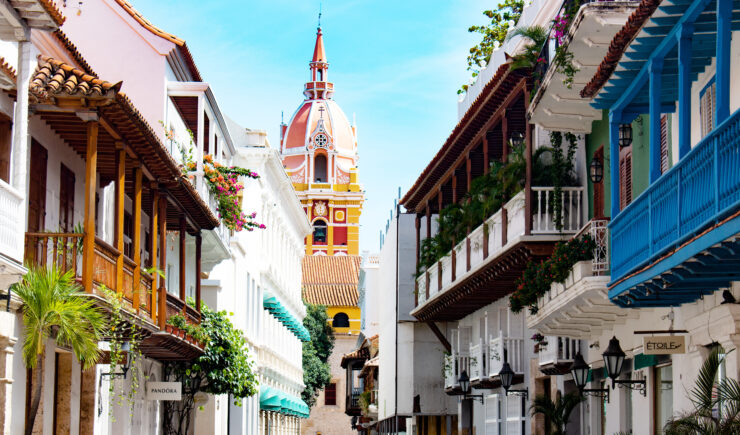
Cartagena is a UNESCO World Heritage site that charms in an often-secretive way. Unyielding, sultry heat creates a languid atmosphere in the narrow old-town streets lined with pastel-painted colonial buildings. Hot pink and Popsicle-orange bougainvillea trail from wooden balconies. Vendors sell iced coconut juice and lush-looking tropical fruit from flat wooden carts. Their whistles shrilly communicate unknowable messages that compete with the songs of tropical birds.
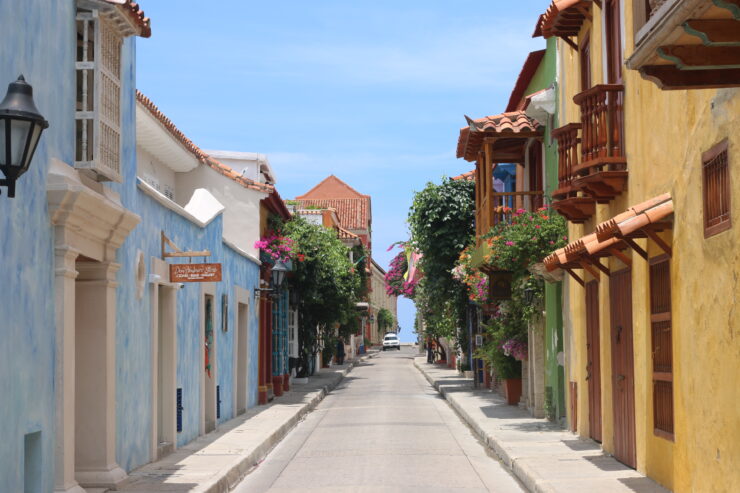
Gabo was known as the father of magical realism for his deft use of the style that weaves the inexplicable into everyday life. These streets inspired him
Cartagena seems timeless, but it is changing. In early 2026, the horse-drawn sightseeing carriages that once departed from the Plaza de los Coches were retired. Electric coaches built in 19th-century style now take tourists around the city, promoting 21st-century goals of animal welfare and sustainable tourism.
A Tour Leader’s Earrings Tell Her Story
We met our Literary Menu food tour leader, Andrea De La Hoz Gaviria, at the main entrance to the 16th-century walled city in an archway under the old town’s landmark yellow clock tower. Old Cartagena is encircled by nearly seven miles of thick defensive walls, built over more than 150 years by Spanish decree to keep pirates out.
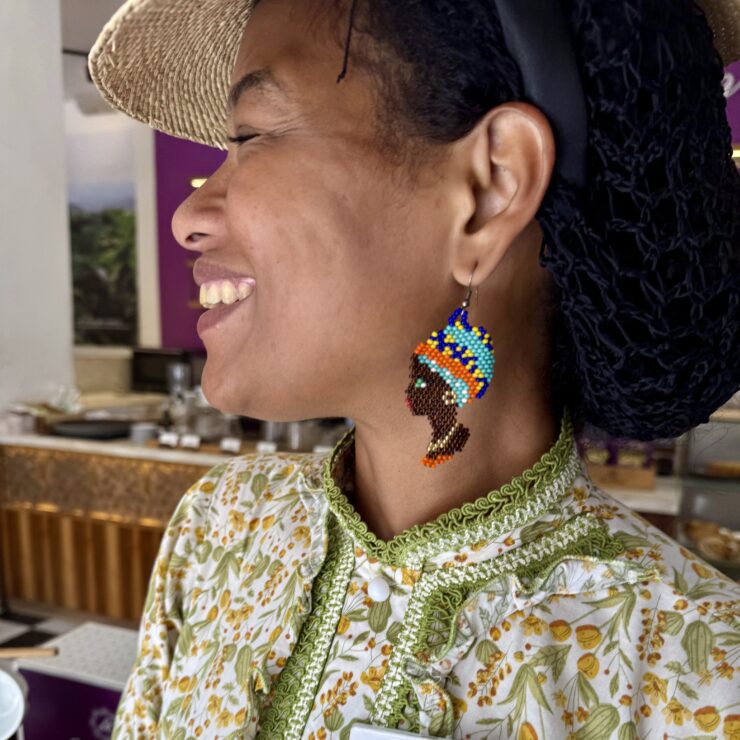
Gaviria, who is also a chef, was dressed as the 19th-century character Fermina from Love in the Time of Cholera in a high-necked cotton gown and straw boater. Her beaded earrings spoke to her heritage; renderings of an Afro-Colombian woman in a vibrant head wrap. These are Palenqueras, whose ancestors were among the kidnapped Africans who escaped slavery in Cartagena. They founded the first free African settlement in the Americas, 30 miles to the south in San Basilio de Palenque in 1691.
Palenqueras in colorful circular skirts work as fruit sellers in the old town and neighboring Getsemani. They carry deep pans of fruit on their heads, posing for tourist photos for a modest tip.
©Linda Barnard
Gaviria is an eleventh-generation Cartagenera, as the female residents of this Colombian city call themselves. She said she wears her heritage on her face as a Black woman, descended from the estimated one million enslaved Africans the Spanish transported to the city over three centuries. She has Indigenous roots as well as Spanish heritage, which she said shows in her almond eyes and light skin.
A small device at her hip played passages from Gabo’s books, read in a professorial, English-accented voice. Occasionally, we listened to the traditional clarinet music Gabo loved, which made a lively soundtrack for our walk. Gaviria has read all of his novels, which are on the local high school curriculum.
Traditional Cartagena Foods on the Menu
We were going to try two of Cartagena’s most traditional foods, also favorites of Gabo’s: fried green plantains, called patacones, which came from Africa, and arepas, made from ground white corn used by Indigenous peoples who predated the Spaniards by thousands of years.
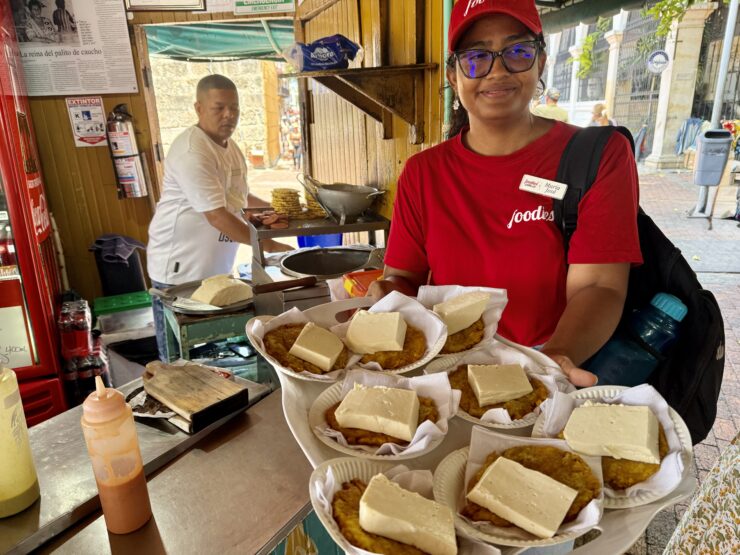
Patacones are one of Cartagena’s most-loved street snacks. We stopped at a busy stall that made the most of its great location next to a local landmark: a rubber tree. García Márquez recalled the spreading branches as a spot for “gatherings for shade” from his years living in the city.
For patacones, green plantains are deep-fried to softness. They’re lifted out of the oil, smashed flat into palm-sized discs, dragged through garlic water, and deep fried again until golden and crispy. They’re topped with a slab of salty fresh cow’s milk cheese called queso costeño. Add a squirt of Aji Verde, a thin green sauce made with pureed cilantro, lime, jalapeños, and sour cream. A sign on the stall advertised a patacon-and-Coke meal deal for about $2.50.
One Dish, Three Cultures
Gaviria led us down several streets into the heart of the old city and inside a chic cafe. At the back of the room, she asked one of us to pull on an item in a bookcase. The wall swung open to reveal Caña Brava Bar.
Arepas stuffed with egg were on our tasting menu, a dish she said included elements from all three of the founding cultures of Cartagena.
She played a quote from García Márquez. “In what other place in the world do you put an egg in a pie?” Meet the arepa con huevo, a corn griddlecake stuffed with a fried egg. It’s a top grab-and-go breakfast here. The ground corn makes the arepa Indigenous, Gaviria explained. The egg came to Cartagena via Spain, and the method of twice frying the arepa is African.
It wasn’t my favorite dish. I found it a bit dry, and I wished the egg inside was runny. But I loved the refreshingly tart, ice-cold juice made from corozo, the deep-burgundy palm fruit. Colombia is the world’s second-most diverse country, after Brazil, Gaviria said, with more than 400 native species of fruit.
I enjoyed the deep-fried carimañola we had next, a fried mashed cassava ball with a melting heart of gooey cheese. Street foods like these savory treats often appear in Gabo’s work, Gaviria said. Like all fried snacks in Cartagena (and there are lots of options), they’re picked up and eaten — no forks and knives.
A Colorful Fruit Seller from a Book
A shaded park at the center of the old city was our next stop. Named for Colombia’s liberator, Simón Bolívar, it’s where lovesick Florentino Ariza wrote love poems after he was snubbed by Fermina in Love in the Time of Cholera.
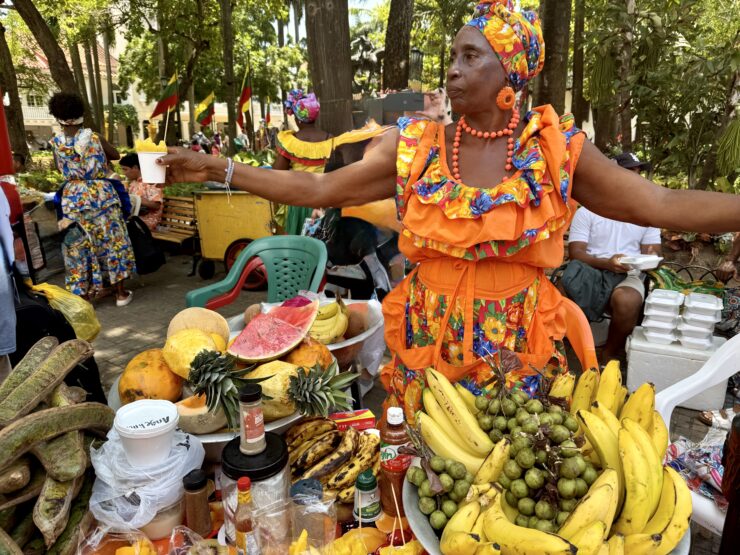
We met Palenquera fruit seller Angelina Cassimene at her stall in a corner of the park. A table was piled with tropical fruit, along with a well-used cutting board and an impressive carving knife. Cassimene handed us cups of juicy pineapple chunks, just like the “black woman with a colored cloth around her head” gave Fermina from the tip of her butcher’s knife here in Love in the Time of Cholera.
With two more stops to go, I wondered if I could eat anymore. But I’m no quitter, and there’s always room for ice cream.
At Nia Bakery, chef Talia Richard’s coffee shop and cocktail bar celebrates “Colombian biodiversity through refined patisserie.” House-made ice cream flavors included sweet pudding-like sapote fruit, coco leaves, creole lime, and sugar cane. I went for mango-passionfruit. I let the ice cream melt on my tongue as Gaviria told us that ice appears in the opening of 100 Years of Solitude.
Colombia is famous as a grower of Arabica coffee in the central Andean region. It seemed fitting to end the tour with a pour-over cup at the multi-award-winning San Alberto coffee shop. The coffee is made tableside with flair, and the single-estate-grown beans make a bright, light cup.
If You Go
Head out early while the streets are quiet to explore and have the photogenic Getsemani neighborhood to yourself. The streets are so narrow that they can be easily clogged by a fruit seller’s wooden pushcart. In short alleys, the umbrella ceiling craze is alive and well. Oversized, artful door knockers may tell a story about who lives inside.
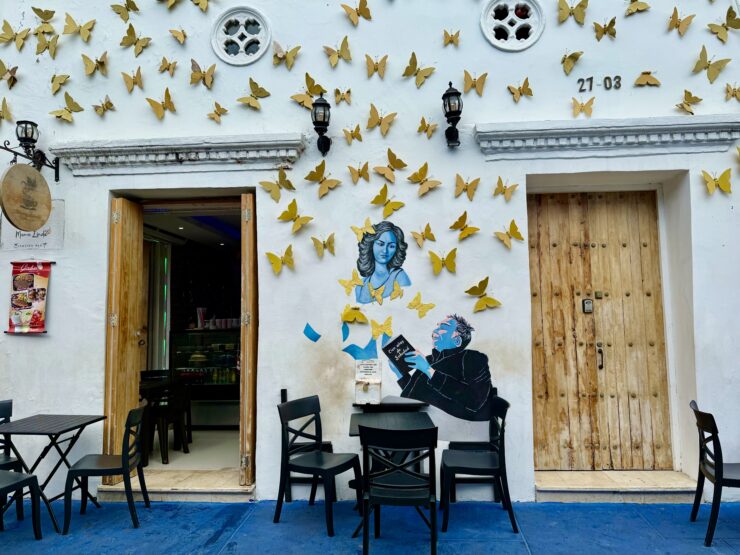
Getsemani has two murals that honor Gabo, both inspired by One Hundred Years of Solitude. One is on what’s called Getsemani’s most beautiful street, where yellow butterflies erupt from the pages of the novel in his hands to swirl around a rendering of Fermina.
In another, he plays an accordion as yellow butterflies whirl. He’s smiling, perhaps recalling a time when he picked up some Cartagena-made happiness in the Arcade of Sweets.
Where to Eat
Mar y Zielo is in a handsomely renovated heritage building in the old city called the Casa de la Escibaña. It was the workplace for the city’s scribes and, later, notaries from the 16th century to the early 2000s. Gabo occasionally wrote in the library, which is now a private dining room.
The menu elevates comforting Colombian dishes with contemporary flair. Coquettes are stuffed with local crab and lacto-fermented paprika. Fried pork belly is paired with tamarind and green picadillo. The caramelized milk ice cream was an elegant finish.
Where to Stay
OSH Hotel is a boutique hotel in Getsemani that has a Michelin Guide mention for its 139 chic rooms, two pools (one on the roof terrace), and a spacious dining room. It’s LEED (Leadership in Energy and Environmental Design) certified for its green building design and is an easy walk to the old city. Getsemani’s bars and restaurants are outside the front door, yet the hotel is a quiet oasis.
Learn more about visiting Cartagena.
You May Also Enjoy Reading:
A Day at Cafe de la Cima: Experiencing Coffee Culture in Colombia
Tasting Ecuador Through the Flavors of Quito
Read more of Linda Barnard’s travel stories at lindabarnardportfolio.com
