
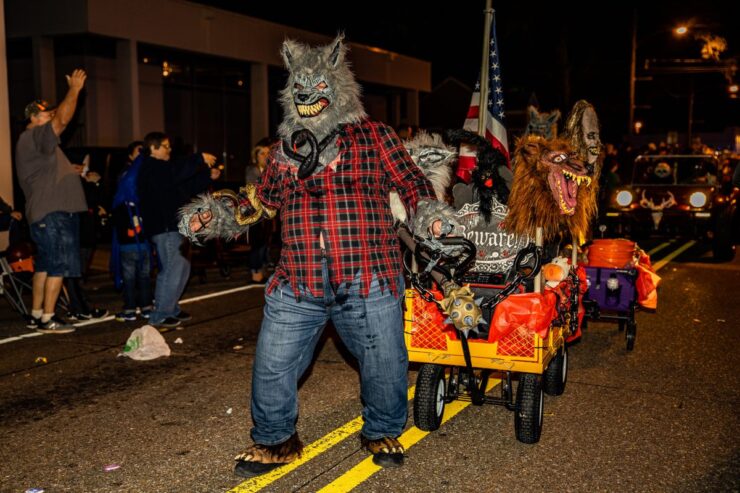
When I arrived in Houma, Louisiana, located in Terrebonne Parish just 55 miles from New Orleans, I was unfamiliar with the Rougarou, a swamp monster from Cajun folklore.
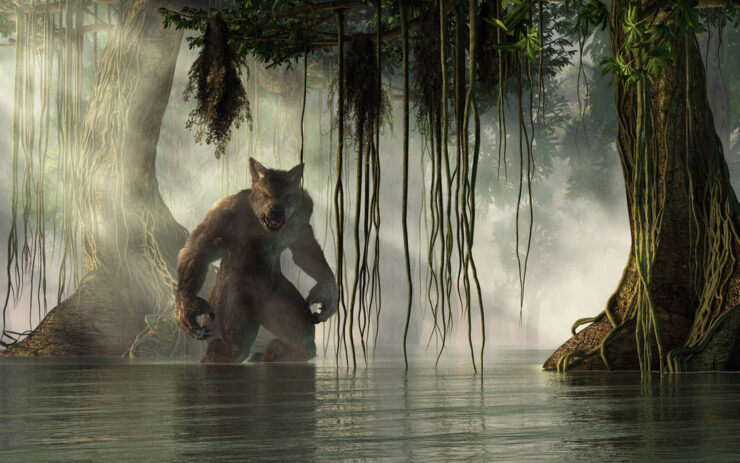
The term “rougarou” comes from the French “loup-garou,” meaning man-wolf. It’s often described as a creature 9 feet tall, with red eyes, a wolf- or dog’s head, and a human body, similar to a werewolf.
Photo Credit: Daniel Eskridge-FineArtByDaniel.com
French settlers and French-Canadian immigrants have passed down the legend through generations.
“If you grew up in the bayou,” explained Jonathan Foret, executive director of a festival devoted to the creature, “your parents probably used the Rougarou to keep you in line. Cajun parents often warn their children that the Rougarou will come after them if they misbehave.”
Welcome to Louisiana’s Bayou Country
While I was surprised to find an entire festival devoted to the Rougarou, the legend set the stage for a weekend in Houma, where Cajun food, folklore, film history, and bayou wildlife intersect.
The Rougarou Fest: Houma’s Signature Festival
The free, family-friendly Rougarou Fest, held every October since 2011, features a lively atmosphere with food, music, and folklore celebrating Bayou culture.
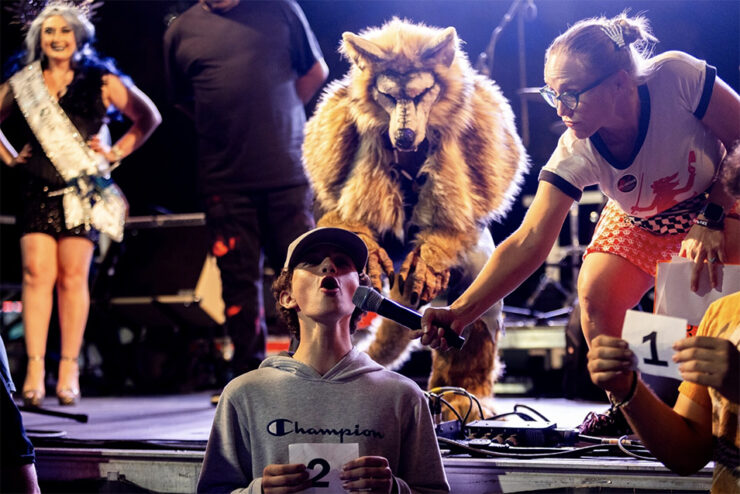
The three-day Fest’s kickoff event is the Howling Contest, held on Friday evening. Kids and adults (a maximum of 10 in each category) sign up and take the stage to bring the Cajun werewolf legend to life with their best howls.
All proceeds benefit the South Louisiana Wetlands Discovery Center, a nonprofit that raises awareness about Louisiana’s disappearing coast and its residents. In Houma, the waterscapes surpass the land. The parish of Terrebonne, meaning “Good Earth,” truly lives up to its name with plentiful seafood, wildlife, and natural resources. Here, water doesn’t just surround the community—it defines it. Moss-covered oaks line winding waterways, and local folklore continues to influence community life.
The Louisiana Association of Fairs and Festivals named Houma’s Rougarou Fest the 2024 Festival of the Year. It ranked second in USA TODAY’s Top 10 Best Cultural Events in the United States for the second year in a row.
Cajun Food
Cajun cooks volunteer their time to prepare and staff numerous food booths at the Festival, serving dishes from various Bayou cultures. During my visit, I tried seafood gumbo, turtle soup, and crawfish fettuccine.
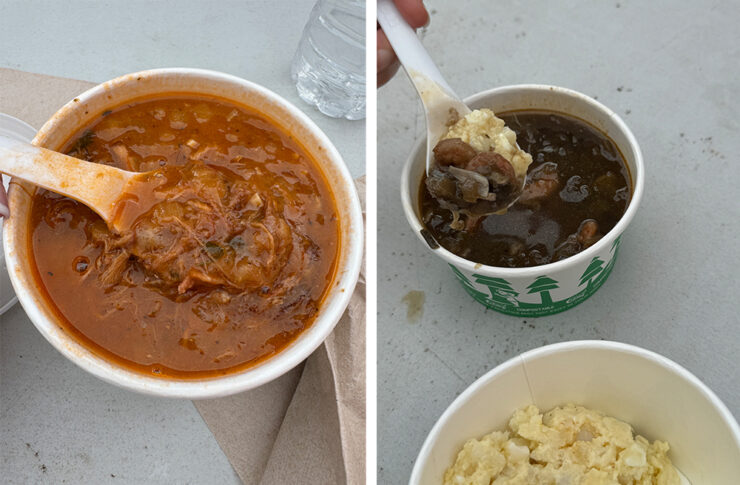
©Debbra Dunning Brouillette
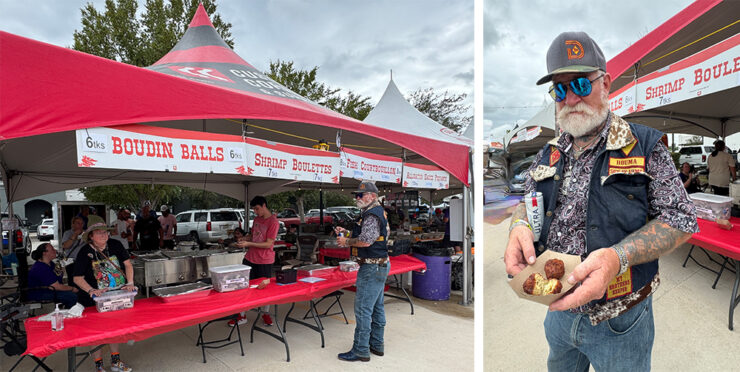
My favorite desserts were the blackberry dumplings and beignets—square, puffy, deep-fried doughnut-like pastries covered in powdered sugar. Other Louisiana specialties included Boudin balls, a deep-fried snack made with pork, rice, and spices; Shrimp Boulettes, fried shrimp balls similar to croquettes; Fish Court-Bouillon, a traditional Creole fish stew; and Alligator Sauce Piquant, a Cajun stew made with tender pieces of alligator meat simmered in a tomato-and-pepper sauce.
©Debbra Dunning Brouillette
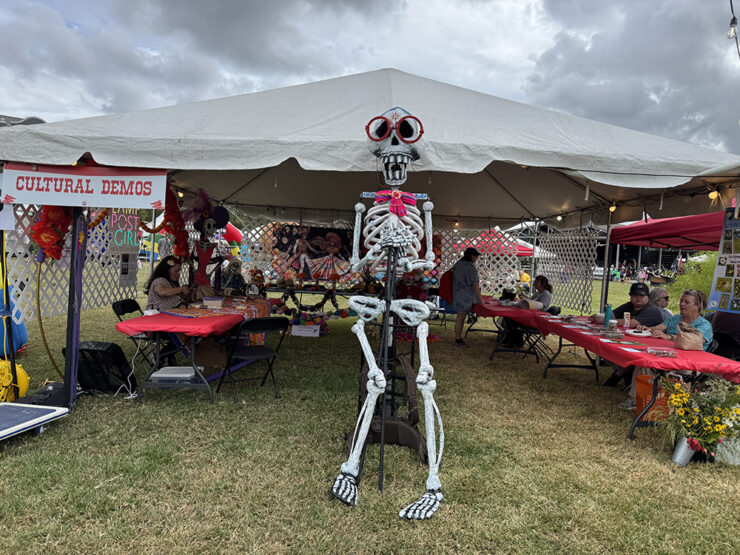
Folklife Village: Demonstrations and Crafts
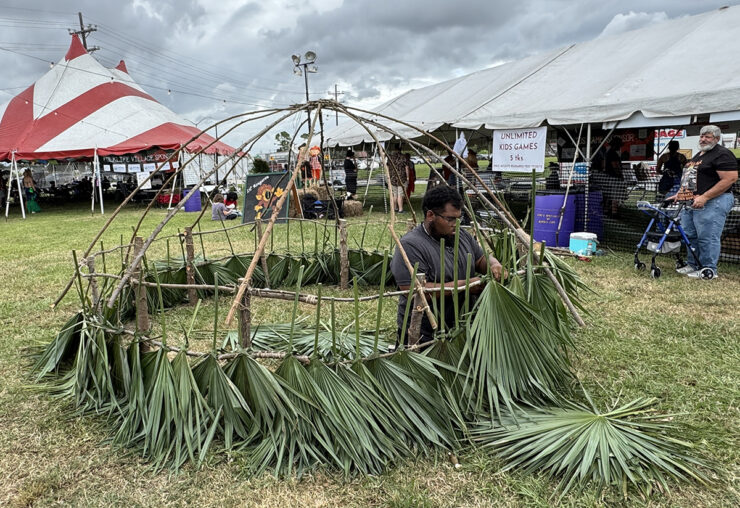
Visitors can stroll through the Folklife Village to watch demonstrations of Cajun cooking, Native American drumming, cultural celebrations, and native crafts, from basket weaving to wood carving. A palmetto hut was under construction the day I was there.
Costumes and Contests for Adults, Kids, and Pets
A high percentage of festival visitors arrived in costume, with wannabe Rougarou monsters and witches mingling alongside pirates and princesses.
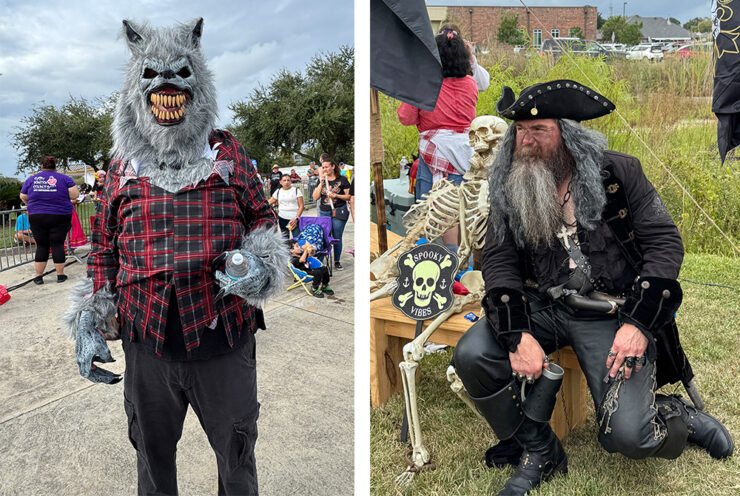
Adults, kids, and even pets participated in costume contests. Categories ranged from funniest and scariest to movie characters, most creative, and best overall.
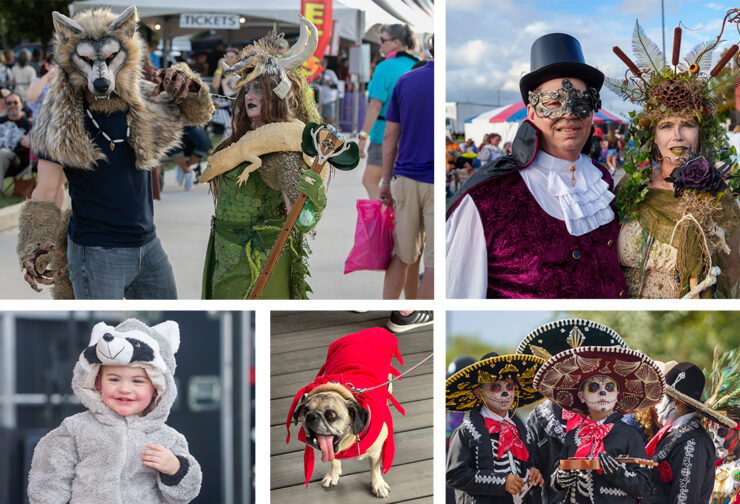
Costumed couple (upper left) ©Rove Life. Costumed pet ©Debbra Dunning Brouillette
And there was so much more—from haunted houses, kids’ games, and carnival rides, to live music on various stages.
Pardoning the Beasts: Neuty the Nutria and Friends
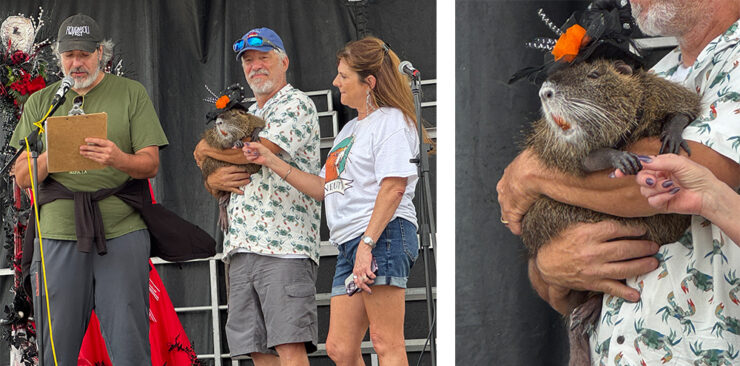
The annual Cajun Critter Pardon is a lighthearted festival tradition in which one wetland animal is ceremoniously “pardoned.” This year’s honoree was Neuty the Nutria, a pet nutria owned by a local couple. While playful in tone, the event serves a larger purpose—spotlighting the animals that inhabit Louisiana’s fragile wetlands.
Nutria, sometimes called swamp rats, are an invasive species introduced to Louisiana in the 1930s for the fur trade. Native to South America, they feed on the roots of marsh plants that hold wetland soil together, contributing to erosion and land loss. To combat the damage, Louisiana established a nutria control program in 2002, offering a bounty to help reduce their population. The Cajun Critter Pardon uses humor to spark awareness, blending education and entertainment in true Bayou Country fashion.
Walking Through History in Downtown Houma
Beyond the festival grounds, Houma’s downtown reveals more layers of the town’s history and character.
Houma as Hollywood Backdrop: Where the Crawdads Sing
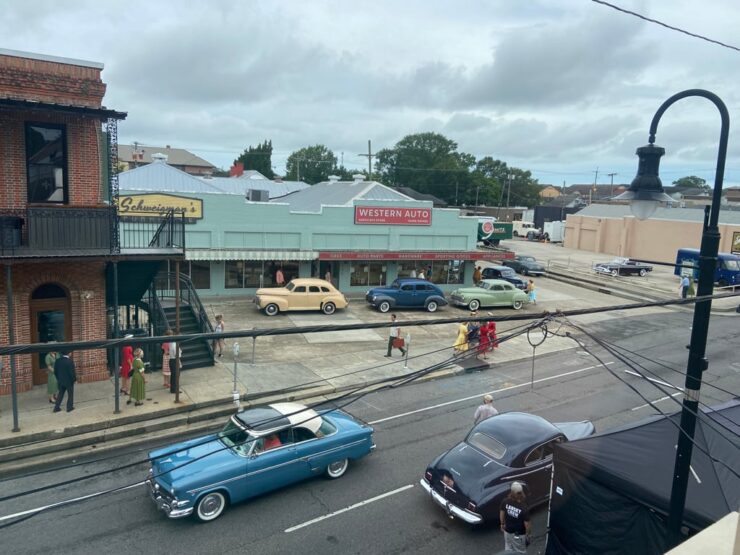
Houma has become known as “Hollywood South.” It was not only transformed into Barkley Cove for Where the Crawdads Sing, set in the 1950s-60s, but also served as the backdrop for other films, including Crazy in Alabama and The Best of Me.
As we walked down Main Street, it wasn’t hard to imagine the storefronts slipping back into another era.
The Regional Military Museum: A Salute to Service
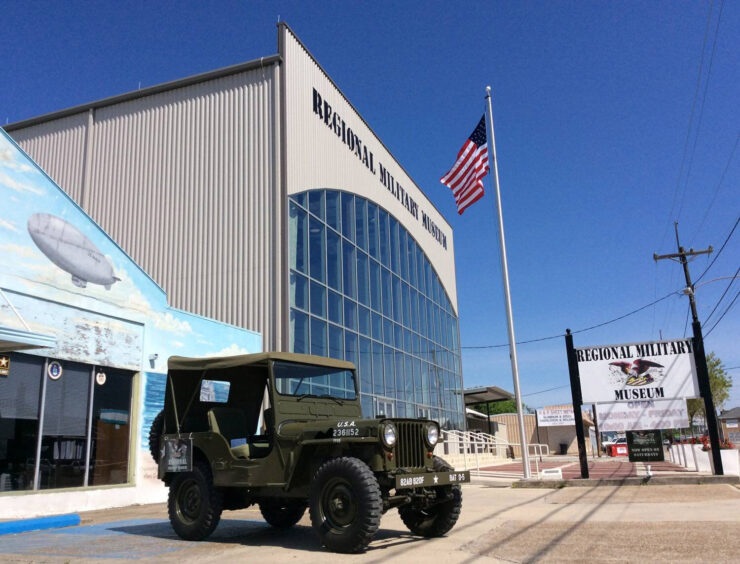
We also had time to stop by the Regional Military Museum near downtown Houma. Founded in 2006 by C.J. Christ, the museum displays military history from the Civil War to the present day. Its broad collection includes uniforms, weapons, model warplanes, military vehicles, and even one of President Eisenhower’s Air Force One Aero Commander planes.
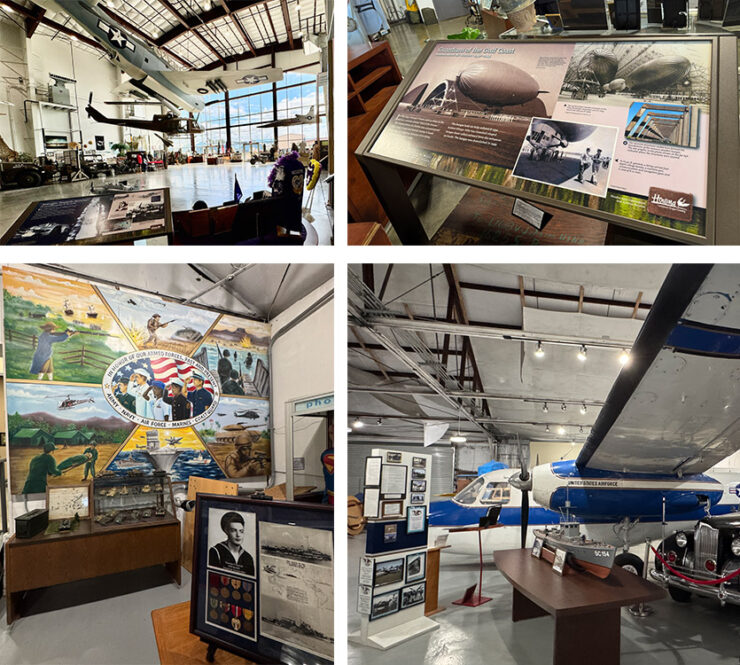
©Debbra Dunning Brouillette
The museum also highlights Houma’s World War II history, when a large blimp base protected the Gulf from German U-boats, and German POWs worked in local sugarcane and rice fields.
Greenwood Gator Farm: Face-to-Face with the Bayou
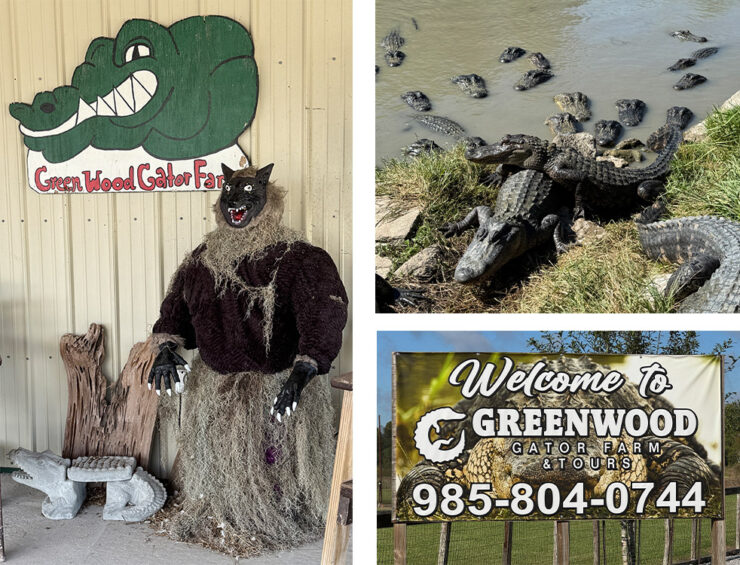
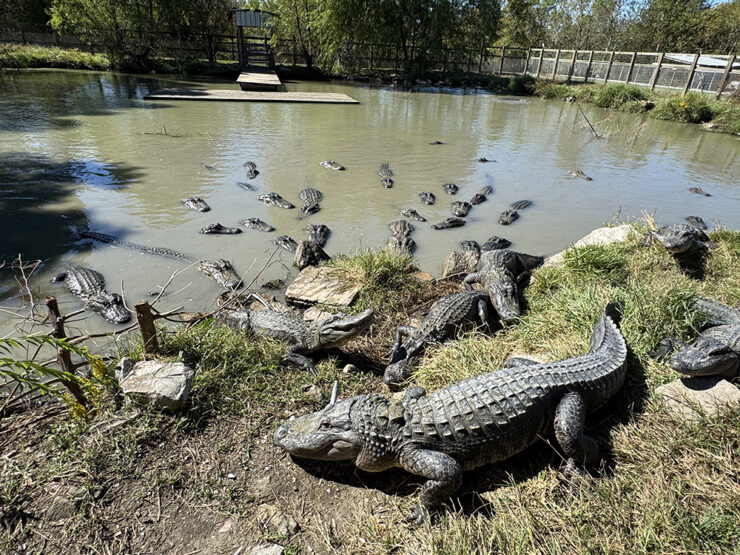
Fifty years ago, Louisiana had fewer than 100,000 alligators. Today, the population exceeds three million; roughly two-thirds live in the wild. Around 50 facilities across the state farm the remaining third (nearly one million). We learned this and many other gator facts during our tour of Greenwood Gator Farm in Gibson, 20 minutes outside Houma, which opened in 1986.
We first watched a short video, which explained how eggs are harvested from the nest. Our tour guide, Amber, then guided us through the display facility. It was fascinating to learn more about gator farming and how the meat and skins are processed.
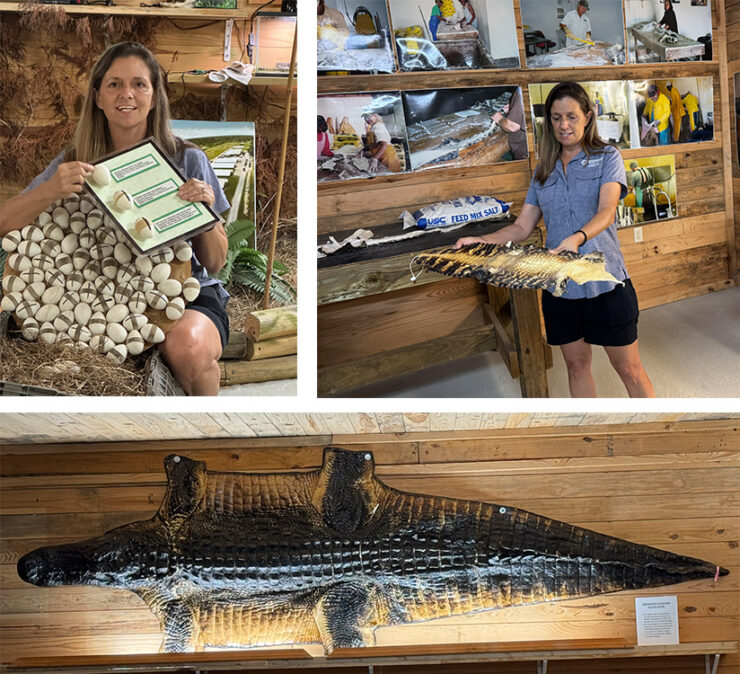
Alligator nests are located by flying over the bayous in a helicopter. Then, they collect eggs from the nests and return them to the hatchery. On average, 4,500 alligator eggs are harvested each year. Hatching usually begins in early August after 65 days of incubation. If the hatchery temperature is high, most hatchlings will be males. If the hatchery is cool, the majority will be females.
Greenwood Gator Farm houses between 10,000 and 12,000 alligators each year; about 12 percent are released back into the wild. At around two to three years of age, they are harvested for meat and skins. Top-grade skins are sent to Italy, while Singapore and France receive the lower-quality skins.
Holding a Baby Gator
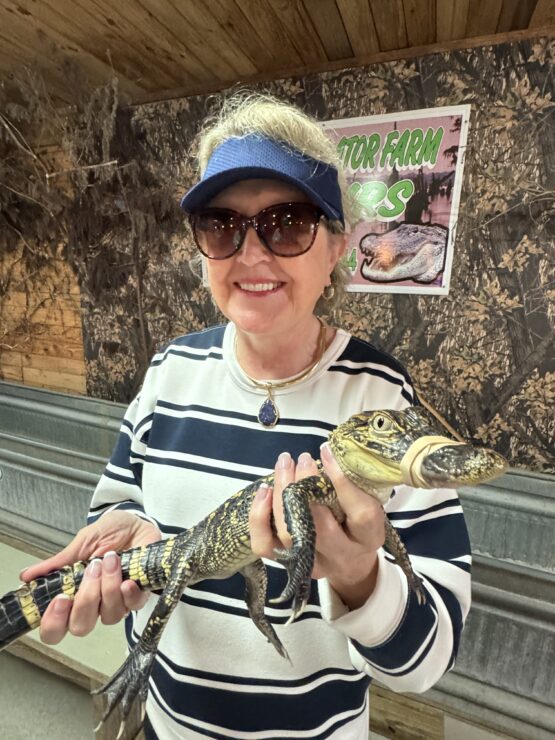
We also had the opportunity to hold a baby gator (mouth taped shut) and have photos taken before ending our tour with a walk outside to feed gators in a large pond. My gator was pretty chill—no squirming.
Alligators hatch at about nine inches. Within one year, most grow to 1.5 to 2 feet. They are the ones used for the “photo ops.”
©Debbra Dunning Brouillette
Feeding Them Marshmallows
©Debbra Dunning Brouillette
Next, we followed our guide behind the main building. Hungry gators waited for us to toss marshmallows over a chain-link fence, which they eagerly snapped up. While marshmallows might seem like an unusual mid-morning snack, their strong scent, sweet flavor, and soft texture may mimic those of eggs and larvae, their natural prey.
Note: Most tours begin with a one-hour airboat ride through the swamp. Our group had to skip that part due to time constraints.
Bayou Flavors: Where to Eat in Houma
A-Bear’s Cafe
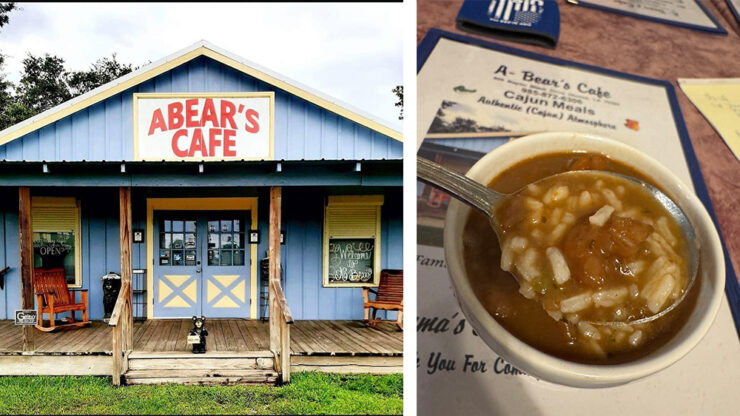
Opened in 1963, A-Bear’s is the oldest café in Houma and still serves soulful Cajun classics. Before heading to the opening event of the Rougarou Fest, we sampled several dishes. Start with a cup of shrimp okra gumbo, followed by red beans and rice. Or choose fish or seafood, topped with crab sauce. The café’s motto, “Come for the food, stay for the heart,” feels fitting. Classic country music by a talented singer-guitarist kept us and the rest of the diners entertained.
Boudreau & Thibodeau’s Cajun Cookin’
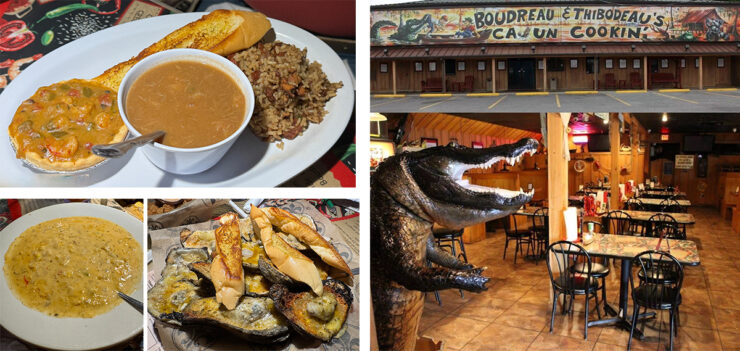
Exterior and interior restaurant photos ©Boudreau & Thibodeau’s
Before heading to the airport in New Orleans for the flight home, we stopped in Houma for some authentic Cajun cooking at Boudreau & Thibodeau’s. Opened in 1998, the restaurant’s name was inspired by two of the most well-known and beloved fictional characters in Cajun history. Their jokes and humorous sayings decorate the walls and around the tables.
The extensive menu features classic Cajun dishes like Jambalaya, Crawfish Pie, and Filé Gumbo. Must-try appetizers include Alligator Bites, Boudin Balls, and Fried Green Tomatoes. As you walk in, you can’t miss Gaston, a giant alligator (12 feet 8 inches) that was caught eating pigs on a farm in Morgan City, Louisiana.
Where We Stayed: Courtyard by Marriott Houma
The Courtyard by Marriott Houma, located right next to the Rougarou Fest, was this year’s official hotel. A discounted rate was available the weekend of the Festival.
If You Go: Why Houma Belongs on Every Bayou-Lover’s Itinerary
Visit the Explore Houma website for information about other festivals, places to eat and stay, and a full events calendar in and around Houma. Whether you visit in October for the Rougarou Festival or at any other time of year, you’ll find a warm, welcoming community proud of its unique culture.
Crawfish lovers will want to check out the Bayou Country Crawfish Trail. There are over 40 stops on the trail, serving up crawfish dishes from po-boys and gumbos to boiled and live crawfish.
There is also a Bayou Country Film Trail. Many seasons of the successful TV series, Swamp People, were filmed throughout Houma’s swamps and bayous. Magnolia Plantation was a filming site for 12 Years a Slave and The Best of Me. Four films, Emancipation, Crazy in Alabama, Deadline, and Tribute, used Ardoyne Plantation as a backdrop.
Laissez Les Bons Temps Rouler — Let the Good Times Roll
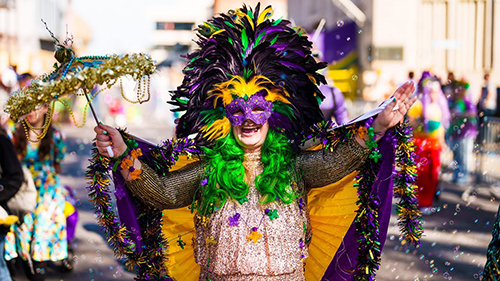
As home to the second-largest Mardi Gras celebration in Louisiana, Houma lets the good times roll in a big way in February, with more than a dozen parades and other celebrations.
Photo Credit: Explore Houma
Getting There
The New Orleans International Airport is less than an hour away from Houma. A total of 15 airlines serve the airport, offering over 50 nonstop destinations.
You May Also Enjoy Reading:
Tour the Atchafalaya Swamp with Captain Caviar: Ghosts, Pirates, and Louisiana Caviar
Read more from Debbra on her Tropical Travel Girl website.
