

It was when I stood at the base of the world’s largest man-made, free-standing, illuminated star when I realized what a wonderfully eccentric, lovably odd place Roanoke, Virginia is. True, there may be little competition for the precise distinction Roanoke’s star holds. But it’s still a commanding and colossal thing, looking like something left over from a mid-century engineering exhibition: three nested pentagrams of steel lined with neon tubes, all lashed to an immense scaffolding.
It’s taller than a seven-story building, and by night it’s visible across the Roanoke Valley. The star was built to promote the holiday shopping season of 1949. But the city’s elders, realizing they had a good thing going, declared it permanent.
Most people drive to the top of Mill Mountain to see the star up close and take in a panorama of the Roanoke Valley. But I recommend renting an e-bike and switchbacking on the old, closed-off road through the woods to get there. You’ll climb nearly a thousand feet, but nearly effortless on an e-bike, whose motor provides a generous assist. Along the way you cut through a neighborhood that looks like a small mountainside European village.
Back on Track
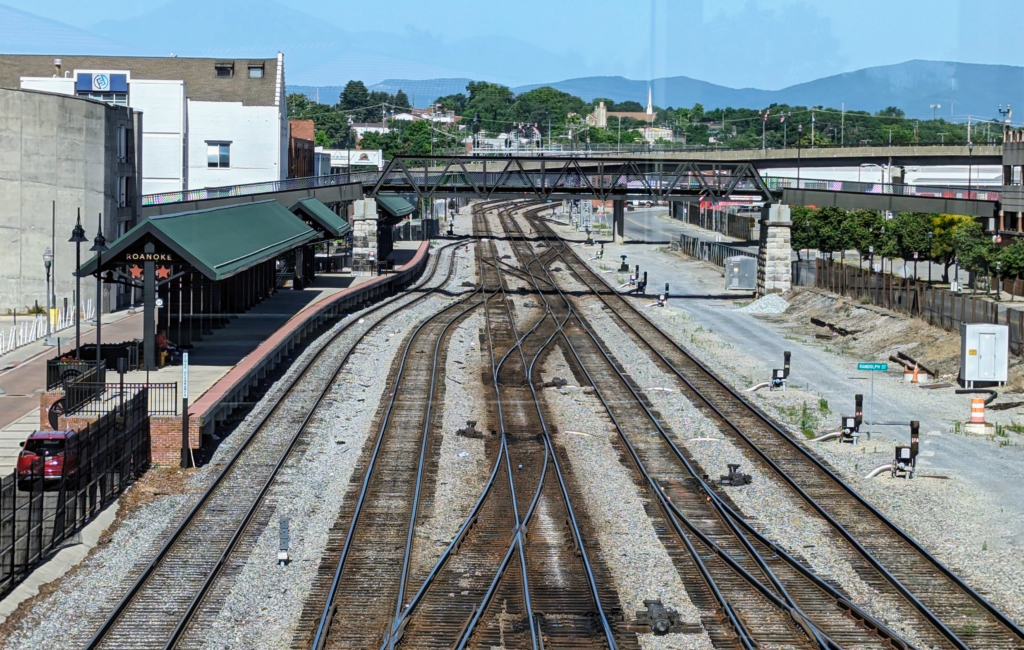
Roanoke is an old railroad town, once a depot where trains headed east and west were serviced by a community of seasoned mechanics. There was also a lot of mining and timbering in the area. Early settlers of the town included not just the Scots-Irish who had long inhabited the Appalachians, but Lebanese, Greeks, and Jews who came for economic opportunities. The city had Lebanese bakeries, Jewish delicatessens, and Greek restaurants.
There are still tracks and trains — Roanoke is the terminus of an Amtrak route that runs all the way from Boston. But the Star City is no longer a significant regional maintenance hub or ethnic stronghold. The mining and timber jobs are mostly gone. Around mid-century there began a long period of decline too familiar to residents of small mountain towns when industry vanishes. By 1990 only 17 people were living downtown.
But Roanoke is reviving, beginning to accumulate a small set of restaurants, shops, museums, and markets of the sort that draw people to rebounding small towns everywhere. Downtown’s streets carry quirks of history — a throwback advertising mural on the side of a building here, an early-1900s bank clock above the sidewalk there. The charming historic buildings are starting to fill with condos just waiting for new residents to move in.
Culture, History, and Microbrews
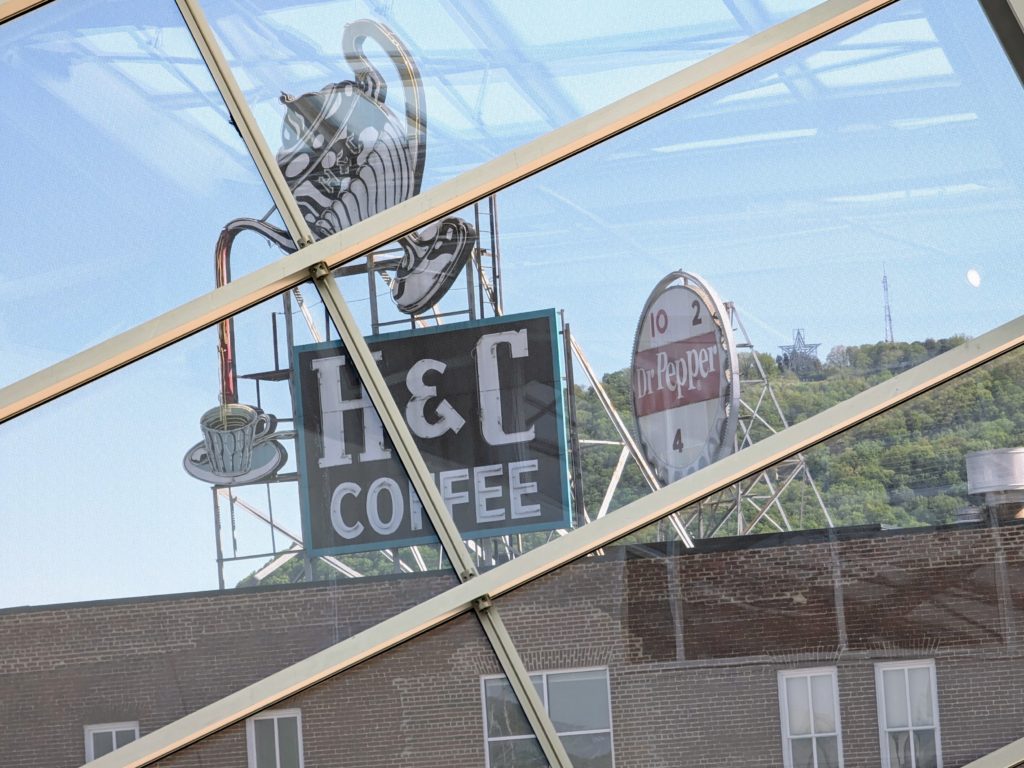
In downtown Roanoke there’s a commanding art museum right along the highway that features strikingly sinuous metal-clad elements that make it look like an early Frank Gehry sketch. This is fitting. It turns out that the building’s designer, Randall Stout, did indeed work with the American master architect Gehry for over seven years. From the museum’s glass atrium you can see a Dr Pepper sign, the old kind with the numbers 10, 2, and 4 arranged as if on the face of a clock.
The grand Tudor-style Roanoke Hotel, once the overnight accommodation of early 20th-century potentates traveling by train to take in the mountain air, has been revived as a convention facility. Its rooms go for $250 to $1,000 a night. There are also two boutique hotels in historic buildings downtown, one in an old bank and one in a former fire station.
In Roanoke, you’re never more than a mile from a microbrewery. And in an eccentric but unmistakable marker along the town’s road to hipness, a Scandinavian restaurant opened in 2022.
While walking around downtown I stopped in at Mast General Store, located in a reclaimed circa-1890 Heironimus Department Store building. It now sells everything from handmade candy to hunting camo. An employee there told me that the parent company, based in North Carolina, carefully locates stores only in comeback towns that have reached a certain point in their upward trajectory. The store is right across the street from one of Roanoke’s two wine bars.
Overnight at the Fire Station
On our first visit, my wife and I stayed in one of the boutique hotels, Fire Station One. It was indeed Roanoke’s first fire station, built in 1907 and decommissioned in 2007.
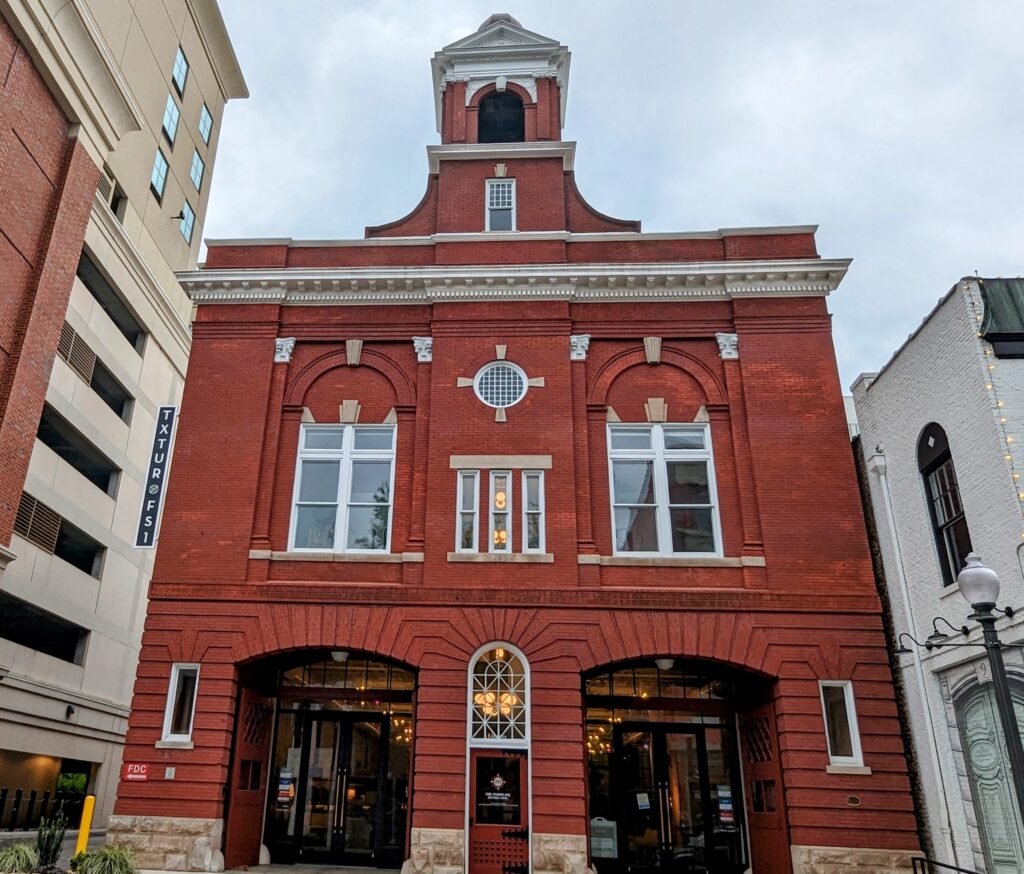
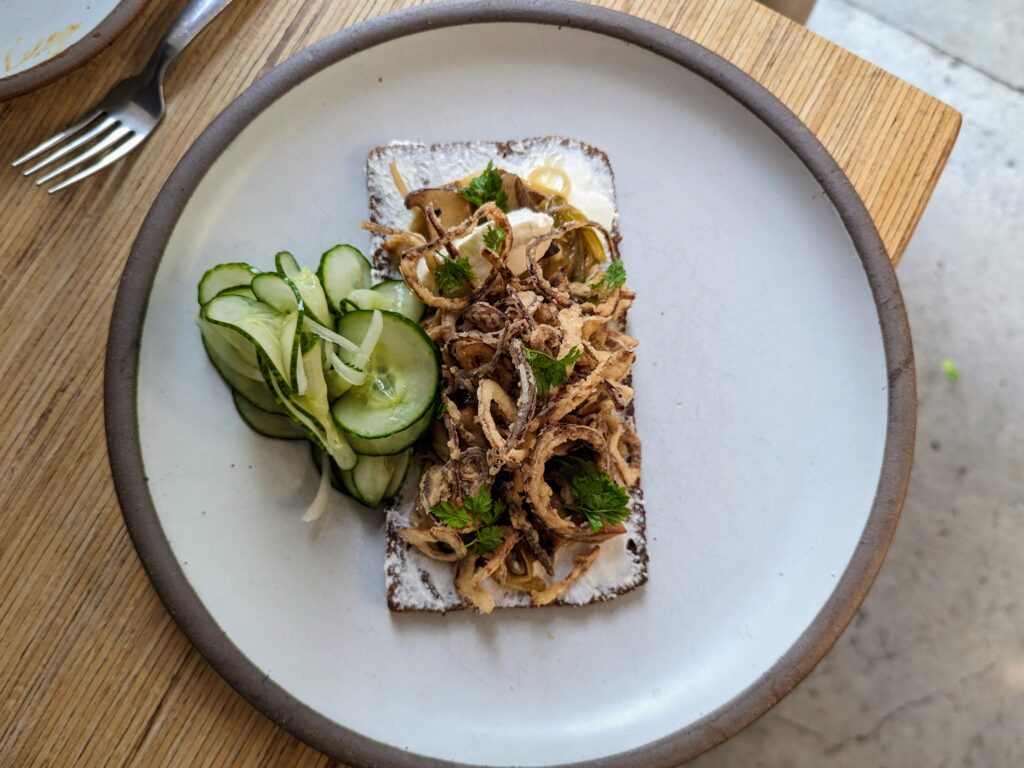
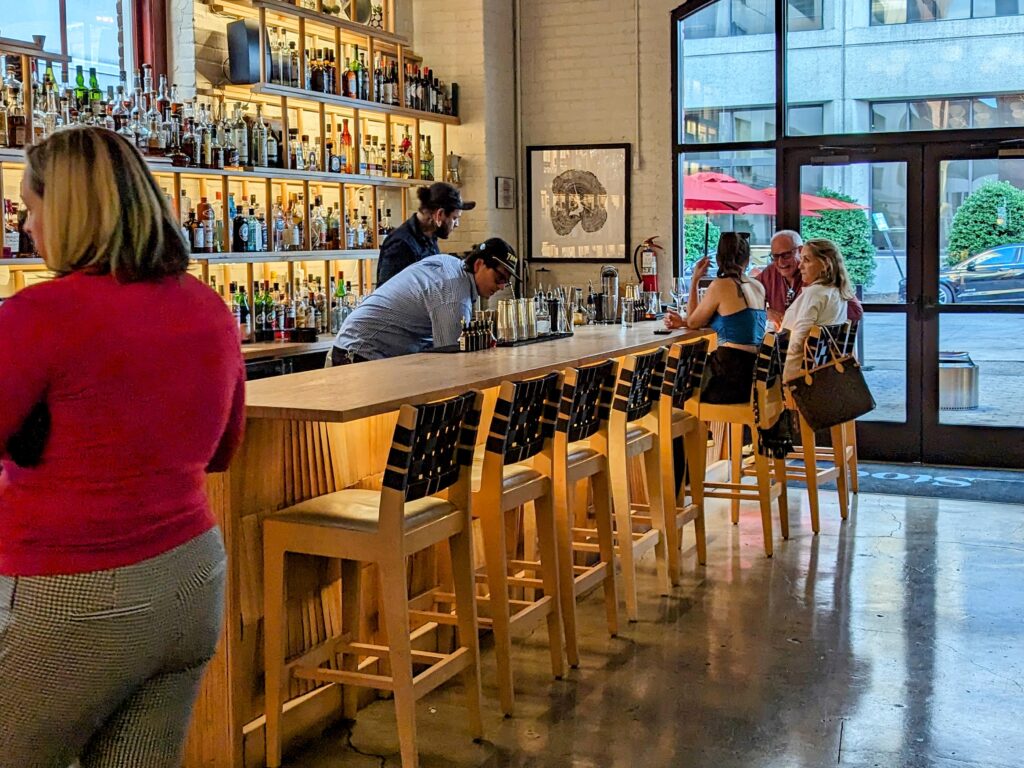
In 2022, the building was restored and now houses an ingeniously integrated set of businesses that are helping power downtown’s comeback: the hotel; a showroom for Txtur, a furniture retailer that makes stylish upcycled, recycled, and sustainable furniture in a factory 1.8 miles away; and Stock Cafe, the Scandinavian restaurant. The building is on the National Register of Historic Places.
One business easily flows into the other: Furniture browsers can grab a drink or dinner, and are invited to enjoy a meal at any seat in the showroom, or just browse the furniture with a drink. Hotel guests can have dinner and check out the home goods.
The restaurant serves kapaslon, a Nordic favorite of french fries topped with chicken shawarma, melted gouda, and Indonesian sambal. It also offers caviar, and a charcuterie board with smoked cod liver pate and sails of crisp skin from local trout.
The accommodations at Fire Station One are a delight, seven rooms operated like an Airbnb. Reservations are made online, an entry code provided, and service is available as requested. We stayed in the old Captain’s Office which, like all the rooms, was outfitted with a full suite of Txtur furniture. The closet was a preserved locker where the fire fighters stored their gear.
Grandin Chillage
At the urging of stuff we read on the internet we also visited Grandin Village, a neighborhood just beyond downtown that’s slowly creeping toward becoming another urban-comeback signifier: an arty strip of cheffy restaurants, hip shops, and craft bars.
That’s not true yet; you can amble along the two-block strip and turn the corner to stroll another two blocks and you’ve pretty much covered it. Some storefronts you pass are empty; others on the strip include a dry cleaner, a 7-11, a laundromat, and an auto repair shop. That said, there’s a new Indian restaurant and two other eateries that get strong nods from locals, and the Grandin Theater, a 1930s showpiece that features new, classic, and arty films. There are a couple of boutiques and an arts center.
Three Guys Chillin’
Three local guys were enjoying iced drinks on chairs one afternoon in front of one of the new restaurants, Rockfish Food & Wine. They told me the neighborhood is popular mainly with people from the neighborhood who spurn the bustle of downtown Roanoke. In fact, the most popular events are the summer weekend editions of “Grandin Chillage,” when the streets are closed off, music is performed, and the crowds shuffle among the handful of ice cream shops, boutiques, restaurants, and bars. Village Grill is where you’ll get the best taste of the local hangout style, they said.

But don’t wait for a special event to visit the strip’s Scratch Biscuit, a small breakfast-and-lunch place that offers a handmade chicken biscuit sandwich so delicious it’s almost unfair.
You can bike to Grandin Village from downtown, if you like, along the pleasant Roanoke River Greenway trail and dedicated bike path on the road. Roanoke refers to itself as the Mountain Biking Capital of the East. I have no way to judge that, but just cruising through the area on e-bikes provided an excellent afternoon of leisure.
Banking on Revival
On a second visit my wife and I stayed at Liberty Trust, the other downtown boutique hotel, located in the building that once housed Roanoke’s first bank. Built two years after Fire Station One, which is just around the corner, it’s also on the National Register of Historic Places. The rooms are elegant and generous, and many have glossy copper doors that suggest retro vaults.
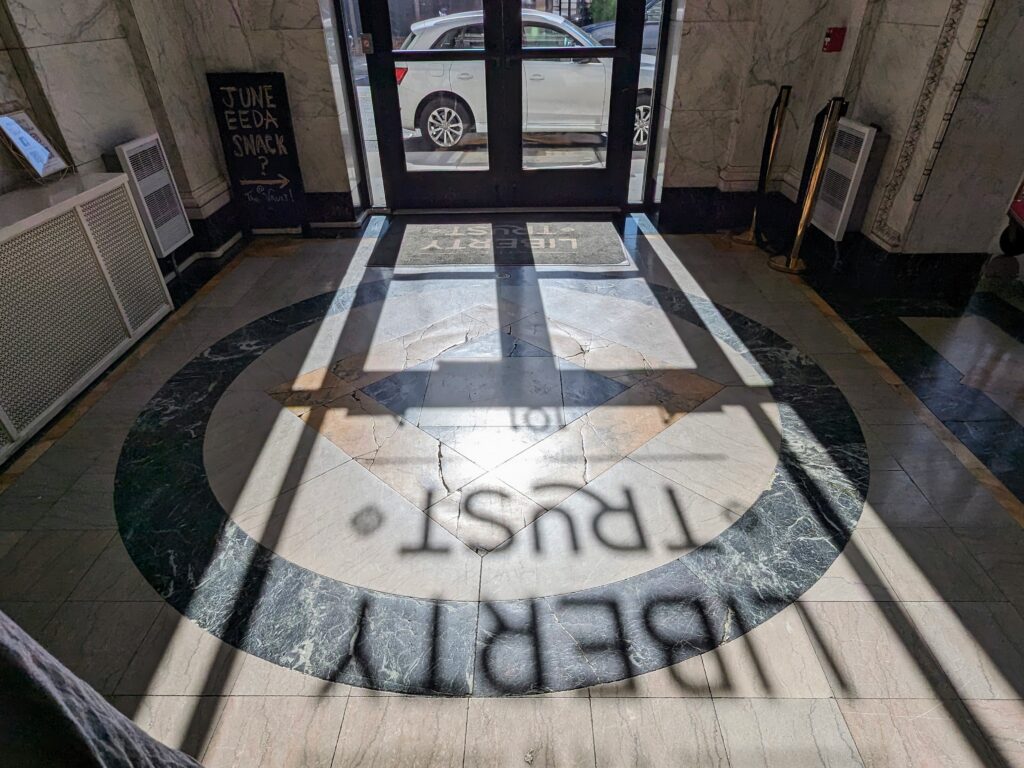
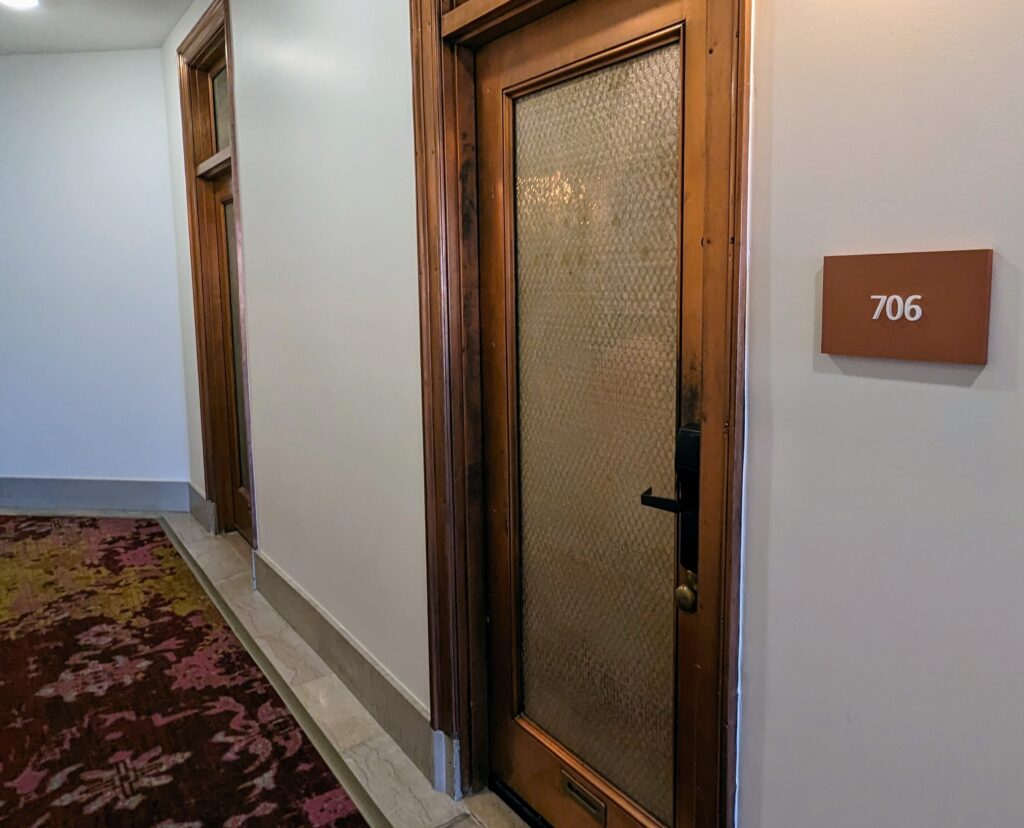
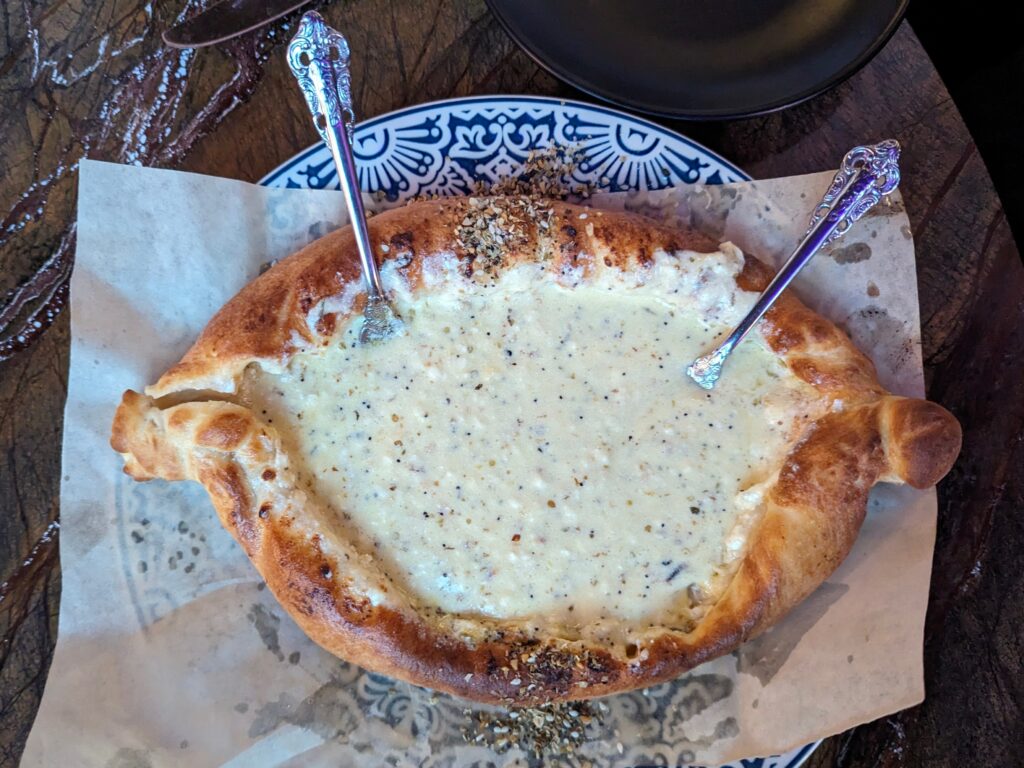
The restaurant downstairs at Liberty Trust, the Vault, serving an impressive range of local and international dishes, including a Mexican Albondigas meatball soup and Khachapuri, a Georgian cheese bread that arrives topped with egg yolks; the server mixes it all together with a flourish. It’s delicious. The original bank vault stands at the end of the restaurant, its two-foot-thick round door swung open into the dining room. It’s used for tasting dinners and private events.
Unleash the Dawgs
My favorite Roanoke attraction is Black Dog Salvage, which was featured on the long-running DIY Network’s Salvage Dawgs reality TV show. Owners Mike Whiteside and Robert Kulp would rush out on urgent missions around the country to rescue pieces of Americana from the wrecking ball, armed with cranes, air hammers, enormous winches, and so forth. The show was beloved during its 11-season run, ended by the pandemic.
Today the gargantuan Black Dog warehouse showroom just outside downtown displays some of that booty, as well as an overwhelming number of architectural artifacts and other home decorating merchandise. If you need a 1920s Federal-style door knocker or a giant stained glass panel rescued from a church, the dawgs have got you. Also old world iron from Egypt, hand-crafted furniture made of reclaimed local wood, and a pair of stanchions rescued from the Capital Center, the Washington, D.C. area’s sports arena.
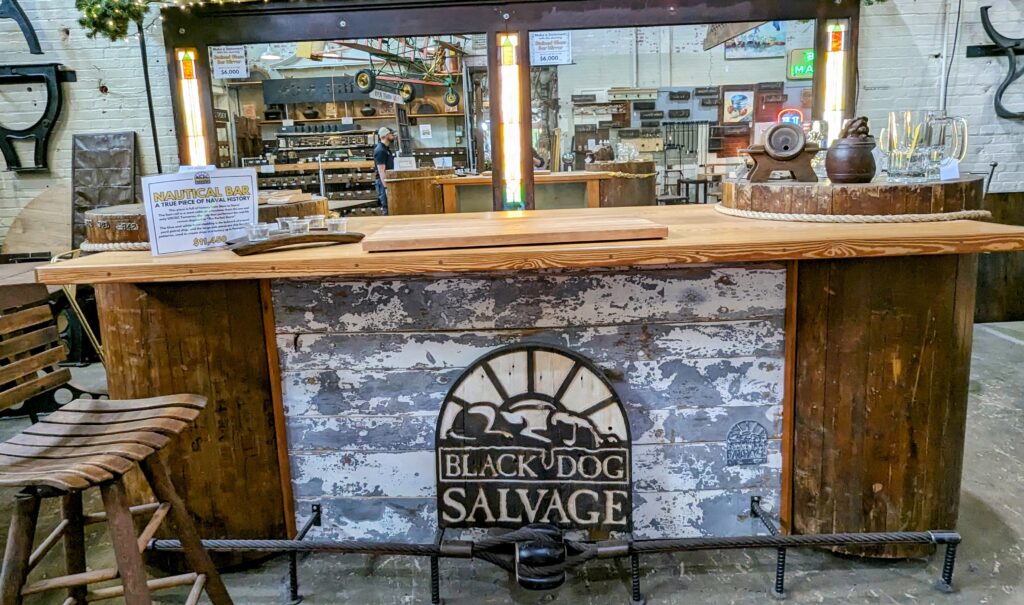
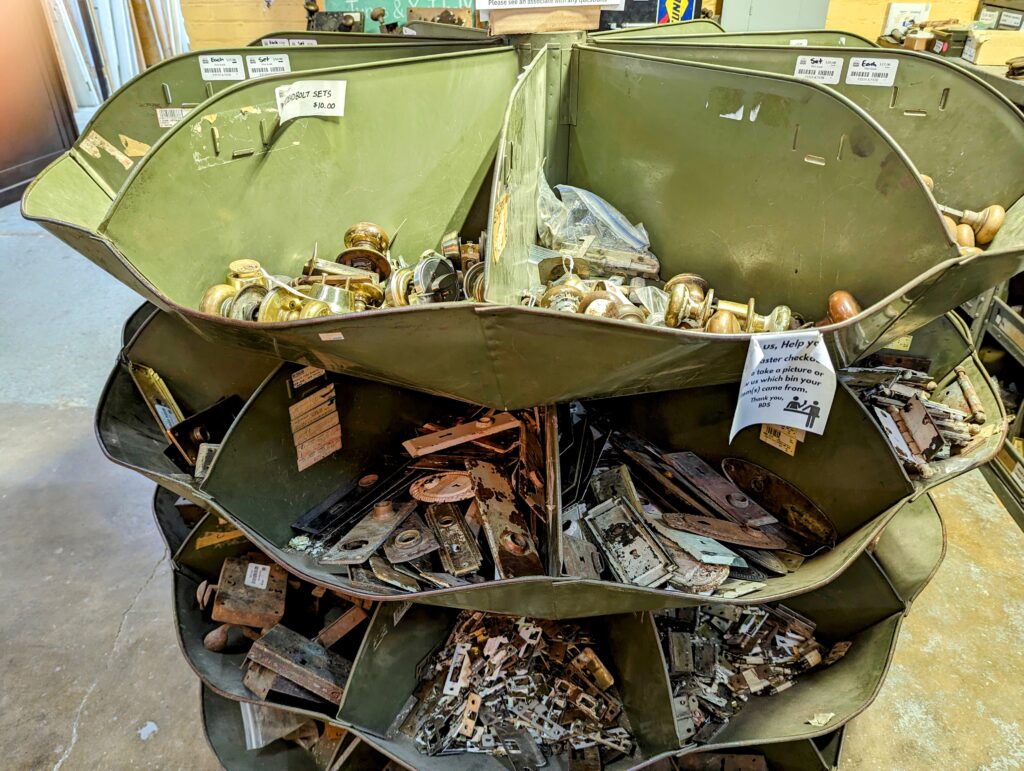
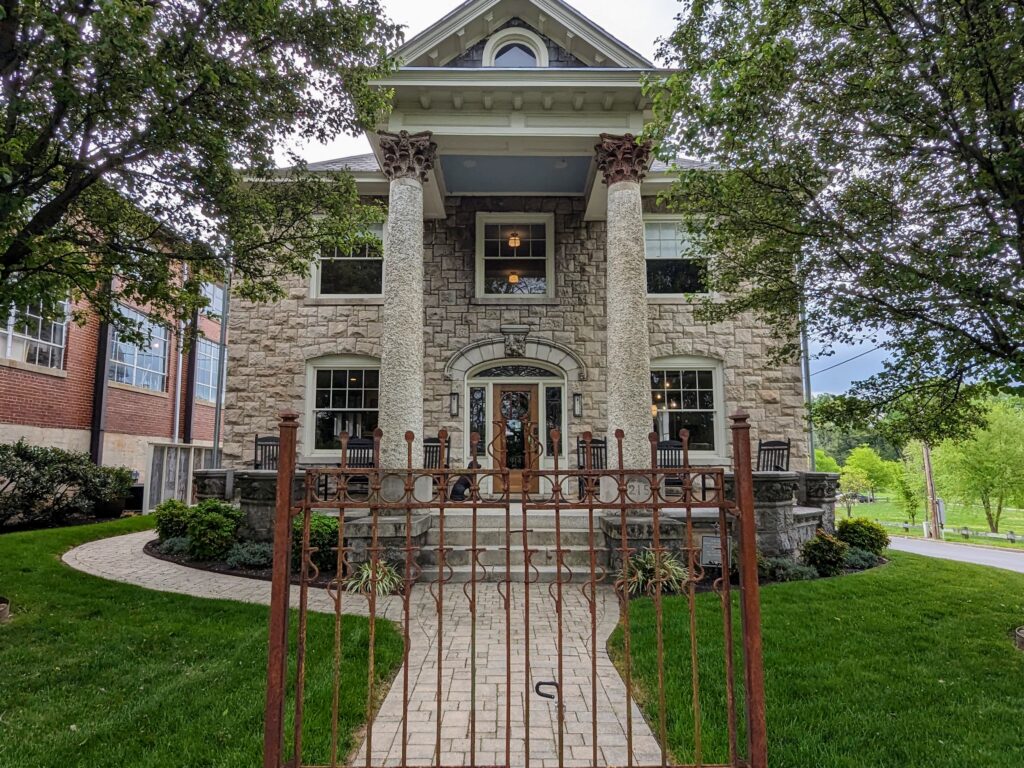
The Black Dog campus includes a music venue and a noteworthy Airbnb. It’s a handsome two-story house built by an Italian stonemason early in the 20th century and outfitted with Black Dog finds.
Reclaimed history and improvised hospitality with a sense of playful eccentricity: If there’s a better metaphor for the revival of the Star City, I didn’t find one.
If you go
Accommodations
I recommend either Fire Station One or the Liberty Trust, both in historic buildings radiating wayback charm and featuring excellent restaurants. There’s also a Hampton Inn downtown. Across the tracks stands the historic Roanoke Hotel, connected to downtown by an easy walkway. Most are about $200 to $250 per night and up on weekends.
Transportation
Amtrak’s Northeast Regional runs from Boston, connecting major East Coast cities, including New York and Washington, D.C. to Roanoke. You can comfortably wheel a bag from the train depot to any downtown hotel.
Arts and Culture
The highest culture in Roanoke is the striking Taubman Museum of Art (free admission), which features a collection of mostly American art, including a few minor pieces by major artists like John Singer Sargent. There are also exhibitions of regional works, providing insight into the art of Appalachia.
Downtown there’s Center on the Square, a modest gathering of rainy-day attractions, including a small aquarium, an African American history museum, a pinball museum/arcade, and educational activities for kids. (Most have admission fees ranging from $6 to $15.)
Food & Drink
In addition to Stock and the Vault at Liberty Trust, there are a few excellent bars and restaurants, including well-regarded Fortunato, an Italian place. A bit outside town, near Grandin Village, is the popular bloom, a cheffy farm-to-table restaurant that multiple locals pointed us to. Our meal there was great, with tweezer platings and ambitious use of local ingredients. Sidecar is a sophisticated cocktail bar and restaurant that compares favorably to craft cocktail bars in just about any urban enclave in the nation.
While strolling downtown you can stop in at Texas Tavern, an eight-seat diner dating from 1930 where you’ll find cheap, unadorned grill top favorites like burgers ($2.25), eggs, hot dogs, a locally favored chili, and grouchy attitudes from the cooks toward visitors that seem a bit performative. For breakfast there’s Scrambled, a delightfully buzzy diner right downtown, and the regional treasure Scratch Biscuit.
Shopping
Like all comeback towns, Roanoke is accumulating a lot of small shops, none of them national chains as far as I could tell. The massively eclectic Mast General Store is a hoot to browse.
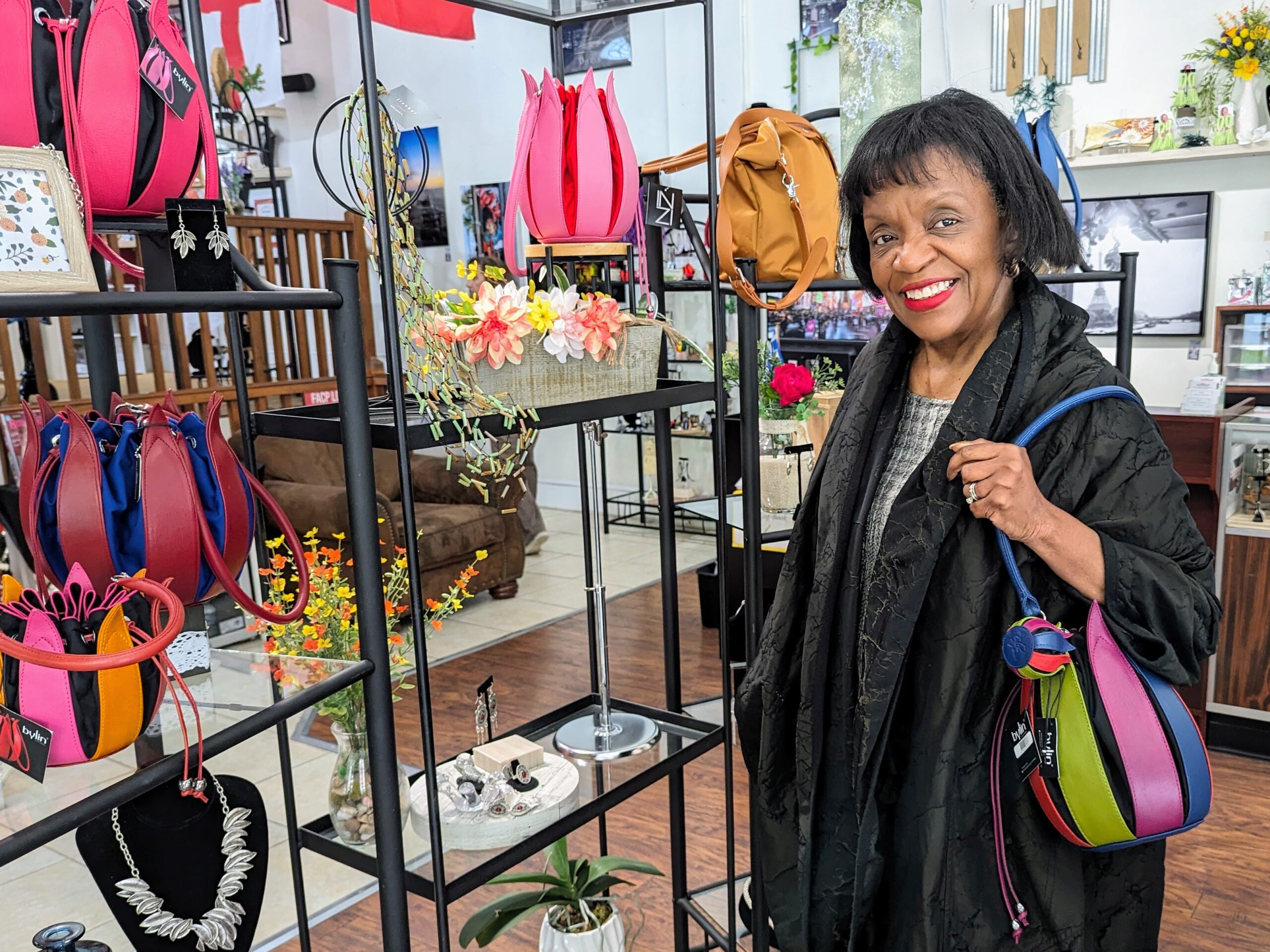
And don’t miss She’s International Boutique, owned by former flight attendant Diane Speaks, who developed her eye for global goods during a long career traveling the world. The tulip purse is a knockout.
You might also like:
Craig Stoltz is author of the Substack newsletter Eat the World.
