

Coca-Cola. Delta Air Lines. Duck Dynasty. The Flying Tigers of World War II. At first glance, these names seem to share little in common. They sound like a list pulled from a trivia game, not a travel destination. And yet, all are deeply tied to Monroe–West Monroe, Louisiana, joint communities set along opposite banks of the Ouachita River.
Often referred to as the Twin Cities, this north Louisiana destination is where early American enterprise, aviation history, pop culture, and Southern hospitality intersect. Today, that legacy unfolds through museums, meals, vineyards, waterways, and wildlife experiences—creating a destination that’s far more layered than it first appears.
Coca-Cola and the Biedenharn Legacy
Monroe’s connection to Coca-Cola is not about where the first bottle was filled, but about where the story continued. In 1894, Joseph Biedenharn became the first to bottle Coca-Cola, starting in Vicksburg, Mississippi, where he and his family ran a wholesale candy business and later added a soda fountain. Before drinks were bottled, they were made by flavoring carbonated water with various syrups and served in small glasses to customers.
When Biedenharn first started bottling the mixture that became known as Coca-Cola, it was a slow process—one bottle at a time. Improvements in bottling techniques quickly expanded his operation, and in 1913, Biedenharn and his family moved to Monroe, Louisiana. They kept bottling in both Vicksburg and Monroe, and their bottling business expanded year by year.
The Coke Museum
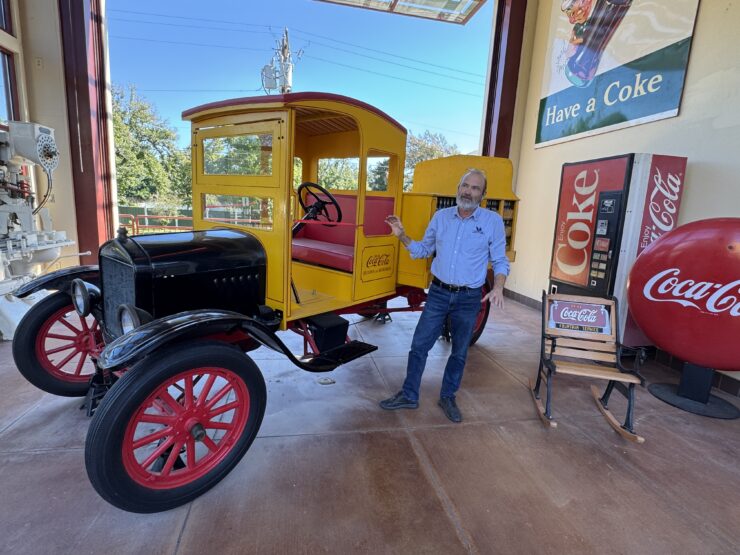
The whole story comes to life at the Coke Museum, part of the Biedenharn Museum & Gardens complex. Opened in 2008, the Coke Museum features two exhibit rooms filled with Coca-Cola memorabilia. Vintage signs, bottles, and other historical artifacts were on the walls and in glass cases. Our guide, Ralph Calhoun, executive director of the Biedenharn Museums and Gardens since 1997, greeted us outside the entrance, near the vintage Model T Coca-Cola delivery truck. Inside, we watched a short video about the history of Coca-Cola, which vividly brought this important chapter of American business history into focus.
©Debbra Dunning Brouillette
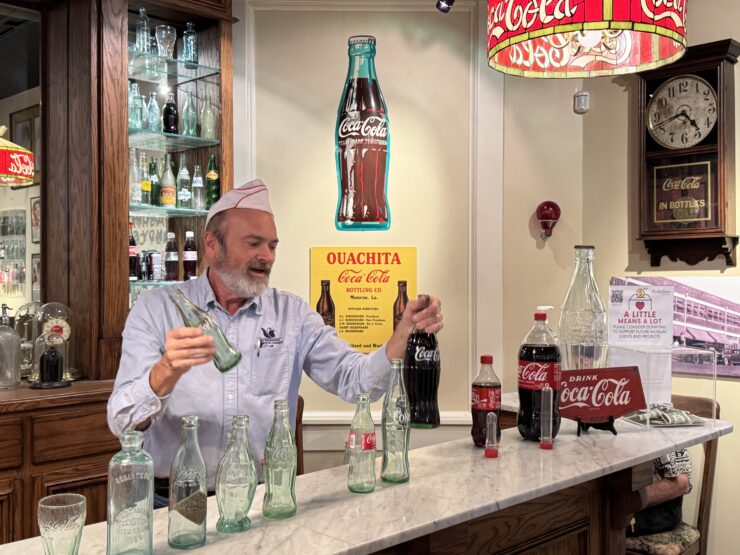
He then invited us to sit near the replica soda fountain. Dressed as a soda jerk, Calhoun shared the story of “Mr. Joe” Biedenharn’s pioneering role in bottling Coca-Cola. We also learned about the origins of the terms “soda pop” and “soda jerk.”
©Debbra Dunning Brouillette
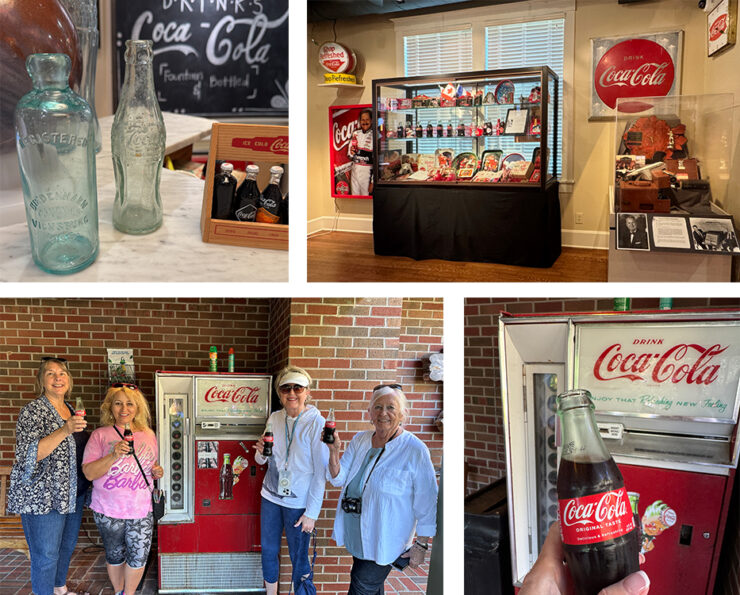
Early bottles featured a glass top with the Hutchinson stopper, made from a single piece of wire shaped like an hourglass. When opened, it produced a distinct ‘pop’ sound, which gave rise to the term “soda pop.” The phrase “soda jerk” refers to attendants who “jerk” the handle of the soda fountain to dispense drinks.
Beyond Coca-Cola: The Biedenharn Home, Bible Museum & Gardens
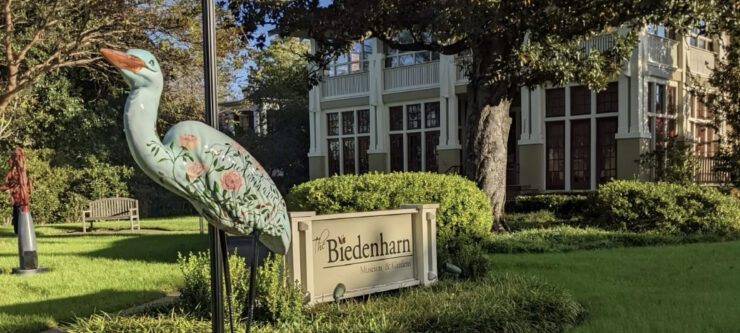
While the Coke Museum is a major draw for visitors, the broader Biedenharn Museum and Gardens complex reveals a more expansive family legacy.
Much of that vision is connected to Emy-Lou Biedenharn. After a successful career as an opera singer in Europe, she returned to Monroe with a passion for the arts, history, and horticulture. She played a key role in shaping the gardens and in establishing the Biedenharn Bible Museum. It houses an extensive collection of rare and historic Bibles tracing centuries of translation, printing, and illustration.
The Biedenharn Bible Museum
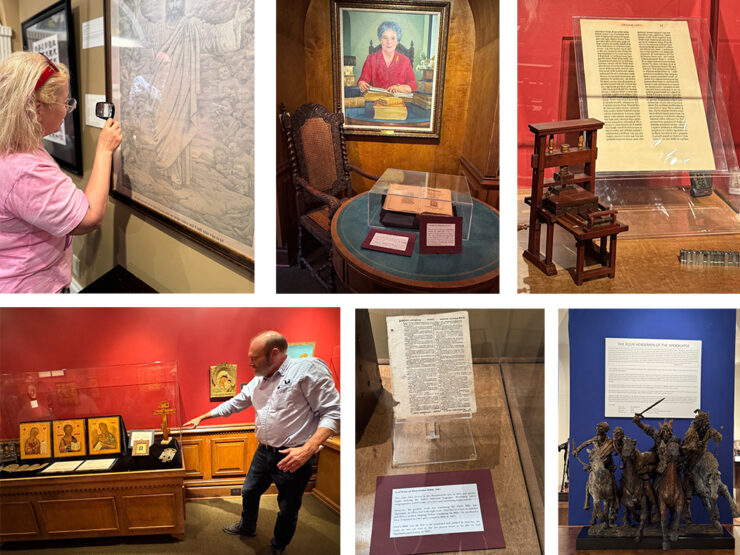
Emy-Lou was inspired to begin her collection after her father gave her a facsimile of the 1854 Wycliffe Bible. The collection grew to include many rare and historically significant Bibles. They include an original 1611 King James Bible and a page from the 1454-55 Gutenberg Bible. The first two Bibles printed in what became the United States are also of special interest.
The ELsong Gardens and Biedenharn Home
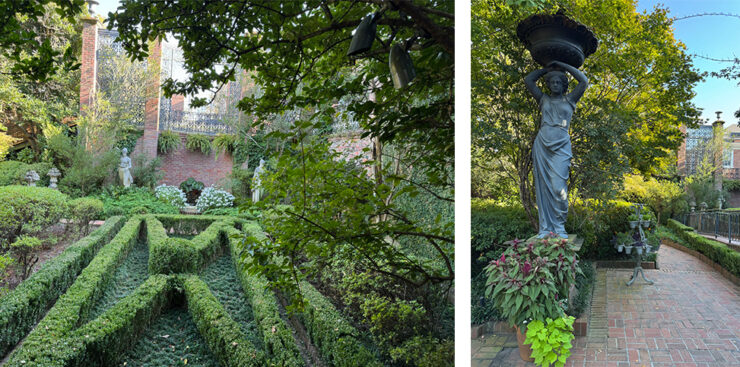
Before receiving a brief tour of the historic Biedenharn home, built in 1914, we walked through the ELsong Gardens. ELsong stands for Emy-Lou’s song. The gardens were developed upon Emy-Lou’s return to Monroe following a successful vocal career in Europe.
The stunning walled English garden was designed with several thematic settings, created for musical events. The Water Garden has cast-iron statues over 200 years old. They were cast in England and brought to New Orleans before the Civil War. A focal point is the Wagnerian Fountain, located on the north end of the Ballet Lawn.
Visiting this museum complex was a highlight of our time in Monroe/West Monroe. Daily tours are available, Tuesday-Saturday, 10 am-5 pm.
Together, the two museums, home, and gardens transform the Biedenharn story from a single business milestone into a portrait of philanthropy, creativity, and cultural stewardship.
Aviation Takes Flight: Delta Air Lines and General Claire Chennault
Just as Monroe helped shape American consumer culture, it also played a role in the early development of aviation. In 1926, what would become Delta Air Lines began in Monroe as a crop-dusting operation known as Huff Daland Dusters. That agricultural enterprise eventually evolved into one of the world’s largest commercial airlines.

(Photo courtesy of Delta Flight Museum)
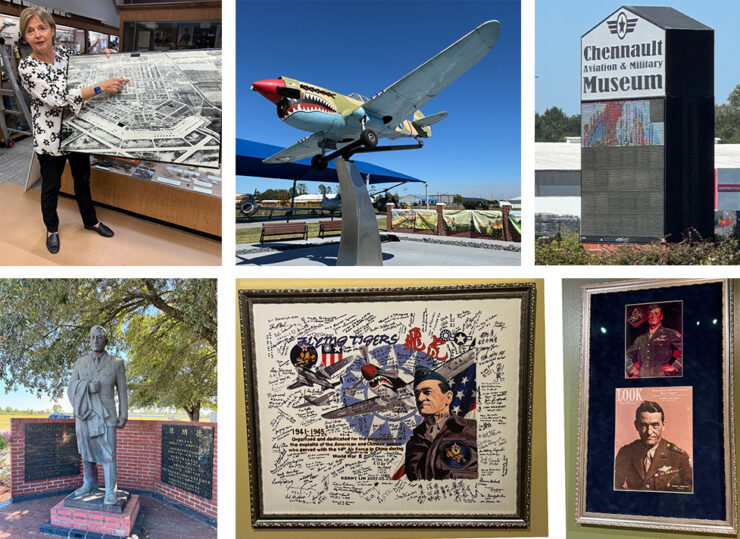
This aviation legacy is explored at the Chennault Aviation & Military Museum, which honors General Claire Chennault, a Monroe resident best known for leading the Flying Tigers during World War II.
Our tour guide, Nell Calloway, is the granddaughter of General Chennault. She led us through rooms filled with exhibits illustrating how Chennault and Delta followed different paths—military and commercial—as parallel threads in the region’s aviation history. Along with her firsthand knowledge of the man she called grandfather, Calloway brought to life the story of Chennault and the Flying Tigers, formally known as the American Volunteer Group (AVG).
Active from 1941 to 1942, the Flying Tigers helped alter the course of the war in China by challenging Japanese air superiority, protecting key cities and supply routes, and boosting morale during a critical early phase of World War II.
The Chennault Aviation & Military Museum opened in 2000 inside the former Selman Field Navigation School. More than 15,000 navigators were trained here during World War II. While it particularly honors General Chennault’s legacy, the museum also pays tribute to veterans and service members from World War I through the Iraq War.
From History to Pop Culture: Duck Dynasty
©Debbra Dunning Brouillette
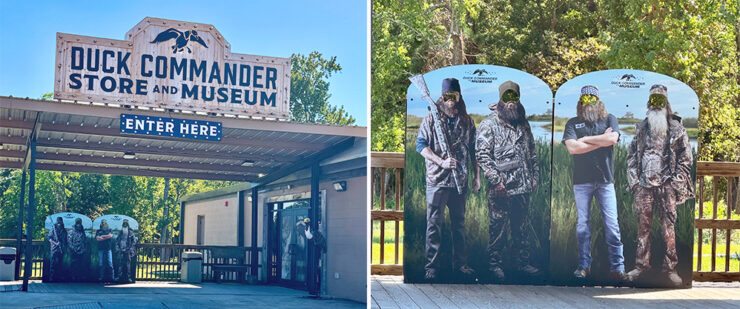
Monroe–West Monroe’s story also includes a distinctly modern chapter. The area is home to the Robertson family of Duck Dynasty fame, whose A&E series aired from 2012 to 2017 and brought the region into the national spotlight. A new series, Duck Dynasty: The Revival, premiered on A&E in May 2025, reigniting interest in the family and their Louisiana roots.
While we did not visit the Duck Commander Museum, its location near the Chennault Aviation & Military Museum underscores how history and pop culture intersect here—often just a few miles apart.
Art and Architecture: The Masur Museum of Art

©Debbra Dunning Brouillette
To complete Monroe’s museum offerings, we visited the Masur Museum of Art, housed in a Tudor Revival–style building listed on the National Register of Historic Places. Built in 1929 as a private residence for the Slagle family, it was later occupied by the Masur family. In 1963, the City of Monroe received the home as a donation and later transformed it into a fine art museum. In 1975, it officially opened to the public.
Today, the Masur serves as a cultural anchor for the city. The museum hosts rotating exhibitions while maintaining the architectural elegance of the original home. Artists from Louisiana and the greater Southeast are featured alongside nationally and internationally renowned artists. Its permanent collection includes works by Thomas Hart Benton, Mary Cassatt, Salvador Dalí, Joan Miró, Pablo Picasso, and Auguste Rodin, among others.
Public Art in Plain Sight: The Heron Hunt
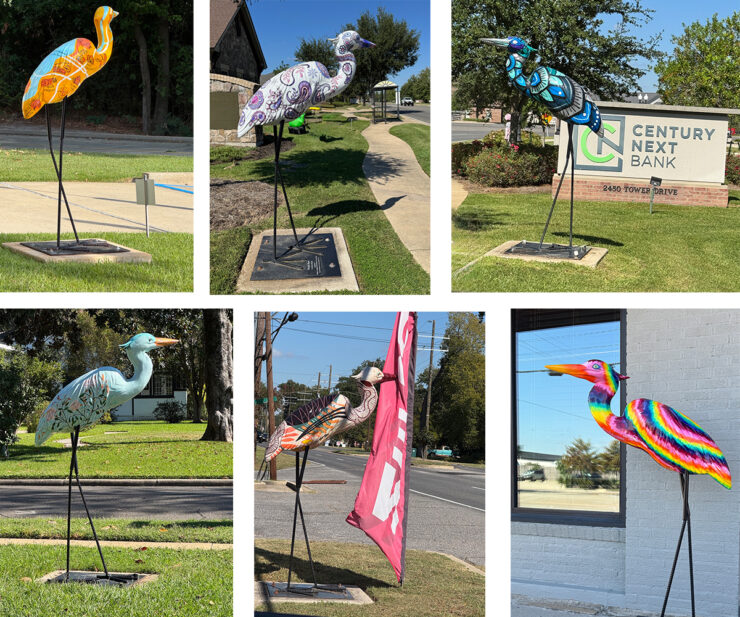
Art in Monroe extends well beyond museum walls. Around 100 heron sculptures can be found throughout downtown Monroe and across Ouachita Parish. Each uniquely decorated sculpture adds a note of whimsy and discovery, turning a simple walk into a playful exploration of the city’s streets and public spaces.
They’re part of Monroe/West Monroe’s Herons on the Bayou public sculpture project. Local artists personalized the sculptures, then placed them in front of businesses and other areas throughout the community.
Morning on the Water: Black Bayou Lake National Wildlife Refuge
©Debbra Dunning Brouillette
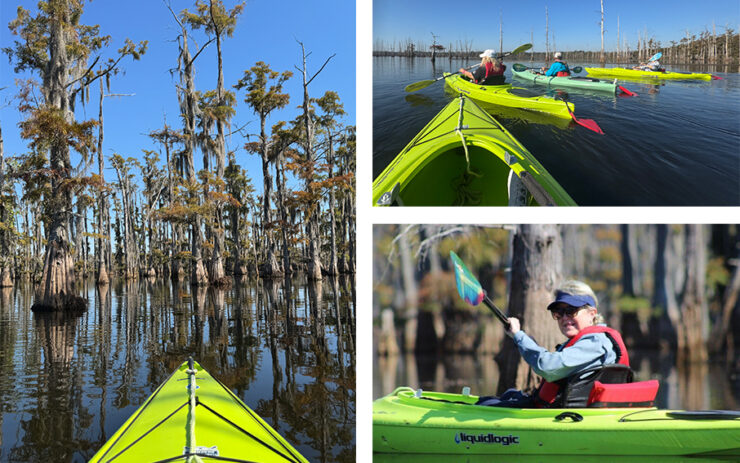
A paddling adventure in the shallow waters of Black Bayou Lake, a 1,600-acre lake just minutes from Monroe, put my novice kayaking skills to the test. Our group kayaked nearly four miles over the course of three hours in this pristine corner of the 5,300-acre Black Bayou Lake National Wildlife Refuge.
©Debbra Dunning Brouillette
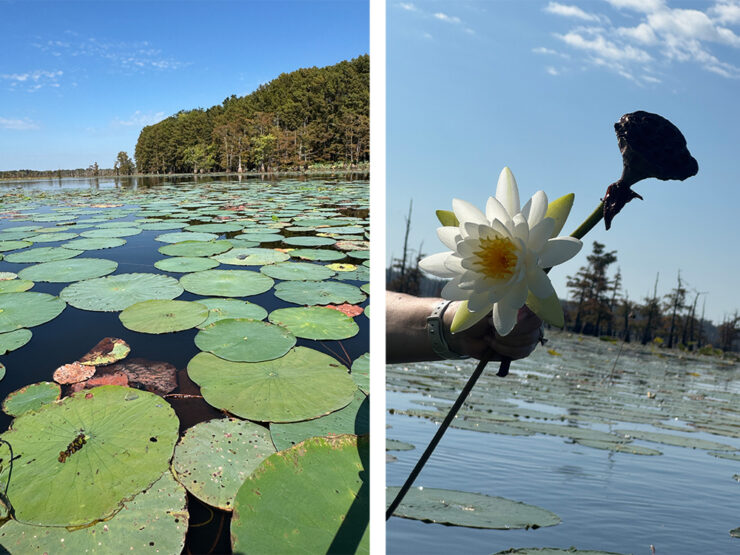
Paddling across still water, past towering bald cypress and water tupelo trees and through beds of aquatic vegetation, offered a striking contrast to the city’s museums and restaurants—highlighting how closely Monroe remains connected to its natural surroundings. Before turning back toward the dock, we paddled within sight of an eagle’s nest, a quiet reminder of how wild the refuge remains so close to town.
Our guide, Steve Birmingham, has launched Ouachita Paddling Trails, a growing network of mapped routes showcasing the Ouachita River and Black Bayou Lake. While designed for kayaking and canoeing, paddleboarders can also use the trail maps. The maps make it easier for visitors to explore the region’s waterways at their own pace.
Wine, Honey, and Celebration
Landry Vineyards

When we arrived at Landry Vineyards, just outside West Monroe, the winery’s popular annual Grape Stomp was underway. Visitors of all ages filled the lawn—kids included—enjoying food, drink, and the live music. Guests lined up to stomp grapes, step out of the barrel, and press their purple-stained feet onto T-shirts to capture the moment. Fans of the classic I Love Lucy grape-stomping episode would have felt right at home. A few Lucy look-alikes joined in, adding to the festive, good-humored atmosphere.
Founded in 1999, the family-owned winery sits on a 50-acre property, with approximately 16 acres under vine. Between 50 and 70 tons of grapes are produced annually. Varieties grown on site include Blanc du Bois, Lenoir (Black Spanish), and Crimson Cabernet. Additional grapes sourced from California allow the winery to produce a total of 24 wines, ranging from semi-sweet to dry.
During our tasting, guests could choose from all 24 offerings. I selected a flight of six dry wines—one white, a rosé, and four reds. My favorite was a crisp Blanc du Bois, a dry white made from a French-American hybrid grape.
Visitors can book tastings and tours, or extend their stay in one of three on-site “Grape Escape” cottages. RV sites are also available for overnight stays.
Two Warriors Meadery
©Debbra Dunning Brouillette
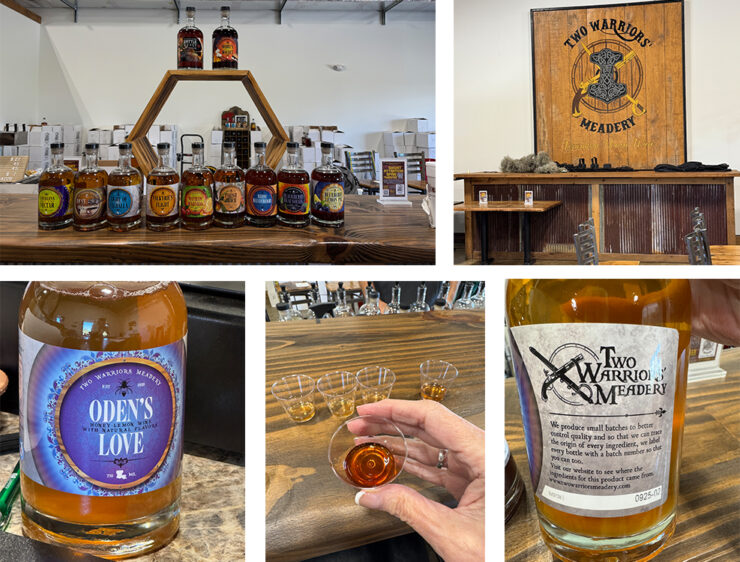
Beyond wine, Monroe–West Monroe is also home to Two Warriors Meadery, the first meadery in Louisiana. It’s one of only a handful in the state. Established in 2016 and veteran-owned, the meadery uses local Louisiana honey and fruits to produce meads. Historic recipes from around the world inspire these alcoholic beverages fermented from honey and water.
A tasting of nine selections, ranging from dry to sweet, highlighted the versatility of mead. My favorite was Oden’s Love, an English spiced honey wine dating back to the 13th century. Louisiana honey, lemon, ginger, cinnamon, and clove are among the ingredients. The mead has earned a Silver Medal in the National Honey Board’s Mead Crafter’s Competition.
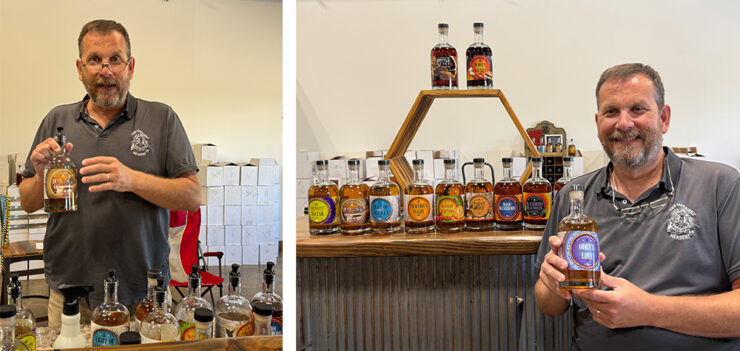
A conversation with one of the owners added a personal dimension to our visit, rooted in service, craftsmanship, and community. A portion of every sale supports local veterans’ charities.
The meadery offers tastings on Thursday and Friday from noon to 6 p.m., and Saturdays from 10 a.m. to 7 p.m. Additional purchasing options are available through Vinoshipper.
Where to Stay: The Hotel Monroe
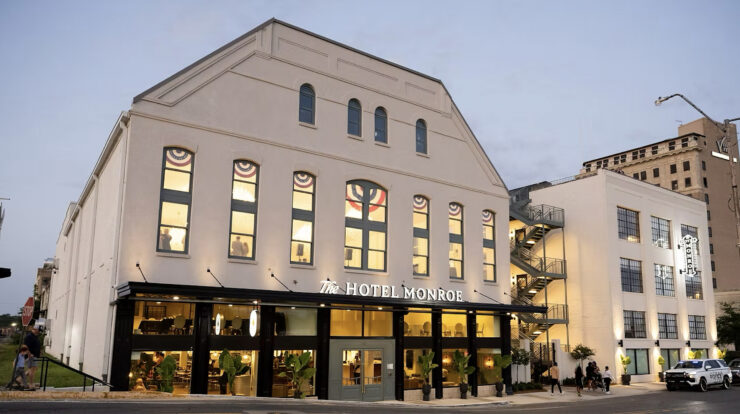
(Photo Courtesy of The Hotel Monroe)
Located downtown, The Hotel Monroe is part of Hilton’s Tapestry Collection, blending historic character with modern comfort. The 69-room hotel celebrated its grand opening in May 2025, following three years of renovation and construction. It occupies two landmark buildings. They include the former Sugar Brothers Opera House, built in the late 1800s, and the Southern Hardware Store, dating to the early 1900s.
The hotel has also been officially recognized as the first full-service hotel in the United States to be certified 100% gluten-free by the Gluten-Free Food Program (GFFP). This certification is endorsed by the National Celiac Association (NCA). For travelers with celiac disease or gluten sensitivities, this is a meaningful distinction.
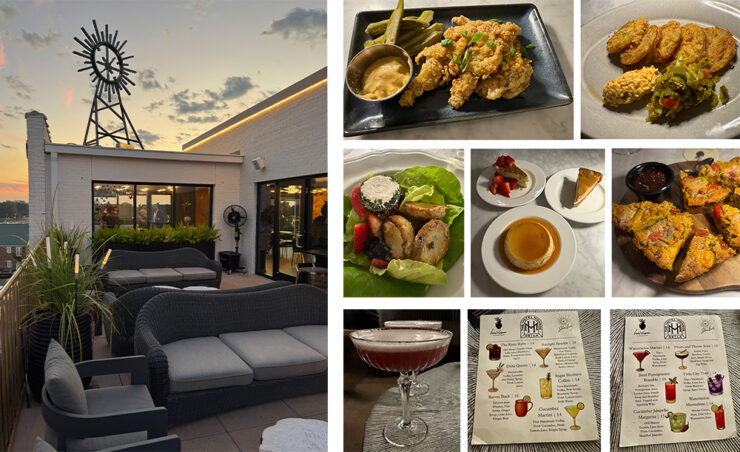
©Debbra Dunning Brouillette
Michael Echols, who co-owns the hotel with his wife, Christie, gave us a tour of the property. A memorable multi-course dinner in the Heirloom Restaurant dining room followed, prepared by Executive Chef Missy Fraley and her team. After dinner, we capped off the evening with drinks at the rooftop Star Bar, taking in views of downtown Monroe.
Dining in Monroe-West Monroe
Our Lunches
Waterfront Grill, overlooking Bayou DeSiard, offers a relaxed midday pause framed by water views. (We got to feed turtles from the deck, too, while waiting for our food.)
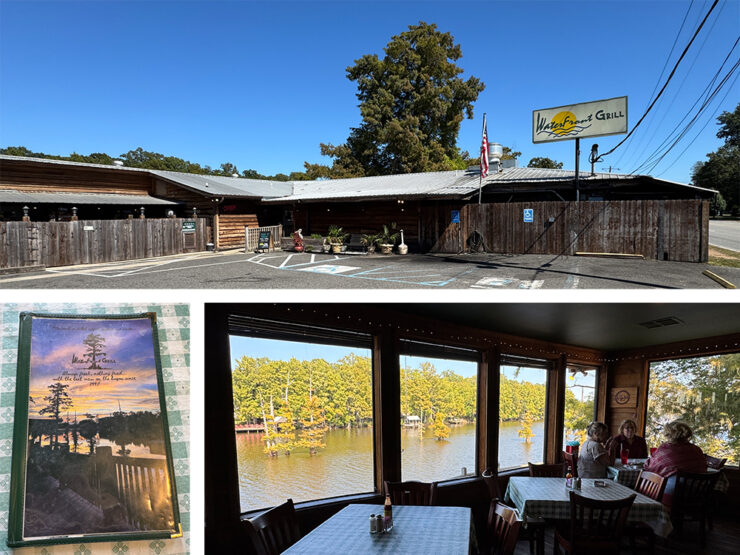
Trapp’s is situated along the Ouachita River. It pairs classic appeal with a location that invites diners to linger and watch the river drift past.
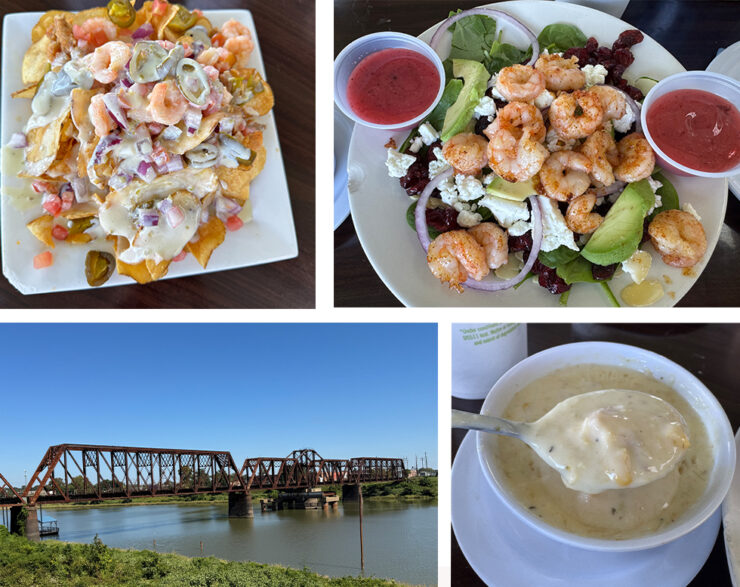
Kravins (not pictured) is a family-owned restaurant that’s the go-to spot in South Monroe for Southern-style comfort food.
Evening Dining
Parish Restaurant and Bar blends Southern influences with contemporary touches. Chef Cory Bahr’s culinary talents have been recognized both regionally and nationally.
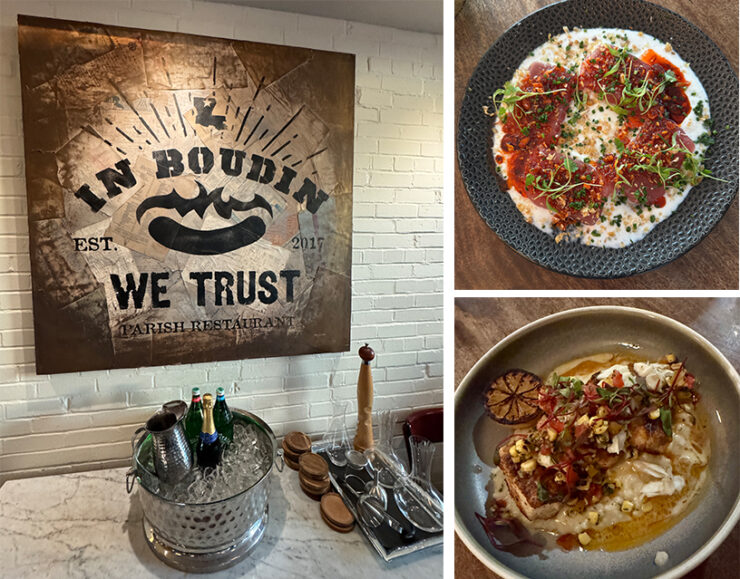
Jac’s Craft Smokehouse, named the Louisiana Travel Association’s 2025 Restaurateur of the Year, is the only craft smokehouse in north Louisiana.
Heirloom Restaurant, the Hotel Monroe’s fine dining restaurant, is 100% gluten-free.
If You Go
Getting There: Monroe Regional Airport (MLU) offers commercial flights with connections through major hubs. By car, Monroe–West Monroe is approximately 1½ hours from Shreveport. It is 2½ hours from Jackson, Mississippi, about 4½ hours from Dallas, and roughly 5 hours from New Orleans.
Plan Your Visit: For trip-planning resources, events, and seasonal highlights, visit Discover Monroe–West Monroe.
You May Also Enjoy Reading
- 7 Epic Things to Do in Louisiana’s River Parishes
- From Bayou to Table: A Louisiana Cajun Cooking Pilgrimage
Read more from Debbra on her website, Tropical Travel Girl.
