
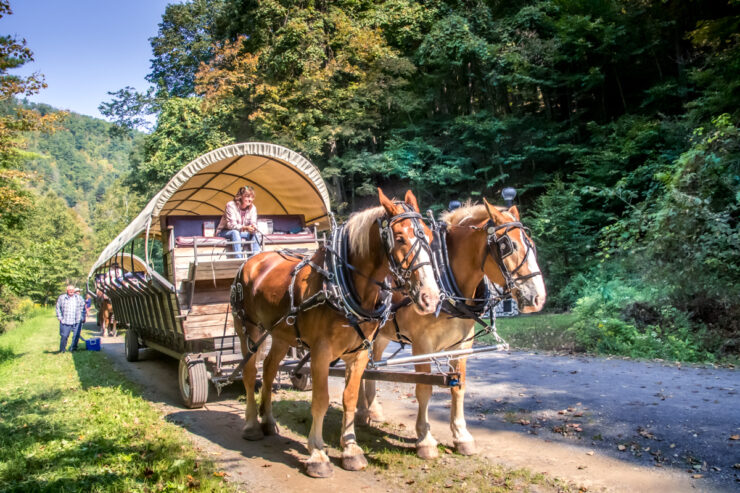
I didn’t plan to be captivated by wood, but that’s exactly what happened as I bumped and jostled along the Pine Creek Rail Trail in a covered wagon pulled by a pair of Percheron horses.
I knew very little about the Potter-Tioga region before climbing into that wagon. But something Jim, our guide, said during the ride along the “Crik” at the bottom of Pine Creek Gorge, aka Pennsylvania’s Grand Canyon, gave me a whole new appreciation for the towering trees dotting the landscape.
For the Love of Trees
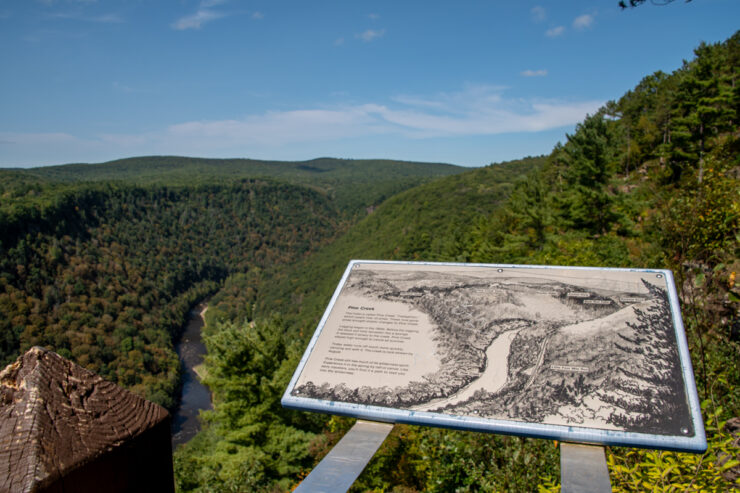
I don’t know why, exactly, but I’ve always loved forests and trees. Perhaps you feel the same. Maybe because some of the best memories are made on family camping trips in our nation’s forests. Or perhaps it’s the magic of nature – the way a tree is deeply rooted in the soil while raising its branches to the heavens. Every time I lie on the ground looking up through the trees as rays of light pierce the leaves, I feel engulfed by the warmth of something eternal.
It’s easy to believe that the heavily forested heart of Pennsylvania we see today is just as it has always been. But when our wagon driver told us he knew how old the trees along this dusty trail were because his Grandpa had planted them, I did a double-take.
Moments before, I’d watched a fly-fisherman standing in the center of the river cast his line above glistening waters. I was taken in by the scenery, romanticizing an idyllic life among these towering trees, imagining how lucky the folks were who first settled here among such beauty.
So the thought of someone’s grandfather creating that landscape, and not nature or God, seemed to shatter the story I was building in my mind.
His words didn’t make the place less stunning. They simply opened a door into Pennsylvania’s past and the Lumber Heritage Region that might otherwise go unnoticed and unappreciated.
Pennsylvania Lumber Museum: Where the Story Unfolds
©Dawn Damico
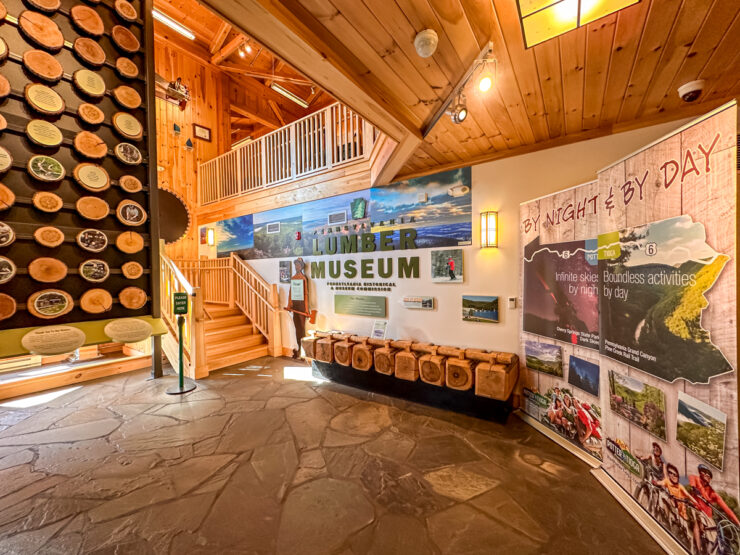
About 25 miles from the canyon where our horses plodded along the trail, the Pennsylvania Lumber Museum fills in the rest of the story.
I learned that by the late 1800s, Pennsylvania’s once-lush, forested landscape had been replaced by thousands of acres of what could only be described as forest graveyards. Old-growth forests that had taken more than a thousand years to evolve were chopped down or burned to make way for a new world. Decades of unchecked farming, logging, and uncontrolled fires left Pennsylvania’s forests in dire straits.
The trees that once seemed like an inexhaustible resource were turned into an ugly scar on a beautiful land. This caused a completely new set of management problems.
But the story doesn’t stop there. As with life itself, birthing a nation has seasons. There’s an evolution of peace, opportunity, success, failure, and new understandings at each stage of growth. For Pennsylvania, that new understanding transformed the lumber industry and ignited the state’s conservation consciousness.
Read More: Six Great Things to Do in the Laurel Highlands, Pennsylvania
A New Generation of Forestry
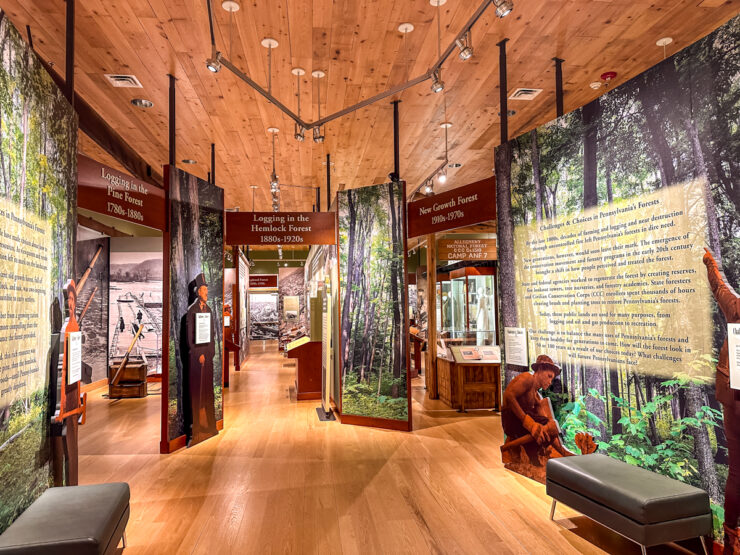
The Lumber Museum tells how a new generation would leave their mark, creating the foundation for Pennsylvania’s forest legacy.
The emergence of the conservation movement and forestry programs in the early 20th century shifted how people perceived and treated the forest. This important transformation resulted in the Pennsylvania landscape we enjoy today, along with a long list of outdoor recreation opportunities across more than four million acres of public land, according to the Pennsylvania Department of Conservation and Natural Resources
Implementing this new direction in the early 20th century, members of the Pennsylvania Civilian Conservation Corps, which our wagon tour guide’s family was a part of, planted 50 million trees, built 86 forest fire towers, built and repaired 6,300 miles of roads and trails, constructed 98 small dams, controlled disease on over 450,000 acres of trees, and fought numerous forest fires, according to information at the museum.
Sustainable forest management has become a part of Pennsylvania’s DNA.
The Real Adventure Begins

Travel is more than checking off a box for where to go and what to see. When you learn something new, understand something differently, and step into a place without judgment or preconceived notions, you allow yourself to experience it as it is, and not as you hope it will be. From there, the real adventure begins.
The Ole Covered Wagon Tour offers a unique viewpoint of the Pennsylvania Grand Canyon’s beauty while telling its story. The Lumber Museum gives you a glimpse into the birthing pains of a nation, revealing the good, the bad, and the ugly of the lumber industry.
Travelers who enjoy both experiences get a fuller picture of this region. It’s like connecting the dots between the forest visitors see today and the tragic yet inspiring story of Pennsylvania’s lumber boom and bust, which almost decimated the very forests that have become an important recreational area for the state.
If You Go
Ole Covered Wagon Tours
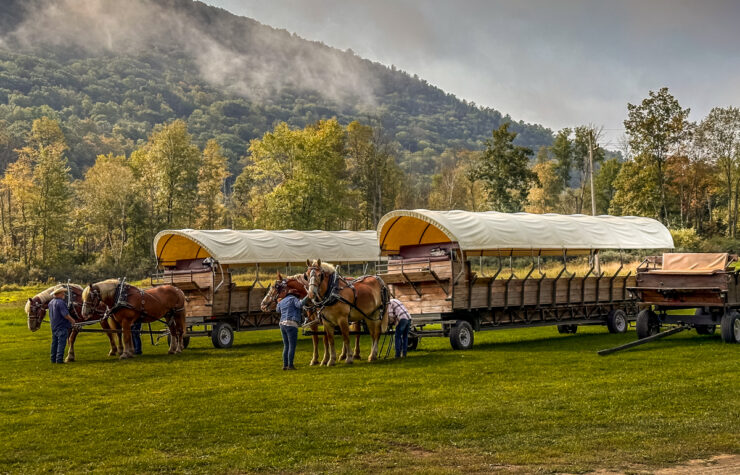
This is a must-do experience. A horse-drawn covered wagon carries you through the Pennsylvania Grand Canyon, blending history and wildlife sightings with a generous dose of friendly humor. The trail takes you along the river, which was once dammed and completely covered with water. Our guide said people claim the water was once only 30 feet from the top of the hills. When the dam deteriorated, the water burst through, forming what is now known as the Pennsylvania Grand Canyon.
The ride is comfortable, and the canvas top provides ample shade. I was hosted on the Waterfall Tour, which travels to 4 Mile Falls near Leonard Harrison State Park. Guests get about a half hour to explore. I recommend climbing the wooden stairs to various platforms where you can see the falls up close.
Bathroom facilities are available near the turning point of the experience.
Location: 1538 Marsh Creek Road, Wellsboro, PA
Phone: 570-724-7443 or 607-857-5256
Website: Ole Covered Wagon Tours
Pennsylvania Lumber Museum
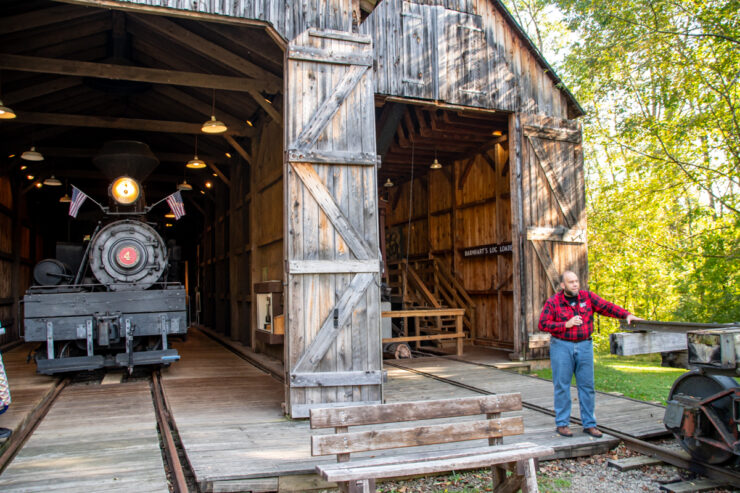
Don’t be fooled. Their simple museum website doesn’t do justice to the wealth of information and the experience visitors get here. The space, exhibits, and staff reflect the passion behind Pennsylvania’s lumber heritage. It’s very fitting for a state that is literally named after its forests. (Pennsylvania = Penn’s Woods, in honor of William Penn’s father)
From old-growth forests to today’s sustainable forestry practices, you’ll leave with a new appreciation for the industry, those who work in it, and the forest land that has become Pennsylvania’s playground and economic backbone.
Location: 5660 US Route 6 West, Ulysses (Township), PA 16948
Phone: 814-435-2652
Website: Pennsylvania Lumber Museum
Pine Creek Rail Trail
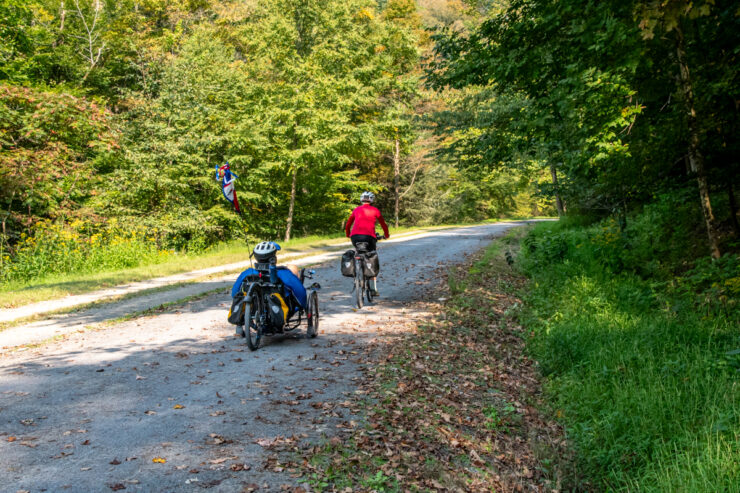
The 62-mile multi-use recreation Pine Creek Rail Trail runs from the town of Wellsboro to Jersey Shore, Pennsylvania.
Visit Potter-Tioga hosted the author.
