
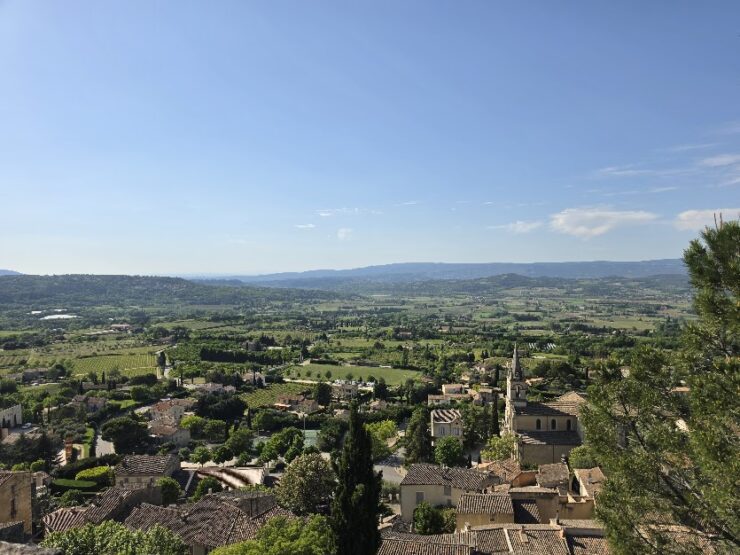
In the Luberon region of France, hilltop villages rise between vineyards and limestone mountains. Stone footpaths, winding roads, and hiking trails begin where the village streets end. Mornings stretch into long rosé lunches, market squares hum and fade, and every village settles into its own rhythm. Some draw you into lively cafés and weekly markets; others ask for quiet wandering beneath shuttered windows and centuries-old stone facades.
I wanted more than a passing glimpse of the villages of Luberon. Each one deserved a week on its own. But I had only two days. So instead of trying to conquer the region, I decided to slow down and observe rather than consume.
I was lucky to explore with the help of Destination Luberon, the local tourism board, who narrowed the region’s twenty-plus villages down to six. Together, we began our journey one hour at a time.
Lourmarin
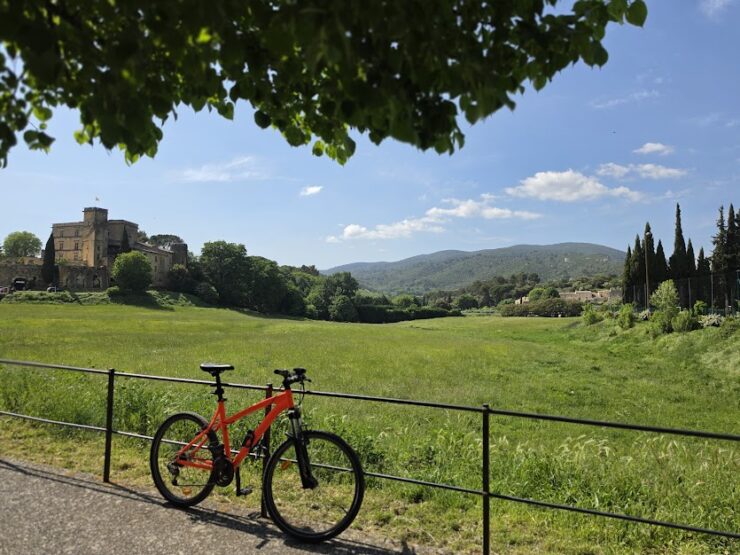
After a picnic lunch and wine tasting at Château La Verrerie in Puget, we made the short drive to Lourmarin, one of France’s most beautiful villages.
The Château de Lourmarin immediately came into view, rising across a meadow against the backdrop of the Luberon Mountains. The 15th-century Renaissance castle is now the anchor of the local arts community. Rescued from ruin in 1921, it serves as both a cultural venue and an artist residence, housing collections from the 15th and 16th centuries.
I couldn’t stop staring at the castle while cyclists and drivers rolled in to visit. As an avid hiker, though, my attention soon drifted toward the forests and mountain ridges. I asked my local tour guide whether people could hike between villages. She explained that the region offers wooded trails ranging from moderate to difficult. I was especially intrigued by the six-mile loop between Lourmarin and Cadenet.
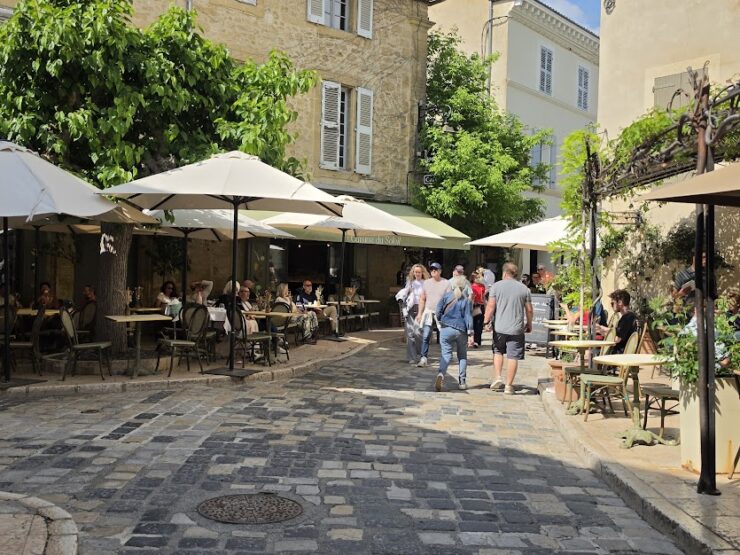
While we wandered through the cobblestone streets, I paused to photograph an apartment window overflowing with plants and flowers. My guide smiled and said locals are used to tourists doing exactly that. Cafés and boutiques enticed me to settle in for the afternoon as we drifted through narrow alleys.
At one point, I overheard someone say people come to Lourmarin to relax and do nothing. I looked back at the café tables filled with smiling people and thought, “Seems about right.”
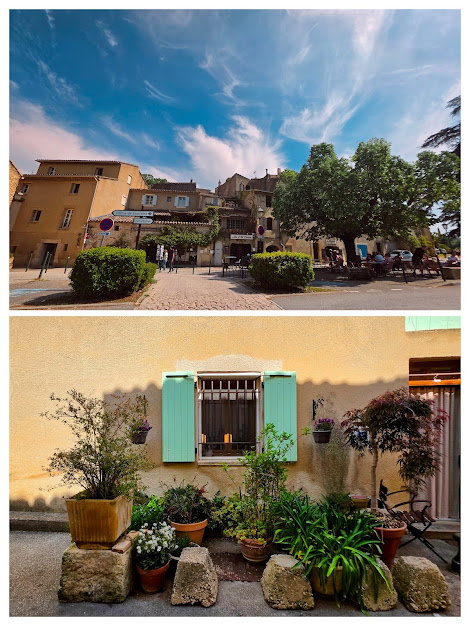
As we left Lourmarin, we passed Le Moulin, a Beaumier property and sister hotel to the one where I would stay next. For a moment, I wished for another day in the village—time to linger at the cafés, wander the alleys again, and do absolutely nothing
Bonnieux
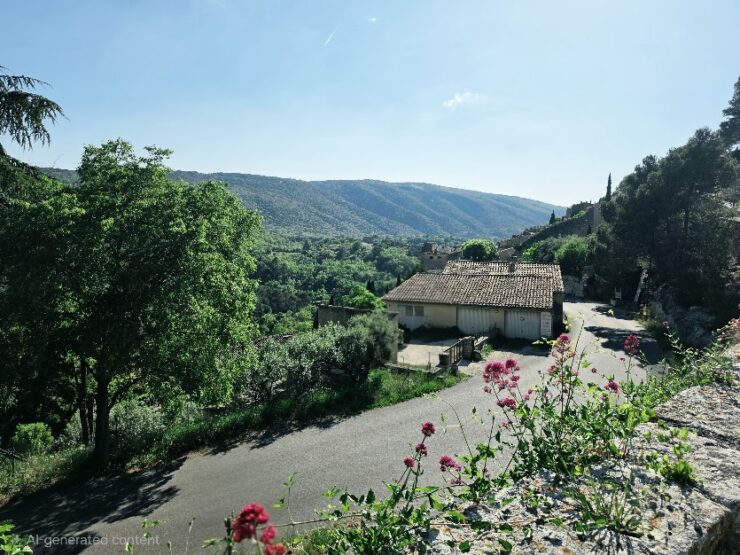
Perched high above the valley, Bonnieux became my home for the night at Capelongue Hotel, a hillside retreat overlooking the Luberon. Stone villas with pale blue shutters sat among lush gardens, alongside a spa, two pools, and a farmhouse-style restaurant. The landscape matched every image I had ever imagined of the South of France.
Still, the private patio attached to my suite tempted me to stay put and enjoy the silence. Instead, I hiked up to the ruins of the 10th-century fortress church at Bonnieux’s highest point before winding my way down into town. I stopped often to admire the countryside from every angle.
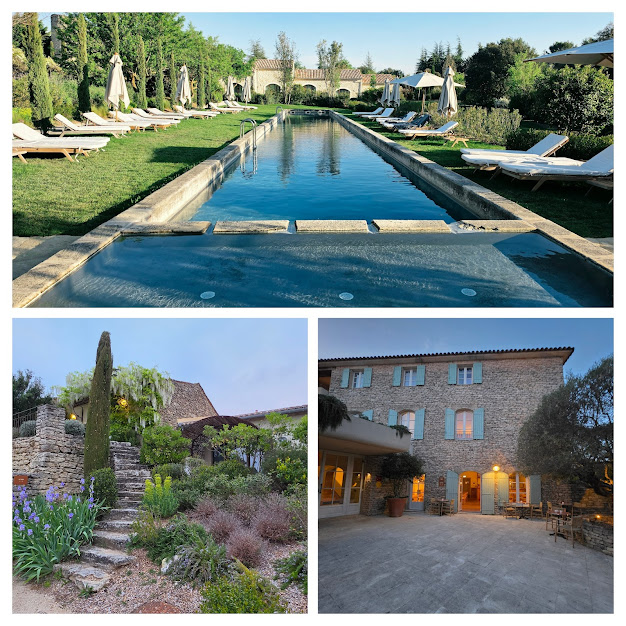
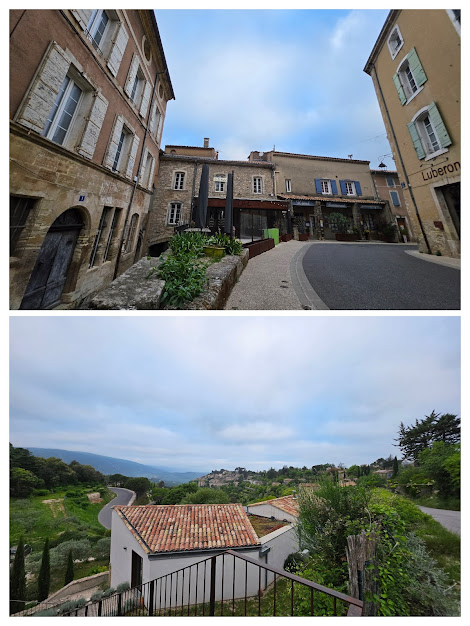
Bonnieux felt more spread out than some of the other villages. Cafés, shops, and boutique hotels line a narrow main road through town. Since it was Sunday, most of the shops were closed. I still wandered up and down the steep stairways, fascinated by daily life carved into a hillside of this scale.
A group of men working on one of the buildings said something to me in French, followed by what sounded like friendly laughter. Since I had no idea what they said, I laughed too, hoping what they said was nice.
To my delight, Brasserie Les Terrasses was open. Using Google Translate, I asked if I could buy wine to go, and they happily obliged. I carried a bottle of Château La Canorgue back to my room before dinner at the hotel restaurant, La Bergerie.
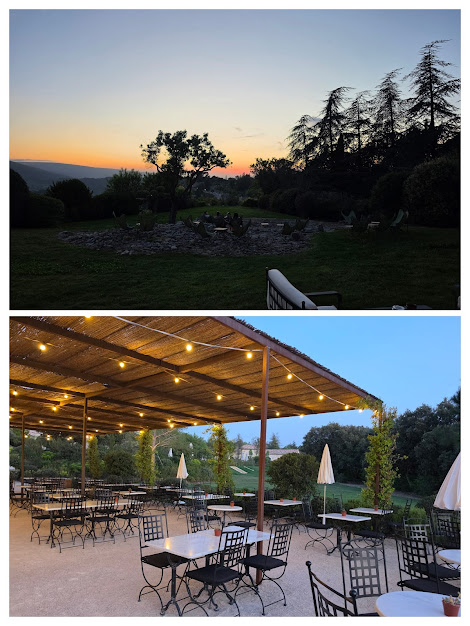
Inside, casually arranged wooden tables held polished stemware while the staff moved gracefully around the room. Coffered ceilings, arched windows, and soft yellow lighting suspended from black fixtures created an elegant farmhouse atmosphere. At the center of the restaurant, a dessert buffet displayed on a butcher block invited guests to indulge at their own pace. I ordered the truffle pizza, a classic favorite that absolutely lived up to expectations.
©Darla Hoffmann
As the sun dipped behind the mountains, couples gathered on the lawn in camping chairs to watch the final streaks of orange fade across the sky. I had planned this as a solo trip, but the view made me miss my husband.
Lacoste
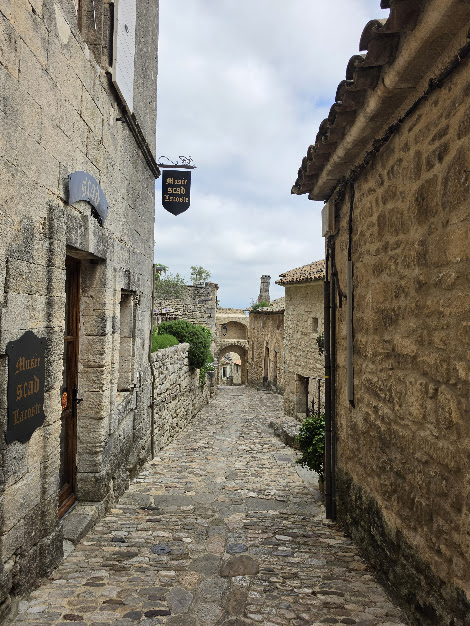
Lacoste won me over almost immediately with its art scene, particularly its focus on teaching and creativity. The quiet village is home to the Savannah College of Art and Design (SCAD), where American students study abroad, and their presence shapes much of the town’s identity. Art and photography by celebrated artists and designers appeared around nearly every corner. Part of me admired their talent, while another part felt slightly envious of the opportunities these students had on this hilltop.
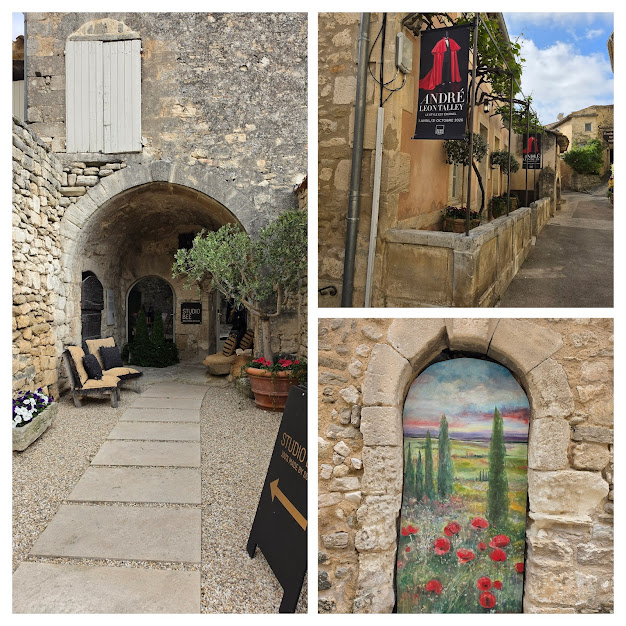
At the top of the village, the 11th-century castle has remained under renovation since the 1950s. Fashion icon Pierre Cardin purchased the château in 2001 and played a major role in transforming Lacoste into the cultural center it is today. He also founded the annual Festival de Lacoste, a celebration of music, theater, dance, and opera held among the town’s stone quarries. Despite its cultural significance, Lacoste remains surprisingly quiet, with only a handful of shops and restaurants and very little day-to-day tourism.
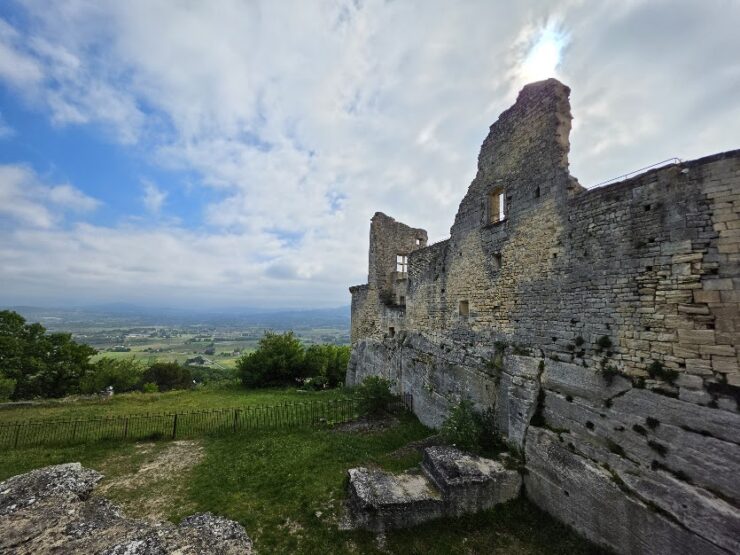
I always gravitate toward the highest viewpoints in these villages. So naturally, I climbed toward the castle ruins. As I navigated the steep cobblestone streets, I wondered how dangerous they must be in winter. Yet at different moments in history, the dangers here went far beyond icy roads. Religious wars in the 16th century culminated in the Lacoste Massacre. And in the late 18th century, Marquis de Sade dominated the village and castle while courting scandal at every turn.
Oppède
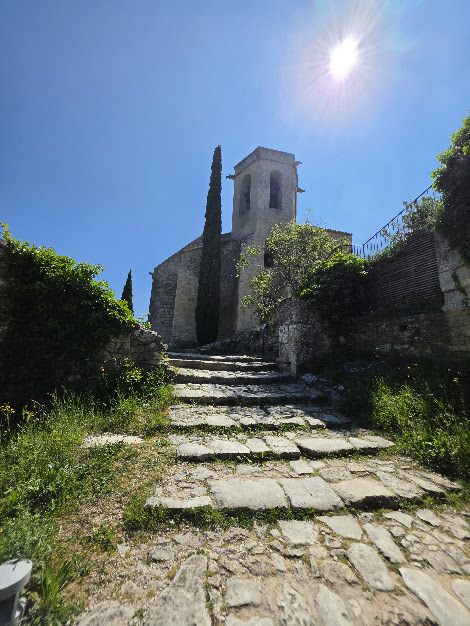
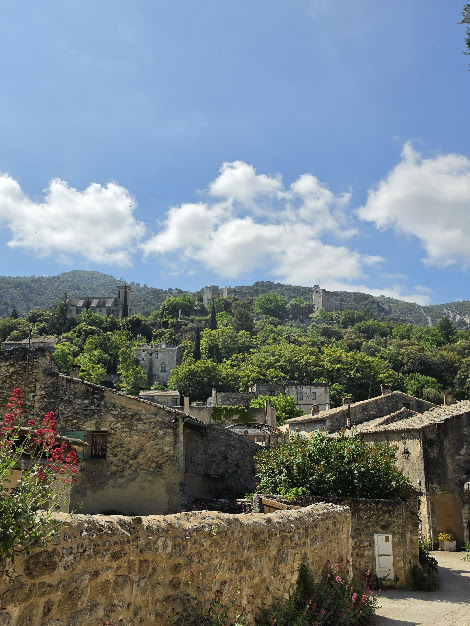
After exploring Château Royère’s olive oil museum and enjoying a wine and olive oil tasting, we drove just a few minutes to the village of Oppède. At first glance, the town felt almost deserted. Although it was Monday, the square sat nearly empty, with only a few restaurants open and no patrons in sight. Then I looked up and saw the ruins of the 12th-century castle and the 10th-century church towering above the village.
During World War II, artists used the medieval ruins as a hideaway. Much of the fortress is now fenced off for safety, though hikers can still climb to the top for views. I scrambled upward, convinced I had the village entirely to myself, until a couple embracing near the ruins quickly stepped apart when they noticed me. Apparently, I interrupted their moment, but I kept going.
From the landings, the distant landscape revealed traces of ancient farmland and historical travel routes that once led to the town.
©Darla Hoffmann
What struck me most about Oppède, though, was how easily it lends itself to wandering. I appreciated its layered history and sweeping scenery. The real appeal, however, was its access to hiking trails that spill directly into the landscape. From here, hikers can disappear into nature for the day before wandering back to centuries-old homes now converted into guest rooms.
After a long hike, I could easily picture myself sitting there with a bottle of wine, overlooking the Luberon Massif and olive groves.
Maubec
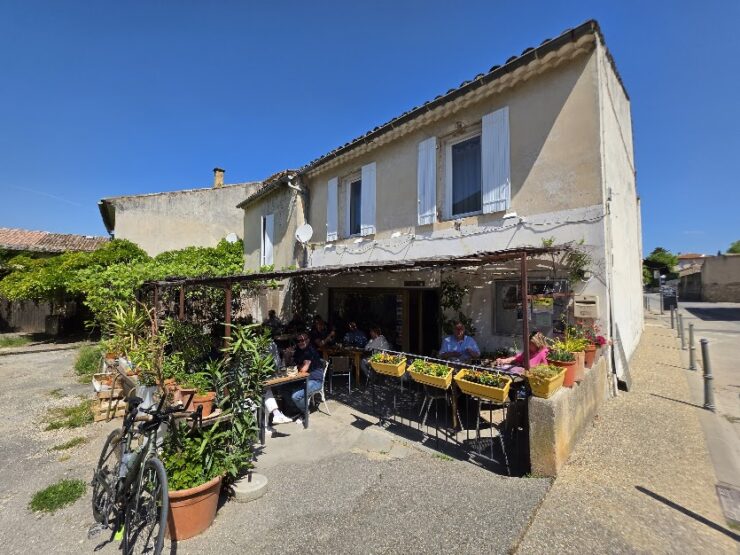
Just four minutes by car from Oppède, we stopped at Mama, a restaurant across from the town hall in the village of Maubec. Our server presented the menu on a chalkboard, and I ordered the sauté de poulet à la citronnelle—chicken and lemongrass stir-fry. During lunch, I also learned from a reliable source that the French consider it rude to cut salad with a knife and fork. Lesson noted.
Throughout the meal, my eyes kept drifting toward the distant Luberon range. The road outside the restaurant seemed perfectly suited for cyclists descending from the trails above. Later, I learned that Maubec is a premier starting point for the Grand Traversée du Luberon, a highly technical route that crosses the entire mountain range. Cyclists regularly use these access points to connect to loops toward neighboring villages, which confirmed exactly the energy I had sensed.
Gordes
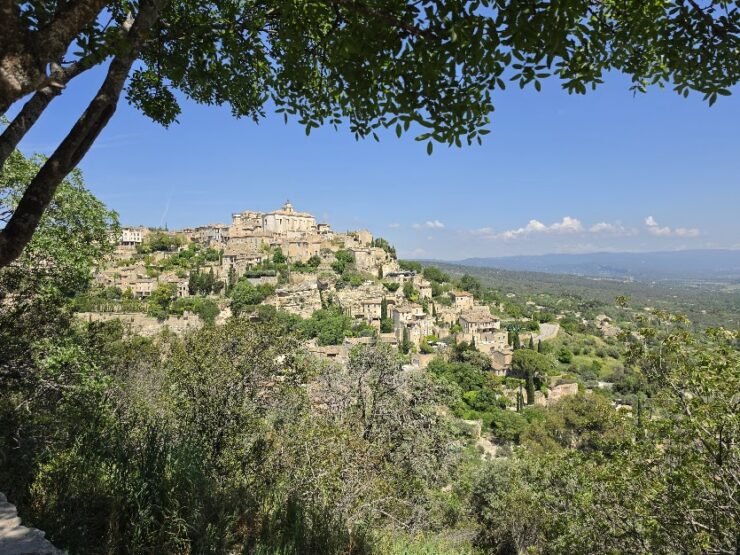
Perched dramatically on a rocky outcrop in the heart of the Luberon, Gordes is perhaps the region’s most recognizable village, known as much for its striking beauty as its postcard silhouette. My local guide mentioned that many tourists know Gordes but don’t know what the Luberon is. I laughed at first, then quickly realized she was right. Crowds filled the village, cameras raised from every angle.
Before entering the center, we stopped at a viewpoint overlooking layers of stone buildings cascading down the hillside. I instinctively blurted out, “WOOWWWW,” sounding like a five-year-old spotting a giant chocolate bunny in a candy shop.
Inside the village, art appeared everywhere—hanging from trees, tucked into stone crevices, and displayed along walls throughout the streets. Someone had even carved a miniature library with a wooden door directly into the stone. As I wandered through the maze of stairways and passageways, I kept turning toward colorful sculptures, pottery, and playful installations intentionally scattered throughout the village.
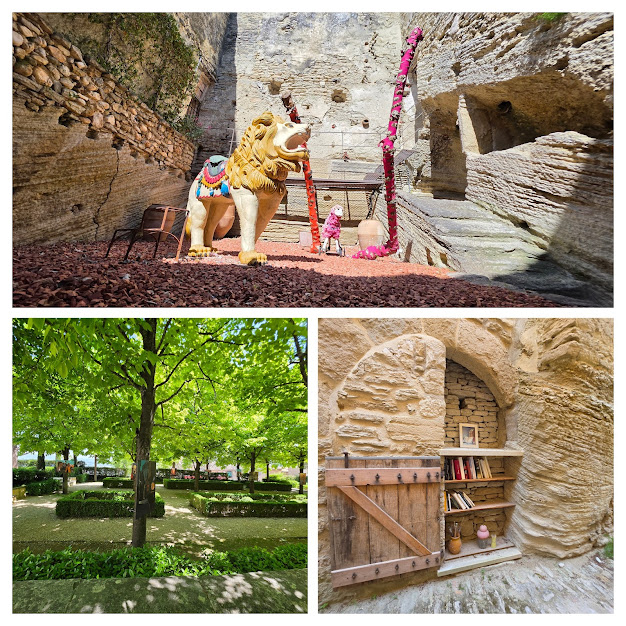
One of my favorite stops in Gordes was the Saint-Firmin Palace Cellars. During the Middle Ages, this underground network functioned as a center for artisanal industry before a local family rediscovered it roughly 60 years ago. They spent nearly four decades excavating and restoring the labyrinth beneath the village. Today, visitors can explore its chambers on a self-guided tour while learning about medieval life in the region.
Before entering, I sat through a short introductory video on a cold stone chair. The dark room immediately set the mood. As the staff member opened the door, he joked that if he never saw me again, it was nice to have met me. I laughed, then gave him a look that silently asked whether he was serious.
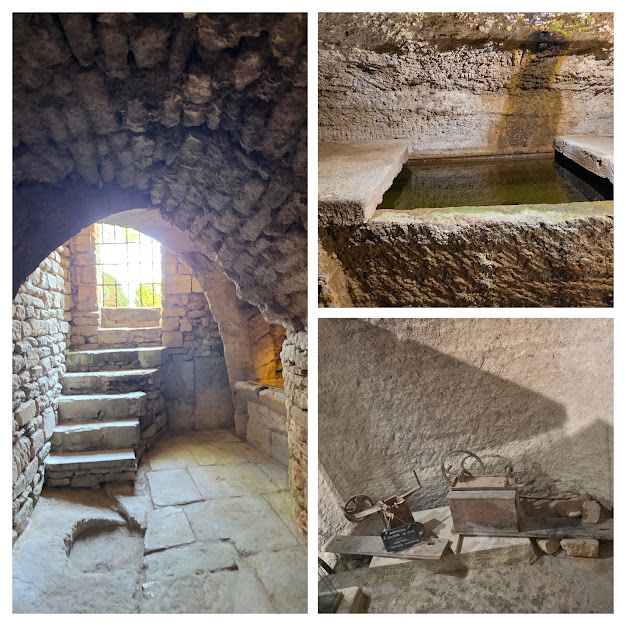
Inside, I moved slowly through the underground spaces, taking in the weight of what daily life must have required centuries ago. Storage silos, olive oil crushing wheels, and ancient press mechanisms felt almost mystical in the dim light.
When it was time to leave Gordes, we drove twenty minutes to Château de Mille, the oldest wine estate in the Luberon. Here I closed out my trip with a tasting of Rhône varietals. It felt like a fitting final pause—an appreciation not just for the villages I had been lucky enough to experience, but for how much of the Luberon still remained unseen, waiting just beyond the next bend.
If You Go:
The closest airport to Luberon is Marseille Provence Airport, which is an hour drive north. The best time to visit is late April to early June or late September to early October, when the weather is pleasant and crowds are thinner. July and August are best avoided if you prefer a quieter experience.
While biking and hiking trails do connect many of the villages. I recommend renting a car to move between them—especially if you plan to visit wineries or travel with luggage. Bring proper hiking gear, including sunglasses, SPF, hats, and a small first-aid kit.
Most villages have a Destination Luberon or Tourism Office, which is useful for maps, trail information, and local recommendations along the way.
If you are staying in Bonnieux, Capelongue is an excellent option, with an on-site restaurant that works well for both breakfast and dinner. Accommodation and dining options vary widely between villages. It is worth checking ahead through tourism offices or online when planning your stays.
You May Also Enjoy Reading
Gigondas Master Class with Nick Jackson, MW in Miami
Walking the Camino de Santiago de Compostela in France
For more stories by Darla Hoffmann, go to www.aboutwineinaz.com
