
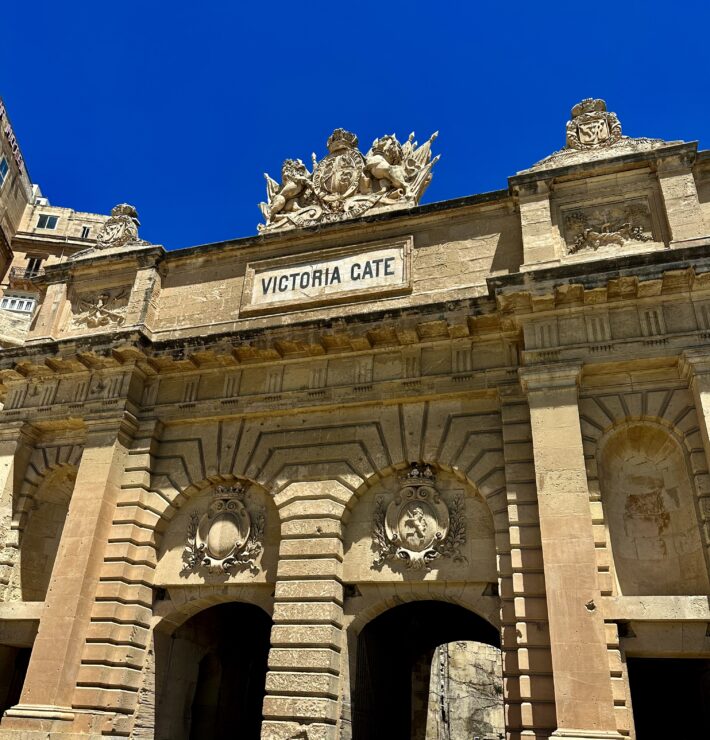
Malta, which comprises three islands in the Mediterranean Sea south of Sicily, is about the size of Las Vegas. About half a million people live there. Yet about 3.5 million people flock there every year.
It’s easy to see why: It’s got exotic appeal, mind-boggling history going back to the beginning of human civilization in 10,000 BC, and great local wine and food. Malta is also slightly more affordable than other European destinations. Bonus: English is widely spoken, if often with heavy Arabic accents.
Malta tends to be off the radar for many U.S. travelers. But after a four-day visit, I can see why so many people from around the globe come to explore this remote place.
Game of Mdina
We kicked off our trip with a private half-day car and driver booked through Daytrip.com. Our itinerary began with a visit to Malta’s original capital city of Mdina. You might recognize it from Game of Thrones, with its majestic limestone and Baroque architecture. The entry gate to Mdina served as the entry to King’s Landing in Season 1 of the series.
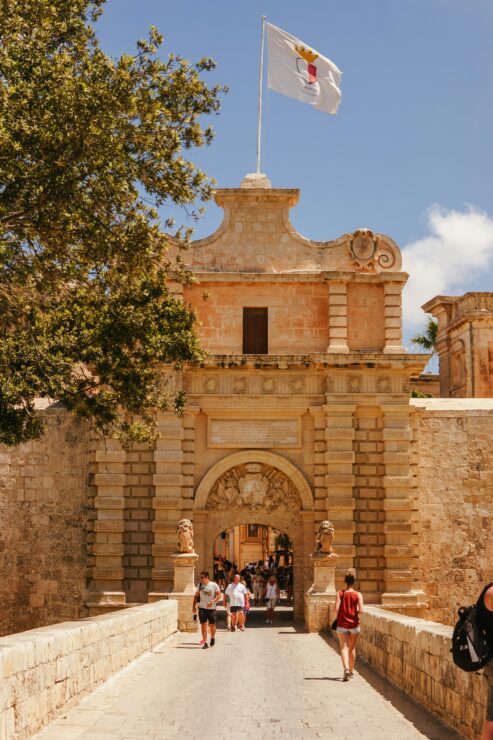
©IgorSporynin for Unsplash
©Liz Barrett
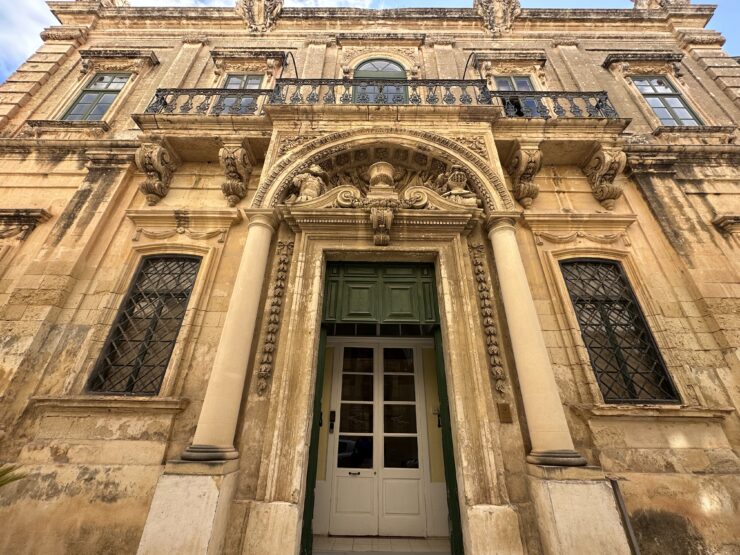
Mdina is densely built with honey-colored stone buildings festooned with Baroque features. Today, there are a handful of permanent residents, but plenty of tourists. I recommend getting there before 10 a.m. to experience the place before the hordes arrive. St. John’s Co-Cathedral (one of two seats of the Maltese diocese) and the monastery are worth exploring.
Malta’s starring role as a popular filming destination goes beyond Mdina. The intensely blue coastal waters, distinctive stone architecture, and raw natural beauty have served as settings for a long list of movies and TV shows including Troy, two Gladiator movies, multiple Jurassic Park films, and more.
Temples That Go Waaaay Back in Time
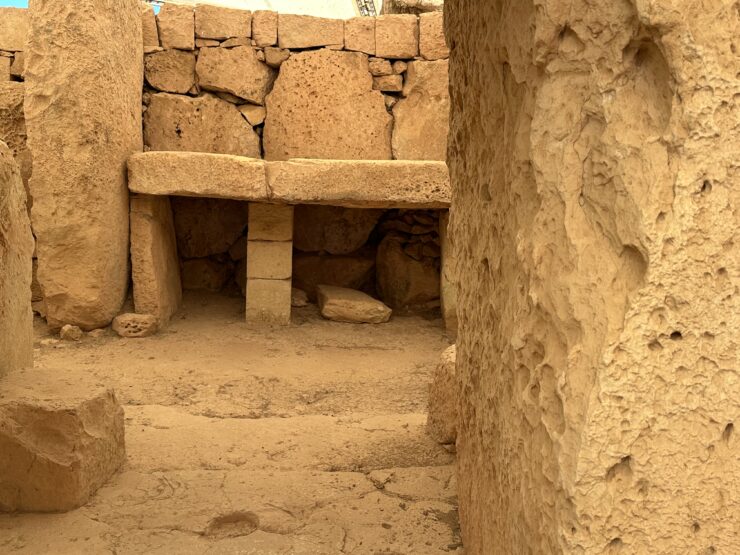
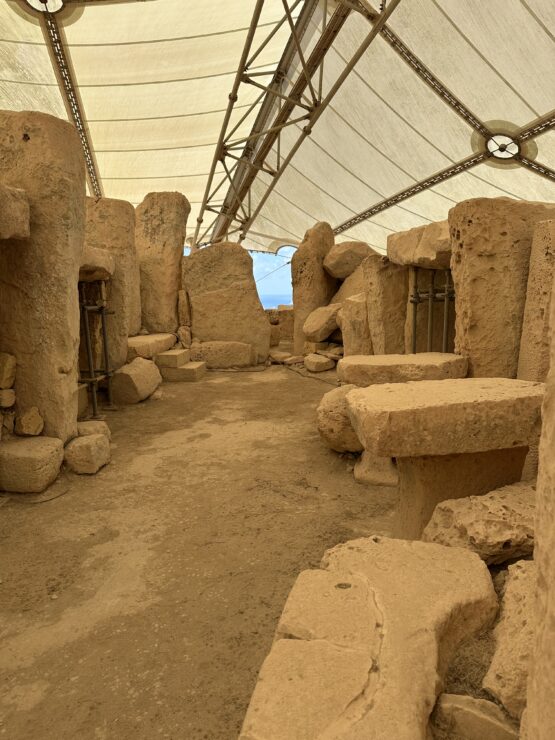
The Hagar Qim and Mnajdra megalithic temples are an excellent next stop, about 20 minutes from Mdina by car. These are some of the largest and oldest stone structures in the world, built by Neolithic people. They are 1,000 years older than Stonehenge.
Walking amongst these structures as I listened to the audio guide was the biggest step back in time I’ve ever experienced. Visit Heritage Malta for details.
A Mash-up of Mediterranean Flavors
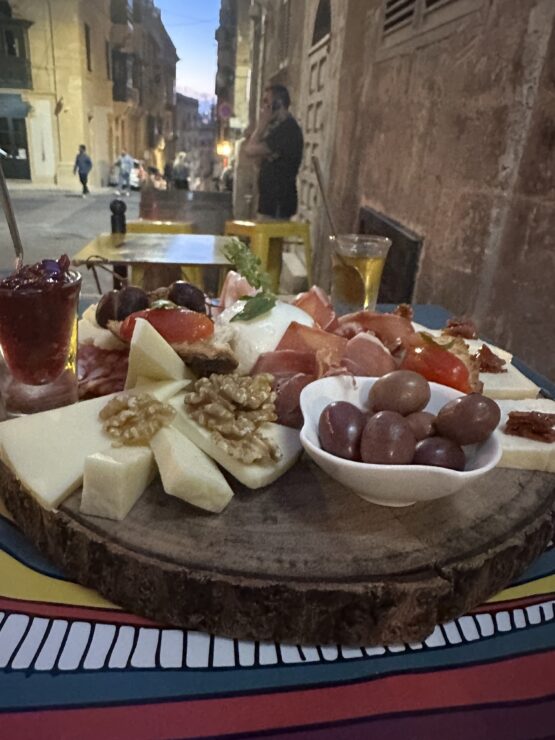
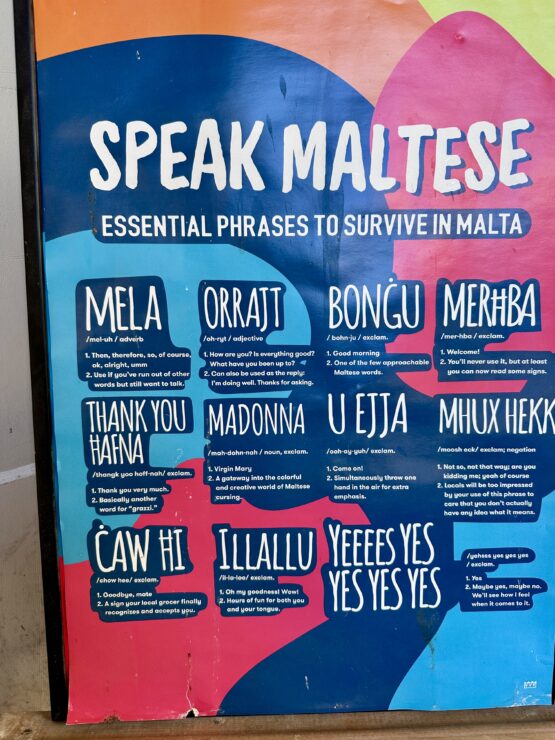
By now, we were getting hungry and thirsty. It was time to start sampling the local food and wine in Valletta, the modern-day capital of Malta. Given Malta’s location 300 miles from Tunisia in North Africa and 91 miles from Sicily, there are strong Italian and Arabic influences woven into the culture. The Maltese language is a mash-up of approximately 60 percent Arabic, with Italian, French, and English words and phrases scattered within.
©Liz Barrett
©Liz Barrett
Traditional Maltese fare is a true hybrid of Italian food with Arabic flavors. You’ll find sesame-crusted breads and Arabic spices like cloves, cinnamon, and nutmeg in soups and stews. You’ll also find pasta, pizza, cured meats, and other Italian specialties.
Rabbit is the national dish of Malta, and you’ll find it simply roasted or pan-fried, and also in a savory stew with some of those North African flavors.
©Liz Barrett
©Liz Barrett
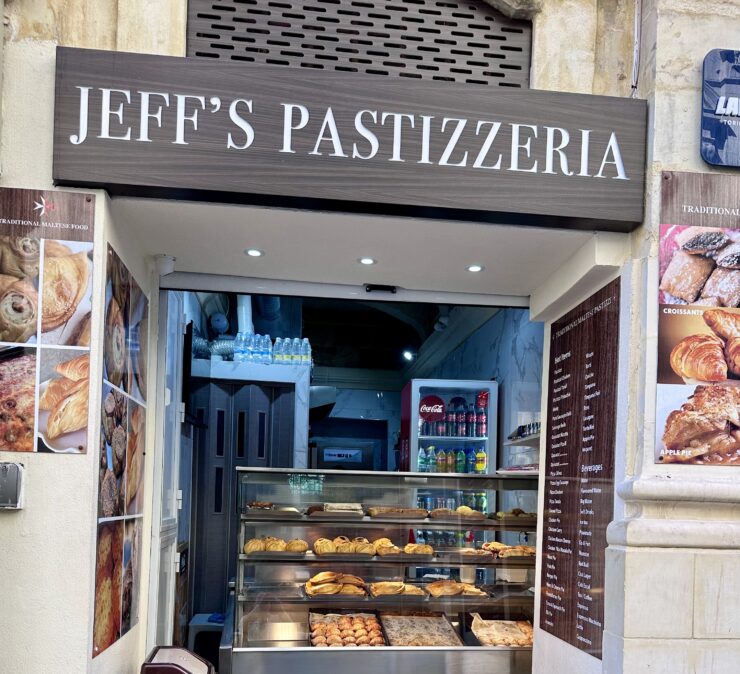
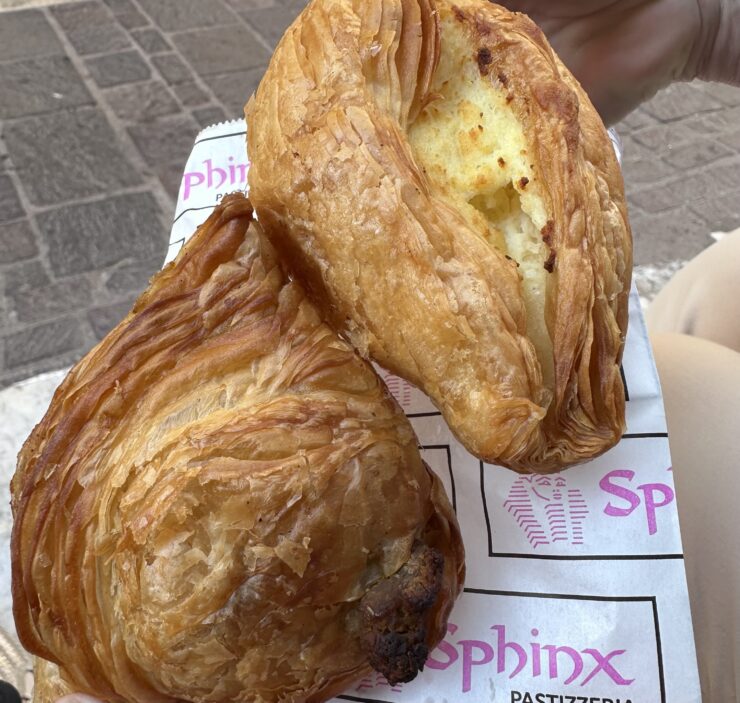
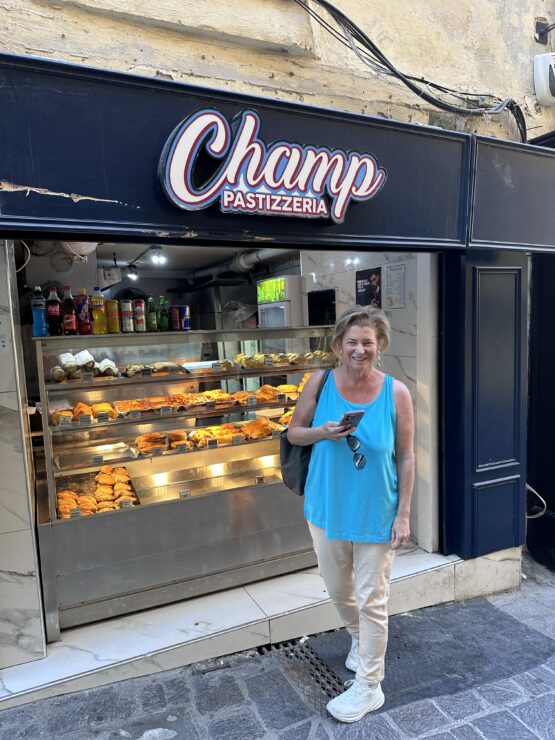
Pastizzi are a traditional “grab and go” favorite. They are crispy baked puff pastry pockets filled with either ricotta cheese or mashed peas flavored with curry. They make an easy hand-held breakfast or snack. You can find them at small stands like Champ’s, Jeff’s Pastizzi, or for a sit-down experience, at Caffé Cordina.
Savor a Maltese Wine Crawl
Malta is home to a dozen wineries. Despite thousands of years of winemaking history, Malta’s commercial wine scene only took off about 50 years ago, in the 1970s.
Interestingly, distilling spirits stronger than 20 percent alcohol is not permitted in Malta. I was told it is because of Malta’s long relationship with Great Britain (which has been an important ally for Malta over the course of history). Malta imports a number of spirits from England (and other countries).
There is one local liqueur (less than 20 percent alcohol by volume) called Bajtra that’s distilled from the prickly pear fruit. It is widely used in the Maltese Spritz, which is slightly sweet with a honeydew melon flavor and a lovely pink hue.
But I digress; on to Maltese wines.
Two Indigenous Grapes
Malta grows two indigenous wine grapes. Girgentina is a white wine grape which takes its name from the root word of Agrigento, a village in nearby Sicily. Girgenti translates to “wine of the people,” and Girgentina is indeed a crowd-pleaser. It’s a refreshing, crisp white wine with notes of preserved lemons, cantaloupe, watermelon rind, and green apples. It pairs well with everything, from cheese and crackers to salads to roast chicken, fish, or rabbit.
©Liz Barrett
Gellewza is Malta’s indigenous red wine grape. It is big and bold, and can be quite tannic, depending on the age. You also may pick up a lot of chocolate and mocha notes from this wine. Rosés of Gellewza are impressively structured, full of ripe plums and strawberries.
Malta also turns out plenty of wines made from International varietals. You’ll find Chardonnay, Muscat of Alexandra—aka Zibibbo—as well as Cabernet Sauvignon, Pinot Noir, Syrah and Merlot on wine lists everywhere.
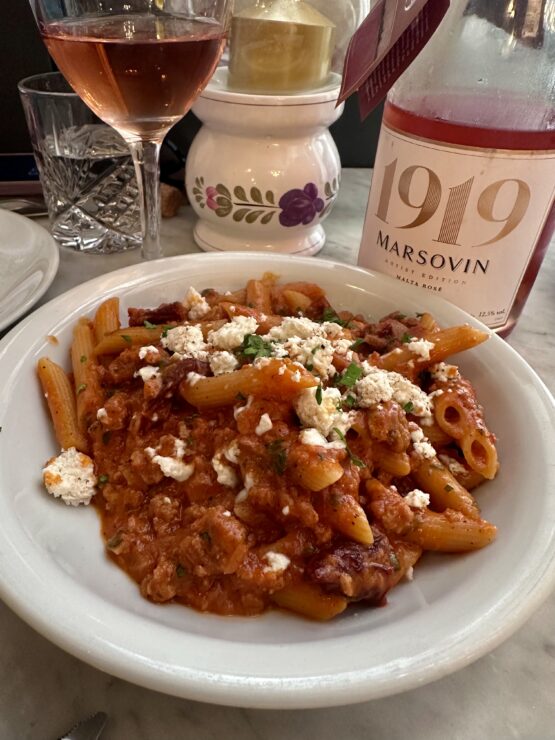
One of my favorite things about Maltese wines is the lack of rules. Maltese winemakers can blend whatever they want. You might taste some interesting mash-ups, like Marsovin’s “1919” White, which is Chardonnay, Zibibbo, and Girgentina. It echoes the weight and roundness of some of the best wines of the Northern Rhône Valley.
The Wineries of Malta
Wineries to look for include:
- Marsovin Cellars—One of the largest producers on Malta, Marsovin is Malta’s biggest cheerleader when it comes to local wines. You’ll see their wines on lists all over Malta, including the “1919” brand.
- Delicata—One of Malta’s oldest wineries, founded in 1907 and still run by the Delicata family.
- Ta’ Betta Wine Estates—Specializes in French varietals that can stand shoulder-to-shoulder with the world’s best examples.
- Meridiana—One of Malta’s newer wineries founded in the late 1980s, Meridiana also specializes in international varietals. Their property is on a reclaimed airfield from World War II, near Mdina.
- Ta’ Mena Estate—Located on Gozo, Ta’ Mena is a boutique winery run by a family that focuses on producing not only wine, but artisan food products as well.
Maltese Wine Bar Hopping
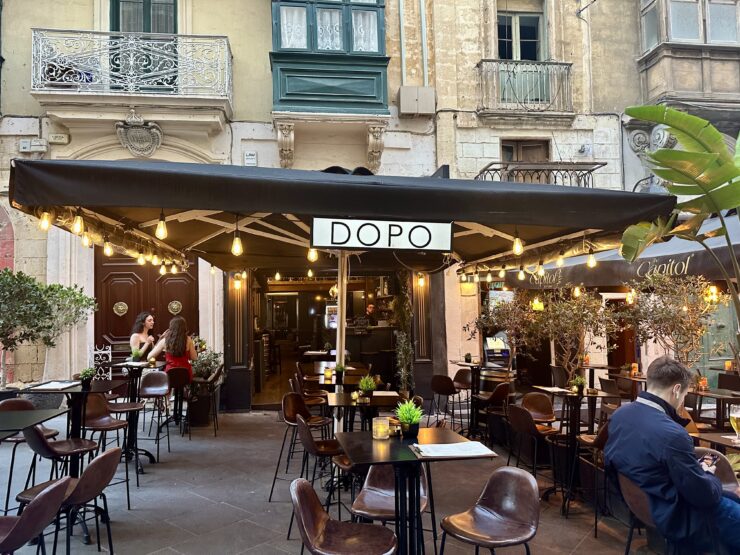
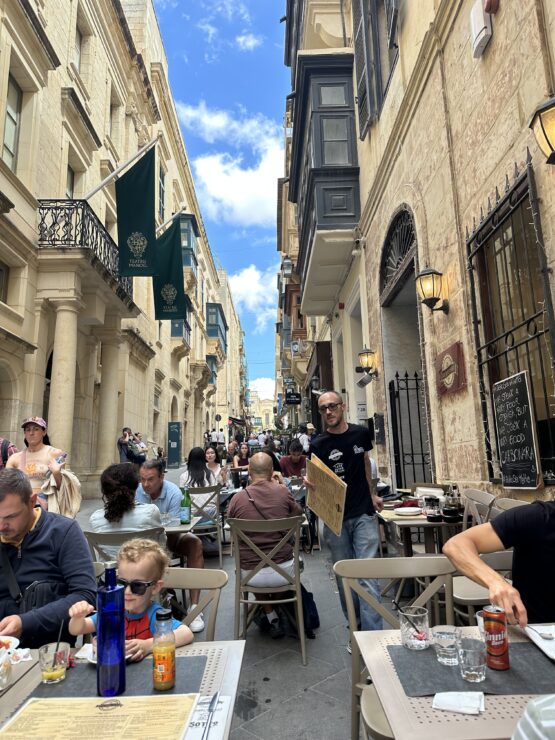
Now, for where to sample these wines. We visited as many wine bars and restaurants in Valletta as we could over four days, and here are some recommendations (and one non-recommendation):
©Liz Barrett
©Liz Barrett
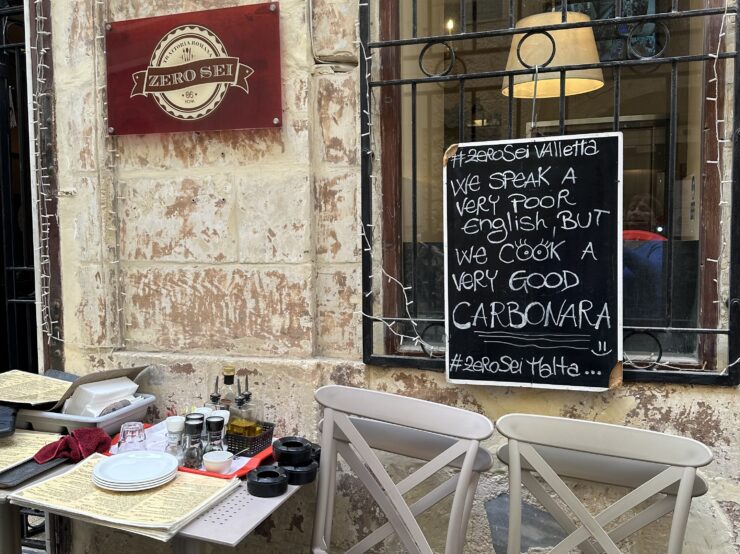
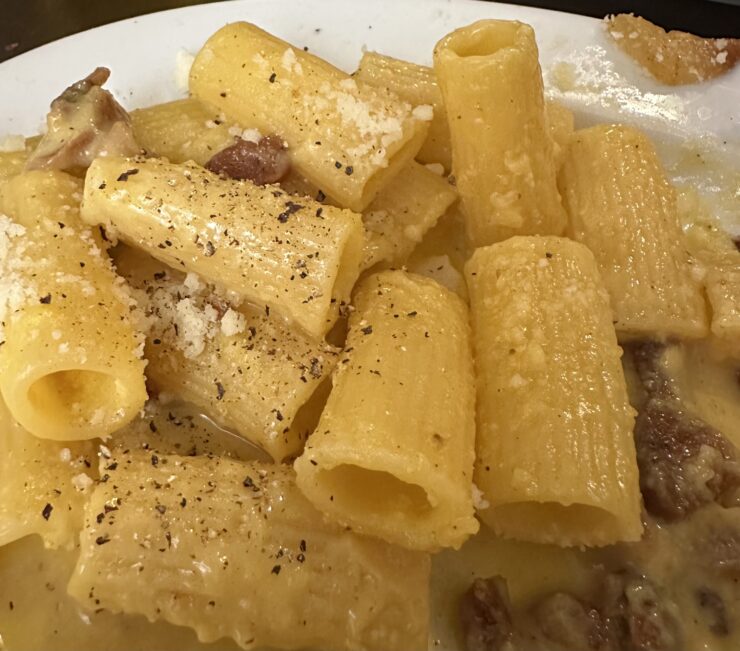
Zero Sei
A popular Italian restaurant whose motto is “Keep Calm And Eat Carbonara.” I took their advice and was not disappointed. There is a patio in the front, but should you find yourself seated inside, the ambiance is comfortable and feels historic.
Why Not?
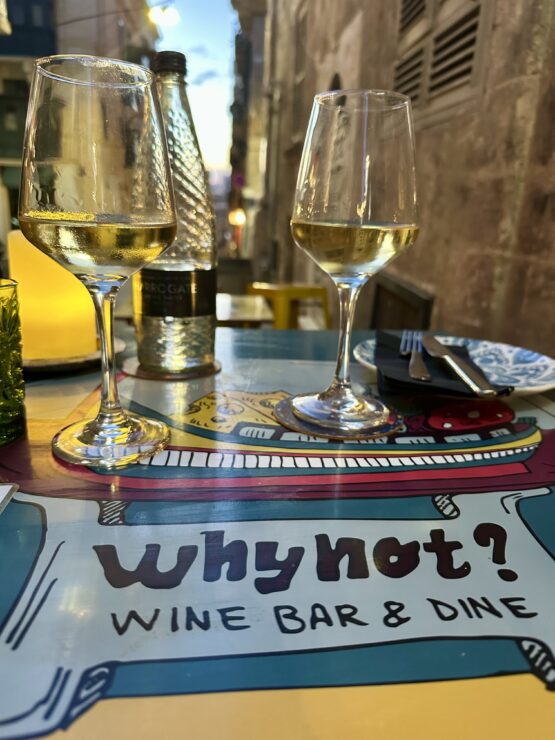
This tiny wine bar offers flights of wines from Malta and other regions alongside nicely prepared platters of charcuterie and cheese, focaccia, and other snacks that you can easily turn into a meal. Try the rosé made from the native Gellewza grape. This wine was like James Brown in a glass—pure funk but in a good way. It offered up aromas of macerated, overripe strawberries. On the palate, it was robust and full-bodied, bursting with plums and ripe strawberries.
Koccio Wine Bar
Their “Wine Tasting Experience” for 35 euros per person seemed intriguing, and the reviews looked good. The sommelier was very excited to talk to us about Maltese wines, which was great. But the wines he poured were substandard, and the accompanying food was lackluster. Better to “DIY” it here, choosing your own food and wines.
Trabuxu Wine Bar
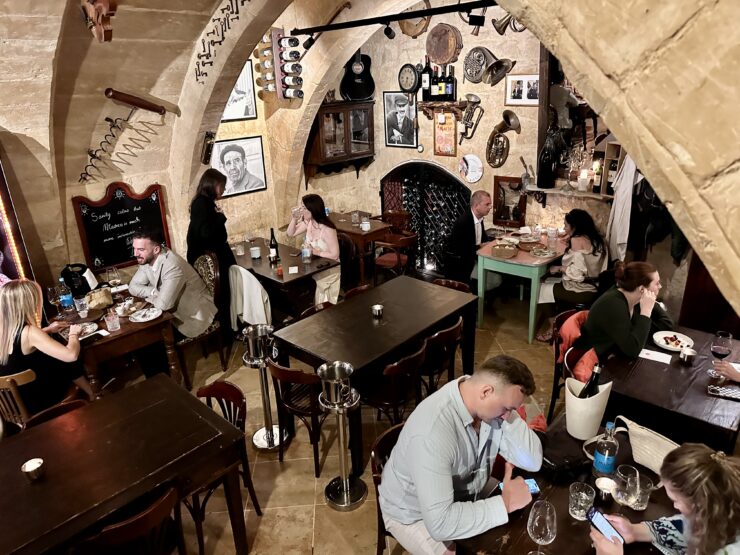
We loved this subterranean boite set in a 400-year-old stone cellar with lively vibes and a young staff that was very excited about the wines they were serving. We shared a bottle of Marsovin sparkling Chardonnay, which spent 14 months aging on the lees and was made in the traditional method. It was rich with tantalizing yeast notes and apple compote with lively bubbles. Trabuxu offers a food menu including crisp and tender fried calamari, fresh asparagus with hollandaise sauce, and cheeses and cured meats.
Vinuri
Keep your eyes open as you seek out this minuscule wine bar with a tiny sign run by an enthusiastic couple who love wine and food. An extensive list of Maltese wines are offered with a selection of cheese and charcuterie.
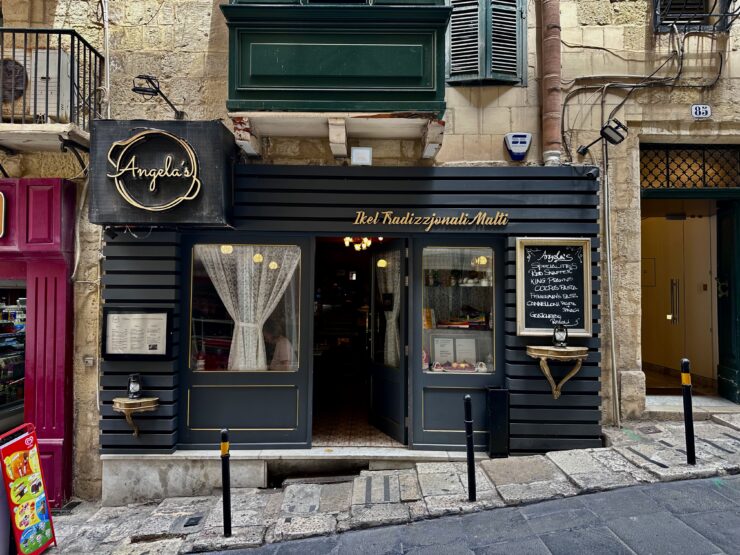
Angela’s
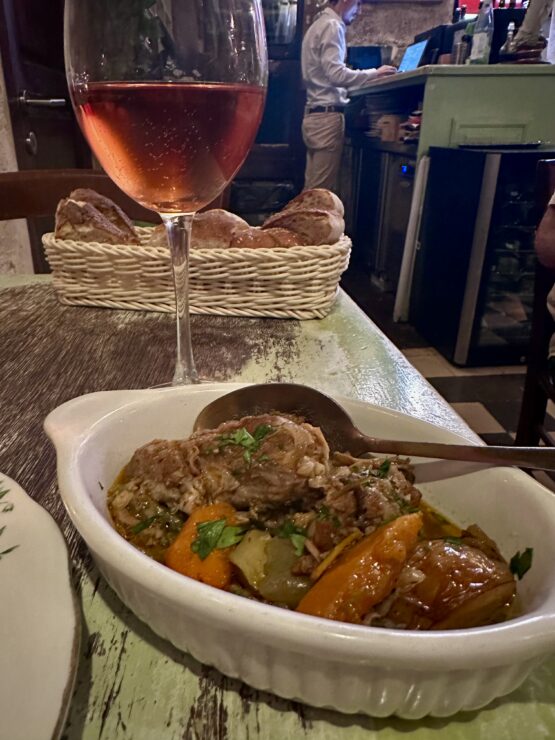
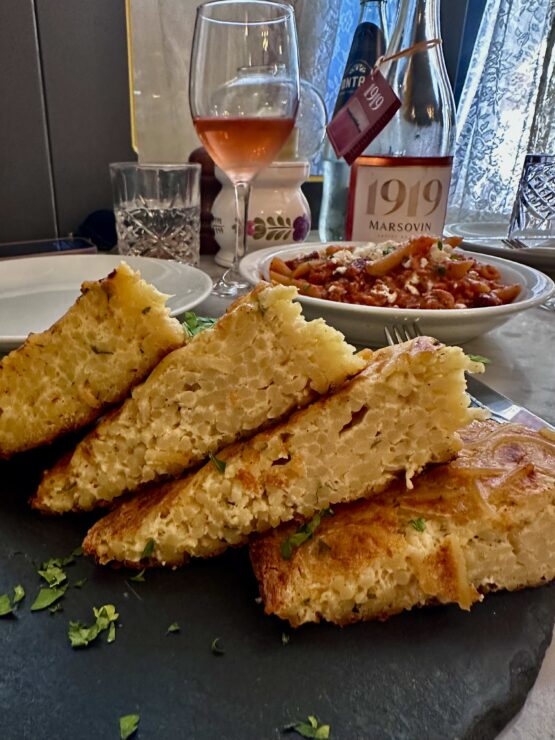
We headed here to try the famous Maltese rabbit stew. We shared a bottle of Marsovin “1919” Rosé, which has enough structure to stand up to endless food options. Penne with Maltese sausage and peppered goat cheese was our first course, followed by Tarja Moolija, which was like a spaghetti pie, made with eggs, cheese, and garlic. The rabbit was pan-fried and came with sautéed vegetables.
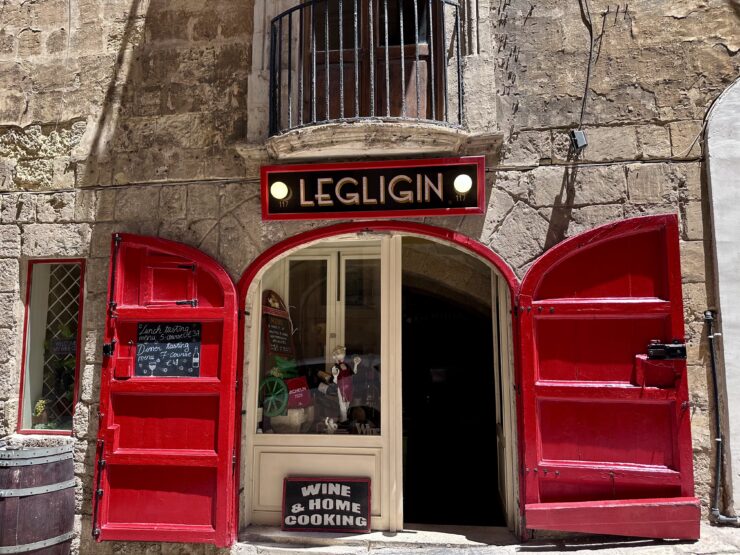
Legligin
This is another restaurant situated in an ancient half-underground stone cellar with views to the street. Legligin is a Maltese word that means “gluggers,” or as my server explained, “people who like to drink.” I knew I was in the right place.
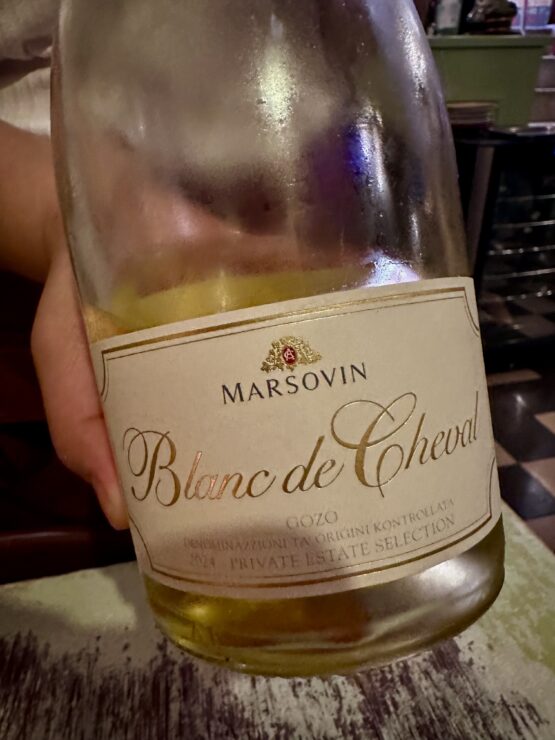
Lunch is a prix fixe menu of five courses for 37 euros. There is an optional wine pairing for 30 euros, but I just went by-the-glass. I started with Marsovin’s Blanc de Cheval Chardonnay (an elegant and classic expression of the grape) and then tried a lovely Rosé of Syrah and Mourvèdre from Ta’Betta winery.
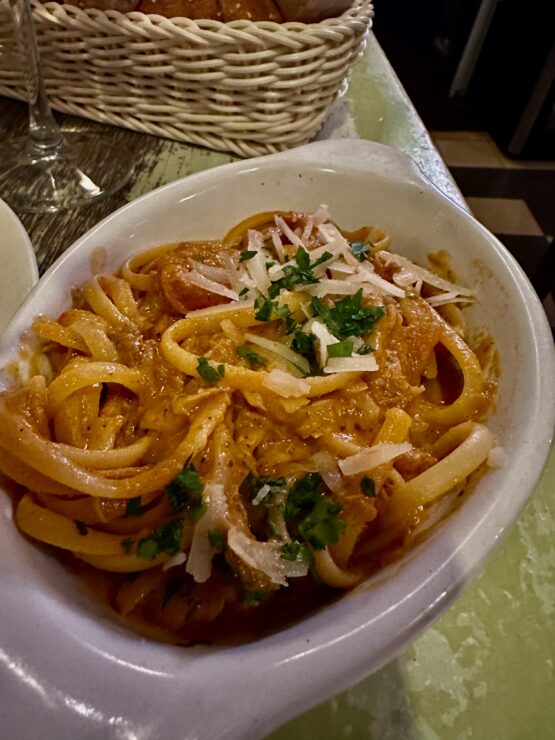
The meal began with excellent bread and a selection of small bites, including stewed fava beans, sun-dried tomato spread, pork sausage coins in tomato sauce and more. It was followed by Maltese fish soup studded with root vegetables and tender chunks of fish. Linguine with rabbit ragout was a stand-out. I had a hard time not eating every bite, because I knew pork stew was coming next. Peach crumble was the finale.
Other Activities in Malta
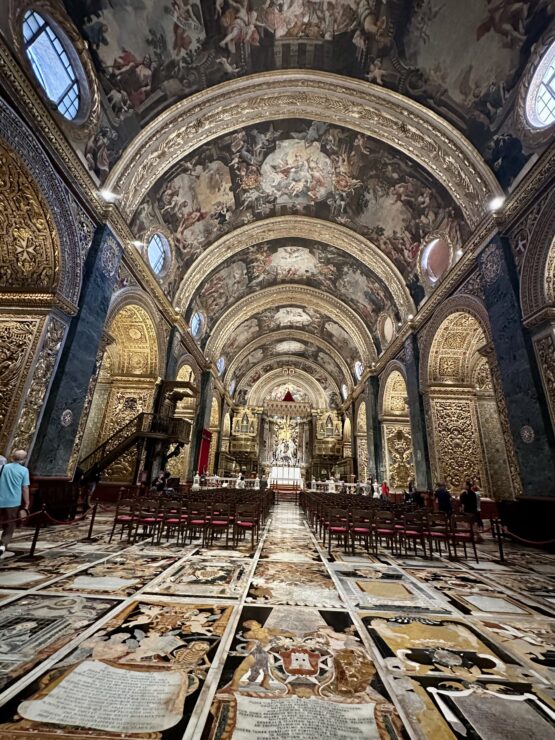
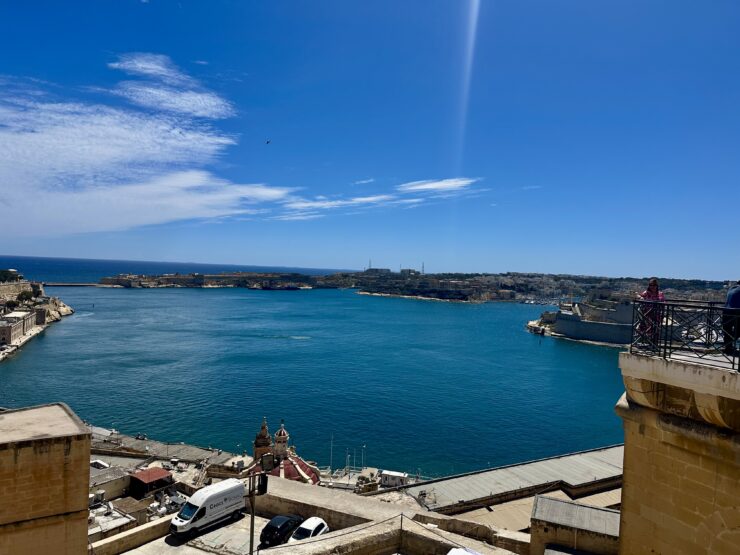
While we focused strongly on wine and food, we also explored Valletta’s history, including St. John’s Co-Cathedral (the co-cathedral to the one in Mdina), as well as the Lascaris War Rooms, from which pivotal World War II operations were based.
©Liz Barrett
©Liz Barrett
The World War II history is fascinating. Malta was the most-bombed location in the entire war. Consider the Underground Valletta tour to see the tunnels beneath the city where most residents lived for large portions of 1942.
I also recommend “The Malta Experience,” a 40-minute film that sets the stage for where you are and how it came to be. While I saw this on my last day, this would be a great start to a trip.
Despite its status as the smallest Mediterranean country, Malta over-delivers on culture, history, food, and wine. Go, explore, and enjoy.
If You Go
- Of the three islands in the Maltese archipelago, Malta is the largest (and where the airport and capital of Valletta are located); Comino is the smallest and Gozo is in between. Most visitors focus on the large island of Malta.
- Malta uses British-style electric plugs (not European).
- Cars are driven on the left side of the road, with the steering wheel on the left.
- English and Maltese are the two main languages.
- Valletta is very hilly with many cobblestone streets. Choose sneakers.
- Check out Visit Malta.com for suggestions on accommodations and other things to do.
Getting to Malta
- There are direct flights to and from Malta to more than 100 European cities—and one direct flight to and from New York. Most U.S. visitors connect in London, Dublin, or another EU city.
- We took the ferry from Pozzallo, Sicily (an hour’s train ride from Ortigia) to Valletta. It was about an hour and 45 minutes and about $85 per person. Food and drinks are sold on board, but we brought our own picnic, including a bottle of Sicilian wine. Taxis are plentiful, if not chaotic, at the Valletta Ferry Terminal.
You May Also Enjoy Reading
3 Wineries in Greece, Sicily, and Sardinia: Ancient Grapes and World-Class Wines
Discover Turkey’s Unexplored Mediterranean Wine Region
