
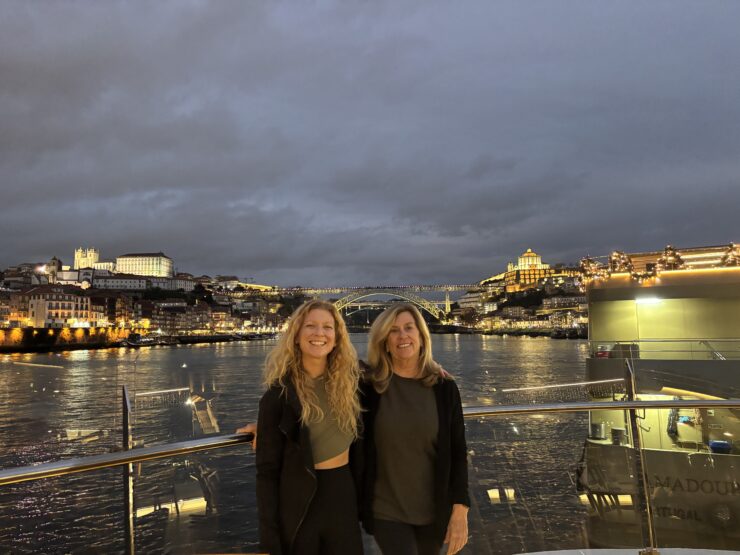
In Porto, on our last full day of the Viking River of Gold cruise in Portugal, my daughter Megan and I sat on a low wall overlooking the Douro River, watching colorful boats as the sun set. Rabelo boats, once used for transporting casks of wine from the Douro Valley to Porto, now ferry tourists through the harbor. As lights from waterfront shops and cafes shimmered in the darkening waters, we reflected on our round trip voyage from Portugal to Spain.
We balanced our trip with Viking’s scheduled excursions and time to wander on our own. Or, as cruise program director Bianca de Jong advises guests, “Get lost in the streets and do your own thing. Enjoy watching.”
And we did.
Lisbon: A Maritime City That’s Easy to Navigate
Our 10-day cruise/tour package started with two days in Lisbon (Lisboa), Portugal’s capital city, and ended in Porto after sailing round-trip through the Douro Valley.
In Lisbon, we wandered on our own one day and took two Viking guided tours on another. We strolled through the Baixa neighborhood in the historic downtown, where pedestrian-friendly streets were packed with cafes and shops. During our late November visit, we were delighted to find a Christmas market in Rossio Square. It was simple but festive. Decorated stalls sold Christmas ornaments, jewelry, cork products, and other items in addition to the popular cod sandwich, cured ham and cheese on a roll, and mulled wine.
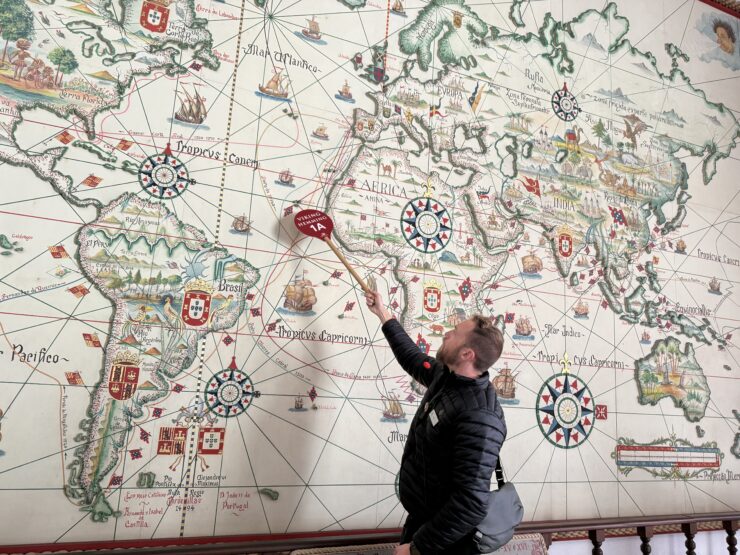
A guided Viking tour brought us to the Belém Tower, the departure point for voyagers during the 15th and 16th centuries, the Age of Discovery. We also visited the Jeronimos Monastery (where sailors prayed before shipping out) at the mouth of the Tagus River and the Atlantic Ocean. Our guide Tiago led us to the white limestone Monastery housing the Maritime Museum, which showcases how Portuguese explorers established global trade routes to bring in sugar cane from Brazil, spices from India, and other goods. Exhibits include shipwreck artifacts (like coins, plates, pottery, and other treasures), nautical paintings, and model ships.
Pasteis de Belém – A Must Stop
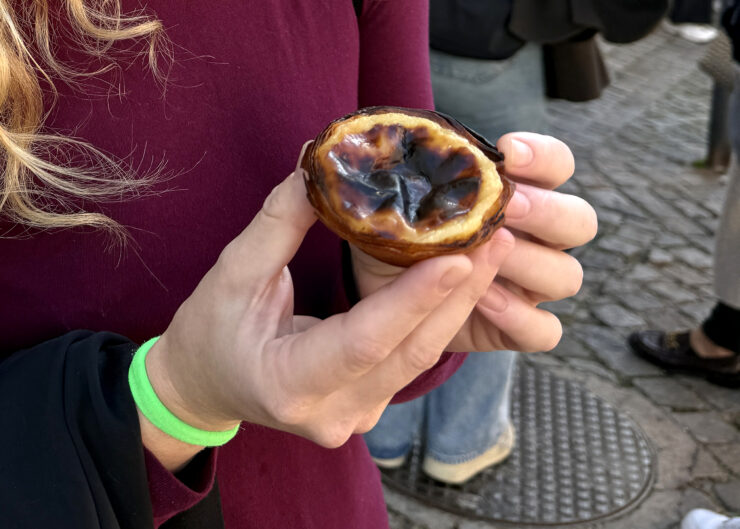
There was enough time to buy some of Portugal’s famed baked egg custard pastries – pastel de nata – from Pasteis de Belém, established in 1837.
These small tarts, about one and a half inches in diameter, originated in Belem. They’re made with eggs, milk, butter, sugar, flour, cinnamon, lemon peel, puff pastry, and a few closely guarded secret ingredients handed down over the generations. The result: a warm custard mixture inside a flaky crust.
You can find these creamy pastries throughout Portugal, but the original tarts (and the most tasty ones) are found in Belém. “Other shops are copycats,” said Tiago.
Tip: The LisboaCard (48 hours/51 Euros) is handy for free public transportation (except ferries) and admission to many museums.
Portugal’s Fishy Cuisine
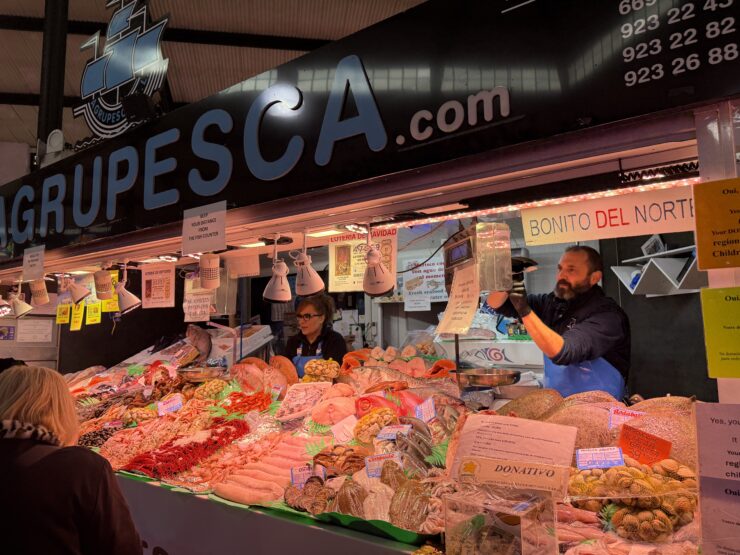
With its coastal location and fishing heritage, Portugal is renowned for fresh seafood, specifically cod and grilled sardines. This was good news for Megan, a pescatarian, who enjoyed the cod but skipped the sardines. While I can’t eat fish or seafood, I enjoyed Portuguese presunto, a dry-cured ham. We got a taste of the local cuisine on the Flavors of Lisbon food tour. I find that food tours are typically a good way to enjoy small servings of regional dishes (petiscos, as they’re known in Portugal) while learning a bit about local history.
In the upper-middle-class neighborhood of Campo de Ourique, we went to a fish market dating from 1934. “Husbands fish at night for sea bass, monk, tuna, and other fish, and wives sell the fish in the morning,” explained our guide, Alexandra. This market is where local families buy their fish, usually for a big weekend lunch.
The tour continued to a handful of restaurants. There, we sampled small plates of cheese, smoked sausages, octopus salad, cod cakes, and, of course, pastel de nata.
Reasons to Visit Coimbra: History and Pastries
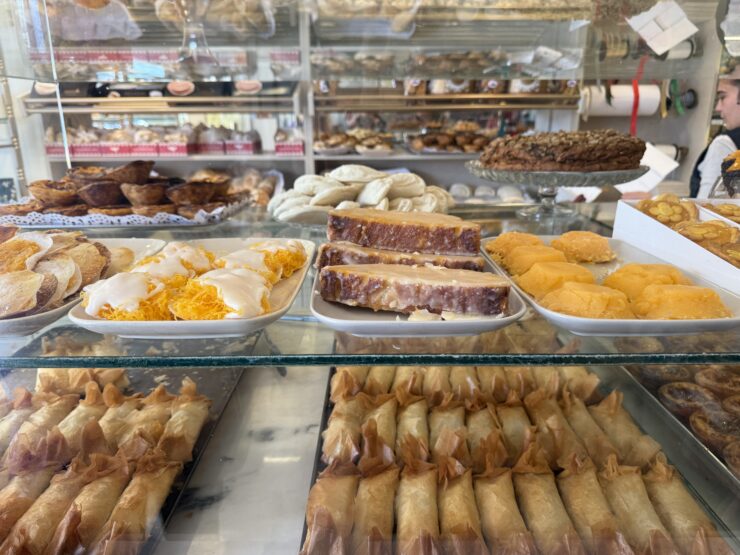
On our way to Porto and our waiting ship, we traveled through countryside dotted with olive and almond trees before reaching Coimbra, Portugal’s medieval capital and the birthplace of six Portuguese kings. It’s also home to the hilltop Coimbra University, one of the oldest universities in Europe.
Again with Tiago, we toured the university’s chapel (housing a Baroque organ) and an 1834 Academic Prison for naughty students (those not wearing uniforms or out after curfew). Especially impressive is the Bibliotheca Joanina, named after King John V, who had a massive collection of books. Thousands of books line the 18th-century Baroque-style library’s ornate bookshelves. To protect the books from insects, there’s a resident bat colony, which we fortunately did not see.
Coimbra’s historic old town along the riverbanks is another reason to visit this city. Cozy cafes and boutiques selling handcrafted items line narrow cobblestone streets. A pedestrian path divides the lower part of town (Baixa) from the upper (Alta).
We stopped by Pastelaria Briosa to buy a bag of Coimbra’s signature Santa Clara. This thin pastry filled with egg yolks and almonds is a recipe handed down from the convent of Santa Clara.
Three men serenaded us during lunch, singing Fado, a Portuguese music genre dating back to the late 18th century. It is both beautiful and mournful, and has historically been performed in Lisbon and Coimbra.
Viking Hemming: Built for the Douro River
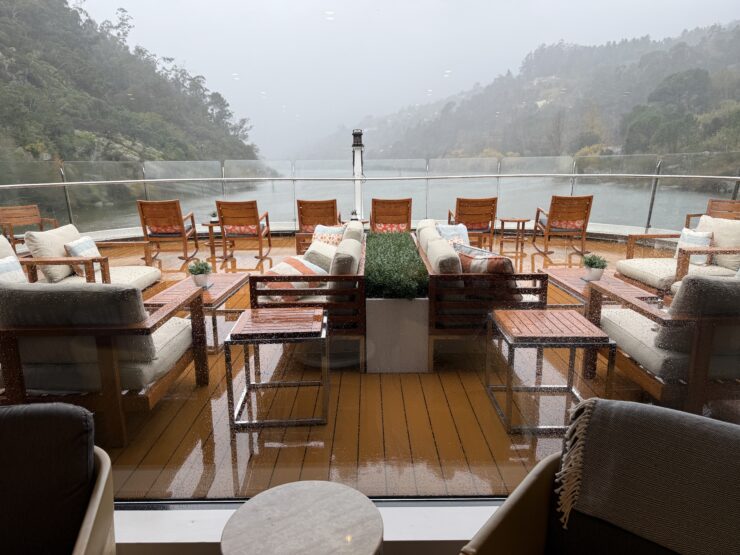
It was late afternoon by the time we boarded our ship, the Viking Hemming, in Vila Nova de Gaia, home to historic wine cellars. It’s the port city across the river from Porto and about a three-hour drive from Lisbon.
The 262-foot-long Viking Hemming was custom-built to sail on the narrow and twisting Douro River. It’s an intimate ship with a streamlined interior. The ship has 53 outside staterooms (we had one of the 24 veranda staterooms) and accommodates 106 passengers.
Viking’s Aquavit Terrace is an outdoor viewing area at the bow for al fresco dining. I was delighted to find a swimming pool upstairs on the sundeck.
Lectures, presentations, and evening entertainment take place in the lounge and bar. Comfy lounge furniture and a small library by the piano make the lounge an inviting place to hang out. It’s where Megan, age 30, would crochet (endearing her to the older crowd) or play Scrabble with me as we sipped Vinho Verde, a light, slightly fizzy Portuguese wine made from green grapes that we usually drank at lunch.
Dining with a View
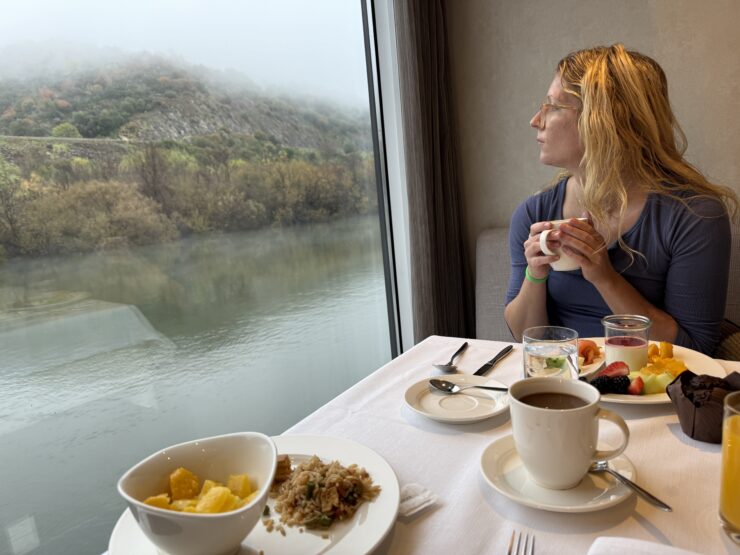
Like Viking’s standard longships, the Hemming features floor-to-ceiling windows in its compact restaurant. Diners can enjoy regional specialties like Iberian cured ham, cod, herb-marinated rack of lamb, and Portuguese almond pudding cake.
Throughout our cruise, the staff was attentive. From day one, the servers knew our names and wine preferences and offered suggestions to try something new. Knowing I like cabernet with dinner, Anton would surprise me with various regional wines, like the Post Scriptum, a 2023 premium red wine with soft tannins from the Douro Valley.
Cork! And Other Onboard Cultural Experiences
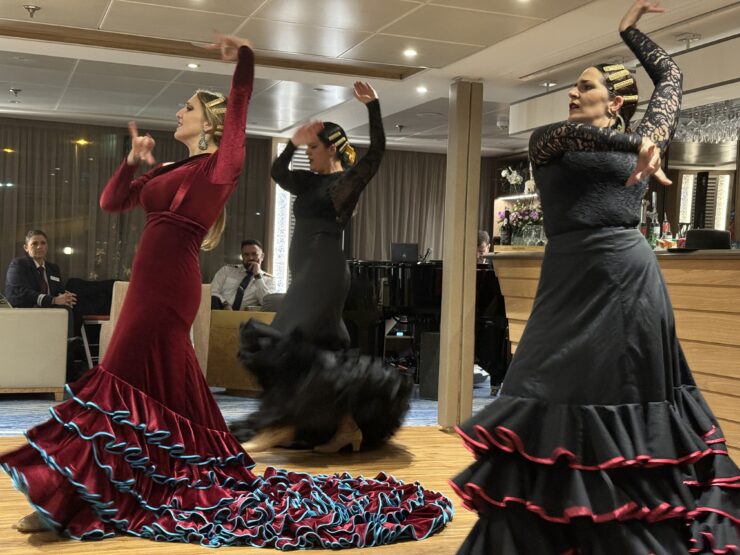
Several onboard programs featured regional culture. Among them were a chef-led baking demonstration for pastel de nata, a flamenco performance, port wine tasting, afternoon tea, and a cork presentation.
The latter was an eye-opening topic. Portugal produces half the world’s supply of cork, which comes from oak trees. In addition to wine bottle stoppers, cork is a sturdy, waterproof material. Flooring, shoes, hats, and many other items are made from it. Several products were displayed, and prices were reasonable. Megan and I bought colorful cork wallets for $18 each.
No Night Sailing
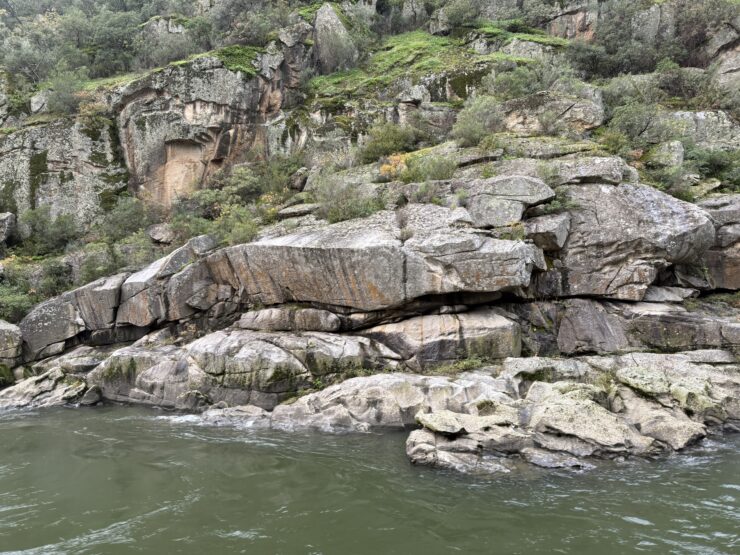
The biggest surprise was that boats don’t sail at night. I was initially disappointed I wouldn’t get to fall asleep to the boat’s gentle motion. But Portugal’s regulations don’t allow ships to sail at night because of navigational hazards, including the Douro River’s narrow and rocky waterways. Locks are closed at night for safety.
This meant the boat moved during the day, often without us, unless we had a half-day excursion or opted to skip an excursion and stay on board (which we did one day). But generally, while we rode coaches to shore excursions, Viking Hemming sailed to the next port, where we met it by sunset.
The Douro River and Valley
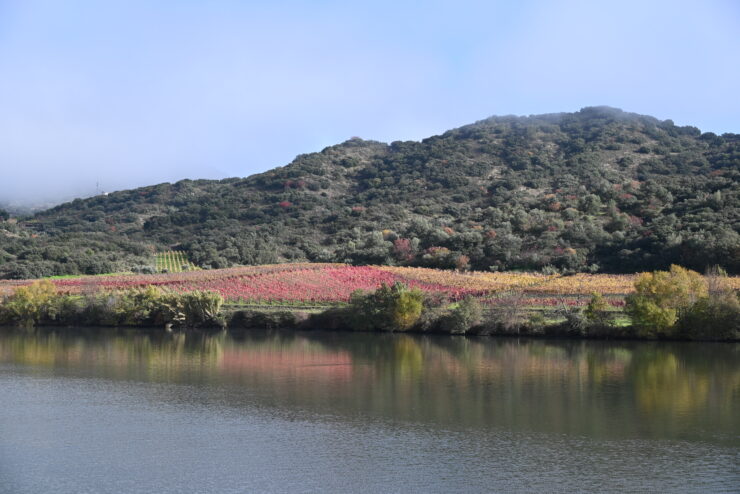
I can’t imagine a better view of the Douro Valley, the birthplace of port wine, than from a boat.
As the Douro River flows about 60 miles from Spain’s border to Porto, it traverses the Douro Valley’s narrow canyons, gorges, and steep embankments. The landscape is a colorful canvas of terraced vineyards. In late autumn, they create a patchwork of yellow and orange. Willows, gold-leafed Poplar trees, and a variety of shrubs hug the water’s edge. Flat-topped stone pines and olive trees frame the background. At times, through the river’s narrow sections, it seemed we could almost touch the rocky shoreline’s long-stemmed plants from our balcony.
As we sailed through the heart of the port wine-growing region between Peso da Regua and the sleepy town of Pinhao, we passed through Europe’s highest lock, Barragem do Carrapatelo. It inches boats up and down over a height of 140 feet.
Cultural Shore Excursions
©Mimi Slawoff
Most of our excursions were half-day, and in some ports there was only one option. One rainy afternoon, we visited the Favaios Bakery in the vineyard town of Favaios.
At the family bakery, we huddled in the kitchen to watch how the traditional four-corner bread is made in a wood-fired oven with old vine branches. The bread, crispy on the outside and soft inside, is called four corners because it’s easy to break and share. It also pairs nicely with the regional Favaios Moscatel Do Douro, a wine with honey, citrus, and oak flavors made at the 100-year-old family winery.
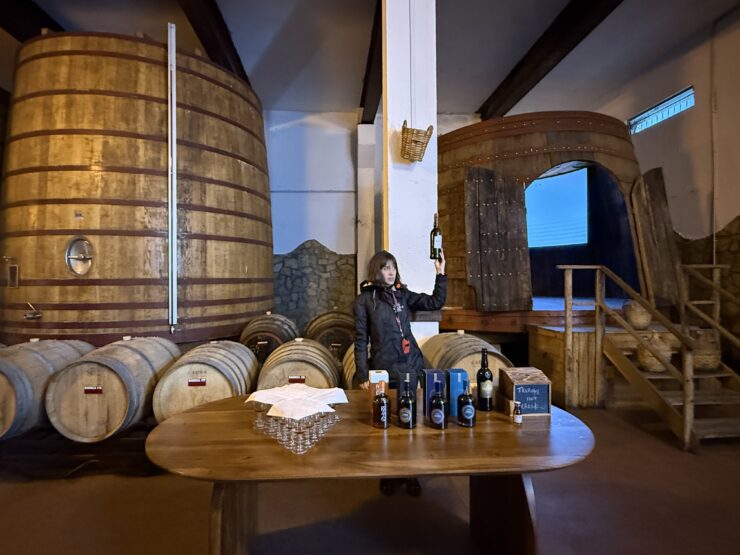
We got a lesson in Moscatel wine at the Adega Cooperativa de Favaios cellar/tasting room. Although Portugal is renowned for port, it also produces delicious red, white, and Moscatel do Douro wines. Only port wines produced in the Douro Valley can be labeled as port, according to the European Union’s Protected Designation of Origin. This bans winegrowers above 1,640 feet elevation from producing and labeling port wine. Quintas (wine estates) in the demarcated Douro Region produce Moscatel.
We tried three different types of Favaios Moscatel, a fortified wine (alcohol content about 17 percent) made from a single grape variety, Moscatel Galego Branco (whereas port is made from several grapes). The flavors varied from sweet to darker, nutty to fruity.
Next door, at Quinta da Avessada, we shared a bottle of Casa Velha. The smooth, dry wine paired well with our lunch of homemade bread, sausages, and vegetable soup.
Beyond Wine
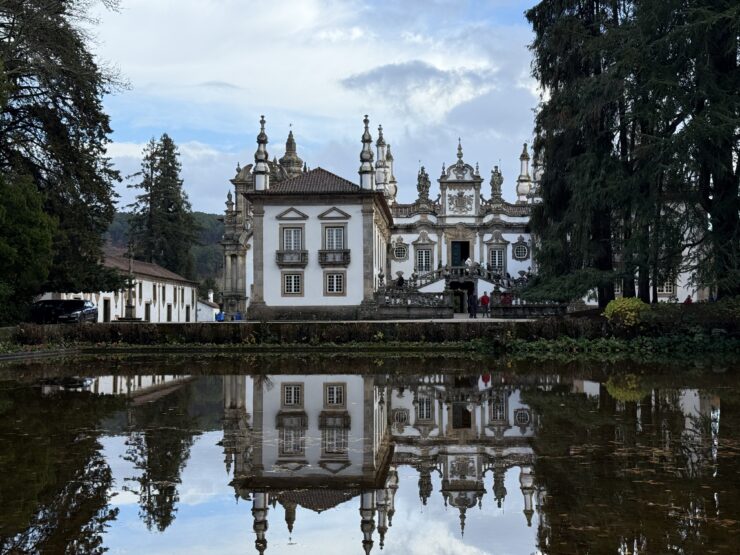
One of our favorite excursions was the Mateus Palace & Gardens, the home of the last Count of Vila Real. Cloudy weather and threatening rain added a cloak of mystery to the majestic property. Megan and I wandered among the formal garden’s walkways, sculpted arches, and fountains. On a guided tour of the family’s ornate home, built in 1744, we walked through several rooms, including a family portrait room, dining room, and a library with 4,000 titles.
Among our more remote excursions was the hilltop Castelo Rodrigo. It is one of Portugal’s 12 historic parishes where Christians, Jews, and Arabs coexisted peacefully in Barca D’Alva (the last Portuguese town before Spain).
Crossing the Border to Salamanca, Spain
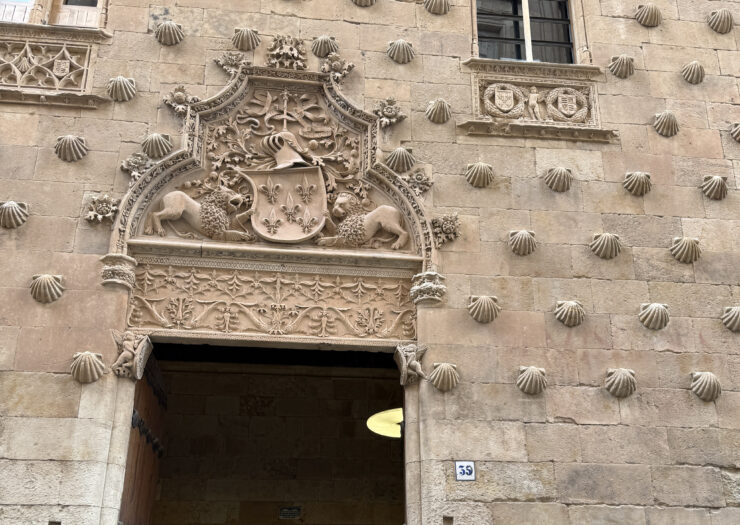
Salamanca, in Northwestern Spain, also topped our list. We had a full day to wander, shop, drink Spanish hot chocolate as thick as liquid fudge (with a side of churro), and admire the city’s sandstone buildings in this university town.
The 15th-century Gothic-style La Casa de Las Conchas (House of Shells) houses the public library. It is named for over 300 scallop shells on the façade. The shells symbolize the military and religious Order of Santiago, as well as the shells pilgrims carried to show they were on the journey to the Camino de Santiago Compostela.
Standing in the courtyard of the University of Salamanca, where ancient exterior walls bear carved names of students who earned a doctorate, we searched for the “frog of Salamanca.” With some help, we finally located the small frog, carved high atop a skull on the façade around 1553. It’s deemed good luck on exams by students who find it. Aha! No wonder we saw so many frog-themed items in souvenir shops.
Equally impressive is the 16th to 18th-century Gothic-Baroque New Cathedral (containing over 100 golden statues of biblical figures. It adjoins the 12th- to 14th-century Romanesque-Gothic Old Cathedral, housing 53 painted panels depicting the lives of Jesus and the Virgin Mary. Together, the two cathedrals create one massive complex.
Back to Porto
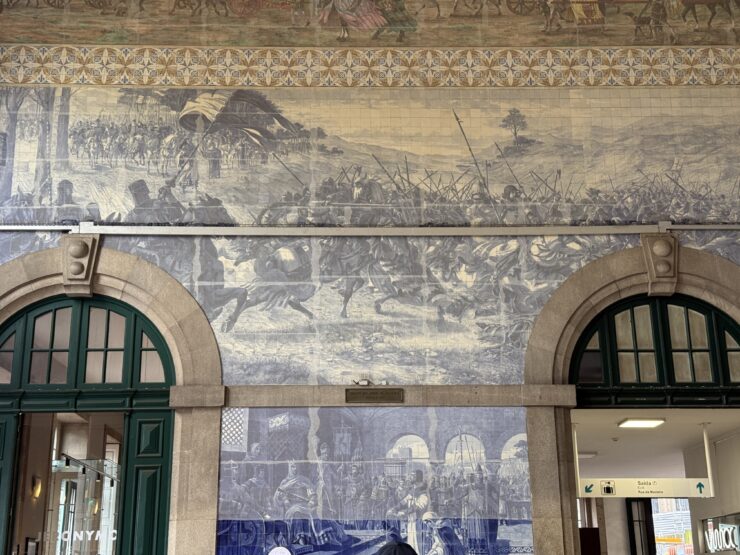
In Portugal’s second-largest city, we admired azulejos. Since the 8th century, these colored tiles have been used to adorn walls, floors, and ceilings. Outstanding examples are found inside the São Bento train station, where 20,000 blue-and-white tile panels depict Portugal’s history. Inside Porto Cathedral, tiles display religious scenes.
“We use tiles as a kind of book,” said Antonia, our guide.
Megan and I surely got more than 10,000 steps in as we navigated hilly streets and ate a late lunch on the lively Ribeira riverfront. It was a pretty place to pause and take in the local scene before walking back on the Dom Luís I Bridge, a double-decked metal arch bridge that spans the Douro River.
But we had one more stop—the Ferreira wine cellar, established in 1751. It’s among the oldest and most famous of the 60-plus wine cellars in Vila Nova de Gaia.
We sampled three port wines. The first was a dry white port, amber in color and only slightly sweet (like honey), often served chilled with tonic. Next were a tawny port (nice with a custard tart), and a ruby port, a traditional sweet, fruity dessert wine.
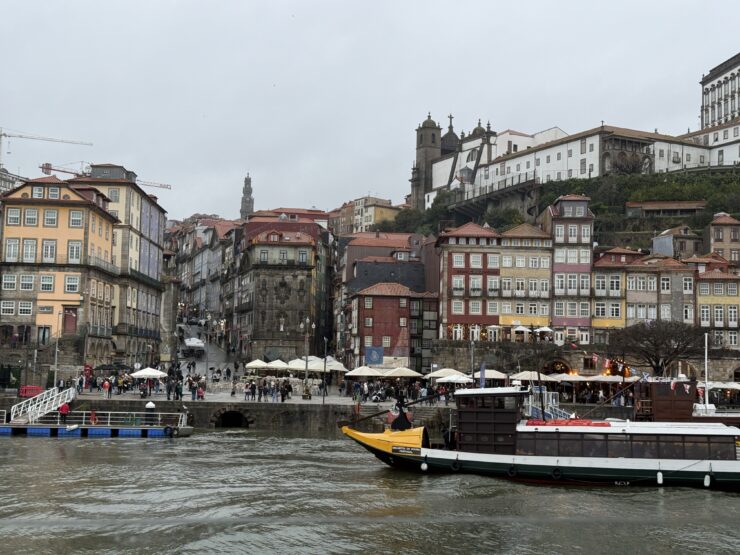
With the lingering taste of port wine, Megan and I sat by the river. We watched the rabelo boats and mused that we had traced the same river route they once did.
If You Go
Currently, Viking has six custom-designed ships that sail the Douro River on the 10-day River of Gold itinerary. Each ship carries 106 passengers and a crew of 33.
Onboard amenities include middle- and upper-deck staterooms with full verandas or French balconies, a swimming pool on the sundeck, and laundry facilities (for a fee).
Where to Stay
We liked that two days each in Lisbon and Porto were part of Viking’s River of Gold cruise/tour package. Purchasing pre- and post-extension tours wasn’t necessary. A two-night stay at the luxury Corinthia Lisbon hotel, including an extensive breakfast buffet, was a bonus.
At the hotel’s spa, Megan and I booked a Water Therapy Circuit. We had access to sensory showers, a pool, a cold plunge, a cold bucket shower, and the steam room. It was rejuvenating after a long flight. Cost: one hour, 40 euros; two hours, 60 euros.
In the hotel lobby, Viking staff provided concierge services. The offer tips for city tours, where to find ATMs, and other handy information. It was during this time that we met program director Bianca de Jong, who traveled with us to Viking Hemming.
When to Go
Find deals and fewer crowds during the shoulder season, March–April, and November. For long daylight hours and pleasant weather, consider May or June. The peak (busy) season is June–October. Wine lovers can enjoy harvest time and fall foliage in September and October. On our late-November/early-December cruise, we experienced fall foliage, shorter days, and some rain. But with Christmas markets in full swing, it was a festive time of year to sail.
You May Also Enjoy Reading
Portugal’s Devotion to Ginja: A Cherry Liqueur Mainstay
A Road Trip Along Spain’s Sun-Drenched Mediterranean Coast
Read more about the author at Mimi Slawoff.com.
