
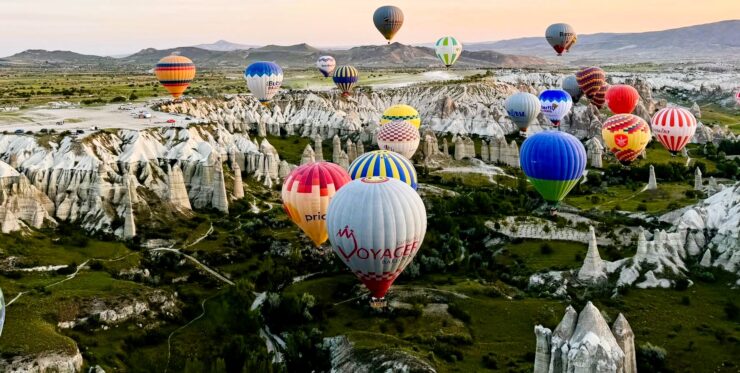
In central Turkey, Cappadocia reveals a landscape shaped by volcanoes, carved by wind, and inhabited for centuries by communities who learned to live within the rock itself.
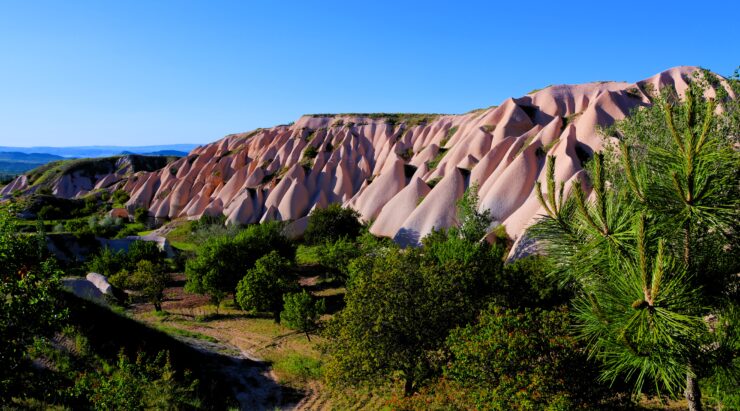
The landscape started to shift well before we reached Cappadocia. Driving across central Anatolia, the wide plains slowly gave way to low, worn hills. Pale rock ridges began to appear along the roadside, and in the distance, narrow stone towers rose up from the ground.
At first, it felt random. But as we got closer to Göreme, the formations became more frequent. Then we started noticing doorways carved into the rock, and it clicked. These weren’t just formations. People had lived here.
Göreme sits quietly within this landscape, its homes spread across the hills and tucked into the valleys that define the region. Some look like traditional buildings, while others disappear straight into the rock. It takes a moment to process. The town doesn’t feel built so much as revealed.
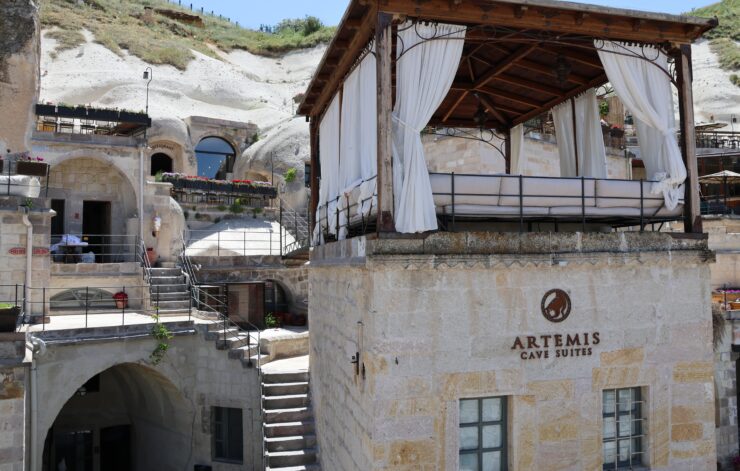
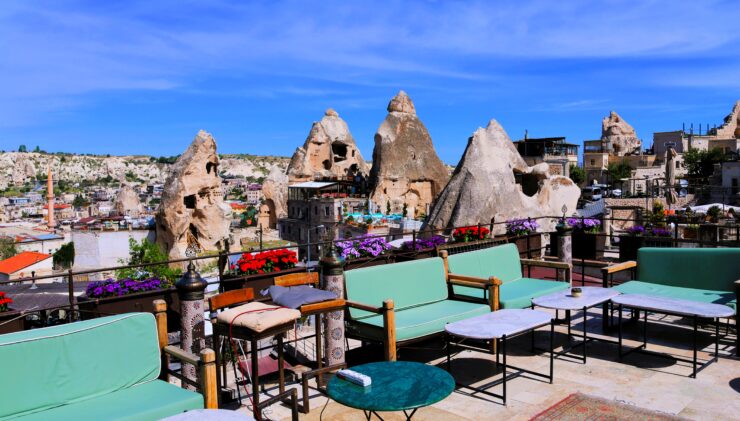
We arrived in the late afternoon and checked into Artemis Cave Suites, set on the hillside above town. From the terrace, the valleys opened out in soft layers of pale stone. Off in the distance, Uçhisar Castle rose above it all, a massive rock formation shaped and used for centuries as a lookout over the region.
Below us, Göreme carried on in the background. The clatter of dishes from a nearby restaurant, a motorbike winding through the narrow streets, a dog barking somewhere in the distance, then quiet again.
We had planned four nights in Cappadocia, thinking it would give us enough time to explore without rushing. By the end of that first evening, we already knew it was the right decision.
Cappadocia is not a place that reveals itself all at once.
The History Beneath the Rock
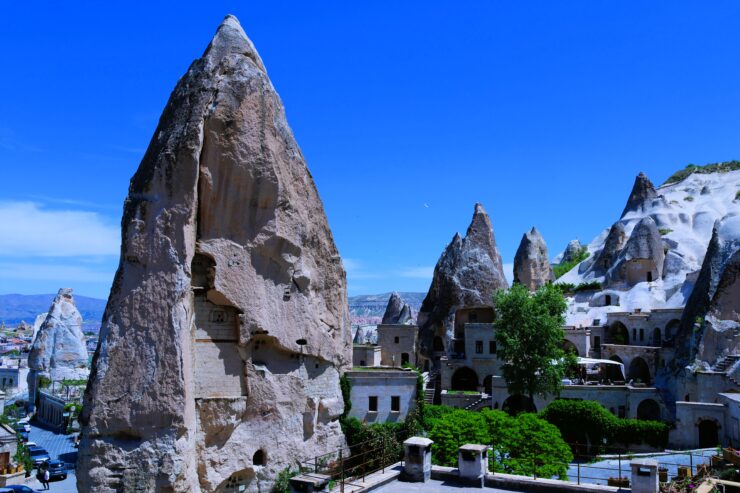
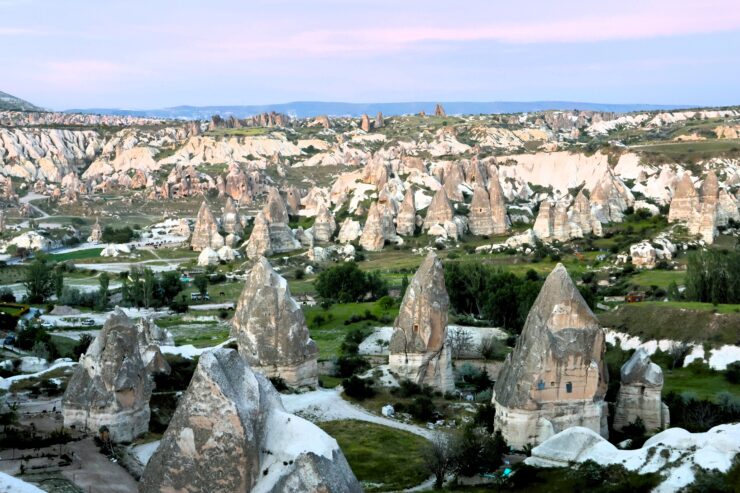
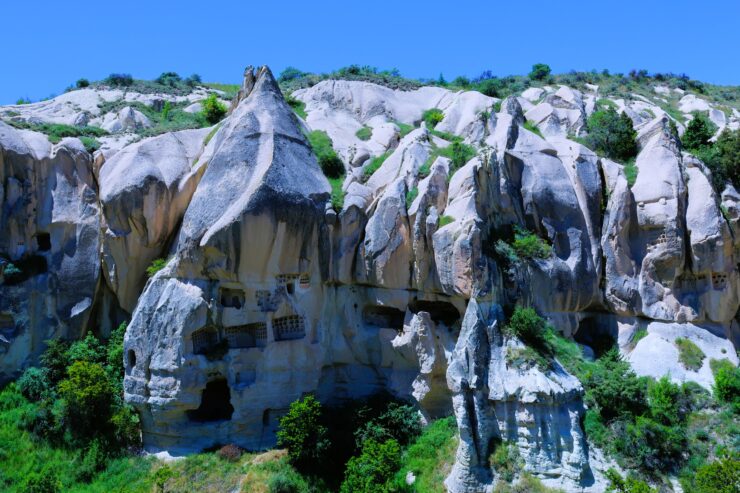
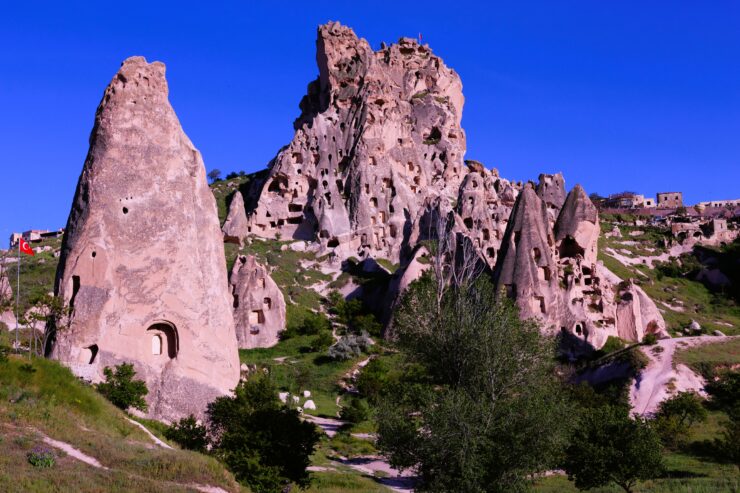
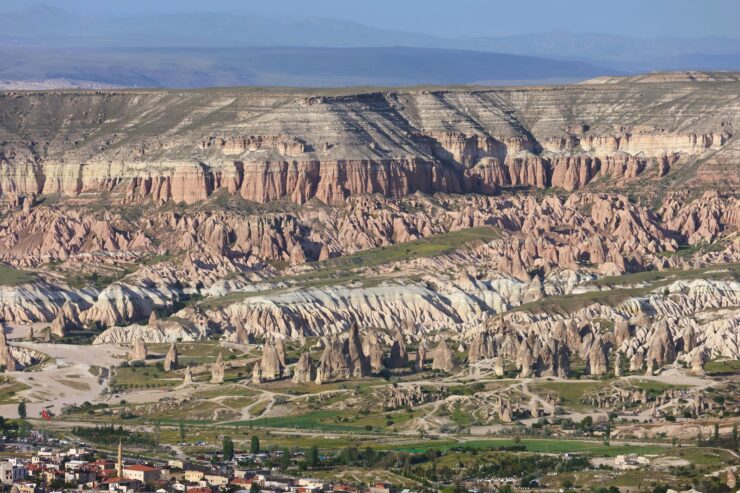
Cappadocia’s unusual landscape began to take shape millions of years ago, when nearby volcanoes blanketed the region with ash that eventually hardened into a soft volcanic stone known as tuff. Over long periods, wind and rain carved that rock into valleys, ridges, and towers, creating the formations that define the region today.
What makes Cappadocia remarkable, however, is not only the geology but the way people adapted to it.
The soft tuff stone can be carved relatively easily while remaining structurally stable. Early inhabitants discovered they could shape the rock into living spaces rather than constructing entirely separate buildings. Homes, storage rooms, chapels, and monasteries were cut directly into cliffs and hillsides. In some areas, entire communities developed within the rock itself.
During the Byzantine period, particularly between the ninth and eleventh centuries, Cappadocia became an important center for Christian monastic life. Monks carved churches deep into the valleys, decorating the walls and ceilings with frescoes depicting scenes from the Bible. Many of these paintings remain today, preserved by the dry climate and the shelter of the stone walls.
Walking through Cappadocia today, the line between natural formation and human construction often disappears. A rock tower might contain several floors connected by narrow stairways. A cliff face might hide a chapel or a cluster of rooms that once served as homes.
The landscape and the people who lived here shaped one another over centuries.
Walking the Valleys
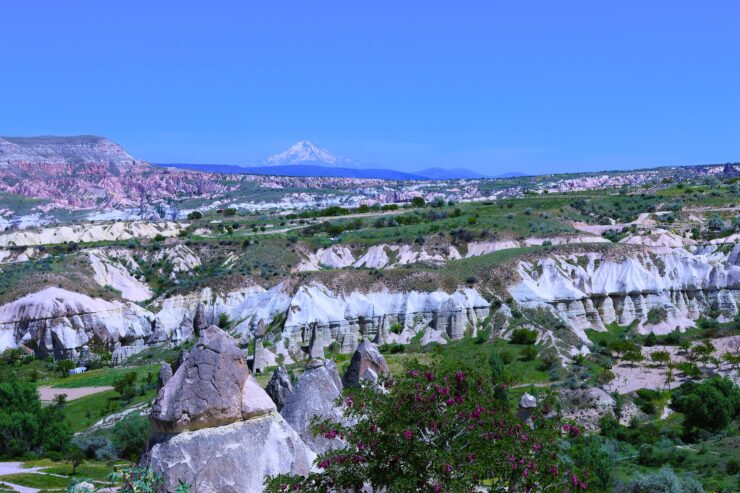
One of the most rewarding ways to experience Cappadocia is simply by walking through its valleys. Trails wind through the region connecting villages, vineyards, and historical sites. Some lead directly to well-known landmarks, while others wander quietly between rock formations that appear almost sculptural in the changing light.
On our first full morning, we set out toward Sword Valley, known locally as Kılıçlar Vadisi. The valley takes its name from the tall rock formations that rise sharply from the valley floor. From certain angles, they resemble rows of narrow stone blades.
The path curved gently between the formations as we walked. Small caves appeared along the cliffs, some shallow and weathered, others clearly carved by hand. A few hikers moved quietly along the trail ahead of us, pausing occasionally to photograph the landscape or simply watch the morning light move across the stone.
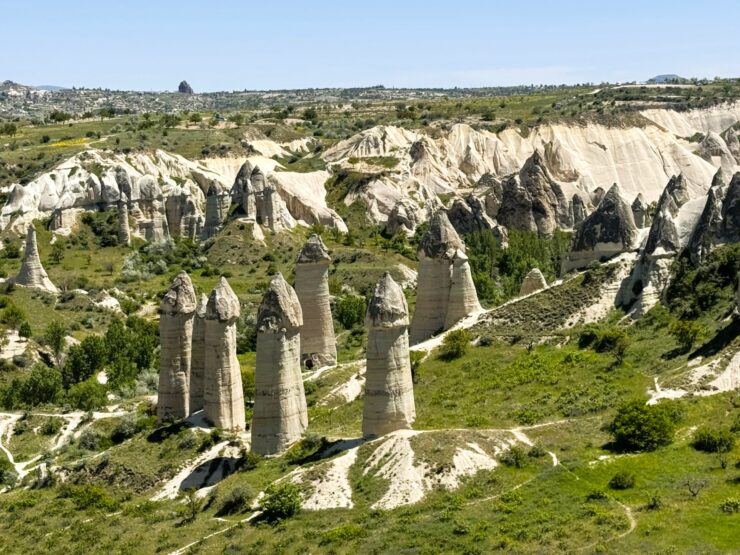
Further north, we reached Paşabağ Valley, where the rock formations look entirely different. Thick columns of pale stone rise from the ground, capped by darker rock that sits like a natural roof atop each tower. These formations are often called fairy chimneys, though standing among them, the name feels almost too whimsical for the landscape’s quiet gravity.
In earlier centuries, monks carved hermitages inside some of these towers, creating narrow chambers stacked one above another. Small windows cut into the stone allowed light to enter while the thick walls protected residents from the harsh Anatolian climate.
Walking through these valleys quickly made something clear: Cappadocia rewards patience. Many visitors arrive for the balloon flight and leave after a day or two, but the region’s deeper character reveals itself when you slow down and simply walk.
A bend in the trail might reveal a carved doorway that once led to a family home. A narrow stair cut into the rock might connect two levels of an ancient dwelling. Occasionally, we would look up and notice a small window high above the path, suggesting another hidden chamber within the cliff.
These quiet discoveries were not marked on maps or in guidebooks, yet they became among the most memorable moments of our time in Cappadocia.
Göreme’s Painted Churches
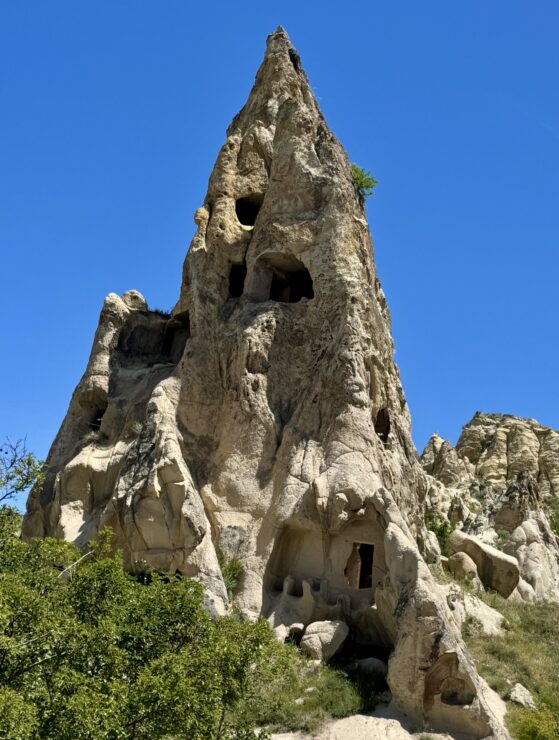
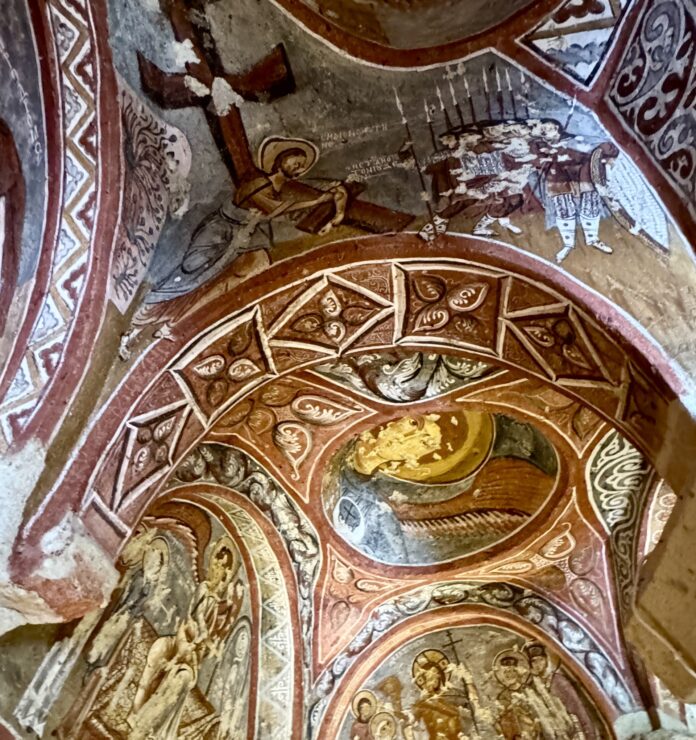
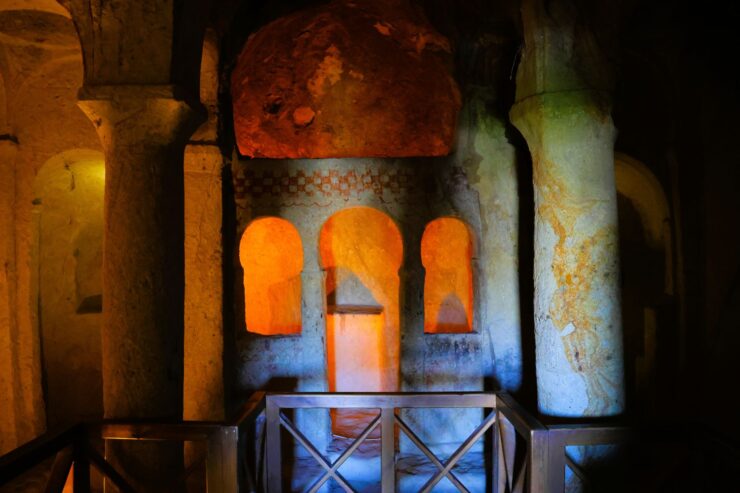
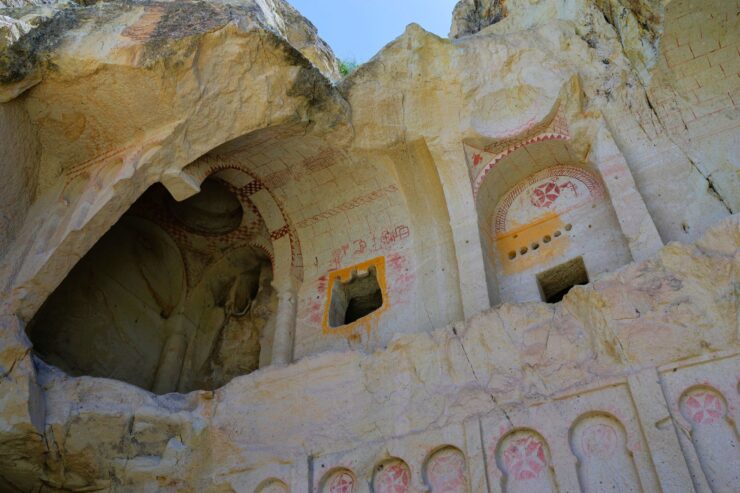
The Göreme Open Air Museum preserves some of the most remarkable religious sites in Cappadocia. What appears from a distance to be a quiet hillside conceals a cluster of rock-cut churches dating to the Byzantine period.
From the outside, the entrances are simple openings carved into the stone. Inside, however, the spaces reveal something extraordinary.
The walls and ceilings are covered with frescoes painted nearly a thousand years ago. Scenes from the life of Christ unfold across domed ceilings and along the walls in deep reds, blues, and earthy ochres. In the Dark Church, one of the best-preserved examples, the colors remain strikingly vivid despite centuries of age.
Standing inside these small chambers, it becomes easier to imagine the patience required to paint such detailed works in rooms lit only by oil lamps.
Uçhisar Castle: Cappadocia from Above
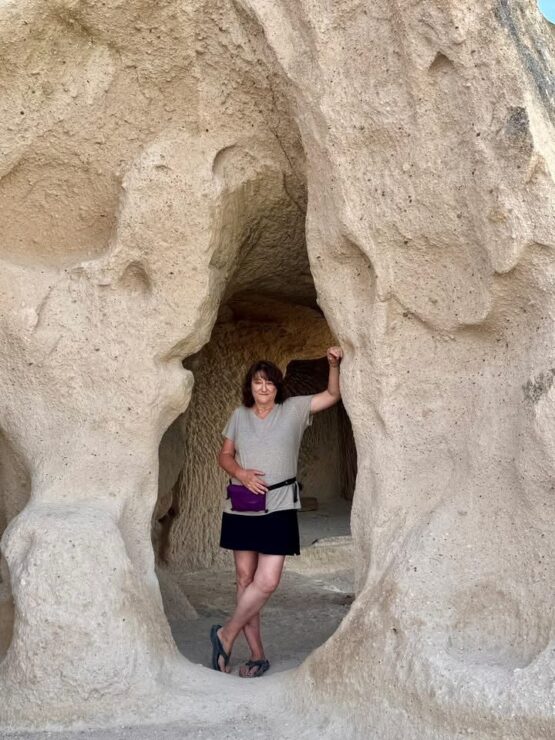
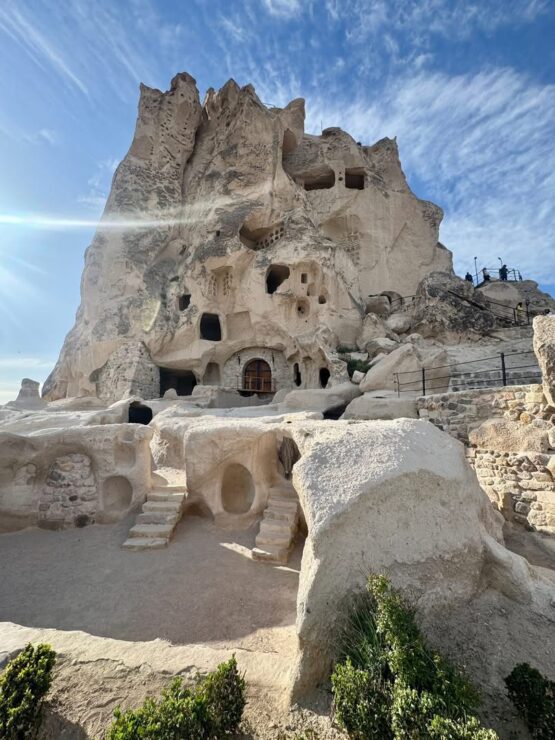
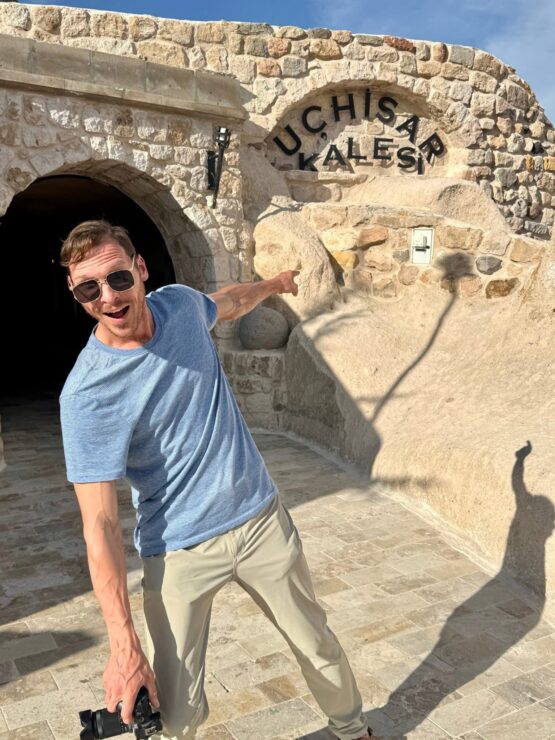
One of the most recognizable landmarks in Cappadocia is Uçhisar Castle, which rises above the surrounding valleys like a towering stone citadel. What appears from a distance to be a fortress is a massive rock formation carved and hollowed out over generations.
The castle once served as a lookout point across the region. Narrow stairways and passageways cut into the rock connect a network of chambers that once served as storage spaces, shelters, and observation points.
Climbing toward the summit feels less like visiting a traditional castle and more like navigating a vertical village carved inside the stone. The path becomes steeper as you move higher, but small openings in the rock reveal sweeping views of the surrounding valleys along the way.
When we reached the top, the full scale of Cappadocia spread out around us. Göreme sat quietly below while the valleys stretched outward in soft layers of pale stone.
It quickly became one of our favorite places in the region.
Beneath the Surface: Cappadocia’s Underground Cities
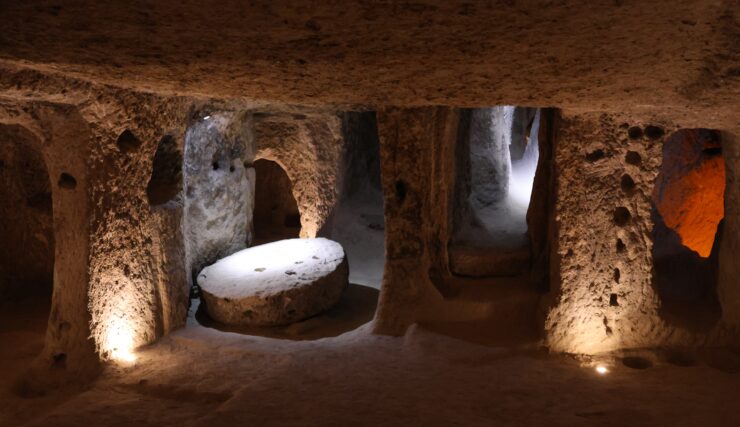
Cappadocia’s history does not end at the surface of its valleys. Beneath the landscape lies another world entirely.
Throughout the region, early inhabitants carved vast underground cities into the soft volcanic rock. These subterranean complexes served as places of refuge during periods of conflict, allowing entire communities to disappear underground as danger approached.
Some of the best-known examples, such as Derinkuyu and Kaymaklı, extend several levels underground. Narrow tunnels connect living spaces, kitchens, storage rooms, and ventilation shafts, allowing fresh air to reach deep below the surface. Massive circular stone doors could be rolled across passageways to seal sections of the city and protect those inside.
We visited one of these underground cities during our time in Cappadocia, descending step by step into the cool stone corridors below ground. The passages grow narrower as you move deeper, and in some areas, you must duck through the tunnels.
It quickly becomes clear how remarkable these places are. Entire communities once sheltered here during times of danger.
At the same time, Joelle will admit that exploring them can feel a little unnerving.
As the tunnels narrowed and the ceilings dropped lower, she became increasingly aware of how far below the surface we had traveled. In a few of the tighter passageways, she felt that familiar sense of claustrophobia creeping in. Joelle was not the only one. A few other visitors struggled along the way as well.
Ryan, however, loved it.
Standing in one of the larger underground chambers, he studied the carved rooms and tried to imagine how people once lived here. If the opportunity arose, he went even deeper underground. It was impossible not to admire the ingenuity required to create such a refuge entirely beneath the earth.
Eventually, we climbed back toward daylight. After spending time underground, the wide-open valleys of Cappadocia somehow felt even more expansive.
Sunrise in Cappadocia
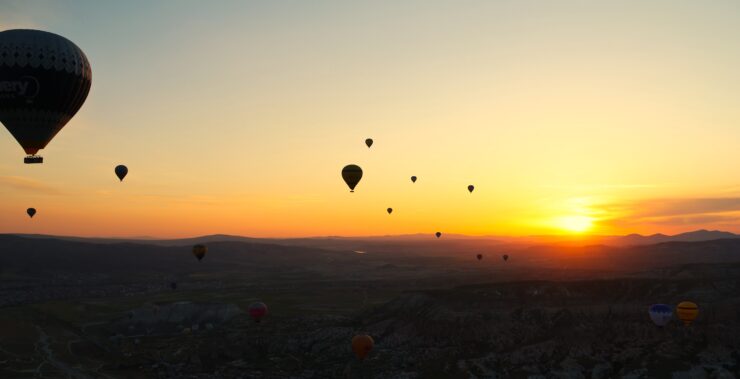
Even for travelers who never step into a balloon basket, sunrise in Cappadocia has become a daily spectacle.
Before dawn, people begin gathering on terraces, hillsides, and viewpoints overlooking the valleys. Cameras are set up, coffee cups in hand, and everyone watches the horizon slowly brighten.
As the first light appears, balloons begin inflating across the valley floors. One by one, they rise into the sky until dozens drift across the landscape.
Many visitors travel to Cappadocia simply to watch this moment and photograph it. We did the same, spending one morning watching the balloons lift into the sky as the sun illuminated the rock formations below.
Seeing the balloons from the ground is remarkable.
But being above it all is something else entirely.
Before Sunrise in Göreme
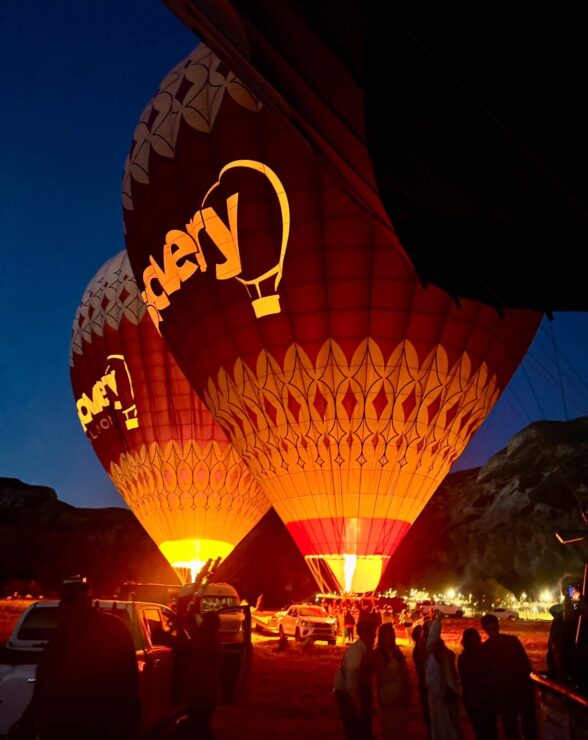
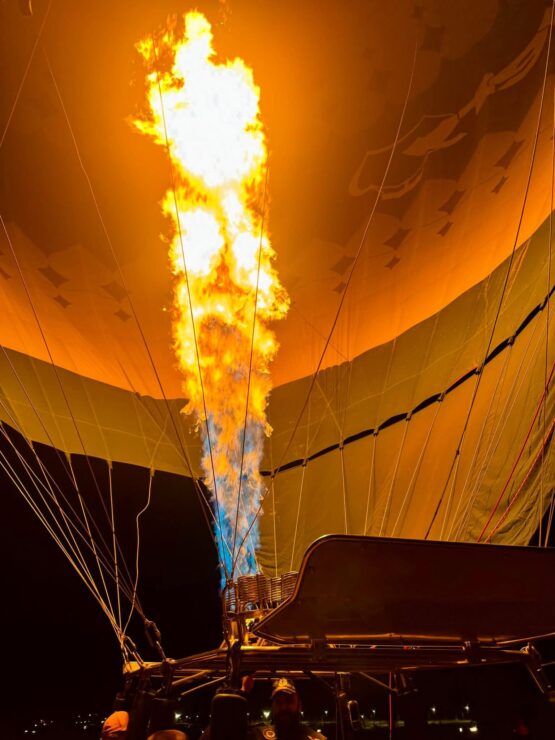
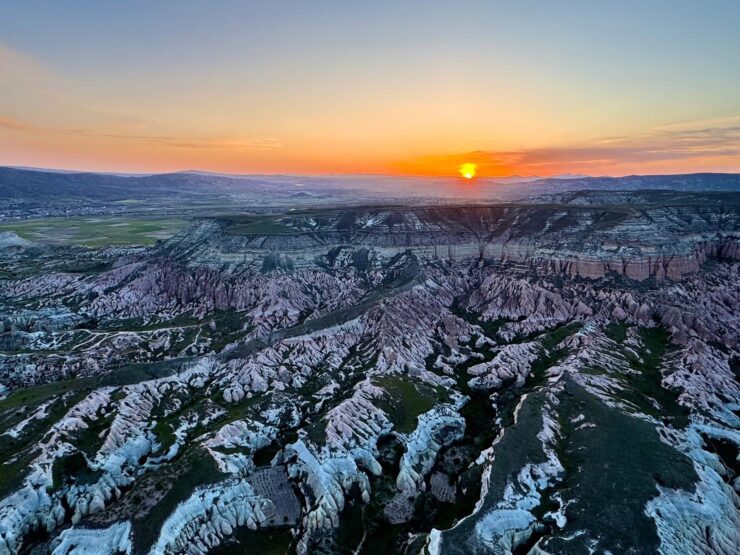
Our alarm rang at 3:30 the following morning. When we scheduled the balloon ride months earlier, the early start sounded exciting. When the alarm arrived in the middle of the night, the idea felt slightly less appealing.
Within the hour, we were climbing into a van heading toward the Discovery Balloons storefront, where coffee and a light breakfast were waiting.
Soon after, we were driven out to the launch field.
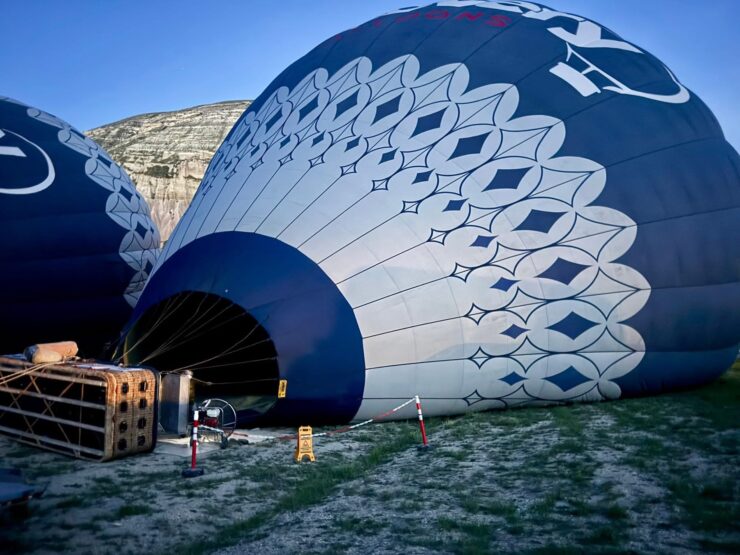
In the dim blue morning light, long envelopes of balloon fabric lay stretched across the ground while crews worked steadily beside them. Each time a burner roared to life, a column of flame briefly illuminated the field while a rush of heat and the faint scent of propane drifted through the cool air.
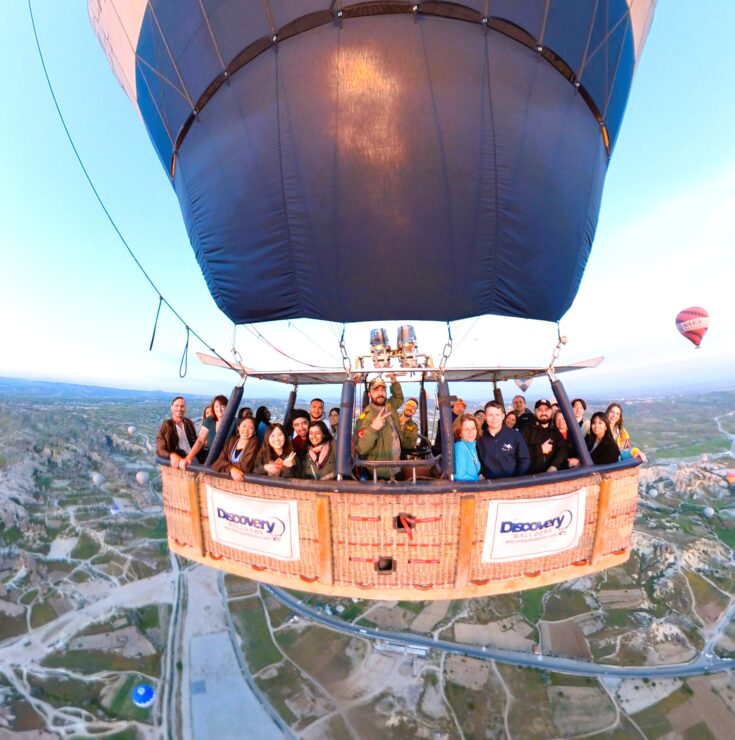
Our basket held twenty-eight people.
Cappadocia from the Air
© Discovery Balloons
© Joelle Machia
© Joelle Machia
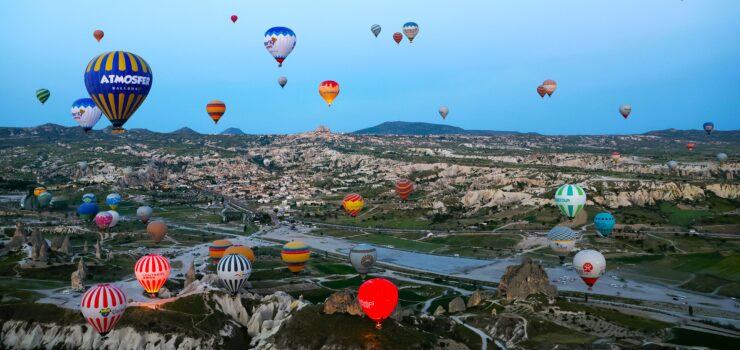
The lift was surprisingly gentle. One moment, the crew was holding the basket steady, and the next, the ground simply began drifting away beneath us.
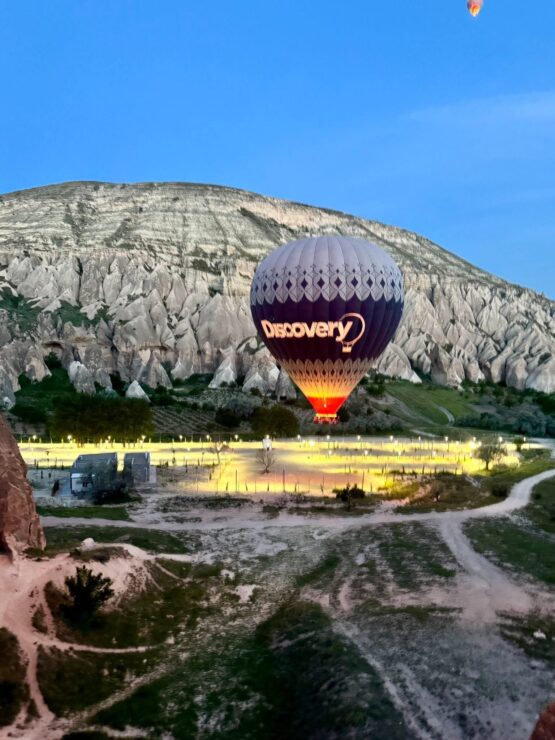
As we climbed higher, the valleys unfolded in ways impossible to fully understand from the ground.
Around us, dozens of balloons were rising into the morning sky.
When the sun finally appeared above the horizon, the pale stone formations shifted from gray to warm gold while long shadows stretched across the valleys.
For nearly an hour, we drifted quietly with the wind.
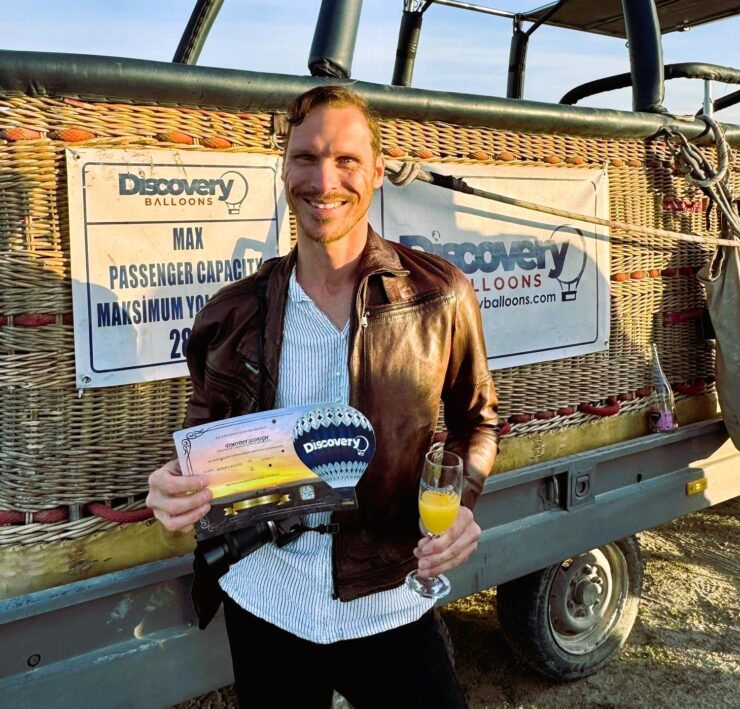
When we landed, the crew greeted us with champagne, small treats, and certificates marking the flight.
It was an experience of a lifetime for us.
An Evening in Göreme
© Joelle Machia
© Joelle Machia
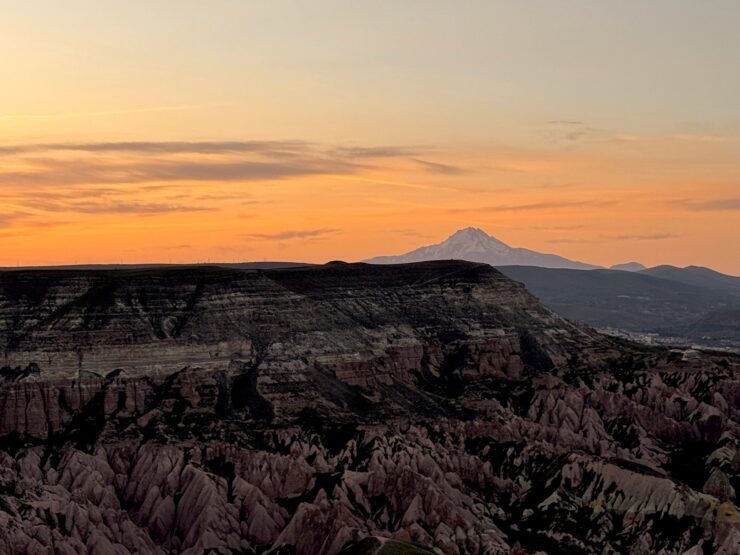
Evenings in Cappadocia settle into an easy rhythm. Locals and visitors alike gather to watch the sunset that the region is known for, and it never disappoints. If you’re lucky, you can grab a seat at one of the bars above the caves, order a bottle of wine, and just take it all in.
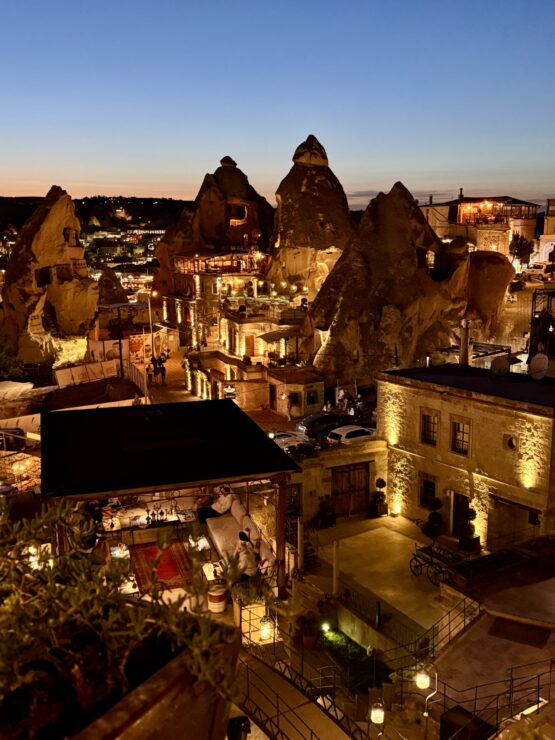
After the sun dips below the hills, the town shifts again. We found ourselves wandering the streets of Göreme most nights, letting the evening lead us to dinner.
Many of the restaurants are built directly into the rock formations that define the town. One evening, we settled onto a terrace overlooking the valley as the last light faded.
Dinner began the way many meals in Turkey do, with small dishes slowly filling the table: olives, fresh bread, yogurt dips, and simple salads.
Turkey’s Quiet Care for Animals
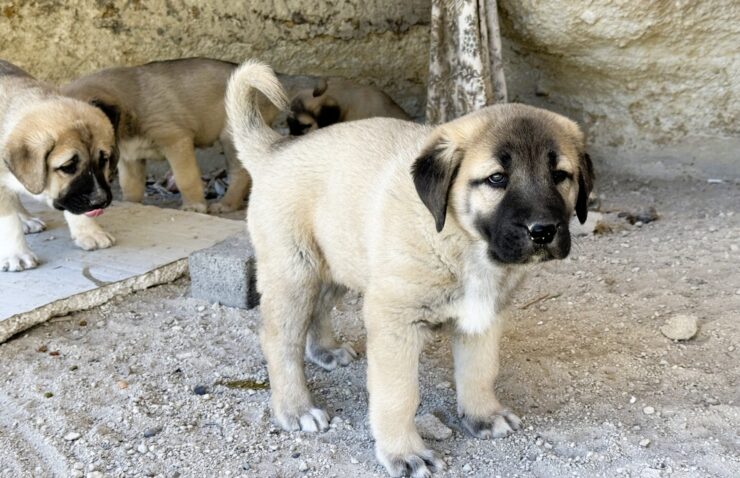
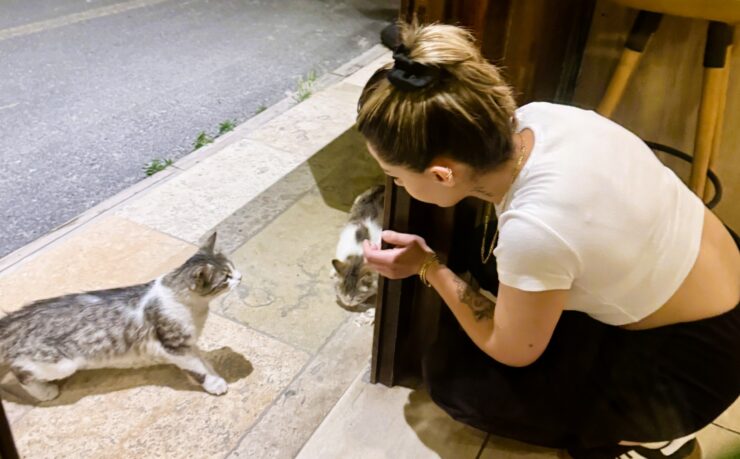
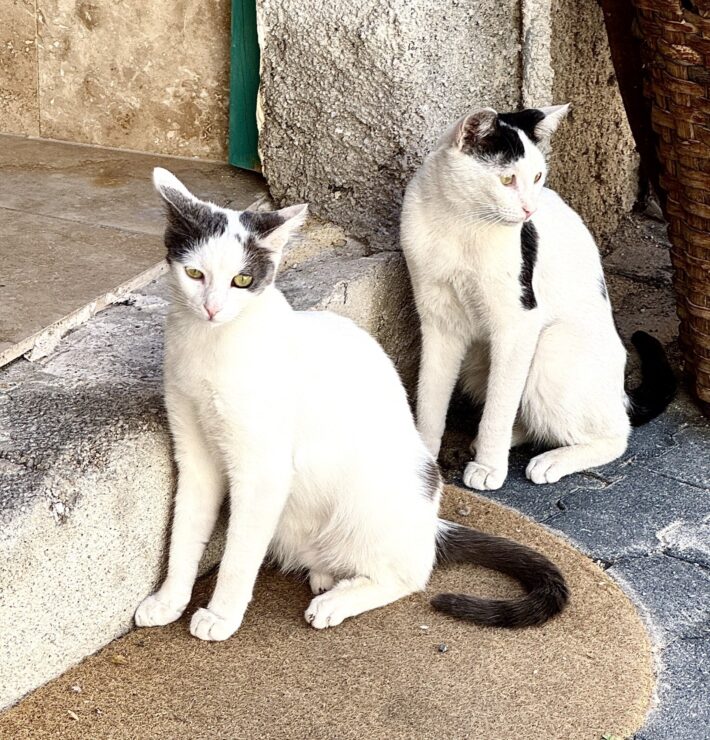
During the meal, we noticed something familiar from our travels throughout Turkey. Cats moved easily between the tables, while a dog wandered onto the terrace and settled comfortably near a chair.
No one seemed surprised.
The staff occasionally stepped outside with small scraps from the kitchen and set them aside for the animals. We saw the same thing throughout the country. Stray animals are common in Turkey, but they are rarely ignored. Shopkeepers, restaurant owners, and residents often feed them and keep an eye on them.
Returning to our meal, we ordered testi kebab, a traditional Anatolian dish cooked slowly inside a sealed clay pot. When it arrived at the table, the server cracked open the pot’s lid, releasing a burst of steam carrying the scent of slow-cooked lamb, tomatoes, and warm spices.
Meals like this became small pauses in the day, moments when the pace of exploring slowed, and Cappadocia had time to settle in.
The Landscape That Stays with You
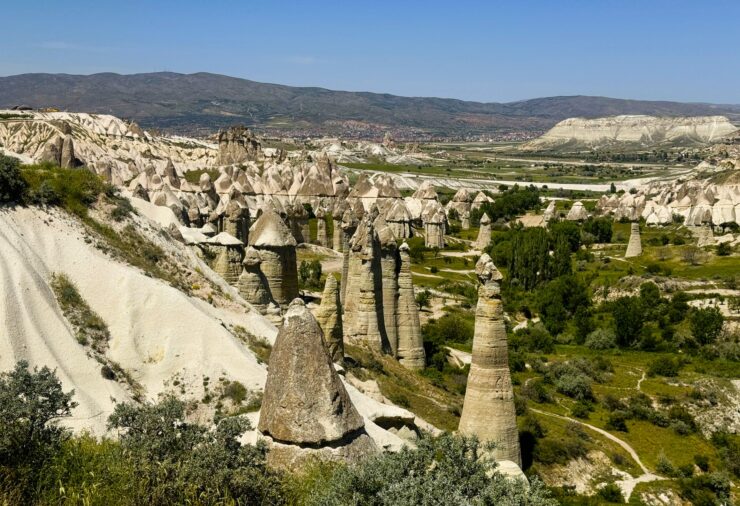
Watching the landscape became a pastime. Many evenings, we joined other travelers heading to terraces or nearby hillsides to watch the sunset spread across the valleys.
The rock formations slowly shifted in color as the light faded, shadows stretching across the same valleys we had spent our days exploring.
It was a view we never seemed to tire of.
Four nights allowed us to explore without rushing, yet Cappadocia still felt larger than the time we had.
It is a place that reveals itself slowly.
And long after leaving, it is the quiet moments, walking in the valleys, watching the balloons rise at sunrise, and seeing the light fade across the stone, that stay with us most.
If You Go
Where to Stay
© Joelle Machia
Cave hotels are one of the defining experiences of visiting Cappadocia. Many accommodations are built directly into the region’s soft volcanic rock. We stayed at Artemis Cave Suites in Göreme, which sits above the town with terraces overlooking the surrounding valleys.
Balloon Flights
Hot air balloon flights take place only in the early morning hours when wind conditions are most stable. We flew with Discovery Balloons, whose program included breakfast at their storefront, transportation to the launch field, the flight itself, and a celebratory champagne toast upon landing.
Sites Worth Exploring
• Göreme Open Air Museum • Paşabağ Valley (Monks Valley) • Zelve Open Air Museum
• Sword Valley (Kılıçlar Vadisi) • Uçhisar Castle
Nearby Towns
• Ürgüp • Avanos
How Long to Stay
Four nights gave us time to explore the valleys, visit historical sites, and experience the balloon flight without feeling rushed. Though if we were to do it again, we would have stayed just a bit longer.
Where To Get More Info on Cappadocia
Official Site for Cappadocia Tourist Information
You May Also Enjoy Reading:
Discover the Wines from Turkey: Discover Turkey’s Unexplored Mediterranean Wine Region
A San Francisco Restaurant with a Turkish Chef: Dalida: Mediterranean Magic in San Francisco’s Presidio
Read more from Joelle and Ryan on their travel blog Wanderers Compass.

