

A clear blue lake, a towering medieval castle, and creaking covered bridges, all set against a ring of snowcapped Alps. That’s Thun, a small Swiss city between Bern and Interlaken, where you can savor slow travel yet remain close to the alpine attractions that draw millions to central Switzerland.
Like many travelers, I assumed touristy Interlaken was the obvious base for exploring the Bernese Alps last spring.
After a closer look at the map, I noticed Thun (pronounced toon), folded into a corner of crescent-shaped Lake Thun. Further research revealed its charms: spectacular views from the hilltop castle, walking paths along both sides of the River Aare, and easy access to the region’s lakes and mountains. Decision made.

A Walk Through Old Town
We arrived on a cloudy morning after a 30-minute train ride from the Swiss capital of Bern. Franziska Kühni Schütz, a former airline flight attendant, greeted my traveling companion and me warmly and shared her reasons for returning to her hometown after seeing the world. She guided us through the city of 45,000 as if she were sharing a secret.
Anchored by four rounded turrets, Thun Castle looms protectively over the medieval Old Town. To get there, we strolled along the River Aare, which pours out of Lake Thun and divides the city in half. Then we crossed the river on Obere Schleuse, one of two covered wooden bridges that double as locks. In summer, surfers ride river waves that surge beneath the bridges.
Old Town rises like stair steps from the water. On Obere Hauptgasse (Upper Main Street), medieval planners cleverly built raised sidewalks, effectively creating two levels of storefronts. Today they’re lined with boutiques, cafés, delis selling creamy Swiss cheeses, and shops stocked with postcards and local sweets.
We passed near a 13th-century town gate and the City Church of Thun, whose clock tower dominates the skyline along with the castle. Frescoes dating from the 13th to 16th centuries decorate the interior of the stunning, white Protestant church.

Thun Castle: Panoramas Worth the Climb
The ascent to Thun Castle is steady but rewarding. Between the medieval buildings and the alleyways, we glimpsed views of the lake and the mountains. At the top, a courtyard opened up so we could admire the unusual, rounded turrets of the castle.
A duke built the fortress as a show of power around 1200. Today, five floors in the tower house a museum displaying 900 years of regional history. The magic is in the tower’s panoramic views, even on cloudy days. I heartily agreed with Schütz’s claim that it’s one of the best vantage points in the Bernese Oberland.
Back down in town, Rathausplatz sits in the shadow of the Renaissance-era city hall. A central fountain invites you to refill your water bottle. The water is perfectly safe to drink, like virtually all Swiss fountains. Farmers’ markets and festivals often fill the square, making it a popular gathering spot.
Another is Mühleplatz, a lively square along the Aare. Once the site of an industrial flour mill, the square was redesigned in the 1990s. Now home to restaurants, cafés, and an abstract iron-and-steel sculpture that recalls the area’s industrial past, the square is especially vibrant on summer nights.
A Scenic Cruise to Interlaken
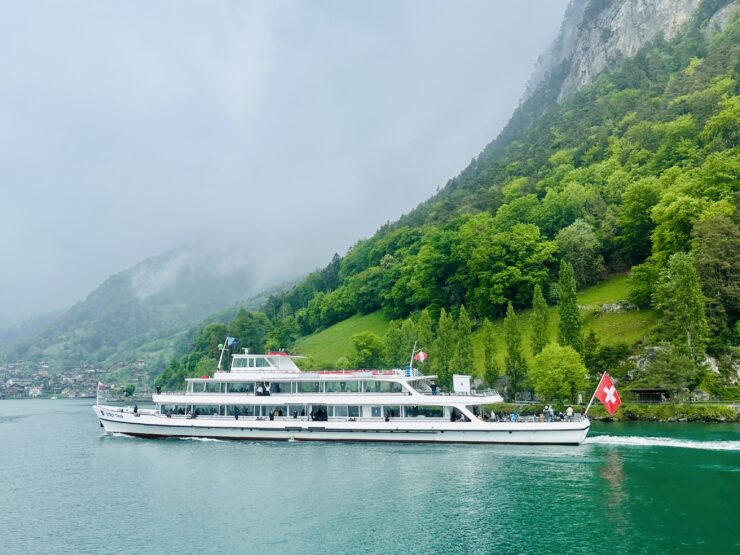
We returned to the lakefront to board the MS Berner Oberland, one of 12 BLS Lake Cruise boats that ferry passengers on Lakes Thun and Brienz. Though clouds hung low, delivering occasional drizzle, the two-hour journey to Interlaken was serene. The sleek, three-deck vessel, with seating for up to 376 passengers, felt like a small cruise ship.
Floor-to-ceiling windows in the first-class dining area provided sweeping views as we settled in for lunch. Creamy asparagus soup arrived first, warm and comforting, followed by chicken in a mild curry sauce and a dessert waffle.
Between courses, we dashed outside to the decks, braving cold breezes for photographs of chalets tucked into hillsides, sailboats moored along village waterfronts, and five historic castles rising above the lake.
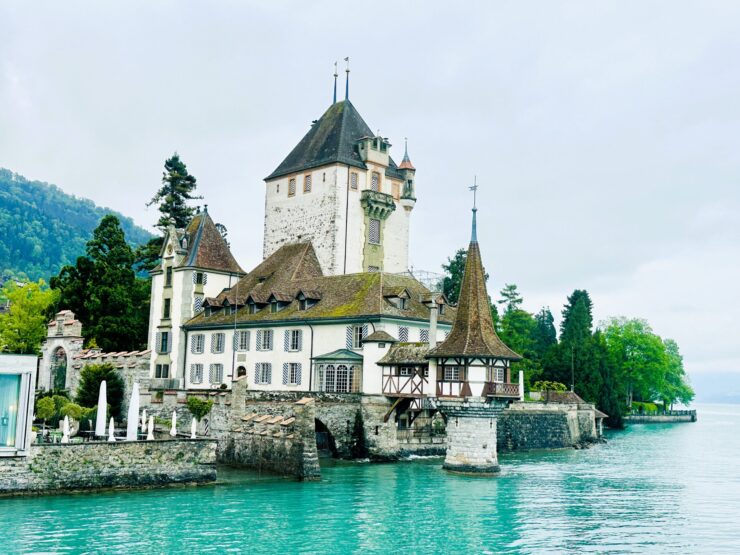
Our onboard guide, Josef Erni, narrated each stop, bringing landmarks to life that we might have overlooked. Schadau Castle, just outside Thun, was so striking we returned the next night for dinner. We also admired Hünegg Castle, with its Art Nouveau accents, and Oberhofen Castle, whose multiple turrets include one that juts out of the lake.
With the Alps shrouded intermittently by clouds, the cruise showcased Switzerland’s beauty in subtle, quiet, and atmospheric ways.
Swiss Wine in Spiez
After disembarking in Interlaken, we caught a train to Spiez, a charming lakeside village we’d admired on our cruise. The station sits high above the lake, and the steep walk down to Spiezer Alpine Weinkultur for a wine tasting was an adventure in itself.
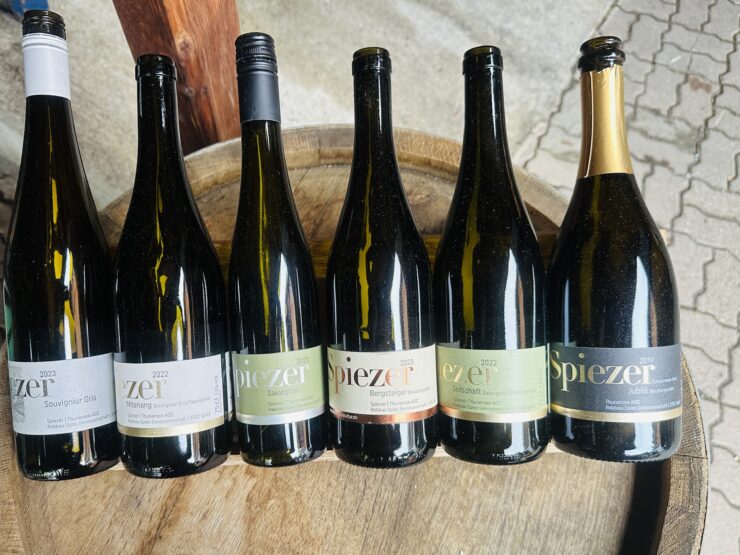
The winery’s viticultural roots date to Roman times. Margaretha Bindschedler, a partner in the winery, introduced us to several wines made with grapes grown on just 13 acres along a steep hillside overlooking Spiez.
Swiss wine, she explained, rarely leaves the country. Only 1 percent is exported, so Bindschedler encouraged us to taste everything, from its best-known whites to roses, reds, and creative blends. Crisp, aromatic, and elegant, Spiezer wines convinced me that Swiss vintages deserve wider recognition.
Chasing the Alps at Schilthorn
With only a day to explore Interlaken’s surrounding mountains, we rode the gondolas from the Lauterbrunnen Valley to Schilthorn, the peak famous for its role in the campy 1969 James Bond film On Her Majesty’s Secret Service.
Thick clouds obscured the views on our thrilling 24-minute ascent. The world’s steepest cable cars carry passengers through three stages, rising nearly straight up to the 9,744-foot summit. Since we could not enjoy the 360-degree panorama, we boarded the Bond movie helicopter to experience a virtual, machine-gun-riddled assault on crime lords in the mountain lair.
As we settled into lunch at Piz Gloria, the rotating restaurant atop Schilthorn, the clouds partially parted for a dramatic reveal. The brilliant white pinnacles of Eiger, Mönch, and Jungfrau appeared above the clouds, rewarding us for braving the weather.

Where to Stay: A Retreat on the Lake
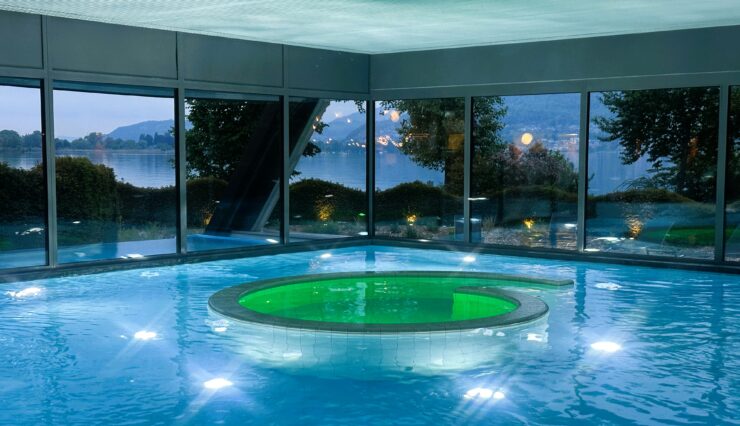
In Thun, we stayed at Deltapark Vitalresort, a serene wellness retreat along Lake Thun. My balcony overlooked a manicured lawn leading down to the lake and a world-class spa. Donning a cozy robe, I spent a peaceful evening in the whirlpool tub, sauna, and indoor pool, enclosed in glass year-round. An electric cart shuttles guests between buildings in cold weather.
The resort’s healthy breakfast buffet launched my Swiss Alps adventures. Gourmet meals in the Delta Restaurant—paired with a glass of Spiezer rosé—ensured a relaxing end to each busy day.
If You Go
We reached Thun by train from Bern as part of a two-week trip around Switzerland, traveling with a Swiss Rail Pass. The pass covers train travel throughout the country and provides free or discounted admission to many museums and other attractions. Seven international airports serve Switzerland; the busiest are in Zurich, Geneva, and Basel.
Thanks to Switzerland Tourism for arranging my hosted stay in Thun.
You May Also Enjoy Reading:
Hope Floats: My Journey to Swim the Rhine in Basel – Food, Wine & Travel
Visit Barbara’s website at this link: https://barbararedding.com/
