
I never expected that a week cruising Scotland’s Highlands and islands on a wee ship, Lord of the Highlands with Hebridean Island Cruises, would turn me into a whisky enthusiast. But somewhere between the Caledonian Canal and the Isle of Mull, 16 drams and a few very patient teachers changed my mind.
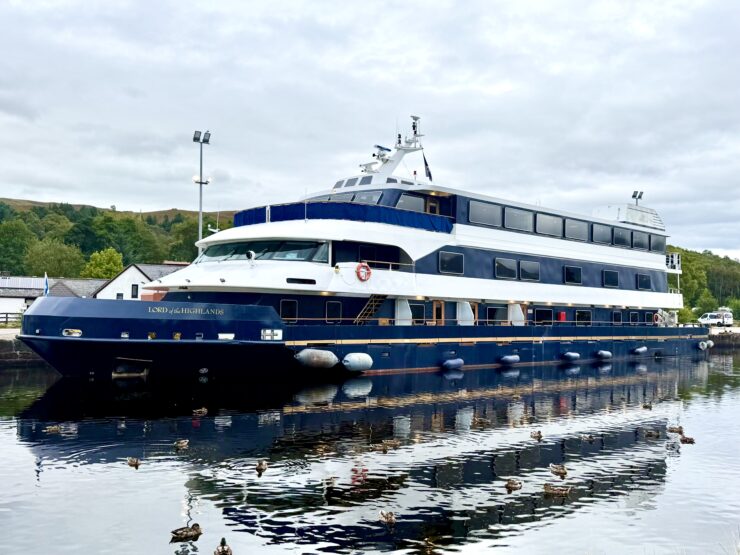
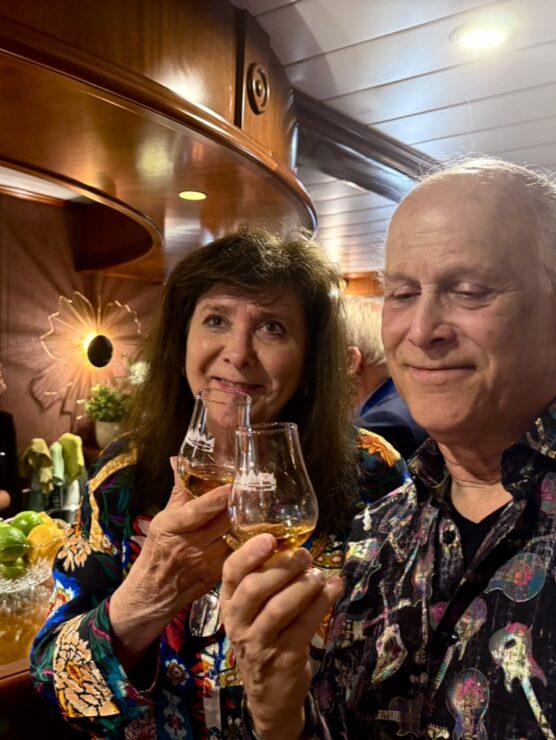
My husband Lawrence and I were never whisky drinkers. In fact, Lawrence hasn’t been able to smell whisky since his early teens, when he got into a bottle of his father’s whisky and regretted it ever since. I had never stepped inside a working distillery and knew little about why one whisky might taste smoky and peaty while another was smoother or lighter.
©Judi Cohen
That changed aboard Lord of the Highlands, where just 37 guests shared seven days of cruising in Scotland.
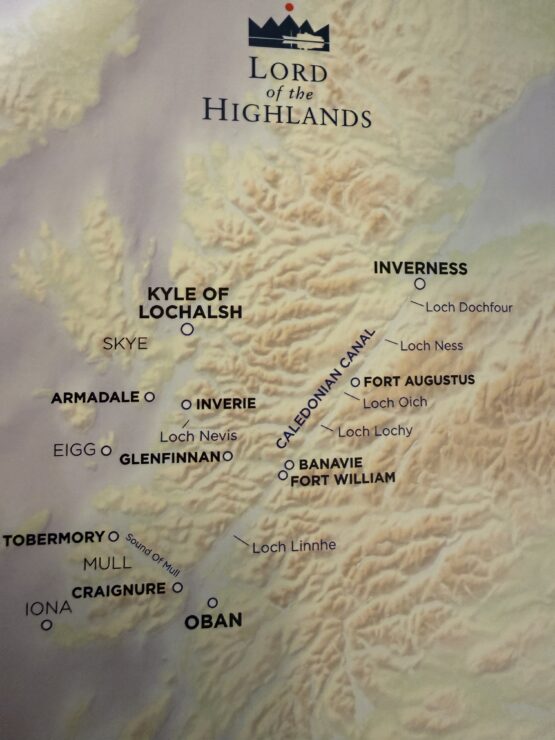
We passed through 29 locks on the Caledonian Canal, crossed four lochs, including the dark waters of Loch Ness, and continued to the islands of Skye and Mull, with a stop in Oban. Along the way, I discovered that getting to know Scotland could involve more than exploring its landscapes and history. It could also begin with a glass in hand.
A Whisky Education Begins at the Bar
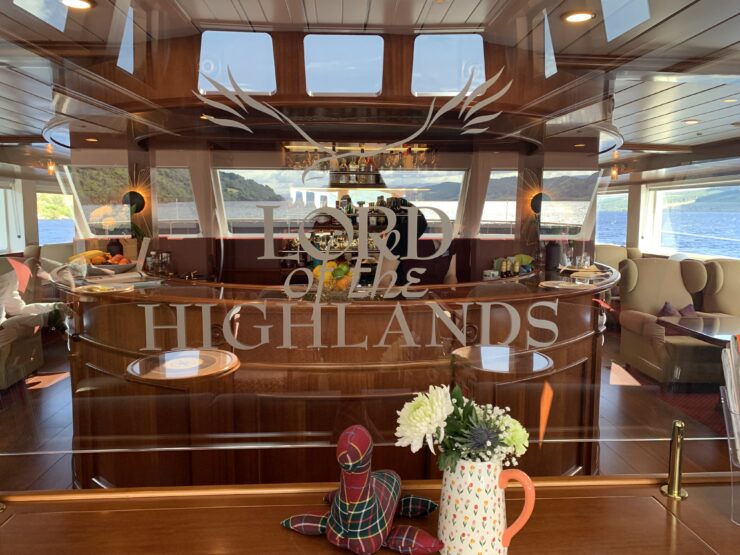
My education took place mostly at the ship’s bar, a cozy, living-room-like gathering place with warm honey-coloured woods and plaid fabrics, in the upper-deck lounge. It was where guests came together to share stories about the day’s adventures, always enjoying the panoramic windows. What began as an after-dinner drink became an unexpected introduction to whisky, guided by fellow passengers who knew far more than I did.
Most of our fellow guests were from the United Kingdom and took a particular interest in the whisky novices, as they affectionately called us.
One evening, I studied the list of whiskies on the counter and completely misunderstood the numbers beside the names. I thought they were prices, not the whiskies’ ages.
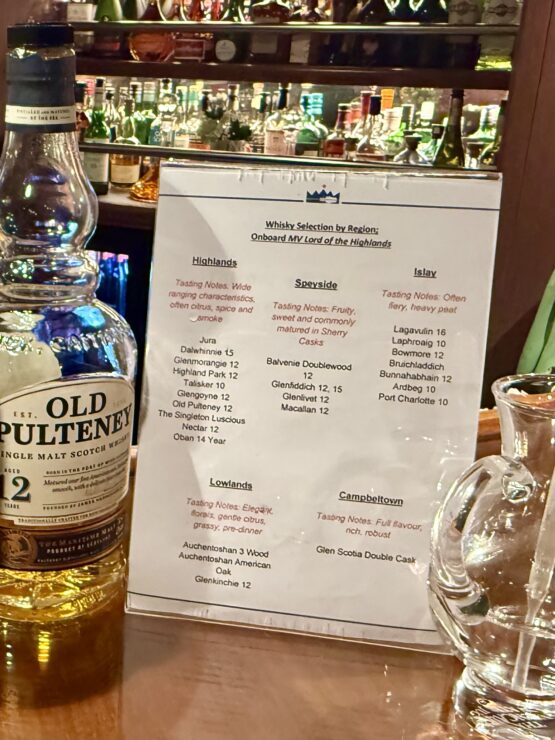
Alissa, the bartender, asked what kind of whisky I liked. I sheepishly confessed that I knew absolutely nothing about whisky. She happily offered to help and reassured me that all the whiskies, along with wine, champagne and other beverages, were included in the cruise fare.
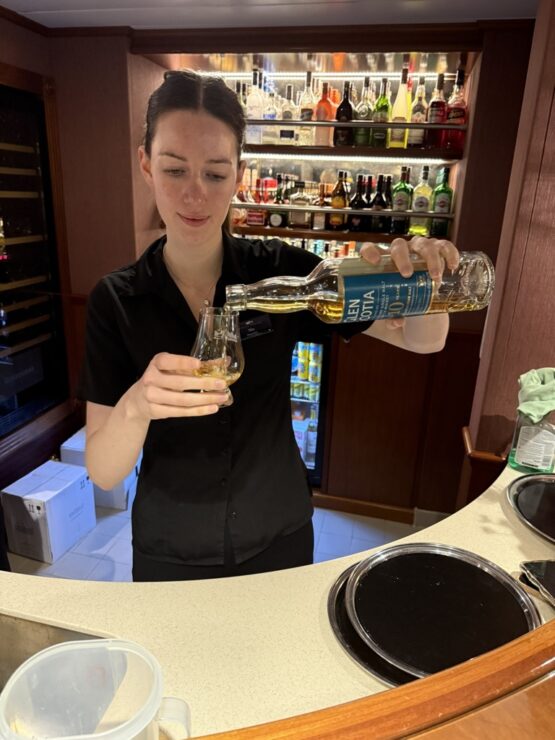
Lesson One: It’s Whisky, Not Whiskey
My first lesson was a spelling one. In Scotland, it’s whisky, without the “e”. Getting the spelling right, I quickly learned, was the easy part.
Our Edinburgh-based onboard guide, Mhorag Heger, offered some reassuring advice. If champagne was more my tipple, she said, there was no shame in starting there. I took her advice and enjoyed a glass or two early in the cruise. But curiosity soon got the better of Lawrence and me as we began exploring the whiskies.
I had always assumed whisky was something you either liked or didn’t. I was about to discover that there was much more to it.
Twenty-Six Bottles and a Very Willing Classroom
Lord of the Highlands carried 26 different whiskies onboard, nearly as many bottles as there were passengers on our sailing. Over the week, we each sampled 16, comparing aromas and flavors and gradually discovering what appealed to us.
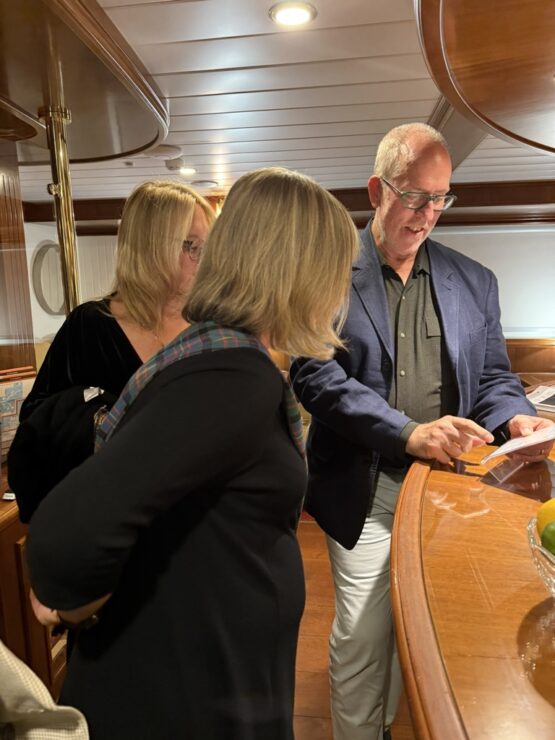
My teachers turned out to be two fellow passengers, Don and Tracy from the United States, along with Alissa, our bartender. They were enthusiastic whisky drinkers, and each seemed delighted to share their knowledge.
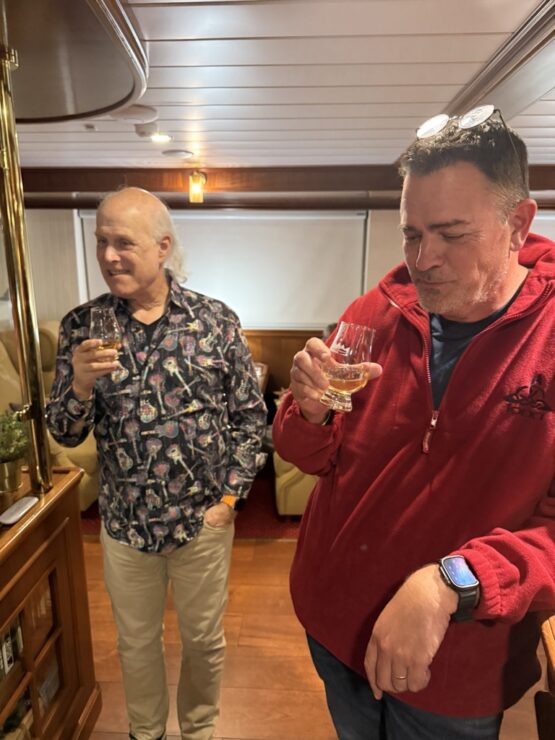
©Judi Cohen
On a small ship like Lord of the Highlands, conversations develop naturally. The people you meet on an excursion are the same ones sitting beside you at dinner. Strangers greeted on the first day become familiar companions by the end of the week.
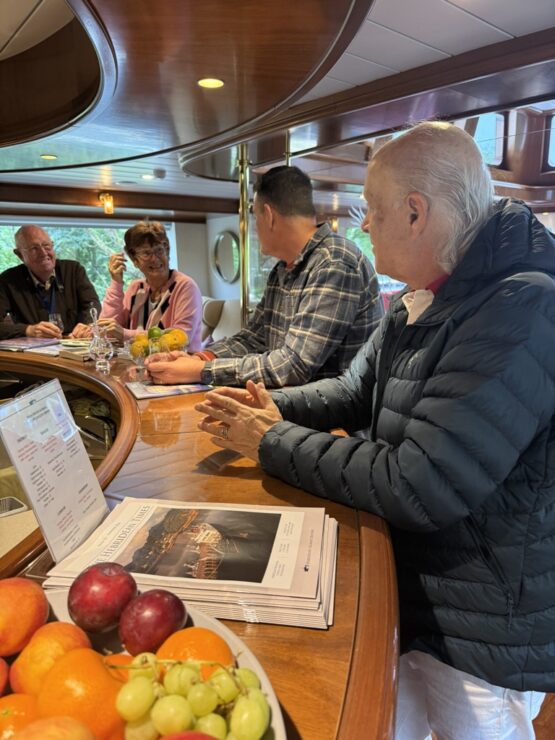
Our evening whisky sessions were never formal lessons. Someone would suggest a dram, explain why they liked it, and invite us to compare it with another. I began noticing differences. Some whiskies were smoky or peaty, others light or rich, with flavors that lingered long after the glass was empty.
Tracy encouraged me to try whiskies from different regions, patiently guiding me through the process of smelling and tasting. I think he enjoyed being the teacher almost as much as I enjoyed being the student.
A Floating Classroom: The Pleasure of Small-Ship Cruising
The collection of whiskies aboard Lord of the Highlands gave us a reason to linger in the lounge, but the camaraderie made the experience special. No one expected me to be an expert. I only had to be curious and willing to listen.
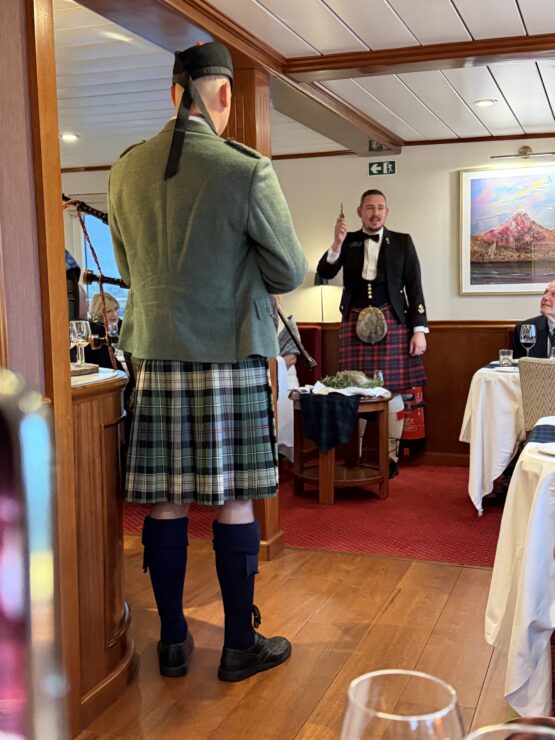
Learning about Scottish culture happened naturally, even during mealtimes. One evening, we all stood and applauded as a piper entered the dining room playing the bagpipes, followed by the chef carrying a haggis on a silver platter and a whisky bearer with a tray of drams.
©Judi Cohen
The traditional “Address to a Haggis,” Robert Burns’s famous poem, was recited before the casing was sliced open with a dagger. We raised our glasses of Scotch whisky in a toast before enjoying haggis, neeps (turnips), and tatties (mashed potatoes).
It was a memorable introduction to a Scottish tradition, and naturally, we enjoyed another dram or two.
Cruising Through the Landscape That Makes the Whisky
What made my whisky lessons memorable wasn’t just the company. It was the landscape passing outside the ship’s windows.
As we left the sheltered inland lochs and headed towards the islands, the scenery changed to open water and salt-edged shores. We were beginning to connect the names on the bottles with actual places on a map. Whisky was no longer just a Scottish drink. It was part of a much wider story about regions, traditions and the character of the places where it was made.
Some of our lessons came from unexpected places. On one excursion, we made our way to The Old Forge in Inverie, often described as Britain’s remotest mainland pub. Reaching it by boat or on foot across the hills is part of its appeal.
As we approached, the unmistakable sounds of a busy pub grew louder. Inside, the noise was almost deafening. Whisky and beer flowed generously as we joined the laughter and conversations, both inside and at picnic tables overlooking the water.
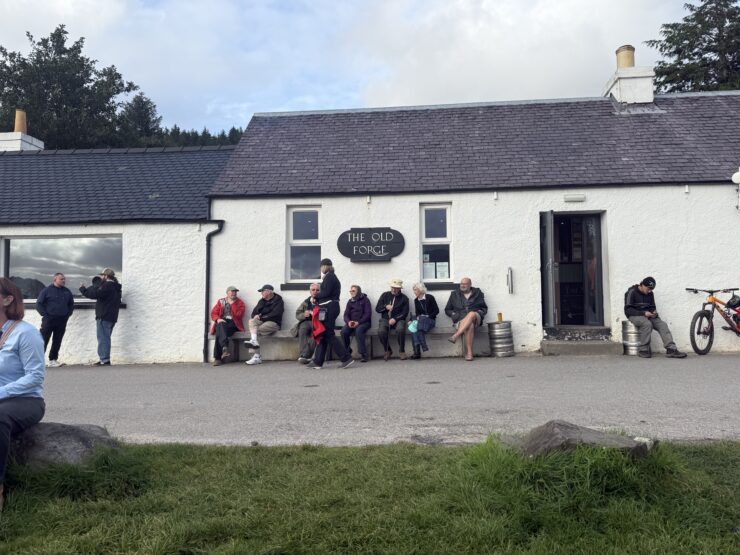
It was a reminder that whisky isn’t confined to distilleries and specialist tasting rooms. It is woven into everyday Scottish life, appearing wherever people gather to talk, share stories and enjoy a drink.
From Skye to Oban: Discovering Whisky Country
On the Isle of Skye, the names Talisker and Torabhaig took on a new meaning. I hadn’t visited either distillery, but knowing they were associated with the island made me more curious about the different whiskies produced across Scotland.
A short ferry ride took us to the tiny Isle of Iona, where we explored the island’s historic abbey and surrounding ruins.
Inside a small chapel, a nun turned from the altar and invited me to help arrange flowers in a vase. As we clipped and arranged the flowers, we began chatting. I was astonished to discover that she was Canadian, just like me. Thousands of miles from home, we had found an unexpected connection. She explained that she had promised to look after the abbey while the monks were away on a pilgrimage.
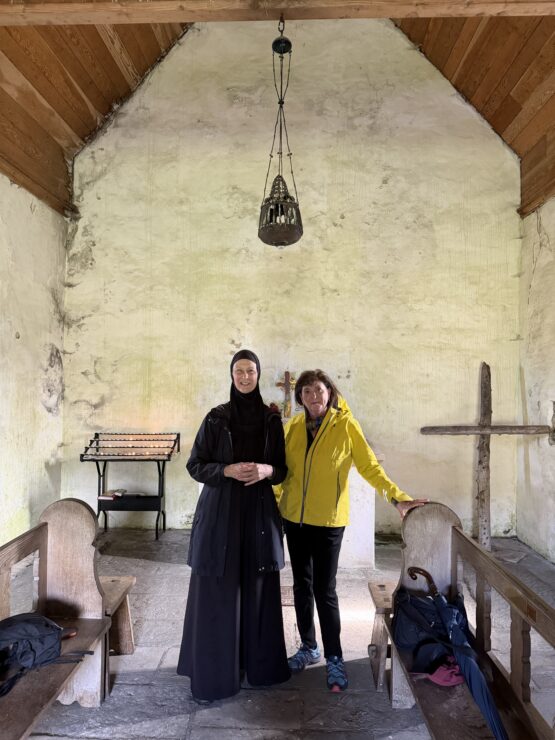
Afterward, I wandered through the ruins and cemetery as the wind swept in from the water. The experience was unexpectedly calming, almost spiritual. I could never have planned this meeting; it reminded me why I love to travel.
Later, in Tobermory, Mull’s colorful harbor town, I discovered another connection between place and drink. The town is home to the historic Tobermory Distillery, which produces both unpeated Tobermory and peated Ledaig single malts. Seeing the distillery in its waterfront setting gave a familiar whisky name a new context.
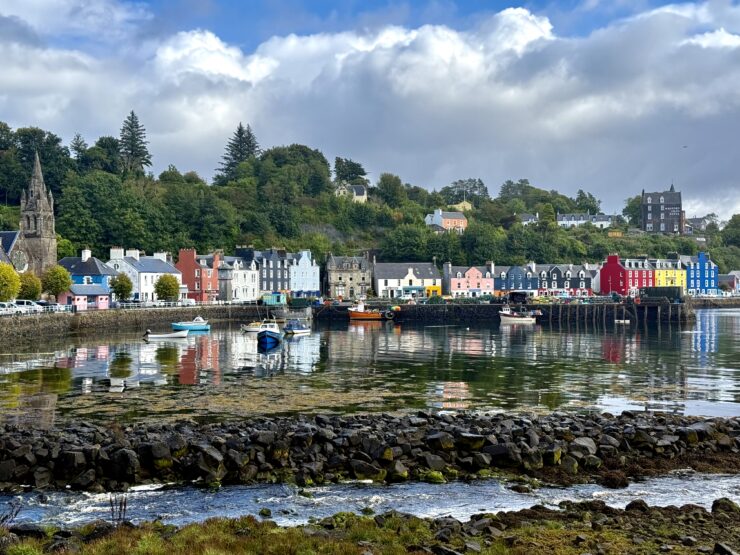
In Oban, I experienced the same pleasure of connecting a real harbor, hillside, and skyline with a name I had previously known only from a bottle on the ship’s bar.
A Dram with a View
By the end of the voyage, three whiskies stood out among the 16 I had sampled.
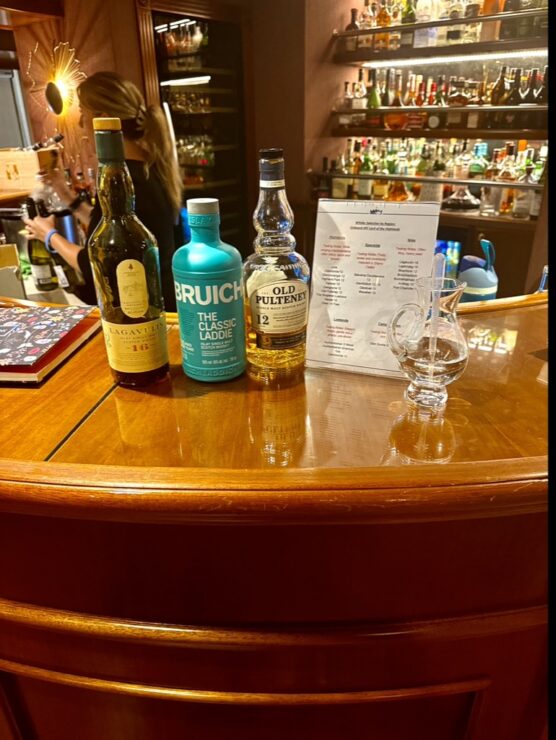
The Classic Laddie from Bruichladdich was one of my favorites. This unpeated Islay single malt offered citrus aromas with flavors of honey and green apple. At Tracy’s suggestion, I added a drop of water with the pipette at the bar, which seemed to bring out even more citrus notes.
Old Pulteney, a Highland single malt, was another favorite, with familiar notes of citrus, green apple, honey, and vanilla.
My third choice surprised Don and Tracy: Lagavulin. Its distinctive smoky character comes from drying malted barley over open peat fires, allowing the smoke to infuse the grain. I was beginning to appreciate the peaty flavors associated with Islay whisky.
I still remember the names of those three whiskies, but what mattered most was that I was developing my own preferences. I no longer felt that whisky was something I needed to understand completely before I could enjoy it. I could simply taste, compare, and decide what appealed to me.
Scotland in a Glass
I didn’t board Lord of the Highlands as a whisky drinker, and I didn’t disembark as an expert. What I gained was something more personal: a new appreciation for a drink I had barely understood, a better sense of the diversity of Scottish whisky, and the pleasure of learning from other travelers.
©Judi Cohen
Between the lochs and locks of the Caledonian Canal and the harbors of Skye, Mull and Oban, this voyage gave me more than photographs and memories of Scotland’s spectacular scenery.
It gave me new friends, new knowledge, and a reason to look at Scotland differently. I discovered that the best way to learn about whisky wasn’t necessarily to begin with a distillery tour or a book. For me, it began with a welcoming ship’s bar, a few generous fellow guests, a knowledgeable bartender, and the willingness to try something new.
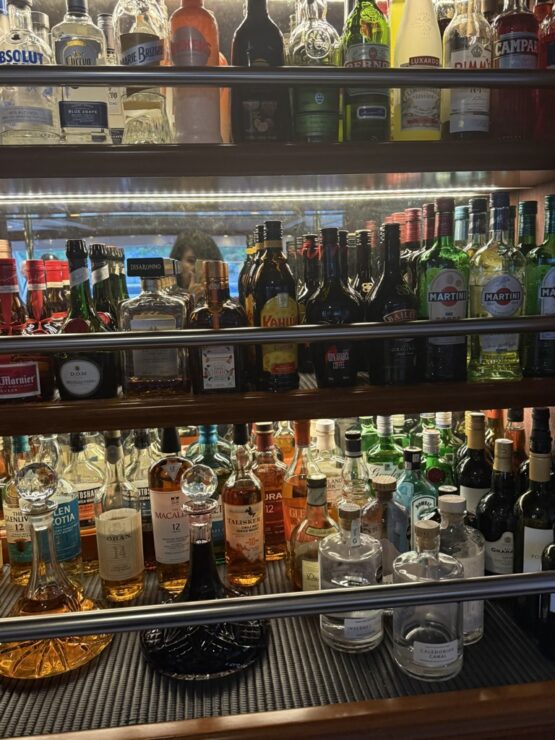
Sixteen whiskies later, I had learned to taste Scotland one dram at a time.
If You Go
Hebridean Island Cruises operates 2 ships, Hebridean Princess and Lord of the Highlands. Both operate in the United Kingdom and offer multiple itineraries, luxurious accommodations, and superior dining onboard.
Consider taking the Caledonian Sleeper train from London to Edinburgh, as I did, and making your way to the departure port.
You May Also Enjoy Reading
- The Land That Fed A Kingdom: A Northumberland Food Tour
- Exploring the Masters & Makers Trail of Tennessee
- A Visit and Tasting at a Japanese Whisky Distillery
