

Dessert was on the waiter at La Vie, le mort, le dessert (life, death, dessert), a three-hour blend of gastronomy and theatrics held inside a projection dome in downtown Montréal.
A male dancer who played both a waiter and a hunted stag during the dinner reclined on a stainless-steel table in the center of the room. Chefs plopped spoonfuls of French crème of parsnip and white chocolate on silicone mats laid across his torso. They carefully garnished the human platter with buttery buckwheat sablé biscuits and juicy Morello cherries.
We got up from our tables, picked up spoons, and dug in.
About 100 diners had paid $190 Canadian for the surprising take on dinner theater. It was slightly bonkers, yet mesmerizing and somehow fitting for the city that’s the headquarters of Cirque du Soleil.
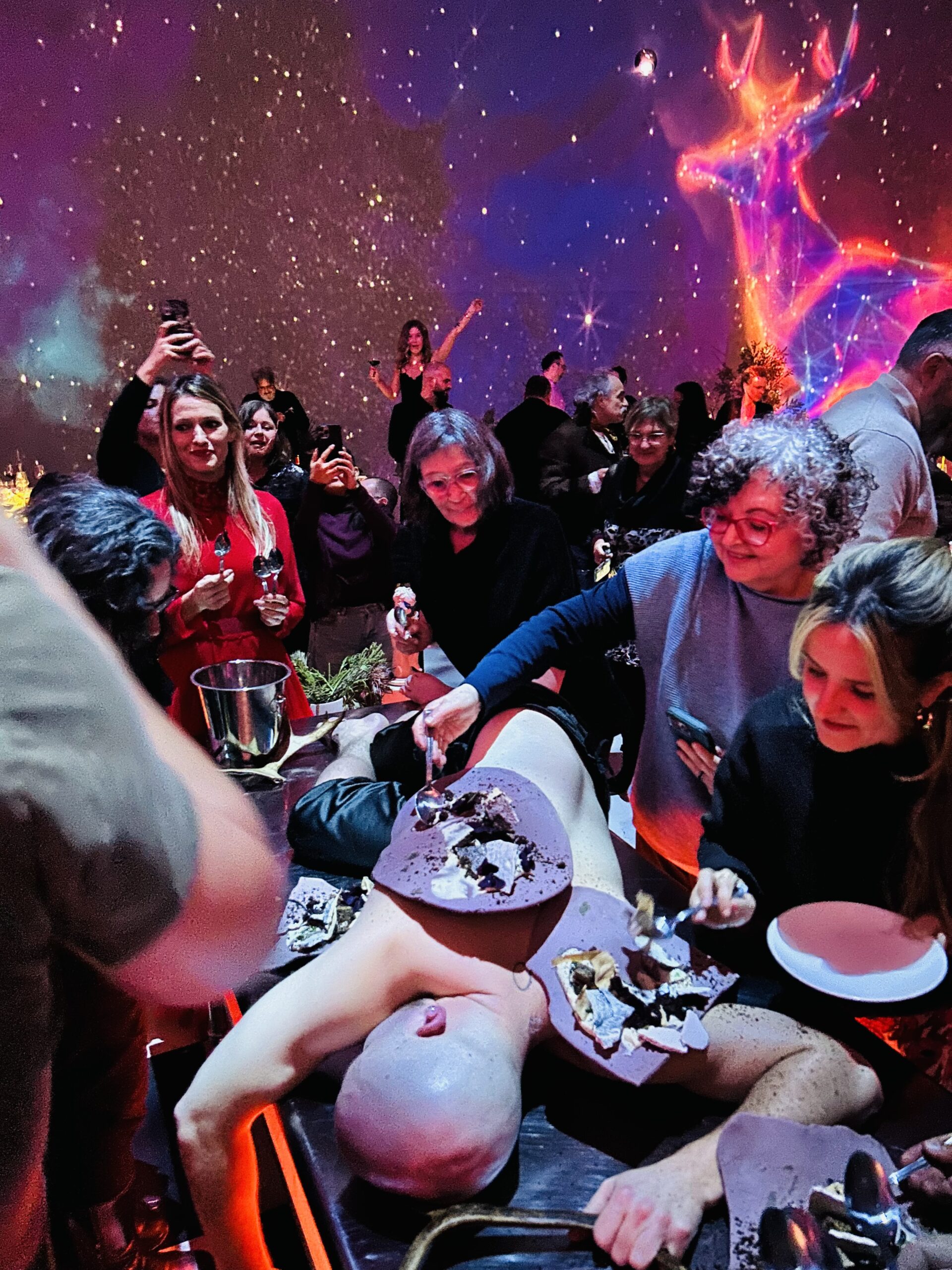
Writer Linda Barnard, right, digs in at “La Vie, le mort, le dessert” in Montréal. ©Emili Bellefleur Tourisme Montréal
Life and Death Under the Dome
A dining room set up inside the 18-meter dome at the Society for Arts and Technology resembled a period mansion engulfed by an overgrown forest. Woodland scenes played across the dome as five courses were served, each reflecting life, death, and rebirth.
A fog machine got a good workout as an Opéra de Montréal soprano and cellist performed. Actors and a dancer interacted with guests. The first language in the province of Québec is French, so the narration wasn’t in English. But the messages of the vignettes were easy to follow.
The inventive menu by celebrity chef Clément Boivinė included trout mousse and gravlax with fish roes and tender shredded lamb wrapped in cabbage leaves. My favourite was the trou normande-style plate of pleasantly salty Quebec-made Le Secret de Maurice soft cheese served with candied squash and purple grapes infused with Hendrick’s Gin.
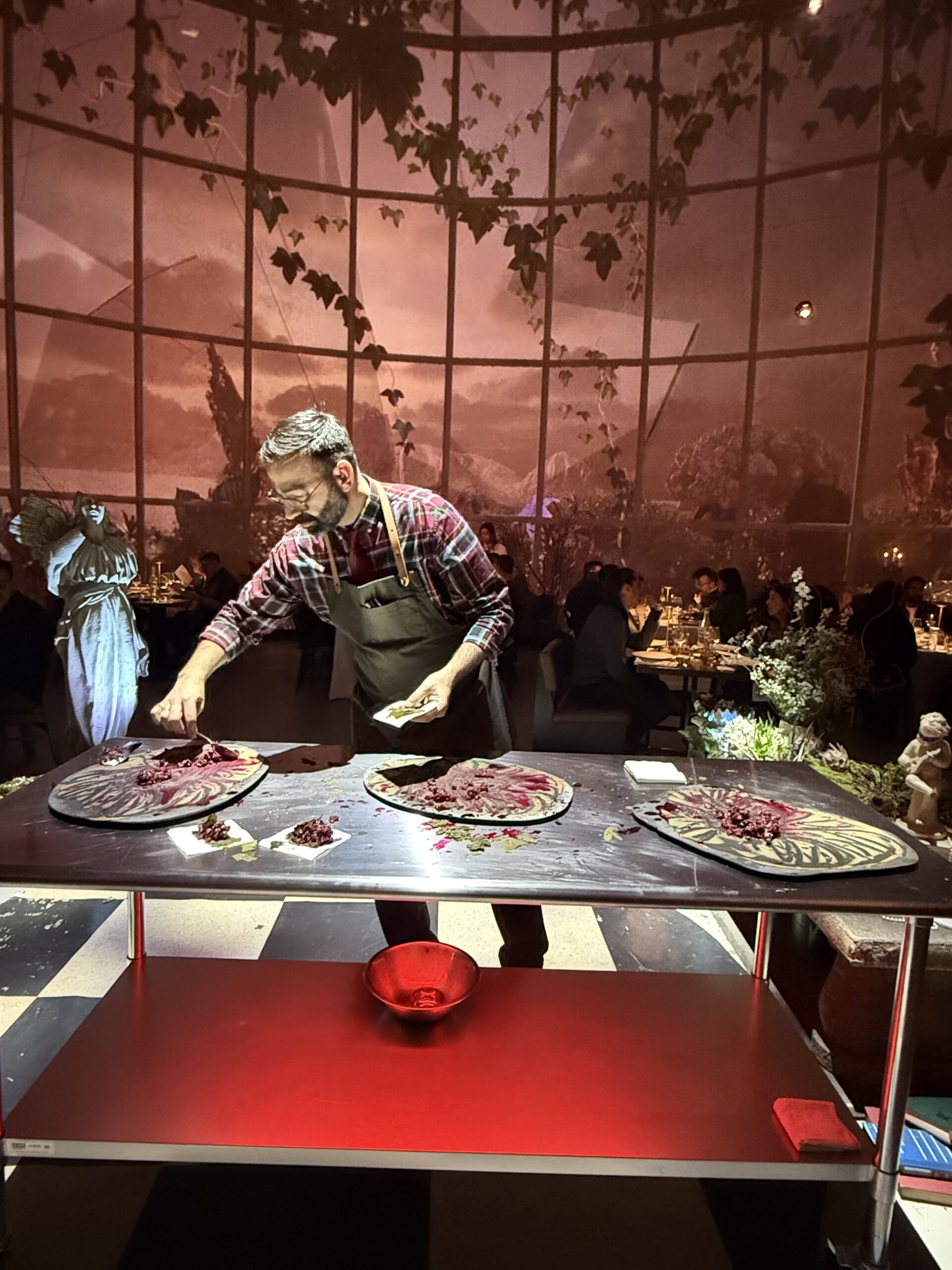
A chef prepares a course inside the dome. ©Linda Barnard
Montréal Knows How to Do Winter
“La Vie, le mort, le dessert” shows Montrealers embrace the snowy season with unique flair. Take the annual Montréal en Lumière (Montréal in Light) festival held each February, one of the largest winter celebrations in the world.
Canada’s second-largest city knows how to illuminate the coldest months. The annual eight-day event focuses on food, and restaurants host international chef collaborations. There’s also arts programming and outdoor fun.
Montréal en Lumière lights up the Quartier des Spectacles, the multi-block cultural district between downtown and historic Old Montréal. That’s where I headed to kick off my night by dancing to thumping EDM with some new friends beneath an SUV-sized inflatable crab puppet.
©Eva Blue Tourisme Montréal
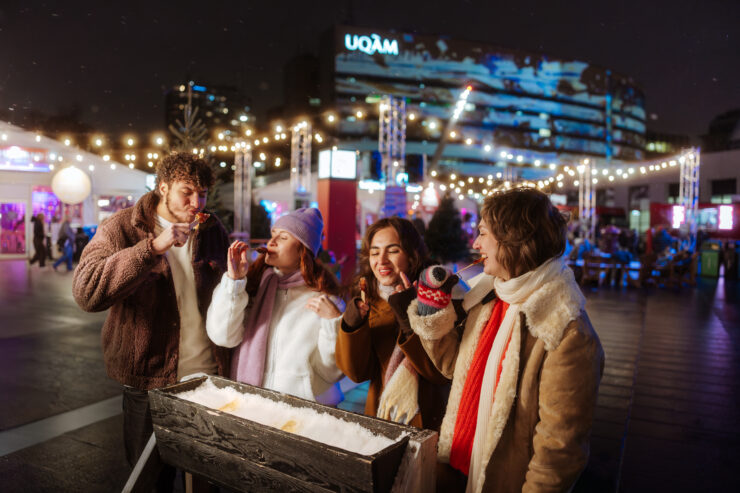
Next, maple taffy at the cabane à sucre (maple syrup sugar shack) trailer. Quebec’s early spring treat is made by pouring a ribbon of boiling maple syrup across snow. Wait a moment to let it firm up, then twirl the sweet ribbon onto a wooden tongue depressor.
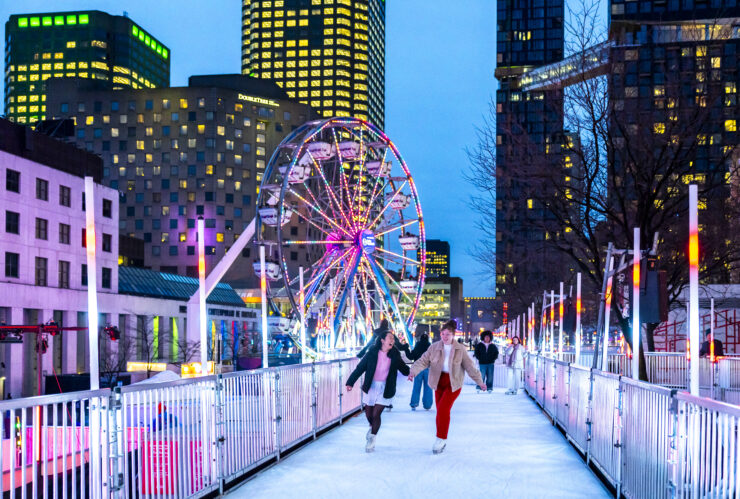
Vendors stood on beer coolers and held bottles of booze aloft, offering to sell revellers a shot to go with their suds. An illuminated Ferris wheel provided expansive, if chilly, views of the party below. Skaters whizzed past LED lights on the 300-meter elevated skating trail that’s created every year for the festival. Rentals are available, but if you prefer to watch the scene, there’s a café and terrace overlooking the fun.
©Jaysson Gallant Tourisme Montréal
Sleepless in Montreal
My Montréal en Lumière visit coincided with Nuit Blanche (sleepless night), a free, dusk-to-dawn cultural celebration that’s been going on for 20 years. The mission is to be immersed in the cool side of winter and stay up until morning.
There are hundreds of free activities across the city, including music, film, art installations, workshops, and outdoor interactive light sculptures. Cultural institutions like the magnificent Musée des beaux-arts de Montréal (Montréal Museum of Fine Arts) stay open until midnight.
Restaurants run Nuit Blanche breakfast and brunch specials for those who make it through. I wasn’t one of them, but still dropped by Darna Bistroquet in Rosemont–La Petite-Patrie. The top-notch Moroccan meal included sweet mint tea and an oblong of sourdough bread topped with grilled slabs of halloumi, lemon labneh, smoked cashews, and poached egg.
Heated Ice
With hometown hockey heroes, the Montreal Canadiens (aka the Habs), crushing it this season, I lost count of how many people I saw in team jerseys. The city is also passionate about its signature chewy, wood-oven bagels. Pair bagels with hockey, and you’ve got peak Montreal.
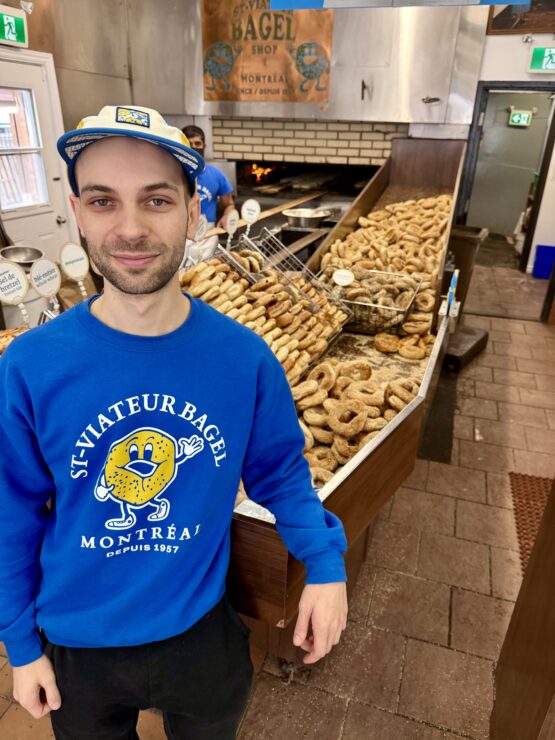
When the two worlds collided onscreen on the Canadian TV series Heated Rivalry, it created a viral moment for St-Viateur Bagel. The bakery has barely changed since Myer Lewkowicz opened the doors in Montréal’s historically Jewish Mile End neighborhood in 1957.
Heated Rivalry’s steamy story of the relationship between two closeted gay hockey players, one Canadian, one Russian, has become a surprise hit. It streams in Canada on Crave TV and in the U.S. on HBO Max. Canadian actor Hudson Williams co-stars as Shane Hollander alongside American actor Connor Storrie, who plays Ilia Rosenoff.
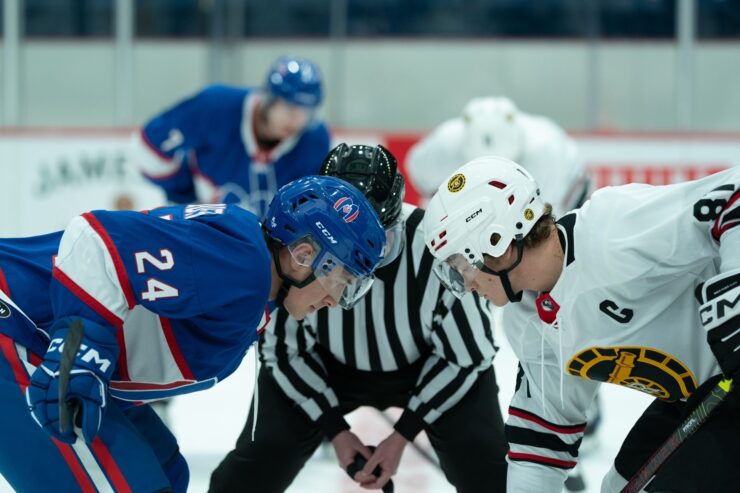
Williams portrays the captain of the fictitious Montreal Metros hockey team. Although the series is shot in Hamilton, near Toronto, Montreal gets plenty of shine from the show, which returns for season two next year.
Heated Rivalry creator-writer-director Jacob Tierney is a Montréaler. Local musician Peter Peter created the soundtrack. And Montréal actress Sophie Nélisse caused a run on St-Viateur Bagel T-shirts after she wore one in a bedroom scene on the show.
It’s the Bagels, Honey
Ben Choquette, director of marketing at St-Viateur Bagel said as soon as Nélisse’s character put on a St-Viateur tee, merchandise sales soared.
“It was in the fifth episode, and Sophie Nélisse is from here, and she is a bit of an idol in Montreal. So, I think it’s just like the best combination possible,” said Choquette. A baker pulled long wooden paddles of bagels from the wood-burning oven and expertly flipped them into a waiting bin.
What makes Montréal bagels different (and better, according to fans) is that they’re hand-rolled. They get a brief dip in honey water prior to baking in a wood-burning oven.
I ate my bagel like a Montrealer: hot from the oven and without fillings or toppings. Sesame is the overwhelming favorite. Although St-Viateur ships across Canada and the U.S., I picked up a few dozen bagels to satisfy friends’ cravings at home.
There was just enough room in my luggage for Montreal’s best babka. I picked up a Cheskie’s kosher bakery, along with an apricot hamentashen, just to keep it company.
Yet More Bagels
My second-favorite way to eat a St-Viateur bagel is at Beautys Luncheonette. It’s about a 20-minute walk away from the bagel maker in neighbouring Plateau-Mont-Royal. A mural on the exterior wall outside honors the couple who opened Beautys in 1942, Hymie Sckolnick and his wife, Freda.
The Beautys Special is my constant pick, a lightly toasted St-Viateur sesame bagel filled with cream cheese and slices of smoked salmon, tomato, and red onion. Sure, the tomatoes are lousy in February, but the Beautys Special endures.
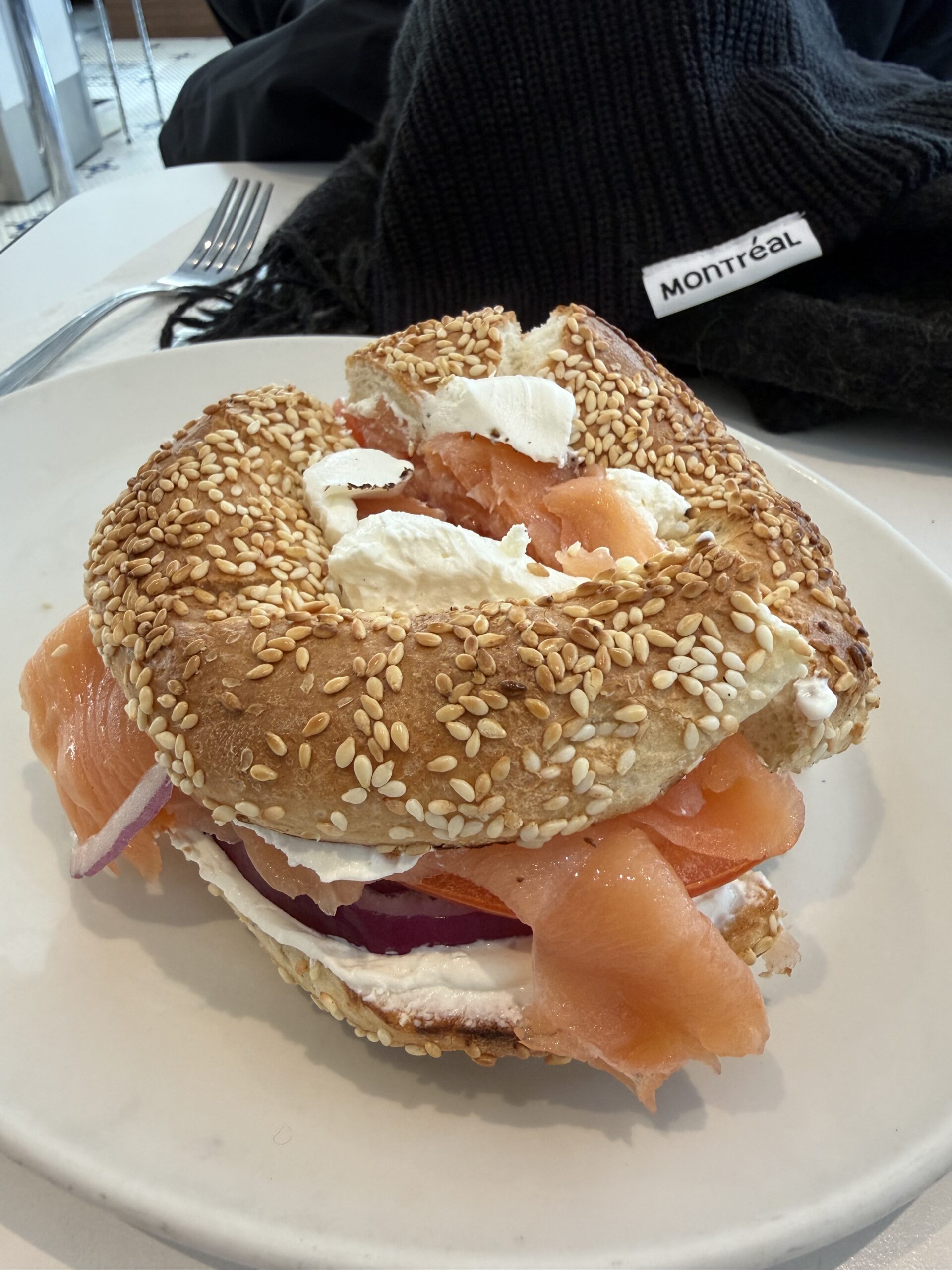
The Beautys Special bagel with smoked salmon at Beautys Luncheonette. ©Linda Barnard
It was a sunny morning. Toque on and parka zipped under my chin against the -10C cold, I walked off breakfast with a stroll around Plateau-Mont-Royal’s streets.
The colorful brick buildings combine Victorian elements with signature Montréal style. The staircases to the duplex and triplex apartments inside are built on the exterior to maximize interior space.
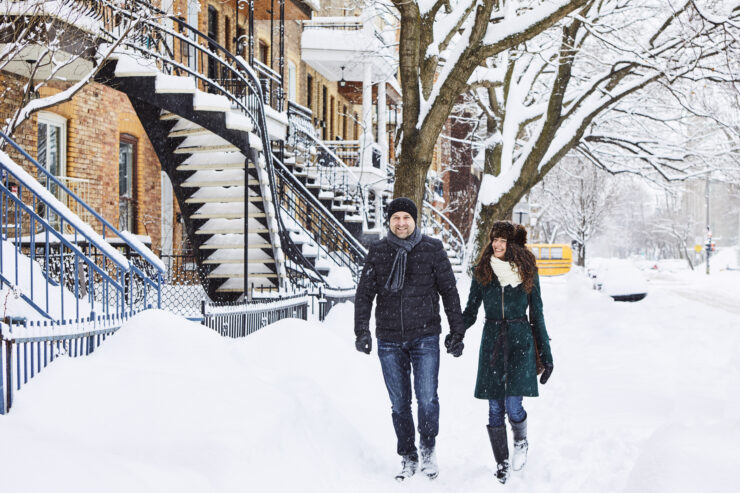
©Madore Maude Chauvin Tourisme Montréal
Some of them are graceful steel spirals. It’s impossible to walk by and not wonder how they get a mattress inside.
Where to Eat
From poutine to smoked meat pizza, Montréal has so many local specialties it feels like an impossible task to get to everything. Get a taste of some of the city’s top offerings at Time Out Market Montréal. I loved the overstuffed chicken cutlet sandwich from Bossa. It was a perfect take on a two-hander Italian sub. Chanthy Yen, once personal chef to former Canadian Prime Minister Justin Trudeau, also has a Time Out Market kiosk, selling bao buns and dumplings.
Michelin-recommended Othym restaurant showcases Québec-sourced products. The menu often includes venison, duck from lawyer-turned-farmer Sébastien Lesage, and exceptional Arctic char. Better still, it’s a bring-your-own-wine restaurant with no corkage fees. My host brought a bottle of juicy Seyval Blanc-Vidal. The white blend comes from boutique winery The Bacchantes, located near the U.S. border in Hemmingford, Quebec.
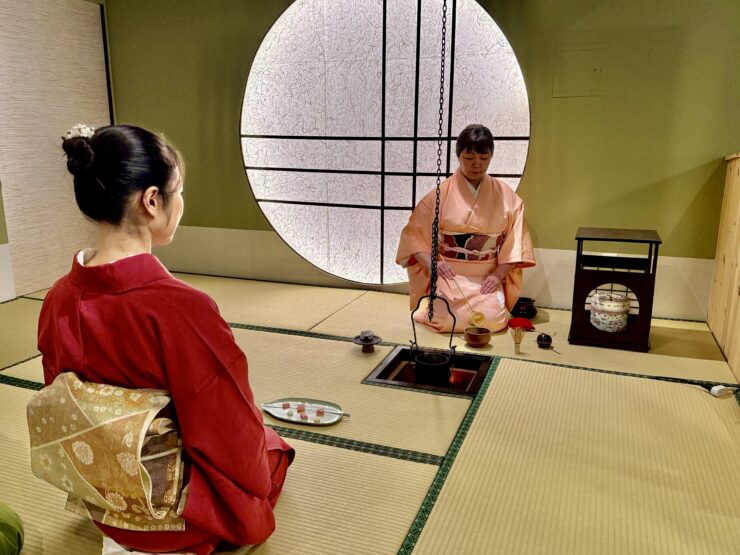
If aperitivo and Italian snacks are your thing, grab a seat at the long bar at Bar Edicola. The coffee is also terrific.
Drop by TGuru to have a cup of Japanese tea from the matcha bar. Or, experience the graceful traditional chanoyu tea ceremony in a replica Japanese teahouse inside the cafe.
If You Go
The W Montreal Hotel is a short walk to downtown and Old Montreal. A Metro station is a block away. The main-floor cocktail bar has an impressive record collection and multiple turntables. Warm up in your room’s soaker tub with free scented bath salts from the front desk.
Get more information on visiting Montréal at Tourisme Montréal.
You May Also Enjoy Reading
Quebec’s Hyper-Local Food and Wine Movement: A Taste of Place
