
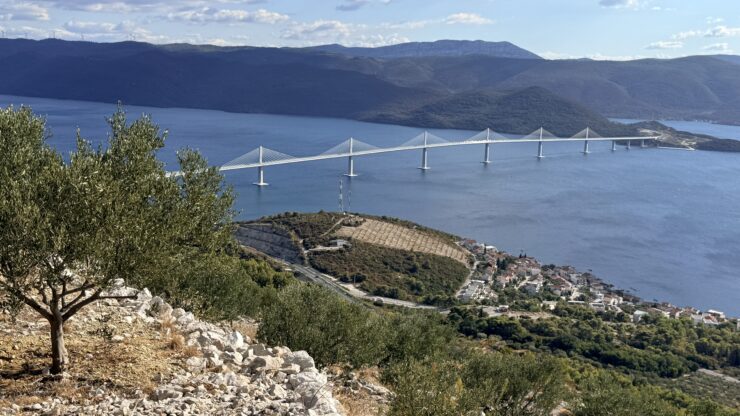
From steep vineyards and bold Plavac Mali to winery hotels, fresh oysters, and Adriatic views, the Dalmatian coast deserves a place on your Croatia itinerary
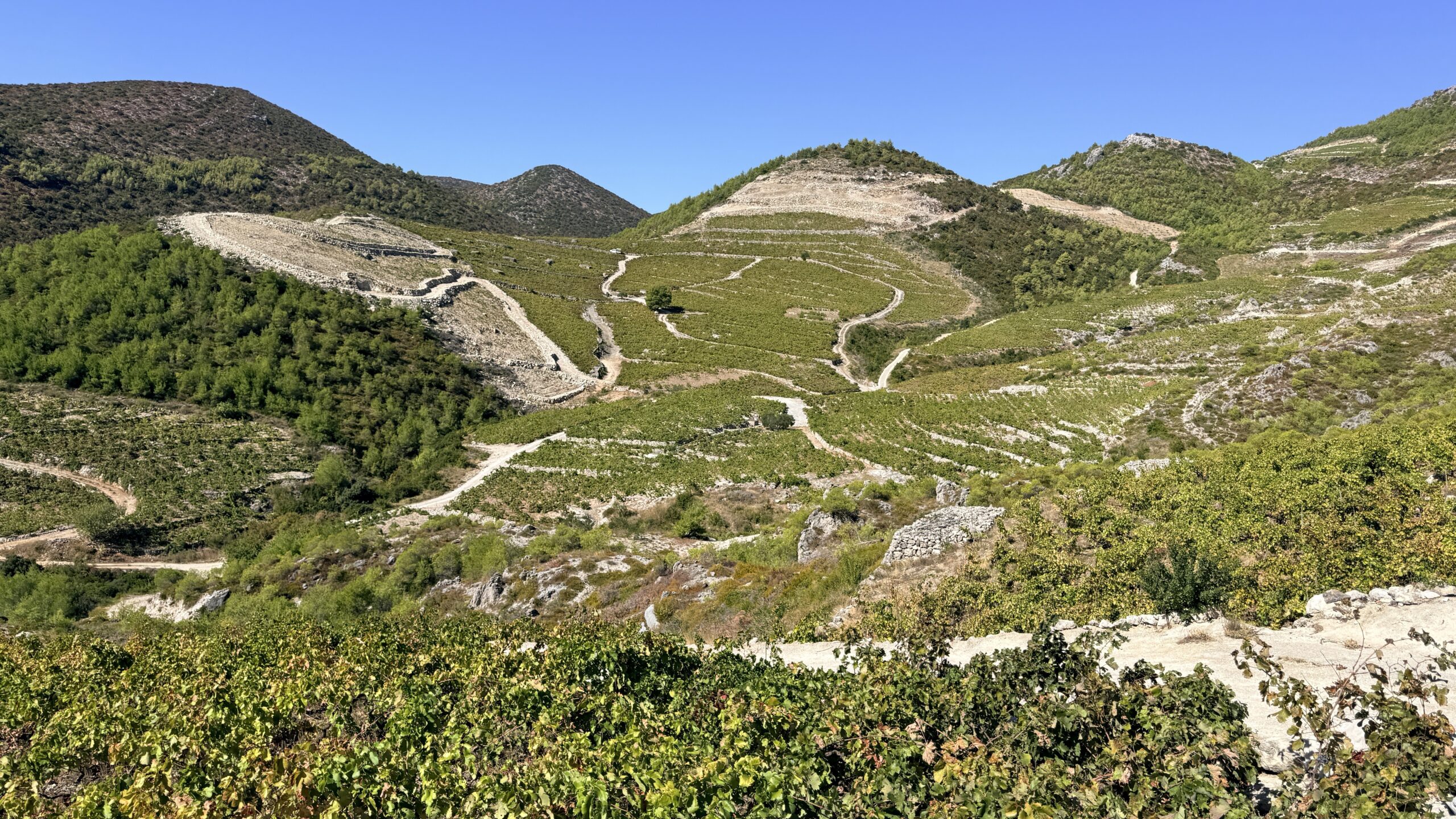
There are easier places to grow grapes than Pelješac on Croatia’s Dalmatian Coast. Driving across the peninsula is dramatic, to say the least. You’re at high elevation above the Adriatic Sea, with dramatic limestone cliffs, steep, sloping vineyards, sea breezes, and heat from the sun, the sea, and the ground.
The peninsula stretches roughly 65 kilometers into the Adriatic, and includes limestone and quartz soils, lots of scrub vegetation, and steep hillsides opposite the island of Korčula. In places, vineyards seem to cling to mountains rather than grow on them. Summers are hot and dry, and some of the best vines are planted on slopes where using a tractor is laughable.
And yet this is the place where Croatia makes some of its most distinctive red wines.
Indigenous Dalmatian Grape Varieties
Pelješac is home to Plavac Mali, the indigenous Dalmatian grape variety grown in the peninsula’s two best-known regions: Dingač and Postup. Both are protected appellations, and both are located on the peninsula’s southern slopes, where intense sunlight, maritime influence, and limestone create conditions that can push Plavac Mali to serious levels of ripeness and potency. Dingač became the first protected wine designation in what was then Yugoslavia in 1961, followed by Postup in 1965.
The further you travel into Pelješac, the more the focus becomes wine. Vineyards drop toward the Adriatic, and you’ll find small family cellars in villages along the route. The towns of Ston and Mali Ston sit at the peninsula’s entrance, where you’ll find oysters, salt, and some of Croatia’s best seafood.
Mention your Croatian visit to friends – not just your time in the well-known cities of Split and Dubrovnik, but also on the Pelješac peninsula where the red wines are the stars – and watch their eyes light up with the intention to plan a future trip.
Plavac Mali: Zinfandel’s Croatian Cousin?
Plavac Mali is often described in relation to spicy Zinfandel, but on Pelješac the grape stands on its own. DNA testing shows that the variety is genetically identical to Tribidrag, the international grape known as Zinfandel in the U.S., and Primativo in Italy. Plavac Mali is a distinct grape, with Tribidrag as one of its parents.
I concur based on the wines I tasted, although California Zinfandels tend to be more fruit-forward. Plavac Mali is similar, and if you like dark red-black-fruited wines – think blackberry, blueberry, red plum with hints of dried fruit and Mediterranean herbs, spice and savory notes – you’ll love these big bold red wines. They are generally high in alcohol and well structured, with firm tannins that integrate over time.
Rather than treating this as a tour of Croatian wineries in general, I’m just following the road into the peninsula to see how the landscape, the grape, and the people who farm it come together. Along the way, we’ll visit the wineries that define the region, and stop for a few of the things that make Pelješac unique.
The Pelješac Peninsula Wine Route
Three destination resorts—Saints Hills, Rizman, and Korta Katarina—offer wine travelers everything they need to linger. Eat, drink, stay, and play. And the food is why visitors love this region. Local ingredients, produce, seafood, olive oil, and creative culinary programs are the norm here.
Two must-visit wineries — Miloš and Grgić Vina — will round out your trip and provide different perspectives: the people, the history, and their wine stories are the destinations.
Visit these wineries in this order if you are starting in Dubrovnik. Reverse course if traveling from Split. Check websites for seasonal hours, or reach out via email and WhatsApp.
Miloš – Where Plavac Mali Takes Its Time
Miloš Winery. Let’s talk about longevity: the Miloš family has lived and farmed for over 500 years. They planted grapevines in the 1980s and released their first premium vintage in 1989. We met, toured, and tasted with Ivan Miloš, a multi-generation caretaker of the family legacy. We visited the 15 hectares (about 37 acres) of organic estate vineyards set high on rocky terraces once reserved for sheep grazing. Because farming an extreme site like this is so difficult, the winery is beginning to use drones for spraying and fertilization.
What impressed me beyond the wines – mostly Plavac Mali – was the aging regimen. Five to 10 years in barrel! The current release of their old vine “Stagnum” is 2016. This is a great opportunity to experience soft tannins and how Plavac Mali evolves over time.
The tasting room, with both indoor space and an outdoor patio, is open daily from 10 am–7 pm, March to November. Seventy percent of their guests are from the U.S., and they note how similar the experience is to tasting rooms and consumer experiences at home. You can also tour the winery and underground cellars.
Another reason to start your wine explorations at Miloš is its location in the village of Ston, discussed in more detail below in the Beyond Wine section.
Read my review of their flagship wine – 2016 “Stagnum” Plavac Mali.
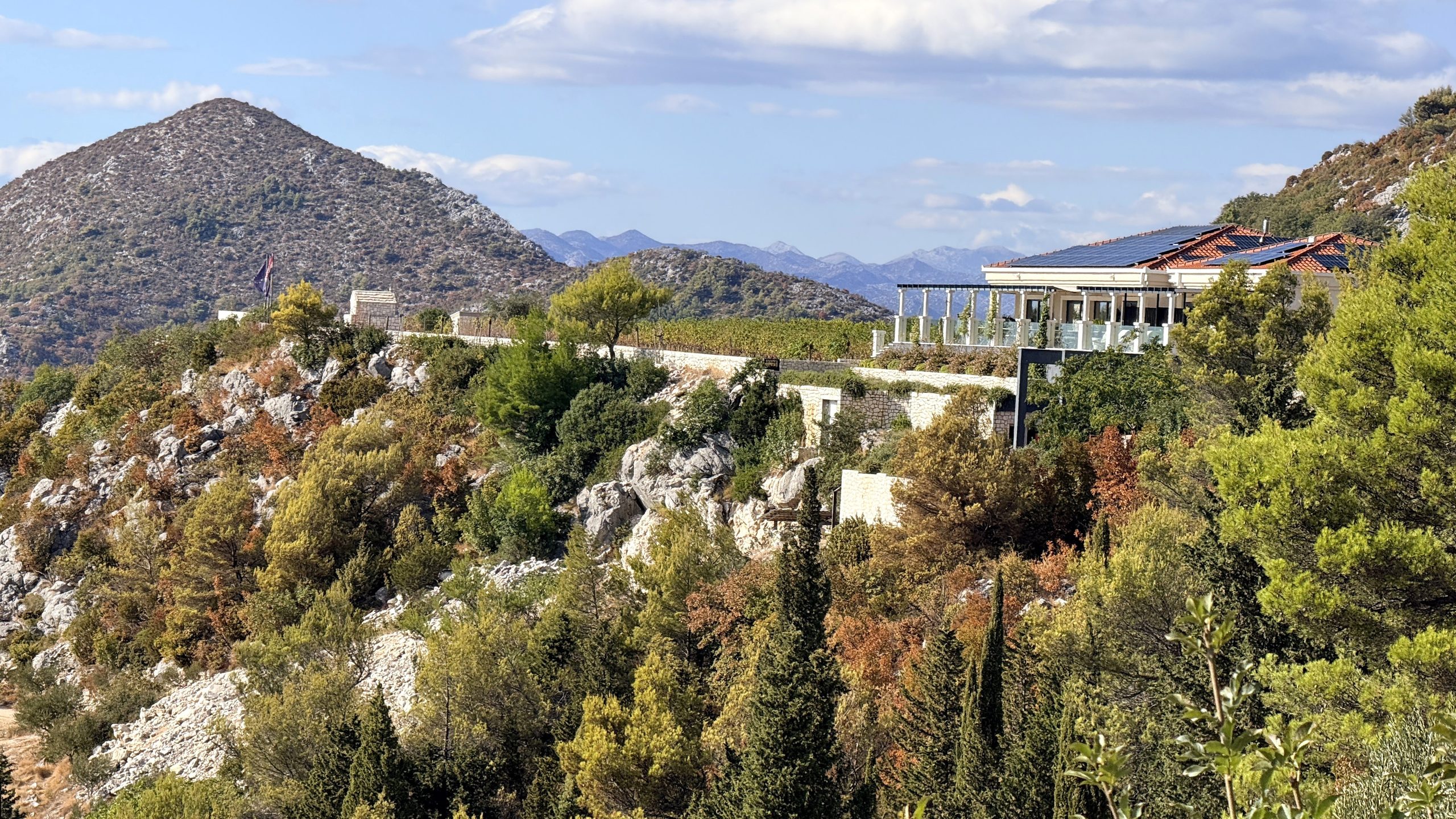
Rizman: The Journey Is Part of the Destination © Carl Giavanti
Visit Rizman Winery for Dramatic Views
The Rizman Winery, Restaurant, and Hotel are located in Komarna, overlooking the Adriatic Sea and Pelješac Peninsula. Technically, they are on the mainland where the bridge connects. I thought it made sense to include them given their close proximity. Rizman is a bird’s-nest site, just over the bridge from Pelješac. The drive to the property is part of the adventure, along a steep, narrow, and scenic road that rewards you with dramatic views of the peninsula, islands, and Adriatic Sea on arrival. We sipped and dined on their expansive deck, just feet away from our B&B room for the night.
The business is named after the family’s first winemaker, Igor Štimac, who was nicknamed Rizman. Rizman was the first to plant in Komarna around 2005, with over 50 acres of high-elevation vineyards and 1,700 olive trees – farmed 100 percent organically and certified.
Our tasting and cellar tour was with Damir Štimac, founder and CEO, and former soccer player and sports agent. Damir is working on establishing a Komarna Wine Trail. We tasted, toured, and dined together. And so will you, with their hospitality staff. The new chef from Istria, with 30 years of experience, has turned the kitchen into a culinary experience. Ask if they are serving pasticada, a slow-braised beef steak with wine sauce, or peka, a wood-fired, slow-roasted veal or lamb dish.
The tasting room and restaurant are open daily 11 a.m. to 9 p.m. (closed Sunday). Check for off-season hours. They take a winter break and close in January.
Read Damir’s Winemaker interview and flagship wine review here.
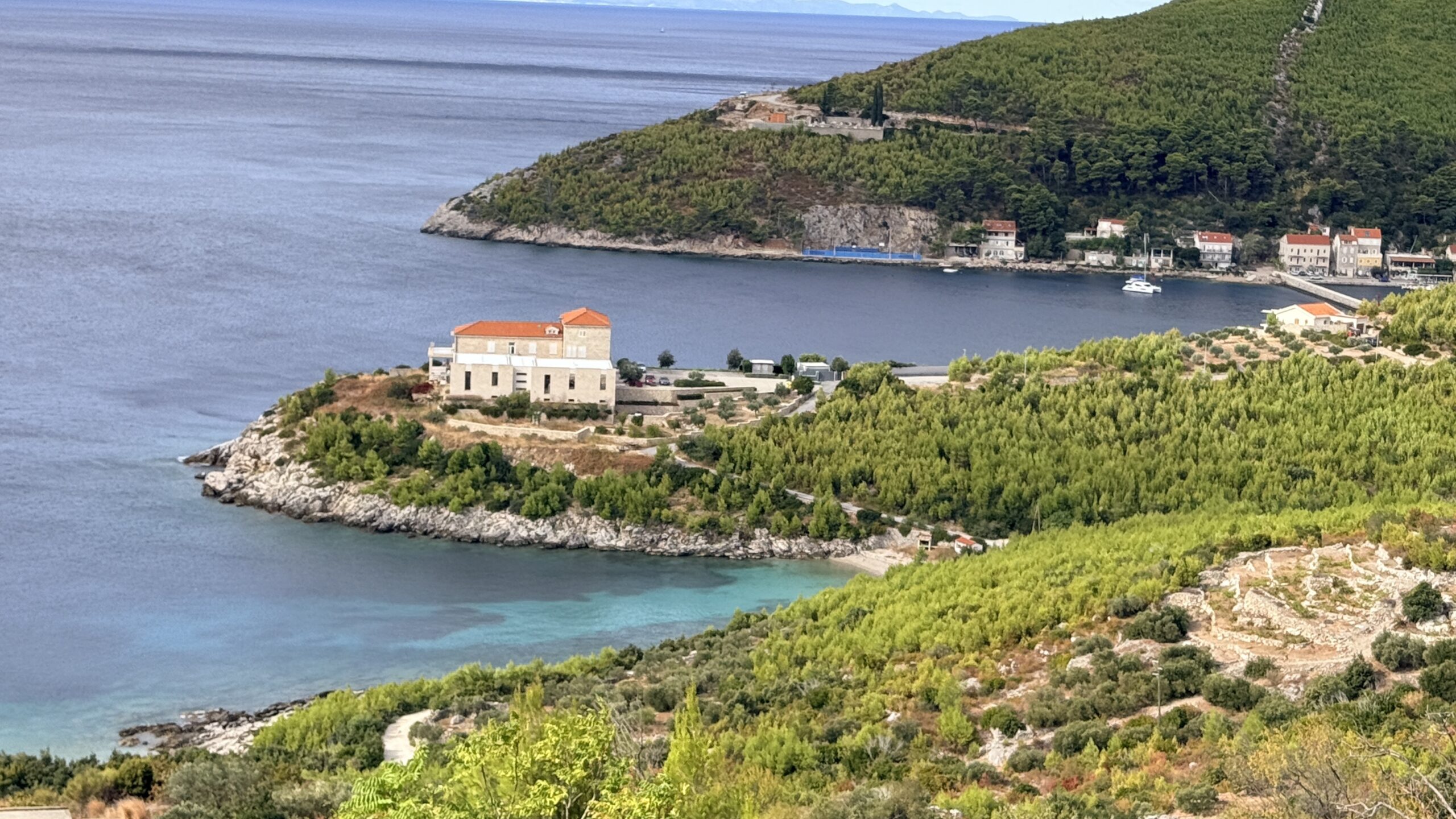
Grgić Vina: How the World Discovered Plavac Mali © Carl Giavanti
A Boutique Winery in Trstenik
Mike Grgić, a native Croatian and respected Napa Valley vintner, founded Grgić Winery in 1996. He is credited with drawing attention to Plavac Mali and the connection to Zinfandel. Mike, his daughter Violet, and nephew Ivo Jeramaz, winemaker at Grgić Hills Estate in Napa Valley, oversee this boutique winery in the scenic waterfront peninsula village of Trstenik. They make fewer than 5,000 cases annually. Most of it is sold locally, but also in the UK, EU, and the US.
Our host, Drazena, and winemaking son, Ivan Vučković, carry on the tradition of local family winemaking on the peninsula. You’ll taste exceptional Pošip and Plavac Mali on the terrace or in the tasting room. The winery is open daily from 9 a.m. to 7 p.m. and by appointment from November until late Spring.
Read Ivan’s Winemaker interview and flagship wine review here.
Saints Hills: Go for the Wine, Stay for the Food
Saints Hills Winery and Restaurant is the must-stop en route to either Dubrovnik or Split for lunch, dinner, or both. They are open daily by reservation from 2 pm–10 pm except Monday. You can enjoy wine tasting a la carte, or with a meal. Tours, barrel tastings, and cigars are also available.
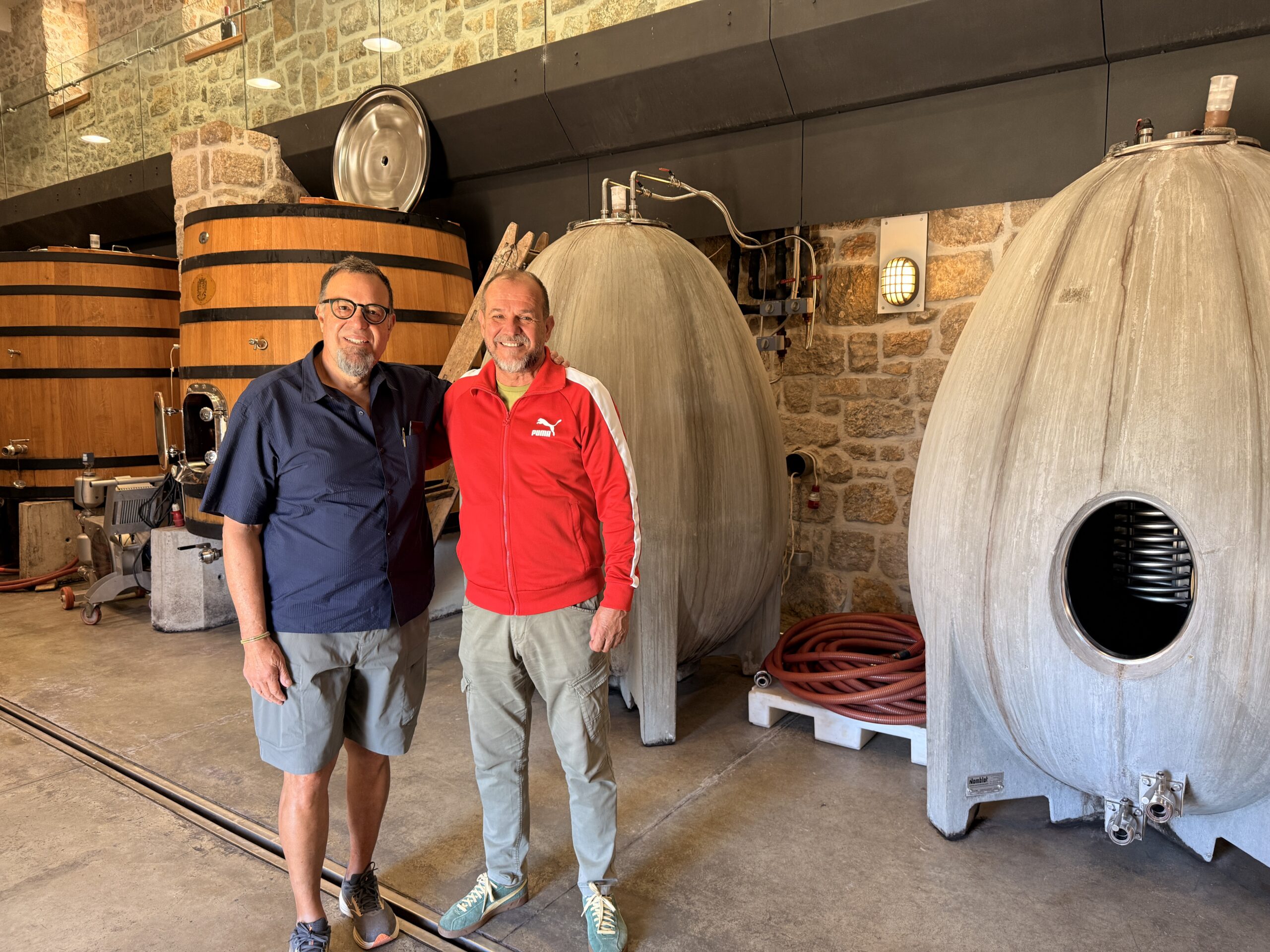
The winery was founded in 2008 by winegrowers Ivana and Ernest Tolj, in the home of a former Croatian Navy captain. Our host Josephina Muscianisi Soldati was gracious, as was Sommelier Tony Jurkovič. Another star of the show is Chef Ivana Bjeliš. Chef Ivana spoke to us through her food. Over 24 hours, we enjoyed a lunch of Croatian eggplant parm, shredded beef ravioli, and shaved octopus salad. Imagine following that with a dinner of frozen oysters, tempura oysters, lobster tartare, and cuttlefish risotto.
We paired all dishes with the exceptional wines of Saints Hills. We enjoyed Pošip (Dalmatia’s famous white), Chardonnay, Rosé, a Malvasia blend, a Bordeaux white blend, and lots of Plavac Mali – all from estate vineyards in Dingač, Komarna, and the Istria Peninsula.
These wines are worth seeking out during your visit to Croatia, and are exported to Canada, the U.S. (Wine.com), Switzerland, Japan, and the EU. Saints Hills also has a location in northern Croatia, in Istria.
Read my review of this Saints Hills flagship wine here.
Korta Katarina: The Queen of Winery Destinations
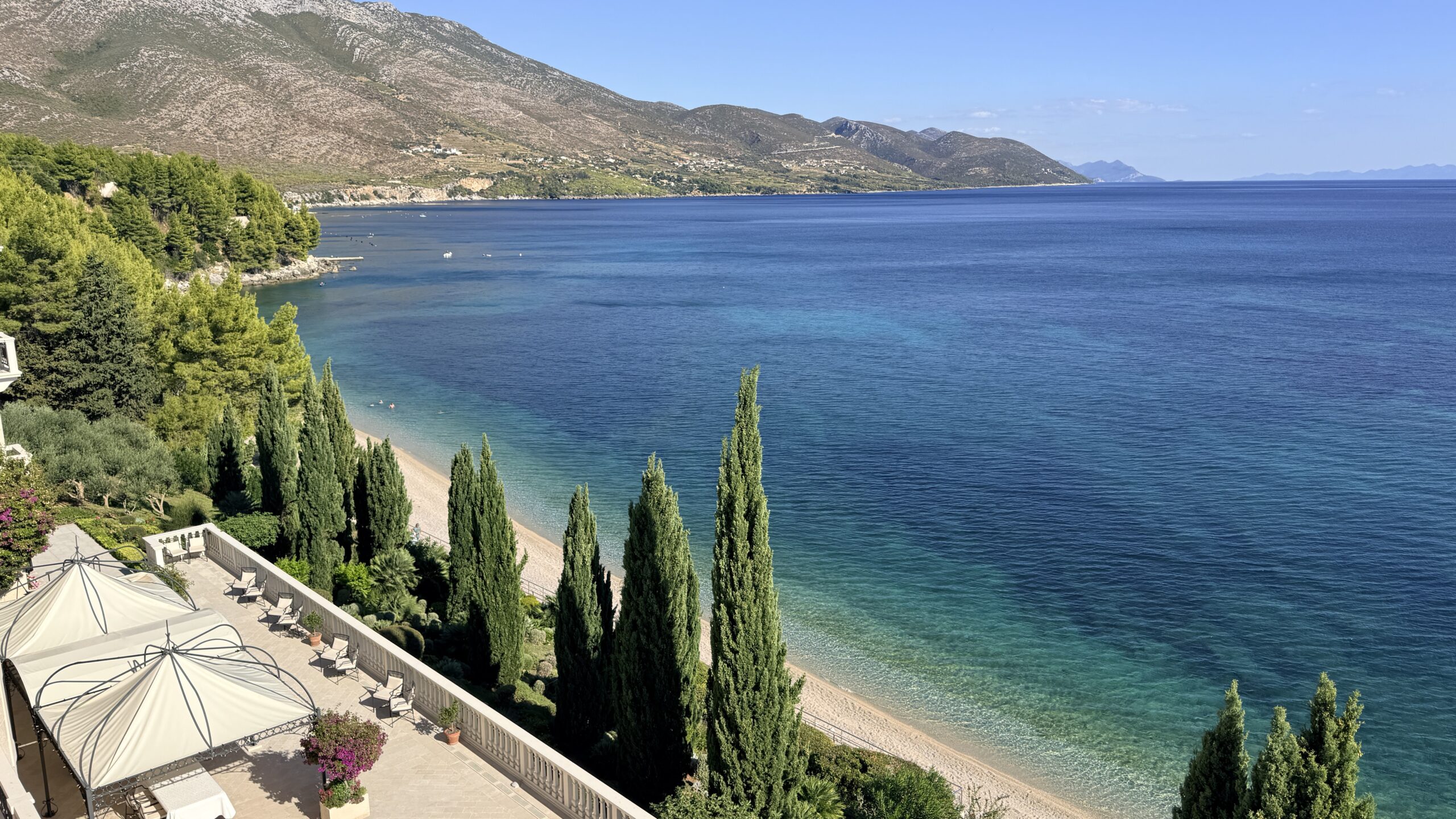
Korta Katarina is located in Orebić. This was the start of our wine journey from Korcula town to Dubrovnik. Lee and Perry Andersons, an American Family from Minnesota, purchased the Villa, described as an eight-room yacht on land, in 2000. The winery began producing its first vintage in 2006.
We visited the Villa for a tour, tasting, and lunch with winemaker Ante Cibilcić on the patio of the acclaimed Michelin restaurant, while gazing fondly at plated foods and views of the Adriatic. We stayed overnight at the Katarina Hotel in the village to watch island ferries glide across the sea and enjoy long waterfront walks and seafood meals.
Most of the wines are sold on-site at the Villa or the beach hotel, or to other Croatian outlets. The rest is exported to Canada, Sweden, and the Balkans. A partnership with Foley Family Wines in California helps make these wines available in all 50 U.S. states.
Tastings are available by reservation from 8 am–6 pm Monday through Thursday, and until 11 pm on Friday and Saturday. Sunday hours are 11 am–4 pm. Options include a one-hour tasting, dining on the Terrace, wine and tapas tasting, cigar and wine tasting, and three- or five-course dinners. Our experience was exceptional. Reservations at vi***@***********na.com
Hotel Katarina, on the beach in Orebić, has a restaurant and the ever-popular American Bar. Breakfast is included for guests at either the Hotel Katarina or the Korta Katarina Villa.
Read Ante’s Winemaker interview and flagship wine review here.
Beyond Wine: Ston, Oysters, and the Adriatic
Pelješac isn’t just a wine region with a few tourist attractions. Ston is an historic fortified town at the entrance to the peninsula, famous for its medieval defensive walls, centuries-old saltworks, and the oysters and mussels harvested from nearby Mali Ston Bay. And of course, the seafood, beaches, and the drive itself are reasons to make the trip.
Is Pelješac worth adding to a Croatia itinerary? Yes, but not a rushed day trip. If you’re going for the wine, stay for the views, food, and location. These wines are worth lingering over.
If You Go
Split and Dubrovnik have long attracted visitors for their history, architecture, proximity to the sea, and easy access from many European locations. We planned our visit to include trips to and from both of these cities. You can also easily reach the charming port town of Orebić, just off the coast of the Island of Korčula. What better reason to visit Pelješac than to pick up wine en route to Split and/or Dubrovnik?
Visiting Split
Enjoy a curated walk through Split’s historic center, including Diocletian’s Palace and key architectural and cultural landmarks. I suggest hiring a guide for a half-day visit to the old city, or using the self-guided app GPSmyCity.
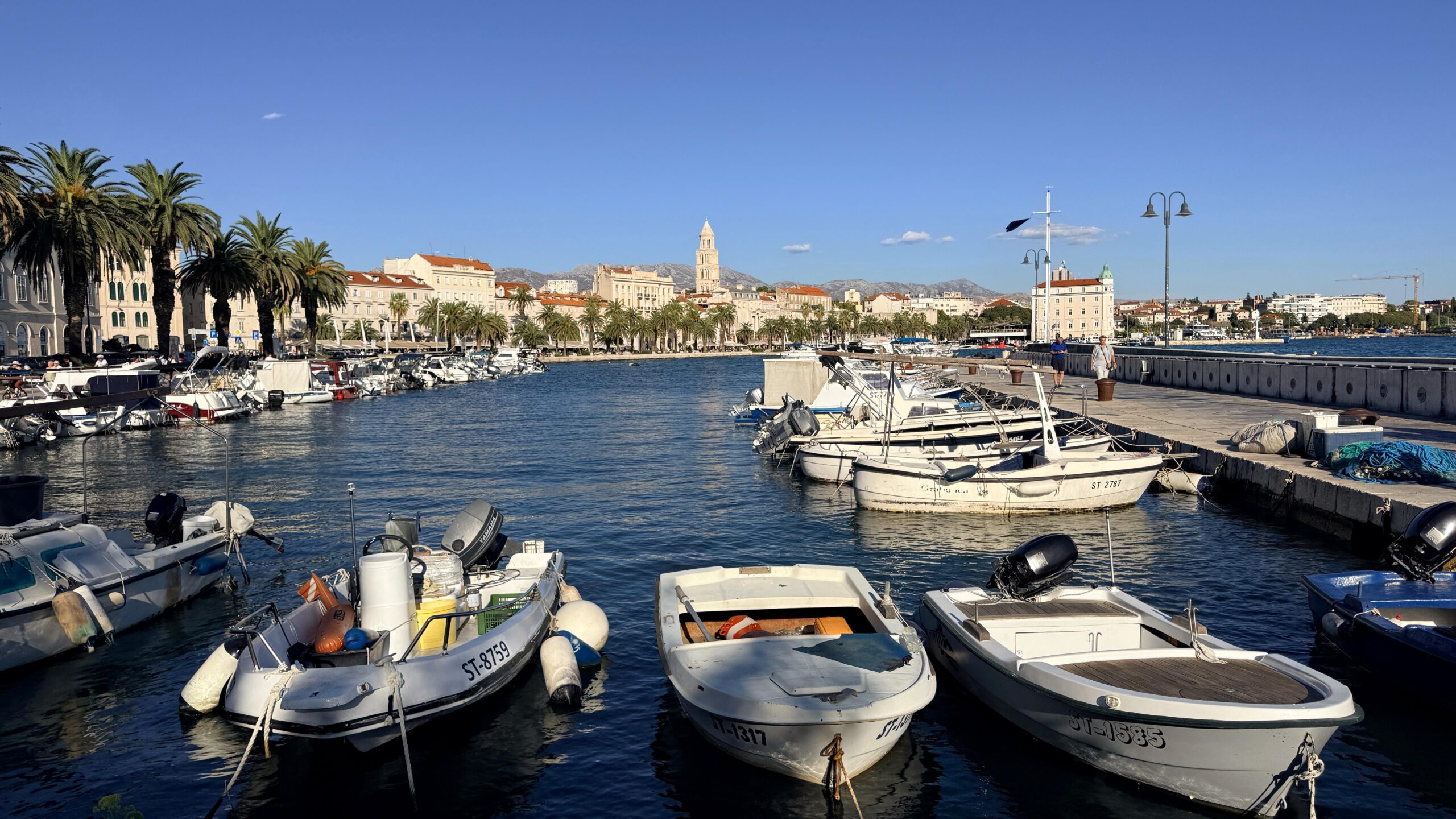
The Hvar Hills Wine Bar (aka Wine Corner and restaurant) is located a 15-minute stroll from Old Town on the West side of Split Harbor. It opened in 2024 to serve Europe’s chic Riviera crowd. The open-air patio with a marina view is the place to be and be seen, especially if you can position your yacht or catamaran across the adjacent promenade. Proprietor Mario Jelicic Purko hosted our party of four, and server extraordinaire Marin explained the wines and charcuterie cheese plates on offer. Wines are served by the glass, so tastings are relaxed and not rushed. All the fruit is sourced from the wineries’ estate vineyards on Hvar and Korčula Islands. The restaurant and open-air patio are open daily from 1 p.m. to 6 p.m. Be sure to try the Cevapi (Croatian sausage delicacy)! Follow them on Facebook and Instagram @Chevapist
Read Mario’s Winemaker interview here.
Visiting Dubrovnik
An overview of Dubrovnik includes the Old Town, city walls, and major highlights, including the sites where Game of Thrones was filmed. This is a great way to understand the region’s maritime heritage and trade history. Then walk the walls of Dubrovnik early, before the cruise ship crowds, for views of the famous red-tile roofs and the Adriatic.
Hire a guide for a half-day visit to the old city, or use the self-guided app GPSmyCity.
And if you still need convincing and need inspiration, watch this John Malkovich YouTube video. He’s one of my favorite actors, and I love his pitch for a visit to the Dalmatian Coast.
You May Also Enjoy Reading:
Repats, Karas, and the Future of Armenian Wine
A Journey through the Wines of the Peloponnese in Greece
