

Driving along the winding country roads of Southwest France, through green hills dotted with wildflowers, we spotted the imposing medieval fortifications of Carcassonne, high on its hilltop perch, from miles away. Built during the Gallo-Roman times, the walled city withstood centuries of warfare, succumbing to the Visigoths in the 5th century, the Saracens in the 8th century, and Simon de Montfort and his Albigensian Crusaders in 1209.
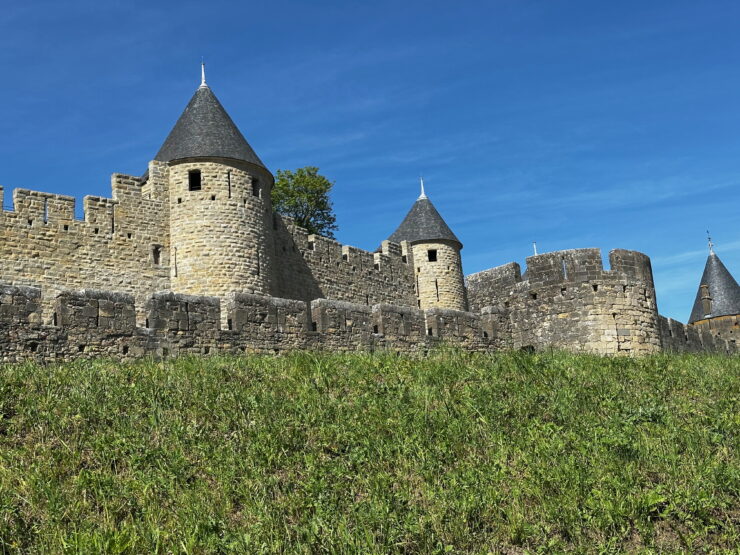
Today, the small city is invaded daily by thousands of tourists who come to walk the ancient ramparts, see the spectacular basilica, visit the museums, and dine on delectable southwest French cuisine. A fortunate few will stay within Carcassonne’s walls at one of just three hotels inside the UNESCO World Heritage site when the tour buses and day trippers depart. We were among them.
Sleep Inside the Citadel
Carcassonne, with its rich history, striking architecture, and traditional gastronomy, was easy to include on our springtime itinerary. When we realized we could stay within the ancient city walls at the historic five-star Hotel de la Cité Carcassonne, we booked immediately.
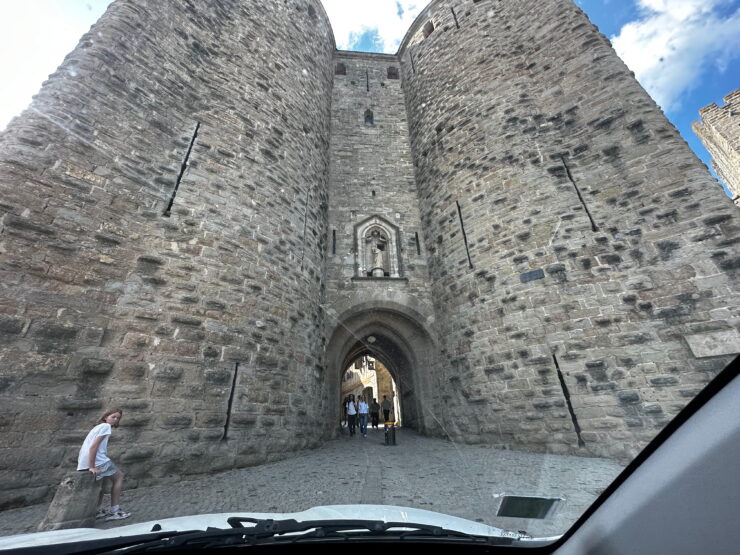
Being a guest at the hotel brings numerous benefits. The first was immediately clear, a reserved parking spot in their private, gated lot. Day trippers must park in the limited public lots and make their way on foot up the hill to the 13th-century Narbonnaise Gate. Arriving as hotel guests, we were greeted by an attendant in a small electric car who whisked us and our luggage up the hill, through the impossibly small stone gate, to the hotel’s luxurious entrance.
A Bit of History
You’ll literally be stepping into history when you enter the Hotel de la Cité Carcassonne. Built in 1909 on the site of the former Bishop’s Palace, the hotel is classically elegant with modern amenities that respect the property’s history. The lobby, decorated with paintings from local artist Jacques Ourtal (1868-1962), was once the palace’s winter garden.
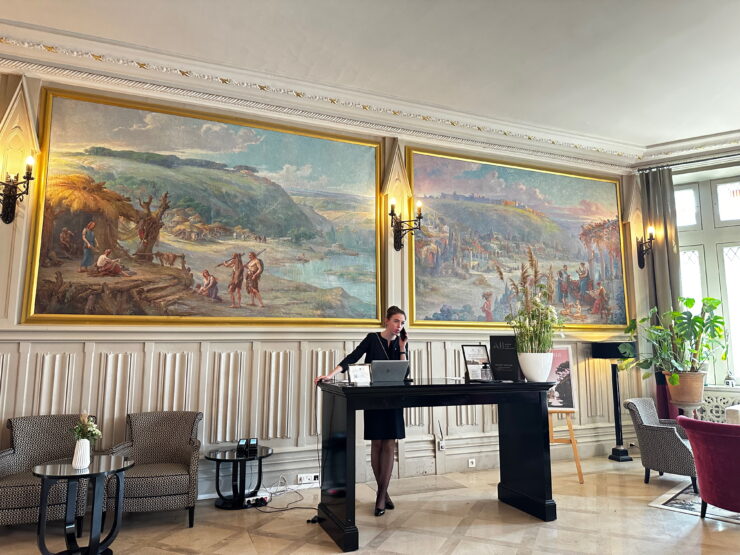
When the hotel opened, it was considered the height of modernity with electric lighting, hot water, and a hairdresser on staff. In the 1920s, the Hotel de la Cité was the place to see and be seen for guests traveling between Nice and Barcelona or Biarritz. The hotel was shuttered during WWII. The post-war years revived the hotel’s popularity, but soon it began to decline and finally closed in 1987.
Careful renovations by new owners in 1989 restored the grand dame to her neo-Gothic splendor. In 1998, the hotel underwent a complete renovation, including incorporating the Hotel Dame Carcas, a sister property. The building was listed by the French National Conservation Trust in 1998. In 2010, the hotel was awarded its fifth star by Atout France, the agency responsible for France’s official hotel star rating system. Hotel de la Cité is now a member of the MGallery group of hotels.
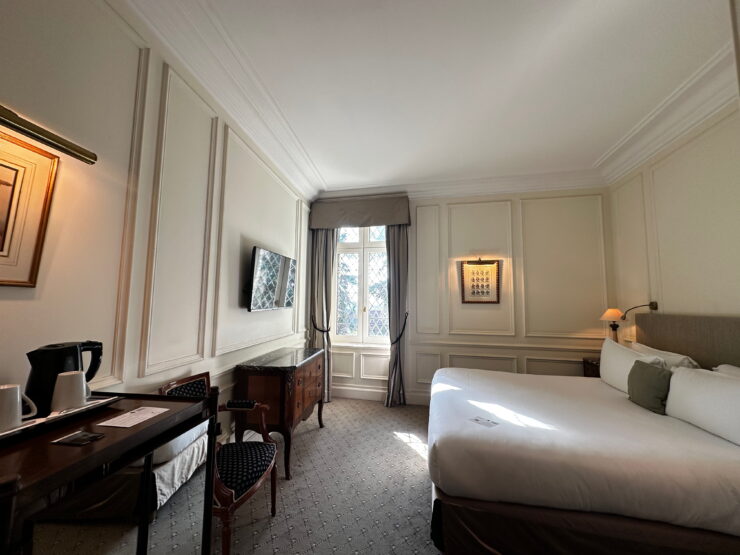
The 59 rooms and suites here are all individually sized and decorated. Ours was a comfortable king room with a large bathroom and views out over the gardens and the famous ramparts.
A Room Full of Memories
The cozy Bibliotheque Bar is a great place to relax, enjoy a beverage, play board games, and catch up on your reading. The library-cum-bar has registry logs, referred to as the Golden Books, dating back to the hotel’s opening. Inside are the signatures of Winston Churchill, Grace Kelly, Johnny Depp, Jacques Chirac, Julio Iglesias, the Queen Mother, Frank Sinatra, and other notable public figures and celebrities. The pages in the ledger dated 1928 were surprisingly crisp and white, and the writing was done in a careful hand.
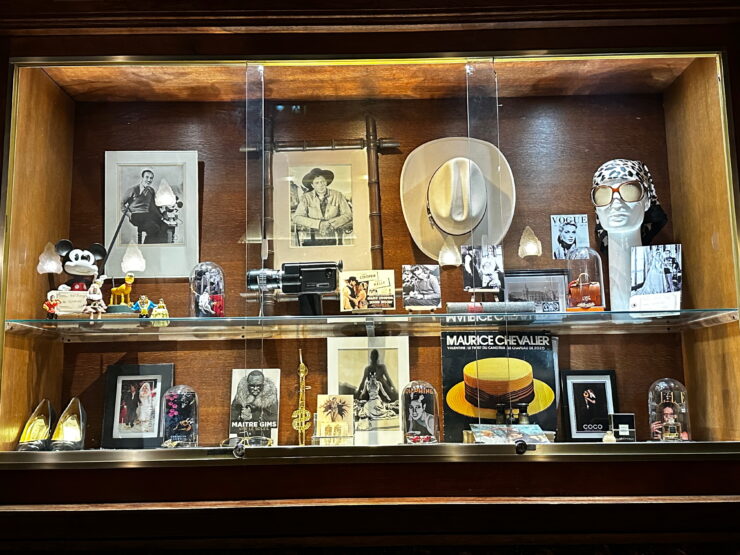
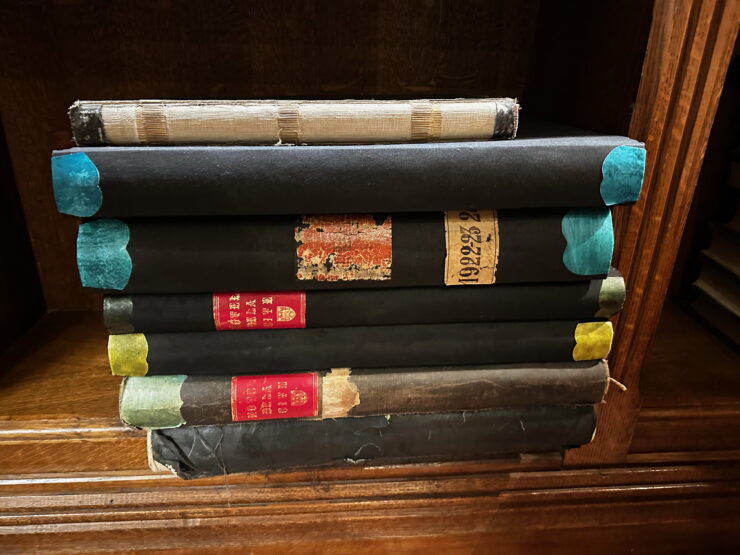
There are also wonderful historic photos and mementos from some of the Hotel de la Cité’s more famous patrons on display, like Josephine Baker, Gary Cooper, Grace Kelly, and Walt Disney.
When the weather is good, enjoy your drink on the panoramic terrace and soak in the spectacular views. We took in the hotel’s peaceful gardens and amazing vistas while sipping a flute of Blanquette de Limoux from the nearby St. Hilaire Abbey, where they claim to have invented sparkling wine before Dom Perignon.
Elegant Dining and Modern Amenities
The hotel’s formerly Michelin-starred restaurant, La Barbacane, offers three ambitious prix fixe dinners available with wine pairings in its elegant dining room. Heraldic shields grace the walls; restored 12th-century stained-glass windows from the original Bishop’s Palace look out over the garden; the chairs are upholstered in heavy violet-striped velvet; and the soft overhead lighting comes from medieval-looking chandeliers.
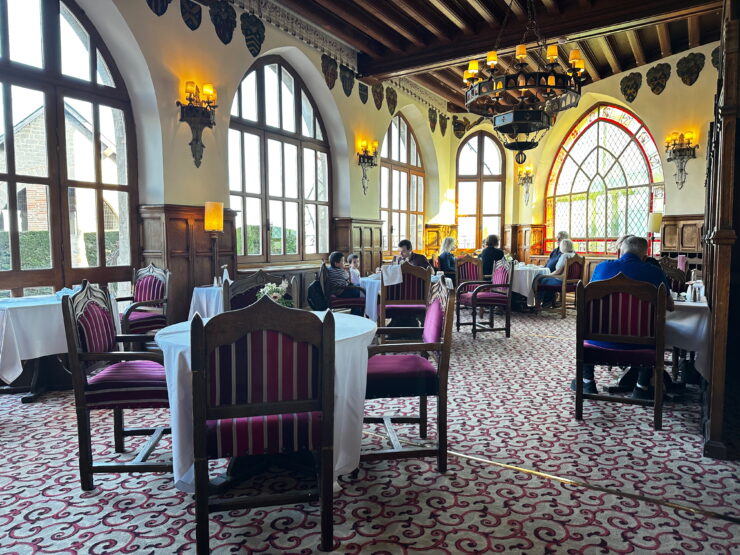
The menus, which do not include beverages, range from 94 Euros for the simplest to 140 Euros for the most complex offering. We chose the 114 Euro multi-course dinner for our first evening in Carcassonne. It began with oyster tartare topped with caviar and served with beetroot gelée and vodka cream. Perfectly roasted scallops with a blanquette of sweet onions and trumpet mushrooms followed. Next was the turbot with lobster, served in a light hollandaise and parsnips.
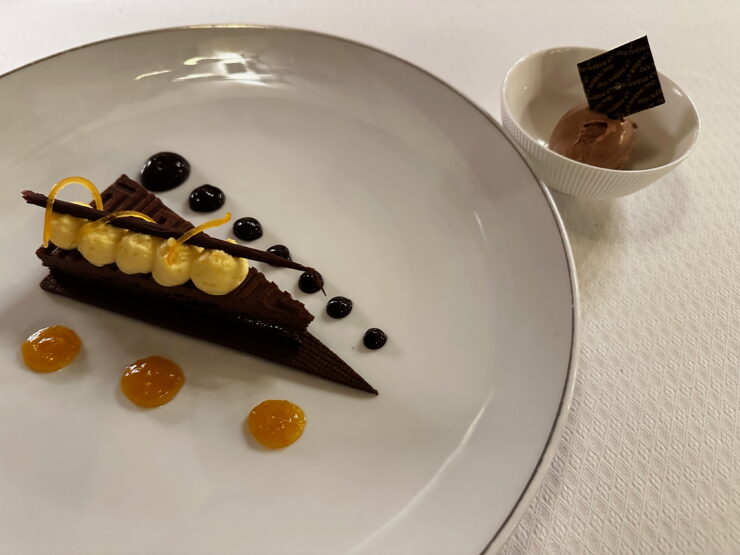
The meat course was my favorite, a succulent filet of beef with pan-fried foie gras, topped with truffles and a Perigordine sauce, and served with a truffled celeriac millefeuille. Local cheeses from the chariot and a clever chocolate tart that looked like peas in a pod, served with a bitter orange marmalade, completed our meal.
See the Film First
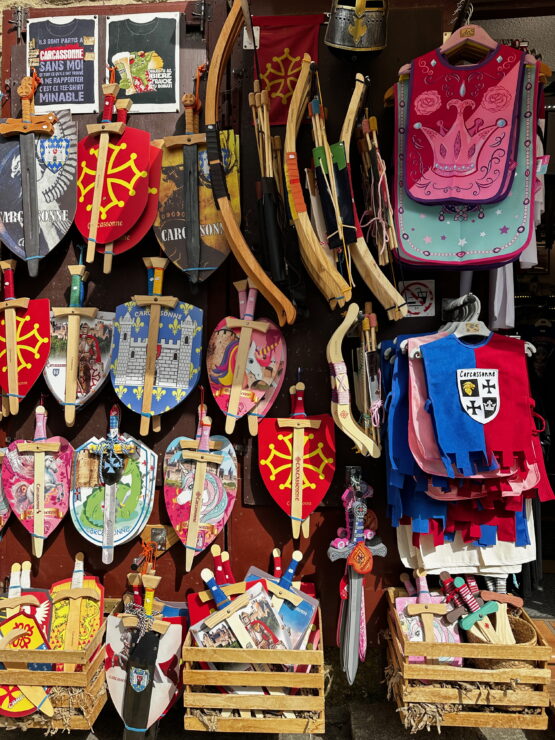
Since we arrived in the afternoon and had a few hours before dinner, we took a stroll to get our bearings. We wandered down ancient streets past souvenir shops hawking medieval garb and swords, cafés crowded with tourists, ice cream stands, and pricey boutiques.
©Jeanne Neylon Decker
As we often do, we made the tourism office our first stop. We watched an AR film there about Carassonne’s intriguing history. The animated film begins with the earliest inhabitants in the 3rd century BC, the Romans, Visigoths, Gauls, Saracens, and the Franks, all of whom made their home in Carcassonne.
The film also covers the horrifying crusades against the Cathars. The Cathars, who split from the powerful Catholic Church because of the corruption and lack of piety they believed the clergy exhibited, were considered heretics. In July 1209, an army of crusaders came to nearby Beziers and massacred almost 20,000 people, including children. Many were burned on mass pyres so that they could not be buried in consecrated ground, their souls condemned to eternal hell.
The film continues with the city’s gradual decline and abandonment. Finally, Carcassonne returned to glory after a 50-year restoration project, from 1853 to 1879. It was led by Viollet-le-Duc, the architect of Notre Dame Cathedral in Paris.
English-speaking staff are happy to answer questions and assist in planning your visit. I met Sarahi Seguy, Tourism Office Promotions Manager, and she generously offered to show me the city the following day.
The Basilica
©Jeanne Neylon Decker
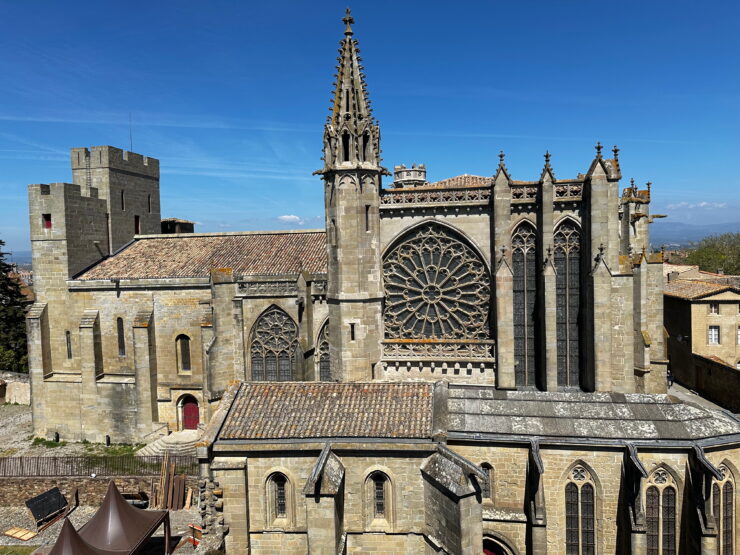
Carcassonne’s famous Basilica Saint Nazaire is steps from the Hotel de la Cité’s front door, another benefit to staying inside the walls. It was my first stop with Sarahi.
The church took nearly 300 years to construct and is built in both Gothic and Romanesque styles. The brilliant colors in the stained glass windows over the altar in the Gothic section of the church caught my eye immediately.
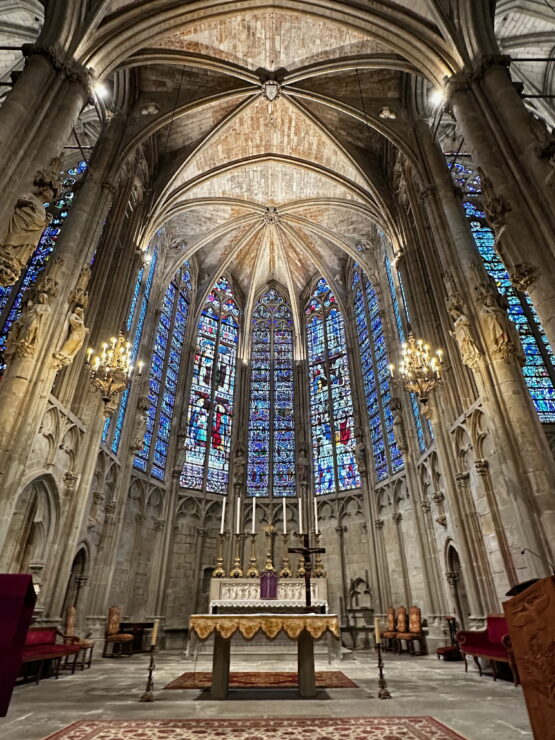
One of the most important pieces in the basilica is the magnificent 13th-century “Tree of Jesse,” depicting the family and life of Christ in stained glass. The detail and use of color is exquisite and captured my attention for some time. The rose window dedicated to the Virgin Mary gives the impression of movement, Sarahi pointed out, while the panes above the altar’s statues appear static. I might not have noticed those subtleties on my own.
The nave, where the congregation sits, is the oldest part of the basilica and was built in the 11th century in the somber Romanesque style. As we walked through the nearly 700-year-old sanctuary, I spotted a poignant Pieta and many beautiful paintings. I also noticed a row of upholstered chairs in front of the altar. These are for family members to use during celebrations like baptisms and weddings.
To the Ramparts!
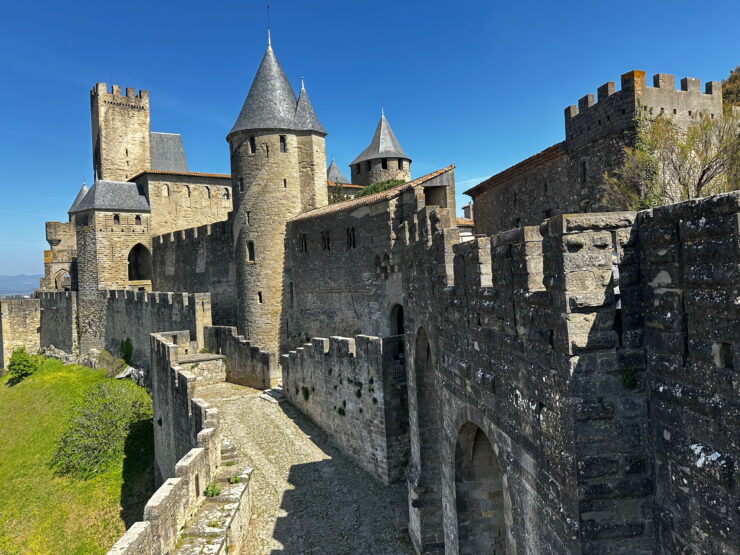
Next on our agenda was a visit to the Château Comtal and the ramparts, one of Carcassonne’s biggest draws. These enormous stone walls and fortifications are what you see when you approach the city. They make clear that the entire citadel was constructed with one purpose—to defend and protect.
52 Watch Towers Along the Route
There are 52 watch towers along the three-kilometer rampart route, and numerous wooden galleries that were moved from place to place as needed for defensive purposes in the Middle Ages. The first walls were built in Gallo-Roman times, with more added in the 13th and 14th centuries. Sarahi noted that the Roman walls include local red brick, while the Visigoths’ additions used gray stone.
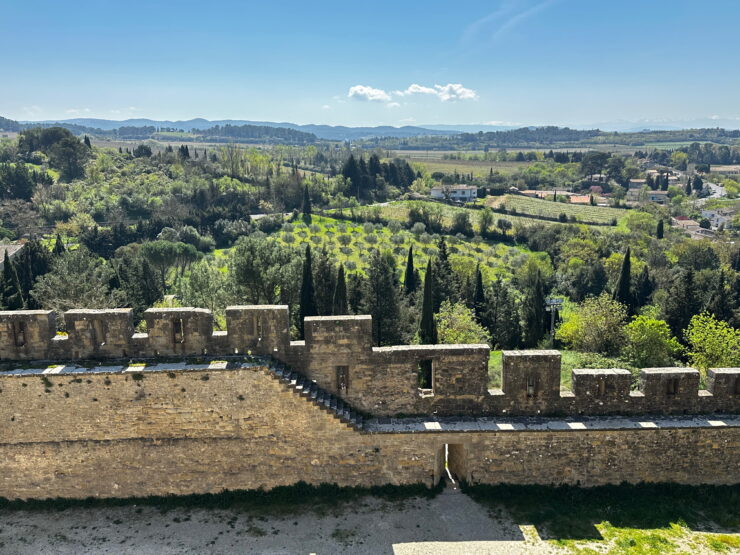
Visitors to the ramparts are treated to outstanding views back over the medieval city, out towards the Canal du Midi and the sprawling “new” town below. It grew from a settlement during the 1209 Crusades, when everyone who was not nobility or military was killed or banished from the citadel. Today, it looks like any modern city.
From high atop the ramparts, I also had a bird’s eye view over the chateau’s gardens, the theater where musical and dramatic performances are held all summer long, the Basilica Saint Nazaire, and my hotel with its panoramic terrace. I could also look far beyond the walls to the vineyards and green rolling hills of the surrounding countryside.
Dame Carcas
Inside the chateau, you’ll find the original sculpture of Dame Carcas, credited with saving the people inside the citadel when Charlemagne laid siege to the town. As legend has it, after years of siege and many dead from starvation, the widow made straw dummies and strategically arranged them to make it appear the citadel was still well defended.
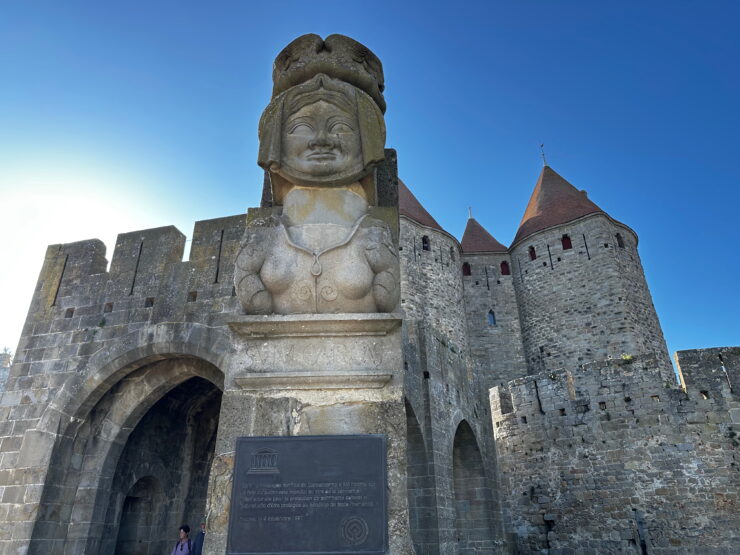
She is said to have force-fed her one remaining pig with what was left of their wheat and threw it over the ramparts. When the pig burst open on the ground below, Charlemagne saw the wheat and thought the city was so well-supplied that they fed expensive wheat to their pigs. The siege ended, and Charlemagne and Dame Carcas made peace. The trumpets sounded, which in French is “carcas sonne.” Although this is controversial, some say it’s how the city got its name. A copy of the sculpture stands at the Narbonnaise gate, welcoming visitors to the medieval city.
More to See and Do Inside the Walls
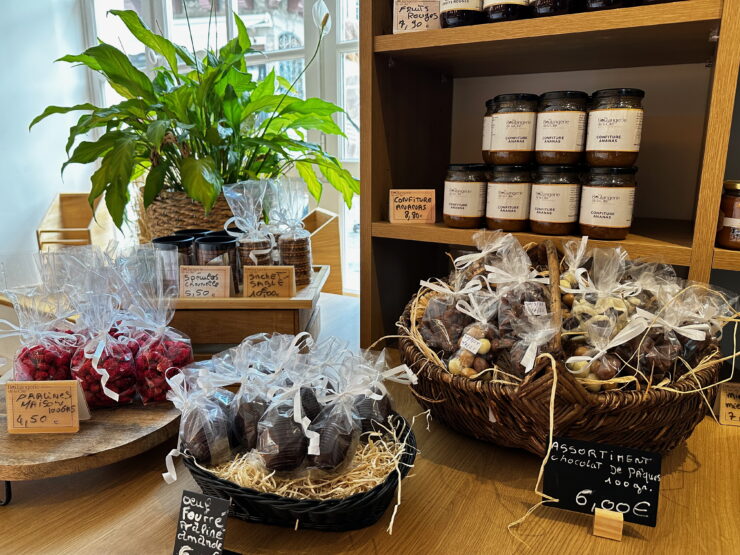
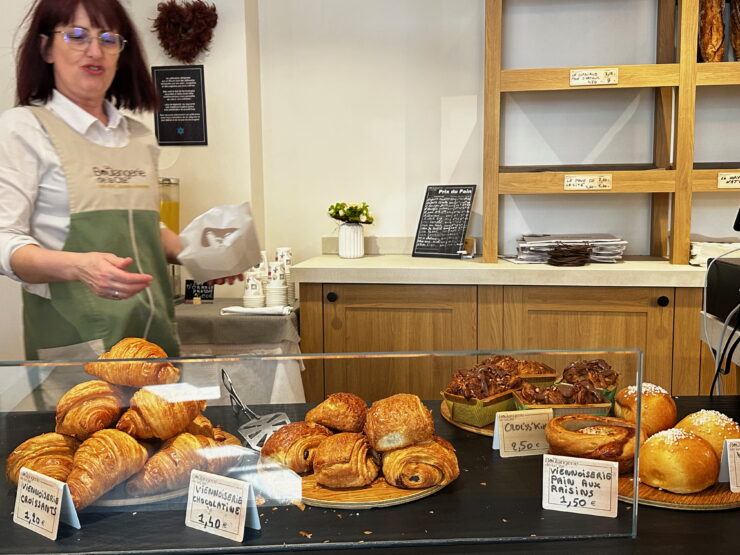
Between the double ramparts are the Lices. This grassy area affords great views of the surrounding military architecture as you walk along the pathway. Strolling the cobbled streets, window shopping, stopping for a coffee and a pastry (or an aperitif) in the old city center is also a pleasure. There are a few too many souvenir stands, but there are also shops with locally made crafts and regional specialties. Cassoulet (the famous duck, goose, sausage, and bean dish of the Occitanie) is available in tins you can bring home.
©Jeanne Neylon Decker
As we walked, we came upon the medieval camp in the city center that we’d learned about at the tourism office. During the high season, actors demonstrate what daily life was like in the Middle Ages. There were a few men in medieval garb standing near the canvas tents, but the camp wasn’t fully up and running in early April.
Eat Like a Local
There is no shortage of places to eat inside the walls, from the elegant Barbacane at the Hotel de la Cité Carcassonne to small local cafes. Vegans and vegetarians may struggle as traditional dishes tend to be hearty and meat-centric. Pork, sausage, duck, and game are all popular, as is salted codfish. Beans or potatoes accompany most dishes. Try the cheesy aligoté potatoes, a local specialty. Cassoulet is the most popular local dish. Foie gras, a goose liver pate, frequently begins a meal here, and local cheeses conclude it, unless you’ve somehow managed to save room for dessert.
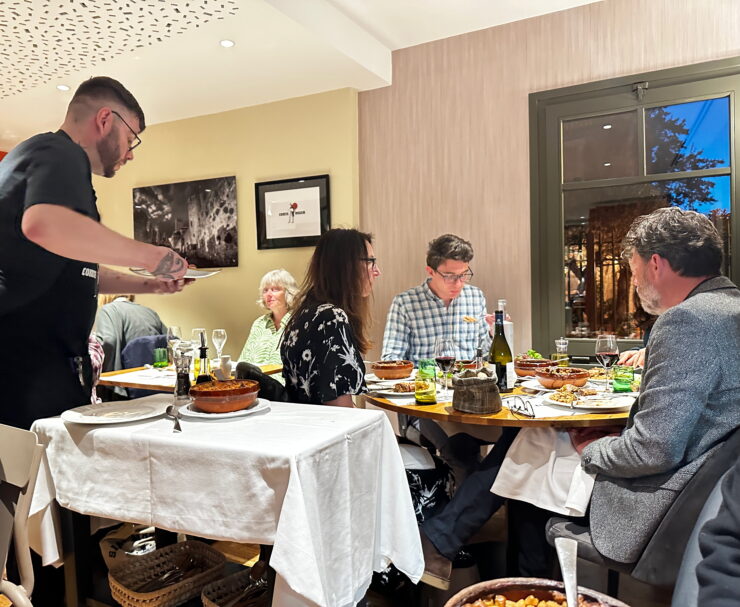
We also dined at Auberge des Lices, a small, more rustic B n B accommodation in the city center. The traditional menu included several prix fixe offerings. They ranged from 27 to 48 Euros for three courses. An à la carte menu featured steaks, lamb, pork, fish, and, of course, cassoulet. The Auberge offers just one room and one suite for overnight stays.
Enjoy the Solitude
When night falls, and the tour groups and daytrippers depart, you’ll have this magnificent medieval city to yourself. After dinner, take a leisurely stroll through the nearly deserted streets.
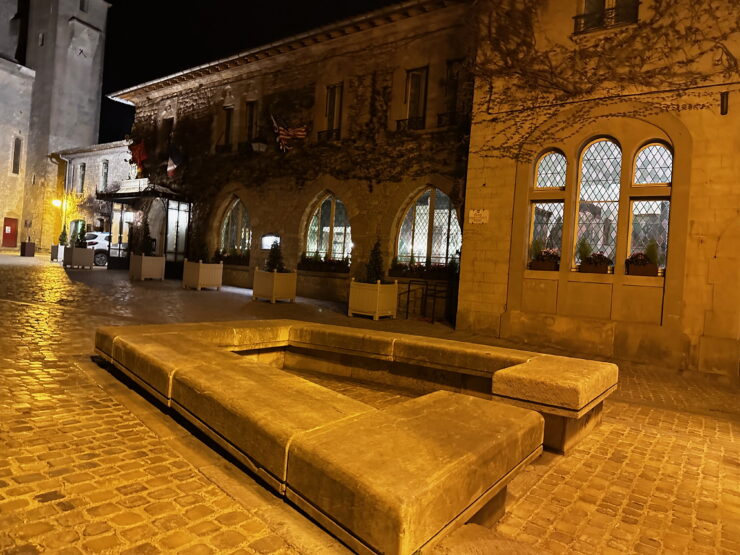
There isn’t really a nightlife here. Shops that had been crowded during the day will have pulled down their shutters. Restaurants that had been full of boisterous diners in the early evening are now closed. Let your imagination run wild and revel in centuries of rich history as you pass by the ancient half-timbered buildings. As you wander, chances are the only sounds you’ll hear are the echo of your own footsteps. Sit on a bench and enjoy the magnificent cathedral under the moonlight. As you approach the yellow lights of the Hotel de la Cité, take a last look around. It’s a magical time and the best reason of all to sleep inside those ancient walls.
If You Go
How to Get There
We had a rental car since our visit to Carcassonne was part of a six-week driving trip around Southwest France and Spain. A car will give you a great deal of flexibility, particularly if you’re looking to explore smaller villages in the countryside. Be sure to reserve a parking spot if you stay at Hotel de la Cité. If you stay elsewhere, check with your hotel. You can’t drive private cars within the walls. Carcassonne is an eight-hour drive from Paris and about four and a half hours from Lyon.
Carcassonne is about six hours by train from Paris and five hours from Lyon.
There is train service via TER regional trains from cities within Occitanie. They include direct intercity trains from Marseilles, Bordeaux, Agen, and Narbonne. TGV (high-speed) trains operate from Toulouse, Lyon, Paris, Bordeaux, and Lille. The SNCF station is across from the Canal du Midi and a 30-minute walk to the citadel.
There are regional airports, including the Aeroport Sud de France in Carcassonne, serving the city. Several others are an hour away. Schedules are seasonal, especially from cities outside France.
Bus service is also available from Lyon, Bayonne, Grenoble, Toulon, Tarbes, and Spanish cities including Bilbao, San Sebastian, and Barcelona. The bus from Lyon will take about six and a half hours.
Use an app like Rome2Rio to find travel options from your destination to Carcassonne.
Where to Stay
There are three hotels within Carcassonne’s city walls.
Hotel de la Cité Carcassonne. Rooms start at around 350 Euros per night and breakfast is an extra charge at the five-star property.
Auberge des Lices. Contact the B n B directly for rates for their one available one room and one suite.
Hotel le Donjon. Rooms start at around 280 Euros per night without breakfast at this four star hotel.
Outside the walls, there are a number of mid-range hotels with varying amenities, including chains like Ibis.
Accessibility Note
There are areas inside the chateau accessible to those with mobility challenges. There are also places along the ramparts that require climbing steep stairs and navigating narrow pathways. Notify the guards if you need assistance.
Explore history here through myriad tours, workshops, and activities. They include guided walks through the citadel and boat rides on the Canal du Midi. Book online or through Tourisme-Carcassonne.
You May Also Enjoy Reading
Champagne Tasting in Epernay: A Journey Through the heart of Bubbly France
A Sense of Place: A Master Class in Wines of France’s Gigondas Region
Where the Buffalo Roam: A Visit to Italy’s Premier Mozzarella Dairy
To read more from Jeanne Neylon Decker, TravelTawk.com
